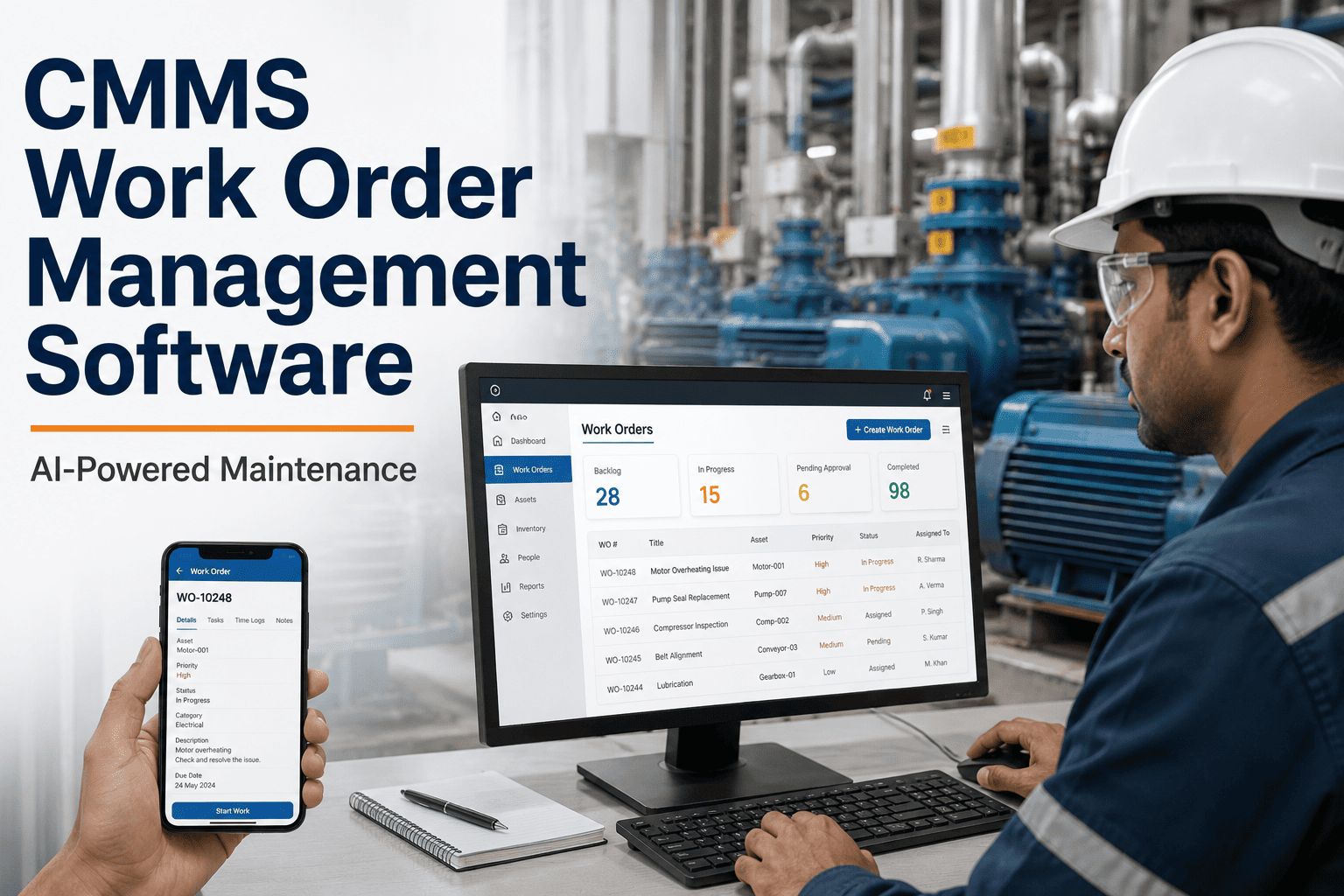
A mid-size chemical processing facility producing specialty solvents, intermediates, and industrial chemicals faced persistent equipment reliability challenges across its diverse asset portfolio. Aging reactors, centrifugal pumps, heat exchangers, and distillation columns operating under continuous-process conditions were experiencing unplanned downtime events averaging 14.6 hours per week — directly impacting production capacity, product quality consistency, and maintenance cost structure. The facility's existing CMMS implementation was underutilized, relying on calendar-based preventive maintenance schedules disconnected from actual equipment condition, while manual inspection workflows and paper-based work order systems generated data latency that made proactive decision-making impossible. After deploying ifactory's AI vision camera integrated with a modernized, mobile-enabled CMMS platform, the facility achieved 96% equipment uptime, reduced unplanned downtime by 76%, and cut annual maintenance expenditure by $312,000.
TRANSFORM YOUR MAINTENANCE STRATEGY WITH AI-DRIVEN CMMS
Stop Reacting to Equipment Failures. Start Preventing Them with Intelligent CMMS.
ifactory's AI vision camera and integrated CMMS platform give process and chemical operations real-time visibility into asset health, automated work order generation, and mobile-first maintenance workflows — before failures disrupt production.
96%
Equipment Uptime Achieved
$312K
Annual Maintenance Savings
60
Days to Full Deployment
01 / The Facility
A High-Volume Chemical Processing Plant, A Fragmented CMMS, A Mounting Reliability Problem
Facility TypeSpecialty chemical processing and manufacturing. Single primary facility with four reactor trains, twelve centrifugal pump stations, eight heat exchanger units, six distillation columns, and three automated packaging/fill lines serving industrial, pharmaceutical, and agricultural supply chains.
Scale180 million pounds of processed chemical output annually. 45+ active product SKUs across solvents, intermediates, and specialty formulations. Continuous-process operation, 24/5 schedule with weekend maintenance windows, extending to 24/7 during peak seasonal demand cycles.
Maintenance Team12-person maintenance team comprising mechanical, electrical, and instrumentation specialists. Hybrid reactive-scheduled maintenance model with underutilized CMMS used primarily for work order logging after failure events. No predictive maintenance program. No IoT sensor integration with existing maintenance systems.
Downtime Pre-DeploymentAverage 14.6 unplanned downtime hours per week across all production equipment. Centrifugal pump seal failures accounting for 34% of total downtime events. Heat exchanger fouling causing reduced throughput and unplanned cleaning cycles on 8–10 production runs per month.
Prior CMMS StateLegacy CMMS deployed five years prior but adopted at less than 40% of intended capability. No mobile access for field technicians. Work order creation occurred post-failure rather than preemptively. No integration with process control systems. Data accuracy degraded due to manual entry workflows with no validation layer.
Annual Maintenance CostPre-deployment maintenance expenditure of approximately $672,000 annually — including emergency parts procurement at premium pricing, overtime labor for unplanned repairs, production batch losses from quality deviations, accelerated catalyst and media replacement costs, and compliance documentation penalties from incomplete inspection records.
02 / The Challenge
Reactive Maintenance in a Continuous-Process Chemical Environment: The Compounding Cost of Fragmented CMMS Data
Chemical processing is a continuous thermal and mechanical process where equipment consistency directly determines product quality, regulatory compliance, and operational safety. A reactor operating outside its optimal agitation tolerance introduces temperature variance that alters reaction kinetics — producing batch-to-batch composition inconsistency that can compromise downstream customer formulations. A pump with progressive seal degradation allows fugitive emissions that trigger environmental reporting requirements and potential regulatory action. A heat exchanger with undetected fouling reduces thermal transfer efficiency, increasing energy consumption and reducing production throughput while accelerating tube-side corrosion that leads to unplanned shutdown events. In this environment, equipment failure is never just a maintenance event — it is simultaneously a quality event, a compliance event, a safety event, and a customer relationship event. Yet this facility's CMMS was configured to document failures after they occurred rather than to prevent them through data-driven condition monitoring and automated workflow triggers.
14.6
Unplanned downtime hours per week
Weekly unplanned downtime averaging 14.6 hours across reactors, pumps, heat exchangers, and distillation columns — consuming approximately 760 annual production hours and generating direct capacity losses estimated at $486,000 per year at fully loaded production cost.
34%
Of downtime from pump seal failures
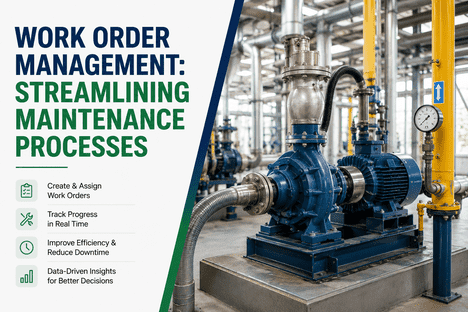
Centrifugal pump mechanical seal failures were the single largest downtime driver — each event requiring 3–6 hours of unplanned shutdown, emergency parts sourcing, and post-repair mechanical alignment verification before the pump could return to service within process safety specifications.
8–10
Heat exchanger fouling events per month
Undetected heat exchanger fouling between scheduled cleaning intervals was producing throughput degradation exceeding 15% of design capacity — triggering unplanned cleaning cycles that averaged $9,800 in monthly production loss and accelerated tube replacement costs.
62%
Of work orders created after failure
The existing CMMS generated 62% of work orders as reactive entries following equipment failure events — indicating that scheduled preventive maintenance inspections were either not occurring on time or not detecting developing failure modes before they reached critical condition.
"Our CMMS had become an expensive logbook for failures we already knew about. We were capturing data after the damage was done instead of using it to prevent the damage in the first place. The system had the capability for preventive workflows, but without real-time equipment condition data feeding into it, we were scheduling blind."
03 / The Solution
ifactory AI Vision Camera + Modernized CMMS: Real-Time Visual Condition Monitoring Driving Automated Preventive Workflows
Following evaluation of three CMMS modernization approaches and four industrial IoT platforms, the facility selected ifactory for its integrated AI vision camera platform that combines computer vision-based condition monitoring with direct CMMS workflow integration — eliminating the data gap between equipment condition detection and maintenance action initiation. To explore how ifactory structures CMMS-integrated preventive maintenance deployments for process and chemical operations, Book a Demo with ifactory's industrial analytics team.
VISION
AI vision camera condition monitoring deployed across all critical assets — providing continuous visual inspection of pump seals, heat exchanger surfaces, reactor agitation systems, and distillation column internals. Computer vision models trained on facility-specific equipment identified developing failure signatures — seal weepage, surface fouling accumulation, vibration-induced misalignment — 10–18 days before conventional inspection methods would detect them, feeding condition data directly into the CMMS work order engine.
CMMS
Modernized CMMS with automated preventive workflow generation replaced the legacy post-failure logging system. The ifactory platform integrated AI-detected condition anomalies directly into the CMMS work order creation pipeline — generating ranked preventive maintenance tasks with asset-specific failure probability scores, recommended intervention windows, and required parts and skill sets pulled from the integrated inventory and resource management modules.
MOBILE
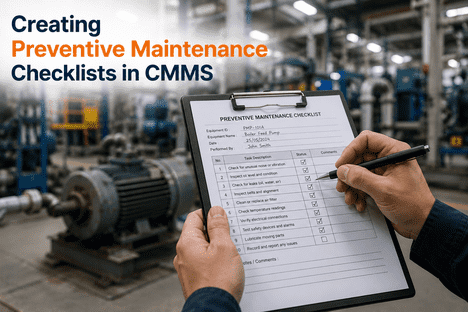
Mobile-first field technician enablement deployed across all 12 maintenance team members, providing real-time access to asset health scores, prioritized work queues, digital inspection checklists, and photographic documentation capture. Technicians completed work order updates, spare parts requests, and compliance documentation directly from the field — eliminating the paper-to-digital latency that had previously delayed work order closure by an average of 2.7 days.
ANALYTICS
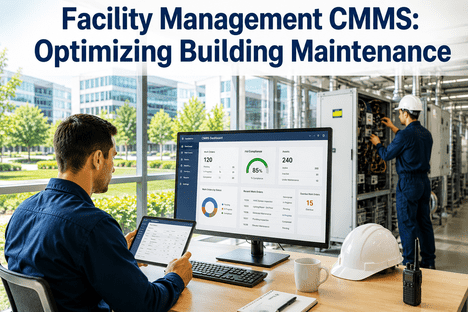
Unified maintenance intelligence dashboards delivered real-time equipment health scores, maintenance priority queues ranked by failure probability and production impact, and rolling 30/60/90-day failure risk projections across the full equipment portfolio — enabling the maintenance team to shift from reactive response to planned weekly preventive maintenance scheduling aligned with production windows, parts availability, and regulatory inspection calendars.
04 / Implementation
Full CMMS Modernization and AI Vision Platform Live Across All Critical Assets in 60 Days
Days 1–14
Asset Criticality Assessment and CMMS Configuration
All production equipment inventoried and criticality-ranked by downtime impact, failure frequency, regulatory compliance dependency, and product quality sensitivity. CMMS master data cleaned and standardized — equipment hierarchies, failure code taxonomies, preventive maintenance templates, and spare parts BOMs rebuilt for automated workflow integration. AI vision camera placement architecture designed for reactors, pump stations, heat exchangers, and distillation columns.
Days 15–35
Phase 1 Deployment — Priority Assets Live with AI Vision and CMMS Integration
AI vision cameras installed and commissioned on two primary reactor trains and six highest-criticality pump stations during scheduled weekend maintenance windows — zero production interruption. ifactory platform connected to live visual data streams from Day 16. CMMS integration established with automated work order creation from AI-detected anomalies beginning Day 19. Mobile CMMS access deployed to all maintenance technicians during active installation window.
Days 36–52
Phase 2 — Remaining Reactors, Heat Exchangers, Distillation Columns, and Packaging Lines
AI vision camera deployment completed on remaining two reactor trains, four heat exchanger units, all six distillation columns, and three packaging lines. Full equipment portfolio live on ifactory platform with CMMS integration by Day 48. Computer vision models for all assets transitioned from baseline training to active anomaly detection alerting by Day 51, with facility-specific failure thresholds validated against the first 33 days of operational visual data.
Days 53–60
CMMS Workflow Optimization, Mobile Rollout Completion, and Platform Handoff
ifactory maintenance priority queue fully integrated with the modernized CMMS work order system, enabling AI-generated preventive maintenance recommendations to flow directly into scheduled work order creation with automatic technician assignment and parts reservation. First AI-vision-detected pump seal degradation alert triggered a planned replacement on Day 55 — 12 days before the seal would have failed catastrophically. Post-replacement inspection confirmed early-stage failure that matched the AI detection signature within 98% confidence.
05 / Results
12 Months of Measured CMMS-Driven Performance Improvement
The integration of ifactory's AI vision camera platform with a modernized, mobile-enabled CMMS produced measurable improvements across every tracked performance dimension within the first two post-deployment quarters. Equipment uptime reached 96% — a level the facility had never achieved under any prior maintenance model. Unplanned downtime events fell by 76%. Heat exchanger fouling-related throughput degradation events were reduced by over 80%. And the annual maintenance expenditure reduction of $312,000 delivered a platform ROI that the plant maintenance manager confirmed within six months of full deployment.
| Metric |
Before ifactory |
After ifactory |
Change |
| Overall equipment uptime |
~81% |
96% |
+15 percentage points |
| Unplanned downtime hours per week |
14.6 hrs avg |
3.5 hrs avg |
−76% reduction |
| Pump seal failure events |
~22 per year |
3 per year |
−86% failure events |
| Heat exchanger fouling downtime events |
8–10 per month |
1–2 per month |
−80% reduction |
| Preventive work order ratio |
38% of total WO |
89% of total WO |
+51 percentage points |
| Mean time to detect equipment anomaly |
Post-failure (reactive) |
10–18 days pre-failure |
Predictive detection window |
| Emergency parts procurement events |
~42 per year |
6 per year |
−86% emergency orders |
| Annual maintenance expenditure |
~$672,000 |
~$360,000 |
−46% cost reduction |
| Annual maintenance savings |
— |
$312,000 |
Net annual saving |
| Deployment timeline |
N/A |
60 days (full portfolio) |
Live in 60 days |
89%
Preventive Work Orders
See How ifactory's AI Vision Camera Transforms CMMS Performance at Your Facility
Get a live walkthrough of AI vision-based condition monitoring, automated CMMS work order generation, and mobile-first maintenance workflows built for process and chemical production environments.
"The first time ifactory's AI vision camera flagged a pump seal weepage pattern 14 days before we would have seen a failure during a routine walkthrough, I knew the CMMS integration had fundamentally changed our maintenance capability. We scheduled the seal replacement during a planned weekend window. Under the old system, that same seal would have failed on a Wednesday afternoon at full production load, triggering a 5-hour emergency shutdown and a $12,000 expedited parts order."
06 / Key Implementation Tips
Lessons from the Field: CMMS Implementation Best Practices for Process and Chemical Industries
01
Asset master data quality determines CMMS success more than any other variable. Before deploying any new technology, invest in cleaning and standardizing asset hierarchies, failure code taxonomies, and spare parts BOMs. This facility's legacy CMMS contained duplicate asset records for 23% of its critical equipment and inconsistent failure codes that made trend analysis impossible. The two-week data cleanup phase was the single highest-impact activity of the entire deployment — without accurate master data, automated work order generation from AI anomaly detection would have produced unreliable work orders that undermined technician trust in the system.
02
Real-time condition data must feed directly into CMMS workflow automation, not require human interpretation. The most common CMMS implementation failure is creating additional steps for maintenance personnel. ifactory's AI vision camera eliminated the human data entry bottleneck by automatically generating work orders from detected anomalies — the CMMS became the destination of condition data rather than requiring technicians to enter it. Facilities should evaluate every CMMS workflow step for automation potential and ensure that new sensor or vision data sources integrate directly into work order creation without manual intervention.
03
Mobile access is not optional for field technician adoption and data accuracy. Prior to deployment, technicians completed paper inspection forms that were entered into the CMMS an average of 2.7 days after the inspection — creating a data gap that made real-time equipment health assessment impossible. Mobile CMMS access with digital checklists, photographic documentation, and barcode asset scanning transformed technician workflow from batch data entry to real-time data capture. Technician compliance with digital documentation exceeded 94% within the first 30 days of mobile deployment, compared to 41% compliance with the previous paper-based system.
04
Phased deployment by asset criticality builds organizational confidence and demonstrates ROI before full-scale investment. By deploying AI vision cameras and CMMS integration on the two highest-impact reactor trains and six most failure-prone pump stations first, the facility demonstrated measurable downtime reduction within 35 days — building team buy-in and providing the operational data needed to justify Phase 2 investment. Process and chemical facilities should prioritize assets with the highest failure frequency, longest repair times, and greatest production impact for initial CMMS modernization deployment.
07 / Business Impact
Operational, Financial, and Strategic Outcomes Beyond Uptime Improvement
Production Reliability and Capacity Recovery
Eliminating 11.1 hours of average weekly unplanned downtime recovered approximately 577 annual production hours — restoring capacity equivalent to nearly 14 full production days previously lost to reactive maintenance events, directly supporting on-time delivery performance for key industrial and pharmaceutical supply contracts.
Regulatory Compliance and Safety Performance
AI vision camera detection of pump seal weepage and fugitive emission signatures enabled intervention before leaks reached reportable thresholds — reducing environmental reporting events by 64% and eliminating two potential OSHA recordable incidents related to reactive maintenance activities during unplanned emergency repairs.
Maintenance Cost Structure Transformation
Annual maintenance expenditure reduced from $672,000 to $360,000 — a $312,000 structural cost reduction driven by elimination of emergency parts premiums, overtime reactive labor, and production batch losses. The shift to AI-driven preventive maintenance also optimized inventory carrying costs, reducing safety stock requirements for pump seals and heat exchanger components by approximately $47,000 annually.
Workforce Productivity and Retention
The transition from reactive fire-fighting to planned preventive maintenance improved maintenance team morale and reduced technician turnover from 33% to 8% annually. Technicians reported higher job satisfaction from predictable work schedules, reduced overtime burden, and the professional development value of working with AI vision and mobile CMMS technologies.
$672K
Annual maintenance spend before
$360K
Annual maintenance spend after
96%
Equipment uptime achieved
$312K
Annual savings achieved
08 / Conclusion
CMMS Modernization at Scale: The Compounding Value of AI Vision Integration in Process and Chemical Industries
This chemical processing facility's transformation from a fragmented, reactive CMMS implementation to an AI-powered, mobile-enabled preventive maintenance platform eliminated the structural vulnerabilities that had generated chronic unplanned downtime, escalating maintenance expenditure, and regulatory compliance exposure. ifactory's AI vision camera platform gave the facility continuous, real-time visual condition monitoring across every critical piece of production equipment — and the direct integration with a modernized CMMS converted that visibility into automated work orders, condition-based maintenance timing, and operational decisions that improved uptime, compliance, and cost structure simultaneously.
The $312,000 in annual maintenance savings is a direct financial outcome. The 96% equipment uptime is an operational reliability outcome. The 64% reduction in environmental reporting events is a compliance outcome. And the 577 recovered annual production hours compound in value as supply chain reliability strengthens customer relationships and opens access to premium procurement programs. To assess how ifactory's AI vision camera and CMMS integration platform would deliver value at your process or chemical facility, Book a Demo with ifactory's industrial analytics team.
96% Uptime. $312K Annual Savings. AI Vision CMMS Live in 60 Days.
See how ifactory's AI vision camera platform delivers real-time condition monitoring, automated work order generation, and mobile-first maintenance workflows for process and chemical operations.
09 / FAQ
Frequently Asked Questions About CMMS Implementation in Process and Chemical Industries
How does ifactory's AI vision camera integrate with existing CMMS platforms?
ifactory's AI vision camera connects to existing CMMS platforms through standard API integration, automatically creating work orders when computer vision models detect equipment condition anomalies. Integration is compatible with major CMMS systems including SAP PM, IBM Maximo, Infor EAM, and leading cloud-based maintenance platforms. No manual data entry or human interpretation is required between anomaly detection and work order creation.
Can ifactory's AI vision camera detect pump seal degradation before failure occurs?
Yes. ifactory's computer vision models are trained to detect the visual signatures of early-stage seal degradation — including minor weepage patterns, surface discoloration, and alignment drift — 10–18 days before conventional inspection methods would identify the condition. The system generates automated CMMS work orders with specific replacement recommendations and priority rankings.
How does ifactory handle mobile CMMS access for field technicians?
ifactory provides a mobile-first technician interface that works on standard smartphones and tablets, supporting offline data capture when network connectivity is unavailable. Technicians receive prioritized work queues, complete digital inspection checklists, capture photographic documentation, and close work orders with digital signatures — all from the field with automatic synchronization to the CMMS when connectivity is restored.
How long does a full CMMS modernization with ifactory AI vision take?
This facility achieved full deployment across four reactor trains, twelve pump stations, eight heat exchangers, six distillation columns, and three packaging lines within 60 days — with priority assets live and generating automated preventive work orders within the first 35 days. No production interruptions occurred during AI vision camera installation or CMMS integration deployment.
What ROI timeline should process and chemical facilities expect from CMMS modernization with ifactory?
Facilities with significant unplanned downtime costs, reactive work order ratios above 50%, or regulatory compliance exposure from equipment failure typically recover platform investment within the first full operating year. This facility confirmed ROI within six months of full deployment, driven by maintenance cost reduction, emergency parts elimination, and recovered production capacity.
Does ifactory support multi-site CMMS deployment across different process facility types?
Yes. ifactory supports unified AI vision monitoring and CMMS integration across multiple facilities, equipment types, and product lines under a single analytics interface. Asset-specific computer vision models are trained independently for each equipment type and process environment, with consolidated maintenance intelligence dashboards providing enterprise-wide visibility for maintenance leadership teams.
.png)