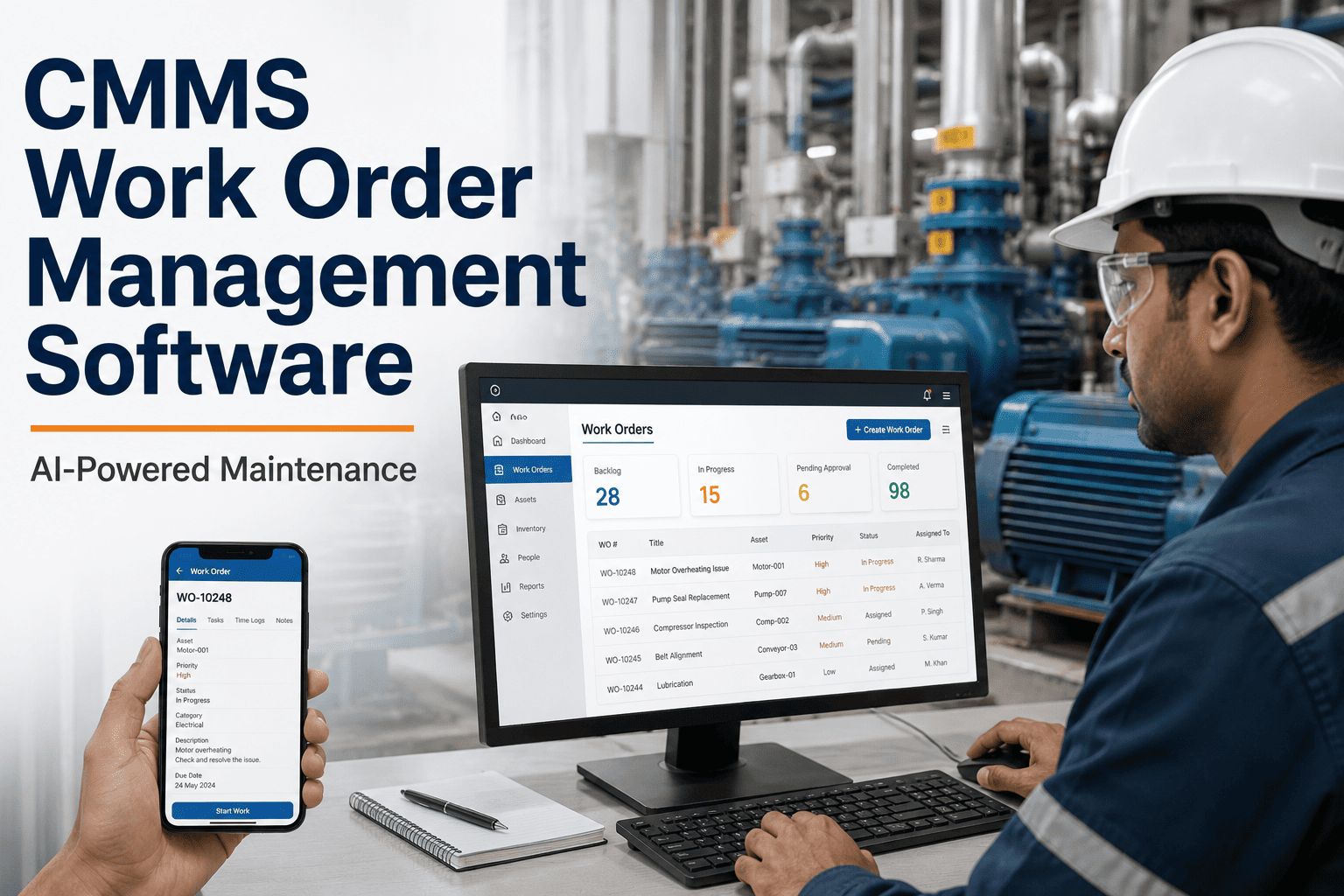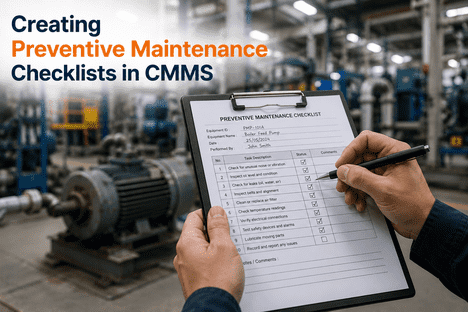
Maintenance organizations have long understood that having the right technician, with the right parts, at the right asset, at the right time is the operational ideal — but achieving it consistently has historically depended on dispatcher expertise, manual spreadsheets, and tribal knowledge that walks out the door when experienced planners retire. Scheduling and resource planning with CMMS transforms this reality by replacing fragmented, person-dependent coordination with a data-driven, automated system that optimizes every maintenance action against available labor, spare parts inventory, production windows, and asset criticality in real time. As Industry 4.0 accelerates into 2026, CMMS platforms enhanced with AI scheduling engines, IoT-driven work order triggers, and mobile workforce access are enabling maintenance organizations to achieve measurable improvements in workforce utilization, schedule compliance, and overall equipment effectiveness that manual planning methods cannot replicate.
What Scheduling and Resource Planning with CMMS Actually Means in 2026
Modern CMMS scheduling goes far beyond calendar-based preventive maintenance reminders. A fully mature CMMS scheduling and resource planning environment integrates labor capacity management, parts inventory alignment, asset criticality weighting, predictive maintenance triggers, and production schedule coordination into a unified planning engine that dynamically optimizes the maintenance workload against all available constraints simultaneously. For maintenance organizations still managing these variables in separate systems — or manually — the operational gap is significant and widening as competitors adopt automation at scale.
In 2026, the most competitive industrial operations are deploying CMMS scheduling systems that receive condition monitoring inputs from IoT sensor networks and AI vision platforms like iFactory's, automatically converting anomaly alerts into prioritized, resource-assigned work orders without planner intervention. The result is a system where maintenance scheduling is no longer an event that happens at the beginning of a shift — it is a continuously running optimization that responds to real-world asset health signals as they occur, allocating resources to the highest-value interventions at every moment of every day.
The 5 Core Functions of CMMS Scheduling and Resource Planning
Effective CMMS scheduling and resource planning is not a single capability — it is an integrated set of five interdependent functions that together determine whether a maintenance organization can consistently execute the right work at the right time with the right resources. Understanding each function and how they interact is essential for any maintenance leader evaluating CMMS maturity or planning a digital transformation initiative. Teams ready to see these functions in action can Book a Demo to explore how iFactory's AI vision platform feeds directly into each layer of the CMMS planning stack.
Work Order Planning and Scope Definition
Before any work can be scheduled, it must be fully planned — labor hours estimated, required skills identified, spare parts listed, safety procedures attached, and asset access constraints documented. CMMS platforms automate this planning layer by pulling from asset maintenance history, OEM task libraries, and previous work order completion data to pre-populate work order scopes with consistent, accurate resource requirements. AI-enhanced CMMS systems further refine these estimates by comparing planned versus actual resource consumption across thousands of historical work orders to continuously improve planning accuracy over time.
Labor Capacity Management and Technician Assignment
Resource planning within a CMMS tracks every technician's availability, skill certifications, current workload, and geographic zone assignment in real time. Scheduling engines match work order skill requirements against the available labor pool and generate optimized assignment recommendations that minimize travel time, avoid skill mismatches, and balance workload equitably across the team. For multi-site operations, CMMS labor capacity management extends across facilities, enabling shared resource deployment when peak demand in one area exceeds local capacity.
Preventive Maintenance Schedule Generation and Optimization
CMMS PM scheduling moves beyond fixed-interval calendar triggers to incorporate condition-based scheduling logic that integrates operating hours, production cycles, environmental factors, and real-time asset health signals. When connected to IoT sensors and AI vision platforms like iFactory's, CMMS PM schedules dynamically advance or defer maintenance tasks based on actual asset condition data — ensuring maintenance happens when assets need it, not simply when the calendar says so. This condition-based PM scheduling approach typically reduces unnecessary PM labor by 20–35% while simultaneously improving the detection rate of genuine failure precursors.
Spare Parts and Materials Coordination
Resource planning is incomplete without parts alignment — a fully planned and scheduled work order that arrives at the asset without the required parts wastes technician time and extends equipment downtime. CMMS spare parts integration checks inventory availability at the time of work order creation, automatically reserves required parts, triggers replenishment purchase orders when stock falls below reorder points, and coordinates parts kitting and delivery to the job site before the scheduled start time. For critical assets, predictive maintenance work orders triggered by condition monitoring alerts can initiate long-lead-time parts procurement days or weeks before the planned intervention date.
Production Schedule Coordination and Downtime Window Management
Maintenance scheduling that ignores production requirements creates conflict, delays, and adversarial relationships between maintenance and operations departments. Advanced CMMS scheduling integrates with production planning systems to identify available maintenance windows, coordinate planned shutdowns for major maintenance tasks, and prioritize work orders that can be executed during natural production pauses. This coordination layer ensures that maintenance resource deployment maximizes asset availability during production-critical periods while concentrating higher-impact interventions in planned downtime windows where the full scope of work can be completed safely and efficiently. For a demonstration of how iFactory's AI vision platform feeds real-time condition data into CMMS production window planning, Book a Demo with our industrial intelligence team.
CMMS Scheduling Maturity Levels: From Calendar-Based to AI-Optimized
Not all CMMS scheduling implementations deliver the same value. The capability gap between a basic calendar-driven PM system and a fully AI-optimized, condition-triggered scheduling environment is substantial — and understanding where an organization sits on this maturity spectrum is the starting point for identifying the highest-value improvement opportunities.
| Maturity Level | Scheduling Approach | Resource Planning Method | Work Order Trigger | Typical Schedule Compliance |
|---|---|---|---|---|
| Level 1 — Reactive | No schedule; breakdown response only | Ad hoc dispatching | Failure or complaint | N/A — reactive only |
| Level 2 — Calendar PM | Fixed-interval PM triggers in CMMS | Manual planner assignment | Time or meter-based | 55–65% |
| Level 3 — Planned & Scheduled | Full work order planning with resource, parts, and time allocation | Labor capacity scheduling board | PM triggers + corrective backlog | 75–85% |
| Level 4 — Condition-Based | IoT and sensor data dynamically adjusts PM schedule | Automated skill-matched assignment | Condition threshold alerts | 85–92% |
| Level 5 — AI-Optimized | ML-driven predictive scheduling across full asset fleet | AI-optimized resource allocation against all constraints | Predictive failure models + AI vision | 92–98% |
How iFactory AI Vision Camera Elevates CMMS Scheduling Accuracy
The quality of CMMS scheduling is directly determined by the quality of the work order inputs it receives. When work orders are generated only from calendar triggers and manual inspection reports, the scheduling system is operating on incomplete, time-lagged information about actual asset condition. iFactory's AI vision camera changes this by providing continuous, real-time visual condition monitoring that generates structured, CMMS-ready work order triggers the moment an asset anomaly is detected — not hours or days later when a technician happens to walk by.
Real-Time Visual Anomaly Detection
iFactory's AI vision camera continuously monitors asset surfaces, conveyor systems, rotating equipment, and production lines for visual defects, misalignments, thermal anomalies, and foreign object contamination. When an anomaly is detected, the platform generates a structured alert — including asset ID, defect classification, severity score, and annotated image evidence — that maps directly to CMMS asset records and initiates the work order creation process without manual intervention.
Condition-Triggered Work Order Generation
Rather than waiting for a calendar trigger or a maintenance technician to file an inspection report, iFactory's platform pushes condition-based work order triggers to the CMMS via API the moment a threshold is crossed. Each triggered work order arrives pre-populated with the defect evidence, asset location, recommended maintenance task, and urgency classification — giving the CMMS scheduling engine the complete information it needs to plan, resource, and schedule the intervention optimally.
OEE Data Feeding Scheduling Priority Logic
iFactory's vision platform captures cycle time, downtime events, and production rate deviations that feed OEE calculation engines in real time. CMMS scheduling systems that consume this OEE data can weight work order priorities based on actual production impact — ensuring that assets causing the most significant availability or performance losses receive the highest scheduling priority, rather than relying on static asset criticality ratings that may not reflect current operational conditions.
Photographic Evidence in Work Order Records
Every work order generated by iFactory's AI vision platform includes annotated image evidence of the detected anomaly, automatically attached to the CMMS work order record. This evidence gives technicians diagnostic context before they arrive at the asset — reducing diagnostic time, improving first-time fix rates, and building a visually documented maintenance history that supports root cause analysis, audit compliance, and continuous improvement initiatives.
When iFactory's AI vision camera platform is integrated with your CMMS, the result is a closed-loop scheduling system where every work order is evidence-based, every resource assignment is optimized, and every completed intervention feeds back into the AI models that generate future scheduling recommendations. The system learns from every maintenance outcome — comparing what the camera detected against what technicians found, refining defect classification accuracy, and improving the lead time and precision of future work order triggers. Maintenance organizations operating this closed-loop architecture consistently achieve schedule compliance rates above 90% and wrench time improvements of 20–30 percentage points over baseline. To explore how this integration deploys against your current CMMS environment, Book a Demo with our platform team.
Key Benefits of Advanced CMMS Scheduling and Resource Planning
The business case for investing in advanced CMMS scheduling and resource planning capabilities is well-supported by documented outcomes across manufacturing, process industries, utilities, and facilities management. The performance improvements below represent measured results from organizations that have progressed beyond basic calendar-based CMMS use to implement structured planning, condition-based triggers, and AI-optimized resource allocation.
"The transformation from a breakdown-driven maintenance organization to a fully scheduled, CMMS-optimized operation does not happen overnight — but the trajectory is unambiguous once you commit to it. When we integrated real-time condition monitoring inputs from AI vision cameras into our CMMS scheduling engine, our planning team stopped spending 60% of their day reacting to emergency work orders. Instead, they were managing a forward-looking schedule where every job was planned three to five days out, every technician had a full day of productive work, and every critical asset had a condition-triggered intervention before it failed. Wrench time went from 31% to 58% in fourteen months. Unplanned downtime fell by 38%. Those are not incremental improvements — they are organizational transformations."
— S. Krishnamurthy, CMRP — Director of Reliability Engineering, Discrete Manufacturing, 18 Years
Implementation Roadmap: Building a Best-Practice CMMS Scheduling and Resource Planning Program
Implementing advanced CMMS scheduling and resource planning is a structured journey that requires careful sequencing to deliver measurable value at each stage while building the data foundation for more sophisticated capabilities over time. The five-phase roadmap below reflects industry best practices for 2025–2026 CMMS implementations in industrial environments.
Asset Register Completion and Criticality Classification
A CMMS scheduling system is only as reliable as the asset register it operates against. Begin by auditing every asset in the CMMS for completeness: location hierarchy, equipment class, criticality rating, OEM maintenance requirements, and spare parts bill of materials. Assign a criticality classification to every asset — typically A (production-critical, no redundancy), B (important, partial redundancy), and C (non-critical, redundancy available) — that the scheduling engine will use to prioritize work order execution when competing demands exceed available resources. This foundational step determines the quality of every scheduling decision the CMMS will make for the life of the program.
PM Library Development and Task Standardization
Develop a comprehensive preventive maintenance task library that documents every PM procedure, estimated labor hours, required skills, tools, parts, and safety requirements for each equipment class in the asset register. Standardized PM task templates ensure that CMMS work orders are generated with consistent, accurate resource requirements that the scheduling engine can plan against reliably — replacing the highly variable, experience-dependent estimates that characterize manual planning environments. Task templates should be informed by OEM recommendations, failure mode analysis, and historical work order completion data from similar assets.
Labor Capacity Profiling and Skills Matrix Integration
Populate the CMMS resource planning module with complete technician profiles: skills certifications, trade qualifications, safety authorizations, shift patterns, geographic zone assignments, and current workload capacity. A complete skills matrix enables the CMMS scheduling engine to match every work order to the appropriately qualified technician available in the correct location at the required time — eliminating the mismatches, delays, and rework that result from manual assignment processes that lack this level of resource visibility.
Condition Monitoring Integration and IoT Work Order Triggers
Connect condition monitoring data sources — including IoT sensors, vibration analyzers, thermal imagers, and iFactory's AI vision cameras — to the CMMS via API integration. Configure alert threshold rules that automatically generate CMMS work orders when condition data crosses defined limits, pre-populating work orders with asset context, defect evidence, urgency classification, and recommended task scope. This integration elevates the CMMS from a calendar-driven administrative system to a real-time, evidence-based maintenance management platform. For guidance on configuring iFactory's AI vision camera as a CMMS work order trigger source, Book a Demo with our integration specialists.
Performance Governance and Continuous Improvement Framework
Establish a weekly scheduling governance cadence that reviews key performance indicators: PM compliance rate, schedule attainment, wrench time, backlog age profile, planned versus emergency work ratio, and first-time fix rate. Use CMMS reporting and analytics to identify patterns in scheduling failures — recurring parts shortages, skill mismatches, inaccurate labor estimates — and implement targeted corrective actions. Mature CMMS scheduling programs use these governance reviews to progressively raise the bar on scheduling quality, moving organizations from reactive firefighting to predictive, data-driven maintenance excellence over a 12–24 month implementation horizon.
Mobile Access and the Future of CMMS Scheduling in 2026
The final dimension of modern CMMS scheduling and resource planning is execution — the point where a perfectly planned and scheduled work order reaches the technician in the field. Mobile CMMS access has become a non-negotiable capability in 2026, enabling technicians to receive work assignments, access asset history and maintenance procedures, record labor time and parts usage, capture inspection findings, and close work orders directly from the job site without returning to a workstation. When integrated with AI vision platforms like iFactory's, mobile CMMS workflows can include camera-triggered defect alerts that route directly to the technician's mobile device, enabling rapid response to emerging asset conditions without dispatcher intervention.
Looking ahead, the integration of augmented reality guidance, voice-controlled work order management, and AI-generated repair recommendations directly within mobile CMMS interfaces is progressively reducing the cognitive burden on technicians — enabling faster, more accurate execution of complex maintenance tasks while simultaneously capturing richer completion data that continuously improves the quality of future scheduling recommendations. Organizations investing in mobile CMMS capabilities today are building the execution infrastructure for the fully autonomous maintenance scheduling environments that leading industrial operators will deploy through the remainder of this decade.
Frequently Asked Questions: Scheduling and Resource Planning with CMMS
Planning defines what work will be done — the task scope, required labor hours, skill requirements, parts, tools, and safety procedures. Scheduling determines when the work will be done and who will do it, assigning specific technicians and time slots based on labor availability, asset access windows, parts readiness, and production schedule constraints. Both functions must be mature for a CMMS scheduling program to deliver its full performance benefit.
Condition monitoring data — from IoT sensors, AI vision cameras, and vibration analyzers — provides real-time asset health signals that replace time-based PM triggers with evidence-based scheduling decisions. When this data feeds into the CMMS via API, work orders are generated when assets actually need attention rather than on a fixed calendar, reducing unnecessary PM labor while ensuring that genuine failure precursors are addressed before they cause unplanned downtime.
The core CMMS scheduling KPIs are: PM compliance rate (target 90%+), schedule attainment (target 85%+), technician wrench time (target 55%+), planned-to-emergency work ratio (target 80% planned or better), maintenance backlog age profile, first-time fix rate, and parts availability at job start. These metrics together provide a complete picture of scheduling effectiveness from planning quality through field execution.
iFactory's AI vision platform outputs structured alert data — asset ID, defect type, severity score, timestamp, and annotated image evidence — via REST API to any CMMS environment. This data automatically triggers prioritized work orders pre-populated with the visual evidence and defect context technicians need, integrating seamlessly with IBM Maximo, SAP PM, Infor EAM, UpKeep, Fiix, and other leading CMMS platforms to elevate scheduling from calendar-driven to condition-driven without replacing existing systems.
Organizations implementing structured CMMS scheduling from a reactive baseline typically see measurable improvements in wrench time and PM compliance within 3–6 months of deploying standardized planning and scheduling practices. Full realization of unplanned downtime reduction and maintenance cost benefits — particularly from condition-based scheduling integration — typically occurs within 12–24 months, as the condition monitoring data history needed to train predictive models accumulates and scheduling governance matures.