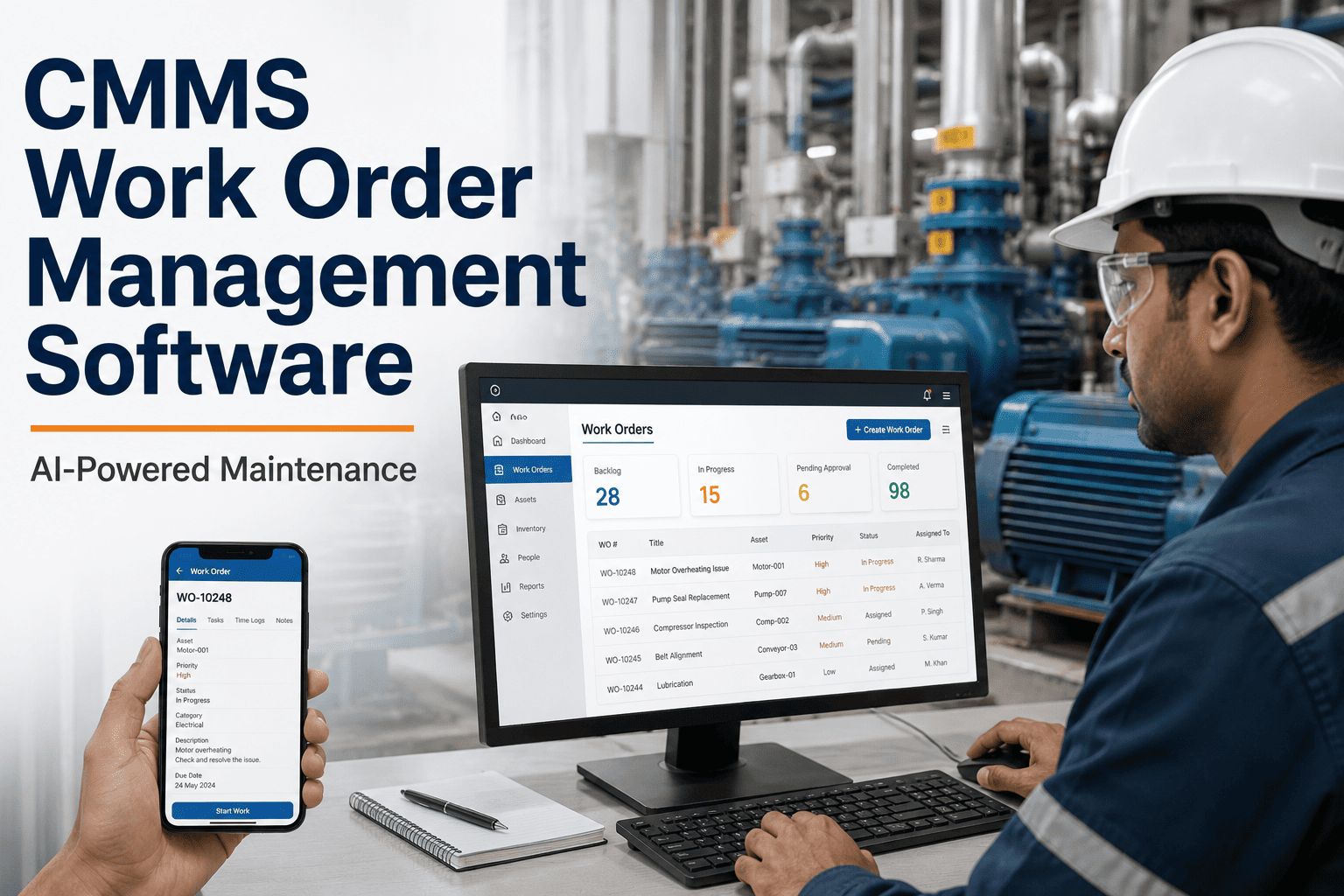
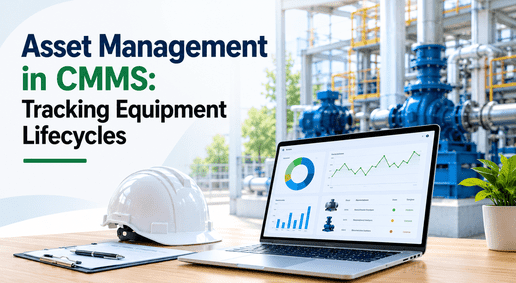
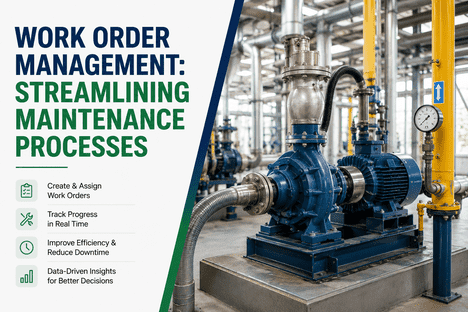
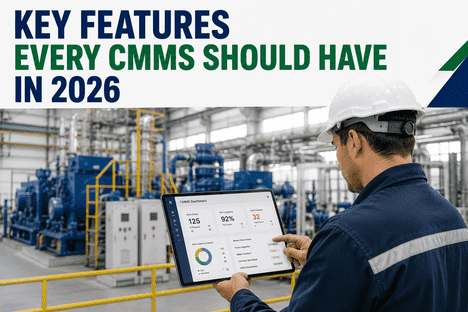
Sustainability and energy efficiency have shifted from voluntary corporate commitments to operational imperatives in modern industrial facilities. As energy costs rise and regulatory pressure on carbon emissions intensifies, maintenance teams are increasingly accountable not just for asset uptime — but for the energy consumed, the waste generated, and the environmental impact produced during every hour of operation. A Computerized Maintenance Management System (CMMS) with built-in sustainability and energy tracking capabilities closes the gap between maintenance decisions and their environmental consequences, turning routine work orders into data-rich inputs for a leaner, greener operation. This guide explores the core sustainability and energy tracking features that define a modern CMMS in 2026, and how iFactory AI extends those capabilities into predictive intelligence that drives both equipment reliability and measurable energy savings.
Why Sustainability Belongs Inside Your CMMS
Traditional CMMS platforms were built to manage work orders, track spare parts, and schedule preventive maintenance. Energy and sustainability data lived in separate systems — utility bills, energy management platforms, or manual spreadsheets compiled quarterly for ESG reports. The problem is that the decisions driving energy consumption happen at the maintenance level: whether a motor is running efficiently, whether a compressed air leak is fixed within days or weeks, whether a pump is operating on its efficiency curve or grinding through an undetected cavitation condition. Embedding sustainability tracking inside the CMMS creates a direct feedback loop between maintenance activity and energy outcome — making every technician an active contributor to the facility's carbon reduction targets.
iFactory AI's platform extends this further by applying machine learning to the combined stream of maintenance records, sensor data, and energy consumption metrics, identifying the specific equipment behaviors and maintenance gaps that are driving avoidable energy waste. This is not reporting after the fact — it is prediction and prevention, weeks ahead of the energy penalty.
Core Sustainability and Energy Tracking Features in a Modern CMMS
A sustainability-capable CMMS in 2026 must go beyond passive data storage. The following feature categories define the functional standard for energy and environmental management within a maintenance platform, and represent the baseline capability set against which iFactory AI's analytics layer is applied.
Energy Consumption Monitoring and Anomaly Detection
A CMMS with genuine energy tracking capability ingests real-time energy consumption data — electricity, natural gas, compressed air, steam — at the asset level, not just at the utility meter. This granularity enables energy attribution: when a compressor's power consumption rises 12% over baseline at constant output, the CMMS flags an efficiency anomaly and creates a maintenance work order automatically. Without asset-level resolution, that degradation shows up only as a slight uptick in the monthly electricity bill — unactionable and invisible until the equipment fails. iFactory AI connects to existing energy meters, smart PDUs, and process historians to provide this visibility without replacing existing infrastructure.
Carbon Footprint and Emissions Tracking
Scope 1 and Scope 2 emissions reporting requirements are expanding across jurisdictions, and maintenance operations are a material source of both. Refrigerant leaks (a potent GHG source), combustion equipment efficiency degradation, compressed air leakage, and steam trap failures each generate measurable emissions impacts that a CMMS can track if it is configured to do so. iFactory AI's emissions module maps energy consumption data to carbon equivalents using location-specific grid emission factors, tracks refrigerant charge and loss events from HVAC and process cooling assets, and generates audit-ready Scope 1 and 2 reports directly from maintenance records — eliminating the quarterly manual reconciliation that sustainability teams currently perform.
Overall Equipment Effectiveness and Waste Reduction
Overall Equipment Effectiveness (OEE) is the maintenance-side sustainability metric that most facilities already track — but few connect explicitly to energy and material waste. A machine running at 72% OEE is not just producing less; it is consuming energy, consumables, and labor per unit of output at a rate 28% higher than its design efficiency, generating proportionally more waste per saleable unit. A CMMS that integrates OEE with energy tracking translates equipment degradation into its true sustainability cost — not just a maintenance metric. iFactory AI's OEE module combines availability, performance, and quality data with per-unit energy consumption to produce an energy-normalized OEE score that sustainability teams can use directly in reporting.
IoT Sensor Integration and AI-Powered Predictive Analytics
The intersection of IoT connectivity and AI analytics is where sustainability tracking in a CMMS transitions from descriptive (what happened) to predictive (what will happen and what should we do). iFactory AI's platform ingests data from vibration sensors, current transducers, thermal cameras, flow meters, and environmental sensors to build continuous equipment health models that predict degradation before it becomes a failure — and before it becomes an energy penalty. A bearing running with increasing friction load consumes measurably more energy weeks before it fails; an AI model monitoring motor current can detect this and dispatch a lubrication or bearing replacement work order before both the failure and the associated energy waste occur.
Energy Tracking in Predictive vs. Preventive Maintenance: The Business Case
Preventive maintenance — scheduled at fixed intervals regardless of actual equipment condition — has a hidden energy cost that most CMMS implementations never quantify. When a motor is disassembled, realigned, and reassembled on a 90-day schedule whether or not it needs service, the maintenance event itself consumes labor and consumables, and reintroduction errors (misalignment, improper torque, seal damage) can leave the asset in a worse energy efficiency state than before the PM was performed. Predictive maintenance — triggered by actual condition data — eliminates unnecessary PMs and targets intervention precisely when the asset's efficiency is beginning to degrade, capturing the maximum energy benefit per maintenance action.
iFactory AI's predictive maintenance engine quantifies this tradeoff explicitly: for each asset class, the platform calculates the energy penalty of deferred maintenance (degradation energy cost per day) against the energy cost of premature maintenance (rework risk, reinstallation losses), and recommends the intervention timing that minimizes total energy impact over the asset lifecycle. This capability moves sustainability from a reporting function to an active input in maintenance scheduling.
How iFactory AI Extends CMMS Sustainability Capabilities
Standard CMMS platforms record what maintenance was done and when. iFactory AI's analytics layer connects that maintenance history to real-time sensor data, energy consumption trends, and equipment health models to answer the question that matters for sustainability: which maintenance gaps and equipment conditions are costing the most energy and generating the most avoidable emissions right now? The following four capabilities represent iFactory AI's specific contribution to sustainable maintenance management, building on the foundation a CMMS provides.
Continuous Energy Efficiency Baseline Modeling
Every asset in an industrial facility has a characteristic energy consumption profile at each operating point — a centrifugal pump at 70% load should draw a predictable current; a chiller at a given cooling load has a known COP. iFactory AI builds these baselines automatically from historical SCADA and historian data, then monitors continuously for deviations that indicate mechanical degradation, process inefficiency, or operational drift. A heat exchanger fouling progressively — a common and costly energy loss mechanism — will show a gradual increase in energy input per unit of thermal transfer weeks before it reaches an alarm threshold. iFactory detects this trend, estimates the energy penalty in cost and carbon terms, and prioritizes it in the maintenance backlog accordingly. This is not rule-based alarming; it is condition-specific baseline comparison that adapts to seasonal load variation, production schedule changes, and feedstock variability without generating false positives that desensitize maintenance teams.
AI Vision Camera Integration for Thermal and Visual Inspection
iFactory AI's Vision Camera system brings automated visual and thermal inspection into the CMMS workflow, enabling energy loss detection that sensor-only approaches miss entirely. Pipe insulation gaps, steam trap failures, conveyor belt misalignment causing excess motor draw, and heat exchanger tube fouling are all visible anomalies that a trained AI vision model can detect from a fixed or mobile camera position — without a technician present. When iFactory Vision identifies a thermal anomaly consistent with insulation failure, it automatically creates a CMMS work order with the location, estimated energy loss rate, and photographic evidence attached. This closes the loop between visual inspection findings and maintenance scheduling, and creates an auditable record of energy-related maintenance activity that supports ISO 50001 and ESG reporting requirements. The Vision Camera system is described in full at iFactory AI Vision Camera.
Sustainability KPI Dashboard and Regulatory Reporting Automation
Sustainability reporting obligations — ISO 14001, ISO 50001, GHG Protocol Scope 1 and 2, and facility-specific regulatory requirements — demand structured, auditable data that most maintenance teams currently produce manually by reconciling CMMS records with utility bills and lab reports. iFactory AI's sustainability dashboard aggregates energy consumption, emissions data, waste volumes, and maintenance activity into a single reporting layer that produces audit-ready outputs aligned with major reporting standards. Maintenance managers access real-time KPIs — energy intensity per unit of output, carbon per production hour, compressed air loss rate, steam trap failure rate — without waiting for monthly data reconciliation. Sustainability teams receive structured data exports that feed directly into GHG inventory tools and ESG reporting platforms. The result is a reporting process that takes hours instead of days, with data traceability that passes external audit.
Industry 4.0 Integration: Connecting CMMS to the Broader Digital Factory
Sustainability management in a modern industrial facility cannot be contained within a single system. Energy data flows from smart meters and PLCs. Equipment health data flows from vibration sensors and thermal cameras. Production data flows from MES systems. Emissions data flows from combustion analyzers and GHG monitoring systems. iFactory AI integrates these data streams through standard industrial protocols — OPC-UA, MQTT, REST API, Modbus TCP — connecting the CMMS work order system to the full operational data landscape of the facility. This Industry 4.0 connectivity enables sustainability decisions that are grounded in real operating conditions rather than approximations, and maintenance actions that are informed by their full energy and emissions context. Pre-built connectors for major CMMS platforms (SAP PM, IBM Maximo, Infor EAM, eMaint) ensure that iFactory's analytics layer enhances existing investments rather than replacing them.
Key Sustainability Parameters Tracked in iFactory AI-Enabled CMMS
Effective sustainability monitoring through a CMMS requires tracking the right parameters at the right resolution for each asset class. The table below outlines the core sustainability and energy parameters that iFactory AI monitors, their source systems, and the maintenance intelligence they enable.
| Parameter | Data Source | Sustainability Impact | iFactory AI Action | Reporting Use |
|---|---|---|---|---|
| Asset-Level Electricity Consumption | Smart meter / CT sensor / MCC | Scope 2 emissions; energy cost per unit output | Baseline deviation detection; efficiency degradation alert; work order trigger | ISO 50001; GHG Protocol Scope 2 |
| Fuel Consumption (Combustion Assets) | Fuel flow meter / DCS | Scope 1 emissions; combustion efficiency tracking | Efficiency model deviation; burner tuning recommendation; CO₂ calculation | ISO 14001; Scope 1 GHG inventory |
| Compressed Air Leak Rate | Acoustic emission sensor / pressure-flow model | Compressor energy waste; Scope 2 indirect impact | Real-time leak detection; energy loss quantification; repair work order | Energy waste reduction reporting |
| Steam Trap Performance | Acoustic / temperature sensor | Steam energy loss; Scope 1 boiler fuel waste | Trap failure detection; energy penalty per failed trap; PM schedule optimization | Energy audit; ISO 50001 |
| Refrigerant Charge and Loss | CMMS service records + charge log | Scope 1 GHG (high GWP refrigerants); regulatory compliance | Leak recurrence analysis; GWP-weighted emission calc; inspection escalation | F-Gas regulation; Scope 1 inventory |
| Motor Power Factor and Efficiency | Power analyzer / VFD data | Reactive power waste; motor degradation energy penalty | Power factor trend; efficiency loss quantification; rewind/replace decision support | Energy intensity KPI; utility tariff management |
| Waste Volume per Work Order | CMMS work order records | Waste generation; hazardous waste compliance | Waste trend by asset and PM type; interval optimization to reduce waste volume | ISO 14001; waste reduction targets |
Deploying Sustainability and Energy Tracking: A Practical Roadmap
Implementing sustainability and energy tracking in a CMMS is a phased process — not a single deployment event. Attempting to instrument and analyze every asset simultaneously typically results in data overload, model quality problems, and slow adoption. iFactory AI's recommended deployment roadmap prioritizes high-energy-impact assets in Phase 1, expanding to full facility coverage as baseline models mature and teams build confidence with the platform.
Expert Perspective: Sustainability Tracking in Industrial Maintenance
We had ISO 50001 certification, an energy management team, and a CMMS with fifteen years of maintenance records — and we still could not tell you which specific assets were responsible for our energy intensity creeping up year over year. The data existed in three separate systems and no one had the bandwidth to connect it manually. What changed with iFactory was that the connection happened automatically, and the answer was immediately obvious: seventeen motors running above their efficiency baseline, four heat exchangers with fouling conditions we had not prioritized because there was no alarm on them, and a compressed air system leaking the equivalent of one full compressor's output around the clock. We fixed those in the first quarter and documented a 22% reduction in compressed air energy spend. The reporting automation alone justified the platform cost — our sustainability team was spending three days per month on the Scope 2 reconciliation that iFactory now produces overnight.
Frequently Asked Questions
No. iFactory AI is designed as an analytics and intelligence layer that integrates with existing CMMS platforms — SAP PM, IBM Maximo, Infor EAM, eMaint, and others — through standard APIs and data connectors. Your existing work order workflows, asset registry, and maintenance history remain in place. iFactory adds the energy tracking, AI anomaly detection, and sustainability reporting layer on top of your current system without any rip-and-replace. Most integrations are live within 2 to 4 weeks of connectivity engagement.
Yes. iFactory AI's sustainability dashboard produces structured Scope 1 and Scope 2 reports by combining fuel consumption records from combustion asset monitoring with electricity consumption data mapped to regional grid emission factors. Reports are generated automatically on a monthly or quarterly cycle, aligned with GHG Protocol methodology. Data exports are structured for direct upload to GHG inventory tools and ESG reporting platforms. All source data is traceable to specific assets and work orders, providing the audit trail required for third-party verification under ISO 14064 and similar standards.
iFactory AI delivers meaningful energy analytics from instrumentation most facilities already have: drive motor current (from MCC data or existing CT sensors), fuel flow meters on combustion assets, and process historian data. From these, iFactory can detect motor efficiency degradation, combustion inefficiency, and energy anomalies on high-priority assets without any new sensor investment. Smart sub-metering and additional IoT sensors unlock additional resolution and detection capability, but a typical facility reaches 60 to 70% of full energy tracking value in Phase 1 using only existing data sources. Book a Demo to review your specific instrumentation coverage.
The iFactory AI Vision Camera system applies computer vision and thermal imaging analysis to detect energy loss conditions that sensor-only approaches cannot identify — including pipe insulation gaps, steam leaks, heat exchanger fouling visible on the shell surface, and electrical hotspots in switchgear that indicate inefficiency. When the Vision Camera identifies an energy-relevant anomaly, it automatically creates a CMMS work order with photographic evidence, estimated energy loss rate, and location data. This closes the loop between visual inspection findings and the maintenance scheduling system, and creates an auditable record for energy audit and ISO 50001 compliance. Learn more at the iFactory AI Vision Camera product page.
Most facilities identify their first high-value energy savings opportunity within 30 days of going live on iFactory AI — typically a compressed air leak, motor efficiency anomaly, or heat exchanger fouling condition that the platform detects against baseline within the first weeks of monitoring. Full deployment — covering all priority asset classes with trained baseline models — is typically complete in 5 to 8 weeks. First-year energy cost savings average 15 to 25% on monitored asset populations, with additional sustainability reporting time savings of 2 to 4 days per month for facilities with active ESG reporting obligations. Book a Demo for a facility-specific energy savings estimate.
Conclusion: From Compliance Reporting to Operational Sustainability
Sustainability and energy tracking in a CMMS represents a fundamental shift in how maintenance management contributes to corporate environmental performance. When the connection between a maintenance decision and its energy consequence is visible, measurable, and acted upon in real time, maintenance teams become the most effective sustainability lever in an industrial facility — more impactful than any retrofit or capital investment. iFactory AI's analytics platform makes that connection explicit, continuous, and actionable, turning the data already flowing through your CMMS and historian into a daily sustainability performance signal your maintenance, operations, and ESG teams can all rely on.
The facilities achieving the most significant sustainability gains from their CMMS investment are not those with the most sensors or the largest ESG teams — they are those where maintenance decisions are informed by energy data and energy decisions are informed by maintenance intelligence. iFactory AI is built to enable exactly that alignment. Book a Demo to see how the platform works with your specific equipment inventory and reporting requirements.