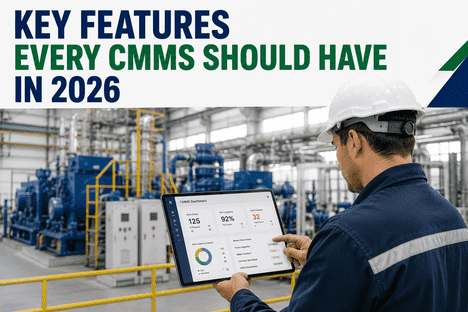
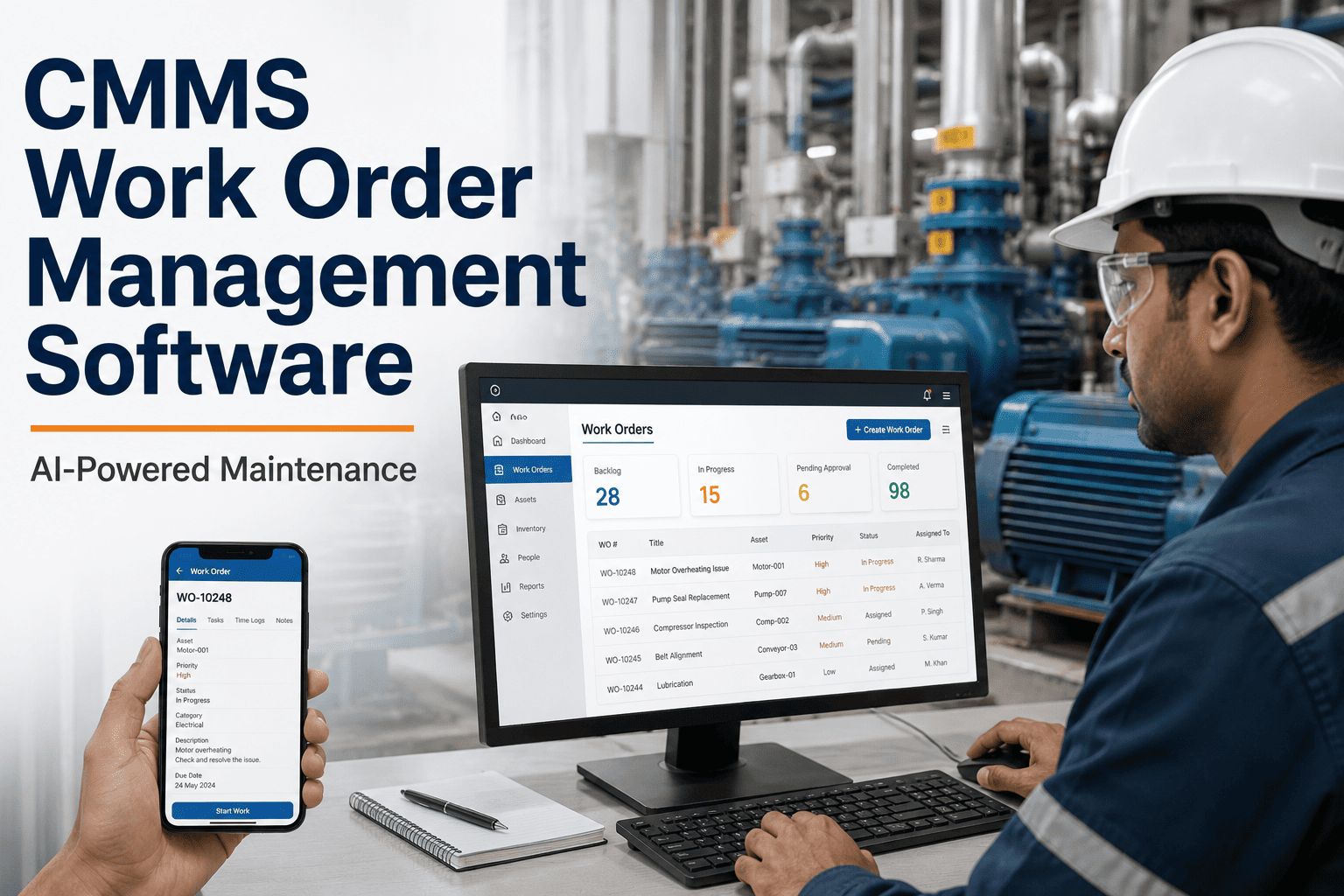
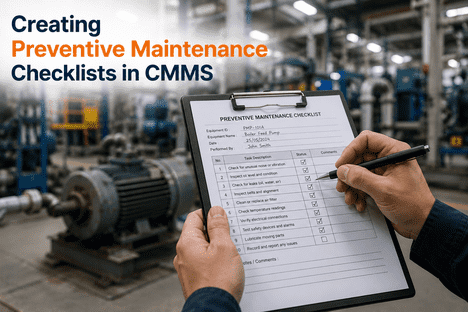
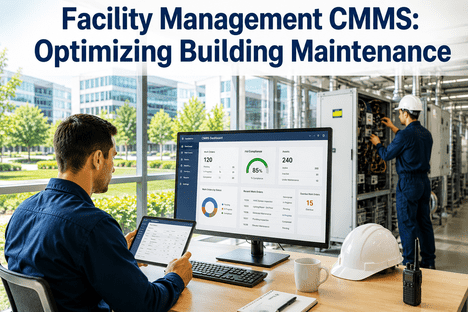
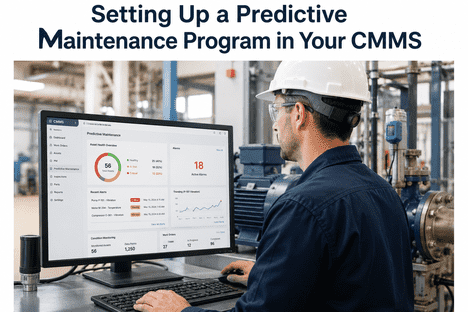
Traditional CMMS platforms have served industrial operations for decades, but the maintenance landscape of 2026 demands far more than digital work orders and scheduled inspections. The gap between reactive maintenance and true asset intelligence is widening, and plants still relying on legacy CMMS workflows remain exposed to failure modes that modern predictive tools can eliminate. Today's most effective maintenance operations embed AI-powered computer vision, real-time IoT monitoring, and automated work order intelligence directly into their CMMS backbone. iFactory's AI vision camera brings visual asset condition monitoring into the CMMS ecosystem, detecting cracks, corrosion, leaks, and misalignments that traditional sensors miss entirely. The following capabilities define what every CMMS must deliver in 2026 to close the gap between scheduled maintenance and real-time asset protection.
MODERNIZE YOUR MAINTENANCE
Is Your CMMS Ready for 2026?
iFactory's AI-powered vision platform integrates directly with your CMMS to add real-time visual asset monitoring, automated defect detection, and intelligent work order triggers. See how leading industrial plants are reducing unplanned downtime with computer vision intelligence.
5 Key Features Every CMMS Should Have in 2026
The Capabilities That Separate Modern Platforms from Legacy Tools
01
AI-Powered Predictive Maintenance
A CMMS that only schedules tasks on calendar intervals cannot prevent unexpected failures. In 2026, predictive maintenance driven by machine learning—analyzing vibration, thermal, and visual data—is the baseline expectation. iFactory's computer vision layer detects visual degradation like cracks and corrosion that sensor data alone misses, feeding these insights directly into your CMMS for automated action.
Book a Demo to see AI vision in action.
02
Real-Time IoT and Vision Monitoring
Batch-updated asset status is no longer acceptable in high-velocity production environments. A modern CMMS must ingest live data from sensors, PLCs, and vision cameras to provide a continuously updated condition dashboard. When a pump temperature spikes or a conveyor shows visual misalignment, the system should trigger a corrective work order instantly—not after the next manual inspection cycle.
03
Intelligent Work Order Automation
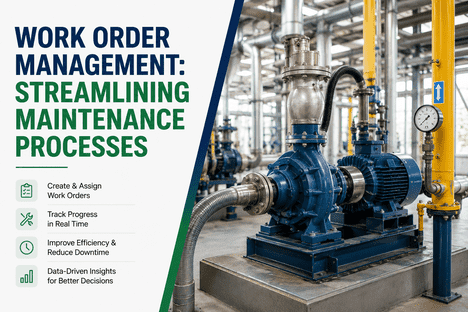
Work orders should auto-generate when asset conditions cross predefined thresholds, eliminating the latency between fault detection and technician dispatch. By pairing your CMMS with iFactory's visual inspection AI, you can trigger maintenance tickets based on visual anomalies—surface cracks, fluid leaks, or component wear—captured and classified in real time.
04
Mobile-First Field Operations
Technicians in 2026 expect offline-capable mobile access to work orders, asset history, and inspection tools. When integrated with iFactory's AI vision, field crews can capture equipment images from a handheld device and receive instant AI-based defect severity analysis, eliminating guesswork and reducing inspection time by more than 40%.
05
Advanced Analytics and Compliance Documentation
Raw data is worthless without actionable insights. A 2026-ready CMMS must identify cost trends, failure root causes, and optimization opportunities while maintaining tamper-proof audit trails for regulatory bodies. iFactory enriches compliance workflows with timestamped visual evidence logs and AI-generated inspection reports that satisfy OSHA, ISO, and EPA standards without manual effort.
The Cost of Operating Without Modern CMMS Capabilities
Annualized Risk Exposure by Feature Gap
When a CMMS lacks predictive intelligence, real-time monitoring, or automated workflows, the financial impact extends well beyond the maintenance budget. Unplanned downtime, emergency repairs, shortened asset life, and compliance penalties accumulate into millions in avoidable losses every year. The table below maps the cost of common capability gaps in industrial maintenance operations.
| Missing Capability |
Primary Impact |
Secondary Risk |
Annualized Cost Range |
| Predictive Maintenance |
Unplanned Equipment Failure |
Emergency Repair and Production Loss |
$350K – $850K |
| Real-Time IoT Monitoring |
Undetected Asset Degradation |
Cascading Failures and Safety Incidents |
$180K – $420K |
| Work Order Automation |
Manual Process Latency |
Missed Maintenance Windows |
$90K – $240K |
| Mobile Field Access |
Technician Downtime and Data Errors |
Delayed Repairs and Rework |
$60K – $150K |
| Analytics and Compliance |
Regulatory Fines and Audit Failures |
Operational Shutdown Risk |
$120K – $380K |
CLOSE THE CAPABILITY GAP
Upgrade Your CMMS with AI Vision Intelligence
iFactory's computer vision platform plugs into your existing CMMS to add real-time visual asset monitoring, automated defect detection, and AI-driven work order triggers at a fraction of the cost of a full system replacement.
How to Evaluate a CMMS for 2026
A 5-Step Assessment Framework for Maintenance Leaders
Step 01
Audit Your Current Data Latency
Measure how long it takes for an equipment fault to become a visible work order in your system. Most legacy CMMS deployments exhibit a latency of 4 to 8 hours. Modern platforms should close this gap to under 60 seconds.
Step 02
Evaluate Sensor and Vision Readiness
Determine whether your CMMS can natively ingest data from IoT sensors and computer vision platforms. If integration requires expensive custom middleware, factor that into your total cost of ownership calculation.
Step 03
Verify Mobile Capabilities
Test work order creation, asset lookup, and inspection logging on mobile devices in full offline mode. Field technicians should never lose productivity due to plant-floor connectivity gaps or dead zones.
Step 04
Assess AI and Analytics Maturity
Demand evidence of genuine predictive capability—not just rule-based threshold alerts. The system should be able to identify and surface failure patterns that you have not explicitly programmed it to detect.
Step 05
Run a 30-Day Pilot with Visual AI
Deploy iFactory's AI vision camera on one critical asset line alongside your existing CMMS and measure the delta in detection speed, work order accuracy, and technician response time.
Book a Demo to set up your pilot.
Frequently Asked Questions
What is the most important CMMS feature in 2026?
AI-powered predictive maintenance is the defining capability. Without it, a CMMS remains a reactive logging tool. Pairing predictive analytics with computer vision—like iFactory's AI vision camera—provides the most complete and actionable picture of asset health available today.
How does AI vision enhance a traditional CMMS platform?
AI vision adds continuous visual monitoring for cracks, corrosion, leaks, and misalignments that conventional sensors cannot detect. These visual detections auto-generate work orders instantly, closing the critical gap between fault onset and maintenance action.
Can iFactory integrate with my existing CMMS?
Yes. iFactory's AI vision platform is designed as an overlay intelligence layer that integrates with leading CMMS platforms via standard APIs, OPC-UA, and MQTT. It enhances your existing infrastructure without requiring a costly system replacement.
How do you measure ROI of a CMMS upgrade?
ROI is measured across four dimensions: reduced unplanned downtime (typically 30 to 50 percent), lower emergency repair costs, extended asset lifespan, and improved labor productivity through automated workflows. Most plants achieve full payback within 6 to 12 months.
What is the difference between preventive and predictive maintenance in a CMMS?
Preventive maintenance runs on fixed time or usage intervals. Predictive maintenance uses real-time data—vibration, temperature, and visual condition—to determine exactly when service is needed, reducing unnecessary work and catching failures earlier.
Does iFactory's vision camera work in harsh industrial environments?
Yes. iFactory's AI vision cameras are purpose-built for industrial conditions with IP67-rated enclosures, wide temperature tolerance, and vibration-resistant mounting. They are deployed in steel mills, foundries, refineries, and heavy manufacturing facilities globally.
FUTURE-PROOF YOUR MAINTENANCE
See How iFactory's AI Vision Transforms CMMS Capabilities
Our engineering team will walk you through a live demonstration of how computer vision intelligence closes the gaps in your current maintenance workflow—from real-time visual asset monitoring to automated work order triggers and compliance documentation.