What Is CMMS Software? Complete Guide to Modern Computerized Maintenance Management Systems
By David Cook on March 4, 2026
Every unplanned breakdown costs money. Every missed PM window shortens asset life. Every hour your team spends chasing paper work orders is an hour not spent fixing what actually matters. In 2026, there is no excuse for running maintenance blind — and that is exactly the problem CMMS software was built to solve. This guide breaks down what modern CMMS really is, why it has become the operational backbone of smart factories worldwide, and how AI and IoT are turning it from a scheduling tool into a predictive intelligence engine.
WHAT IS CMMS SOFTWARE — 2026 COMPLETE GUIDE
Computerized Maintenance
Management Systems
From reactive breakdowns to predictive intelligence — everything you need to know
$2.4BGlobal CMMS Market 2026
9.3%Market CAGR 2026–2036
40–60%Reduction in Unplanned Downtime
300–500%Typical ROI Within 18 Months
What You Will Learn
01What CMMS Software Actually Is
02Reactive vs Preventive vs Predictive
03Core Modules Every CMMS Needs
04AI + IoT: The New CMMS Era
05Real ROI Numbers and Benefits
06Cloud vs On-Premise Comparison
What Is CMMS Software — In Plain English
DEFINITION
A Computerized Maintenance Management System (CMMS) is a digital platform that centralizes every maintenance operation in one place — work orders, asset records, preventive maintenance schedules, spare parts inventory, technician assignments, and compliance documentation — so your team stops reacting to failures and starts preventing them.
Without CMMS, your team works from memory, spreadsheets, and sticky notes. With it, every asset has a complete digital history and every technician knows exactly what to do next — from any device on the floor.
Work OrdersAsset RecordsPM SchedulingSpare PartsAnalyticsCompliance
2026 CMMS ADOPTION
58%Predictive tools adoption
52%Cloud CMMS usage
$2.4BGlobal Market
9.3%Annual Growth
62%Mfg. Adoption
The Maintenance Evolution: 3 Eras That Define Your Operation
Era 1
Reactive Maintenance
Fix it when it breaks
Equipment fails. Production stops. Emergency crew scrambles. Parts expedited at premium. Repeat every few weeks.
Avg. downtime cost: $50K/hr
Era 2
Preventive Maintenance
Schedule before it breaks
Time-based or usage-based service intervals. Reduces surprise failures but can result in over-maintenance of healthy assets.
Downtime reduced by 20–35%
Era 3
Predictive Maintenance
Fix it before it can break
AI and IoT sensors monitor real-time asset health. CMMS triggers work orders only when data says intervention is needed.
Downtime reduced by 40–60%
Modern CMMS platforms like iFactory operate at Era 3 — with AI-driven predictive logic built in from day one.
The 6 Core Modules Every Modern CMMS Must Have
01
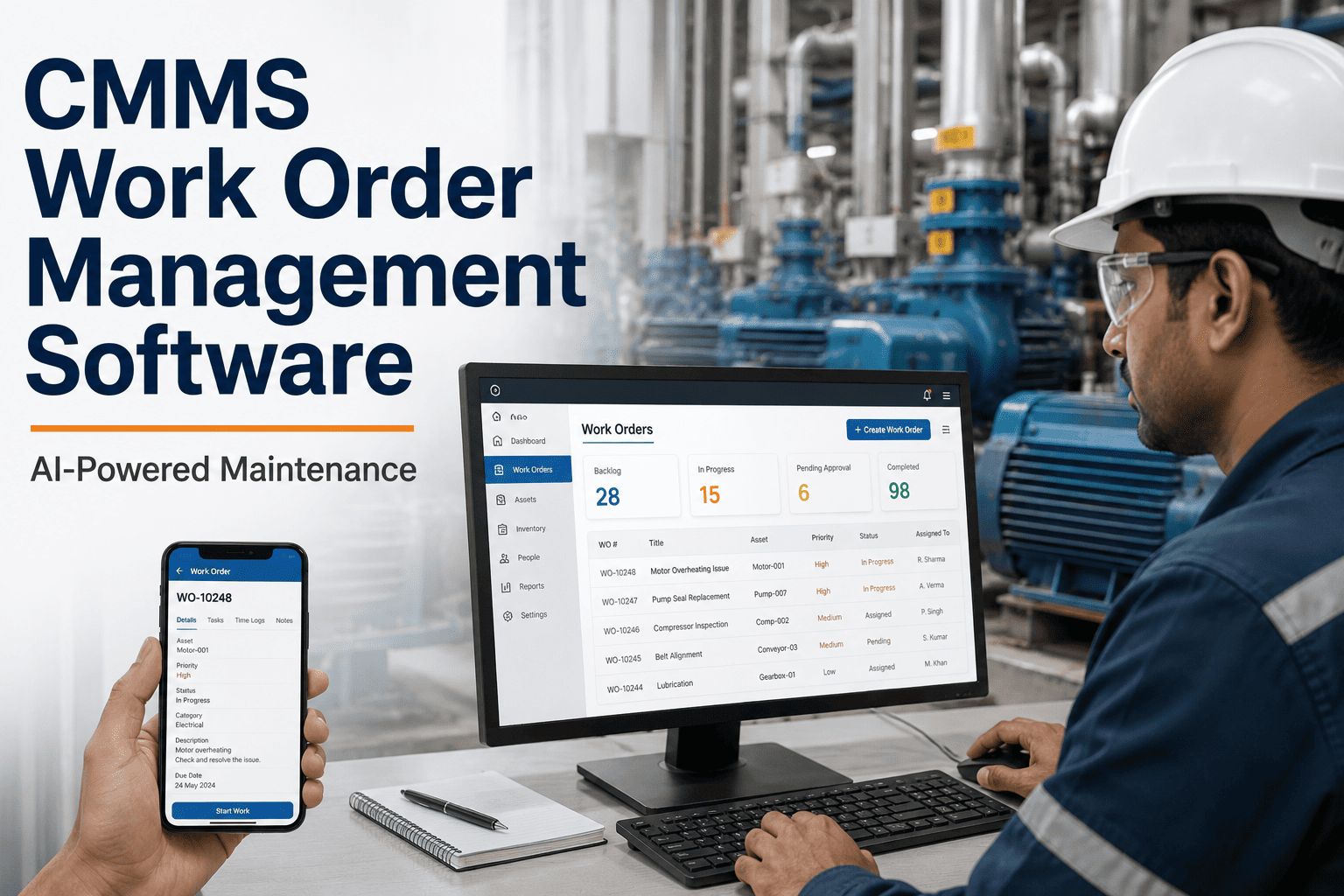
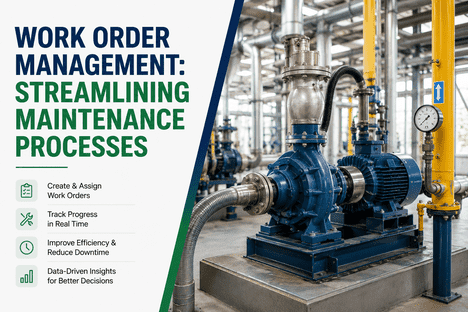
Work Order Management
Create, assign, prioritize, and close work orders digitally. Auto-trigger from sensor alerts or PM schedules. Full audit trail on every task.
58% faster maintenance response
02
Preventive Maintenance Scheduling
Automate recurring maintenance based on time, meter readings, or runtime hours. Never miss a PM window. Schedule compliance hits 100%.
100% PM completion rate reported
03
Asset and Equipment Registry
Full digital record of every asset — specs, manuals, service history, warranty, OEM data, and cost tracking. One source of truth across the plant.
20–40% longer asset lifespan
04
Analytics and KPI Dashboards
Live OEE, MTBF, MTTR, and planned maintenance percentage. Drill into root causes of failures. Turn maintenance data into executive decisions.
44% efficiency improvement avg.
05
Spare Parts and Inventory Control
Track MRO inventory levels, auto-reorder critical parts, prevent stockouts. Ties parts consumption directly to work orders for accurate cost tracking.
20–30% inventory cost reduction
06
Mobile Technician App
Technicians receive, complete, and close work orders from any device. Capture photos, scan barcodes, log time, update asset status — right from the floor.
52% of technicians now mobile-first
iFactory has all 6 modules — out of the box.
No custom development. No stitching together separate tools. One unified platform configured to your assets from day one.
AI + IoT: The Intelligence Layer That Changes Everything
The old CMMS was a scheduling system. The new CMMS is a prediction engine. By combining real-time IoT sensor data with machine learning, modern platforms do not just remind you to maintain an asset — they tell you it will fail in 11 days before any human notices a problem.
How AI-Powered CMMS Works
1
IoT Sensors Stream Live Data
Vibration, temperature, pressure, runtime, current draw — continuously from every connected asset on the floor
2
AI Models Detect Anomalies
Machine learning compares live readings to baseline patterns. Flags deviations that indicate early-stage failure before symptoms are visible
3
CMMS Auto-Generates Work Order
System triggers prioritized work order — right technician, right parts, right time — before the asset fails
4
Repair Feeds Back Into AI
Every completed intervention improves the model. Predictions become sharper with each maintenance cycle
28%
Reduction in unplanned downtime via AI condition monitoring
44%
CMMS users now have IoT-based monitoring integrated
37%
Adopted AI-enabled automated work order generation
19%
OEE improvement when AI is layered on CMMS data
The ROI of CMMS — Real Numbers, Not Estimates
Organizations that implement CMMS properly do not just reduce downtime. They fundamentally change the economics of maintenance. Here is what the data shows in 2026.
Maintenance Cost Reduction
10–30%
Unplanned Downtime Reduction
40–60%
Asset Lifespan Extension
20–40%
Inventory Cost Savings
20–30%
Maintenance Productivity Gain
30–50%
Compliance Documentation Speed
50–70%
$150K
Monthly savings at a food processing plant after CMMS reduced downtime 60% — full ROI recovered in under 2 months
500%
Typical return on CMMS investment within 18–24 months when all modules are fully adopted and utilized
Which Industries Need CMMS the Most?
62%
Manufacturing
Highest CMMS adoption rate. Equipment complexity and production uptime demands make CMMS non-negotiable in smart factories.
48%
Logistics
Fleet and conveyor reliability are critical. Automated vehicle and equipment PM schedules keep operations moving.
44%
Facilities
Multi-site property managers centralize maintenance, reduce complaints, and control contractor costs with CMMS.
35%
Healthcare
Critical medical equipment uptime directly impacts patient care. Zero-miss maintenance on life-critical assets.
28%
Energy
Asset-intensive infrastructure requires maximum uptime and strict regulatory compliance across distributed sites.
Cloud CMMS vs On-Premise: The 2026 Decision
Cloud CMMS
On-Premise CMMS
Deployment Time
4–12 weeks
3–6 months
Upfront Cost
Low (subscription)
High (license + hardware)
Mobile Access
Full, from any device
Limited to internal network
Automatic Updates
Yes — always current
Manual IT effort required
Multi-Site Support
Native, seamless
Complex configuration
ROI Delivery
40–50% better ROI
Slower to realize
Data Control
Provider-managed security
Full internal control
In 2026, 48% of organizations have moved to cloud-based CMMS — and for most industrial operations, cloud or hybrid deployment delivers significantly faster value with lower total cost of ownership.
BUILT FOR MODERN FACTORIES
Stop Managing Maintenance.
Start Predicting It.
iFactory's AI-powered CMMS gives you work order automation, IoT-connected predictive maintenance, live OEE dashboards, and full asset traceability — in one cloud-native platform that deploys in weeks, not months.
CMMS stands for Computerized Maintenance Management System. It is a software platform that digitizes and automates all maintenance operations — including work orders, asset records, preventive maintenance scheduling, spare parts inventory, technician assignments, and compliance reporting. The goal is to move your team from reacting to breakdowns to proactively preventing them.
CMMS focuses on day-to-day maintenance execution — work orders, PMs, technician scheduling, and asset health. EAM (Enterprise Asset Management) has a broader scope covering asset acquisition, capital planning, financial lifecycle management, and procurement. Think of CMMS as the operational layer and EAM as the strategic layer. Modern platforms like iFactory blend both into a unified system.
Cloud-based CMMS platforms can be deployed and operational in 4 to 12 weeks for most facilities. On-premise enterprise solutions may take 3 to 6 months. The key variable is data migration — the more legacy asset data you need to import, the longer setup takes. iFactory offers guided onboarding that gets most teams operational within the first month.
Most organizations see 300 to 500% ROI within 18 to 24 months of full CMMS adoption. The primary drivers are reduced unplanned downtime (40–60%), lower maintenance costs (10–30%), extended asset lifespan (20–40% longer), and inventory savings (20–30%). Facilities with heavy equipment, frequent reactive maintenance, or high downtime costs tend to see the fastest payback — sometimes under 2 months.
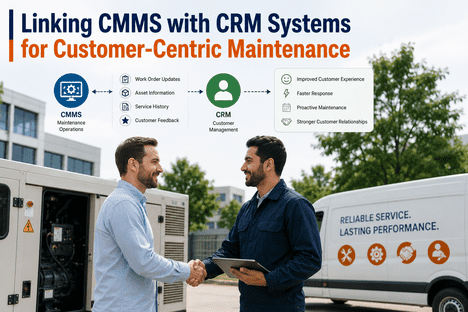
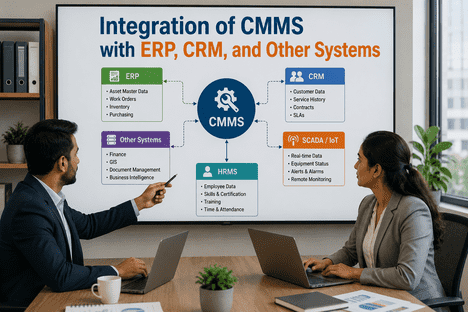
Yes. iFactory connects to ERP systems like SAP and Oracle through standard REST APIs, and integrates with SCADA and PLC layers via OPC UA and MQTT protocols. Work orders can be automatically triggered by machine events, production schedules flow from ERP into maintenance planning, and asset performance data is available across the entire digital stack in real time.
Ready to move from reactive to predictive maintenance? Book your free iFactory demo and see how AI-powered CMMS reduces downtime, extends asset life, and delivers measurable ROI — starting from your first month of operation.