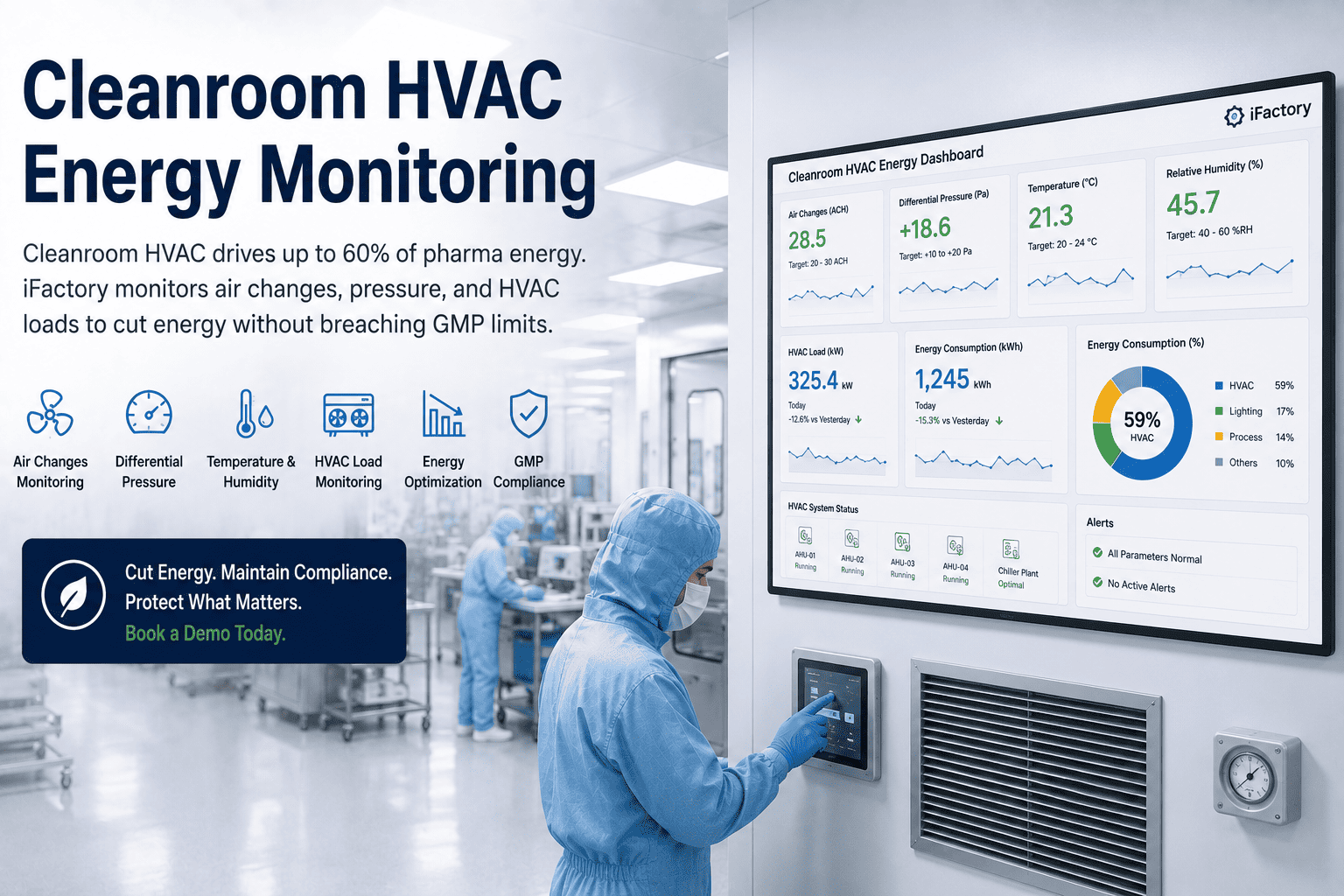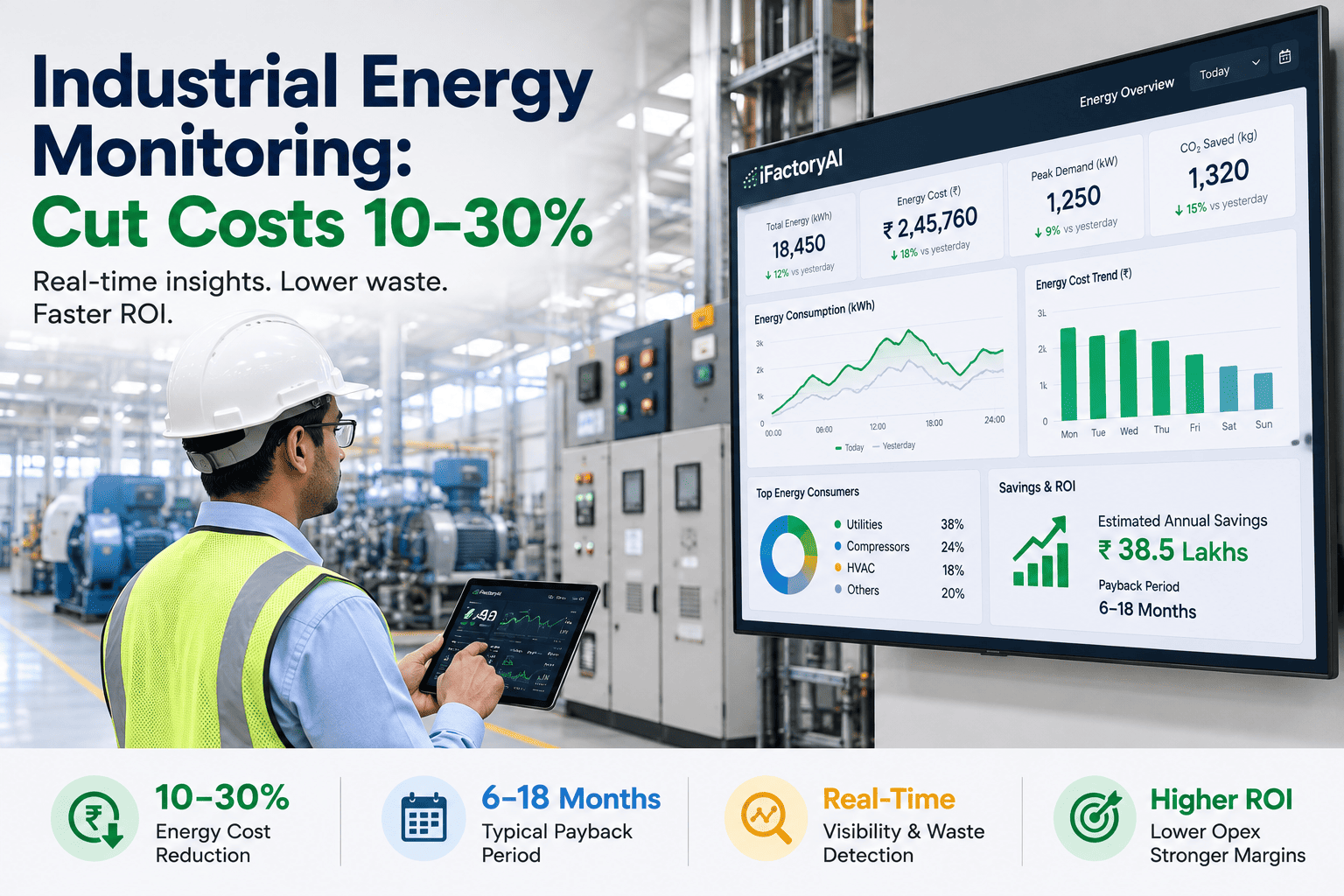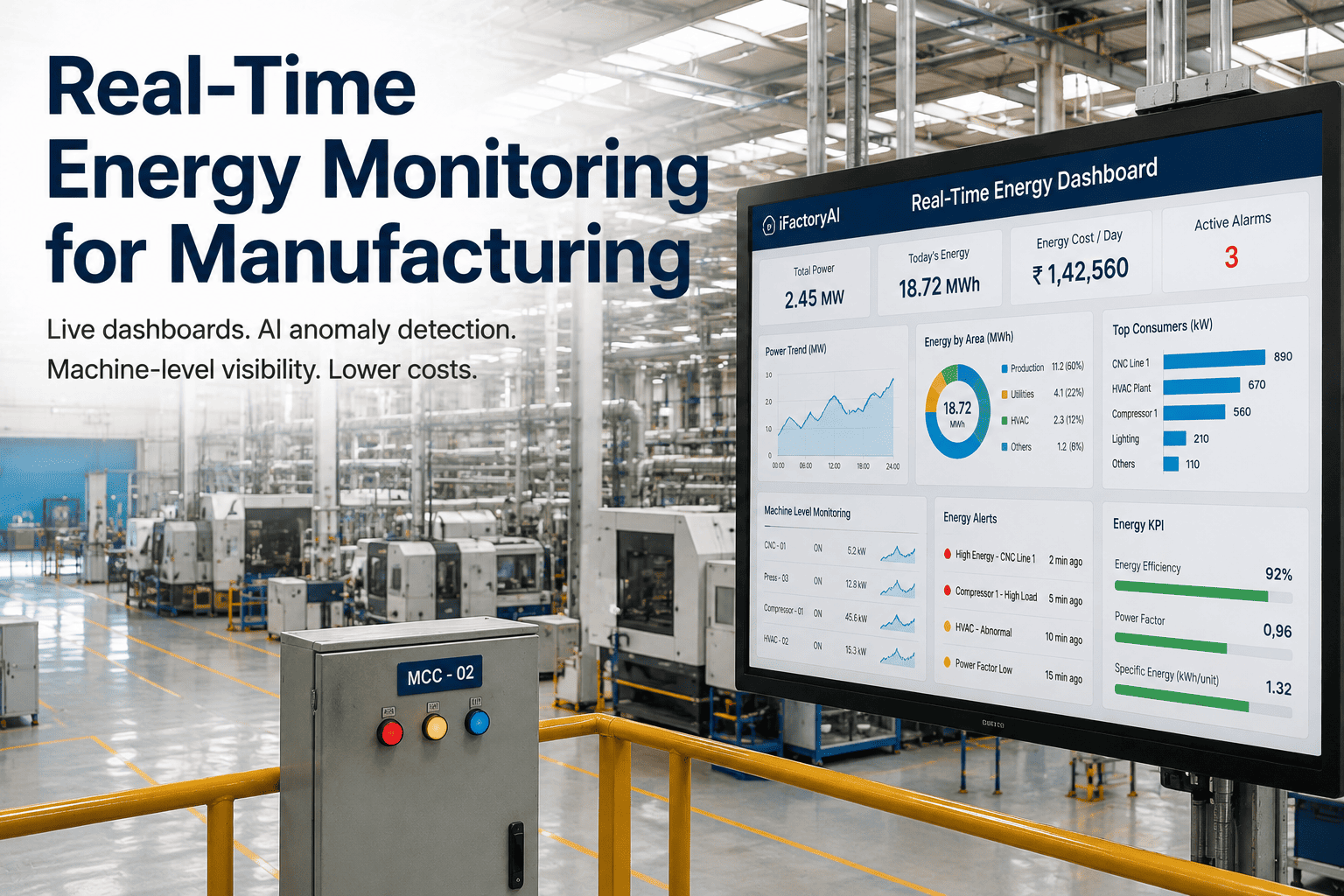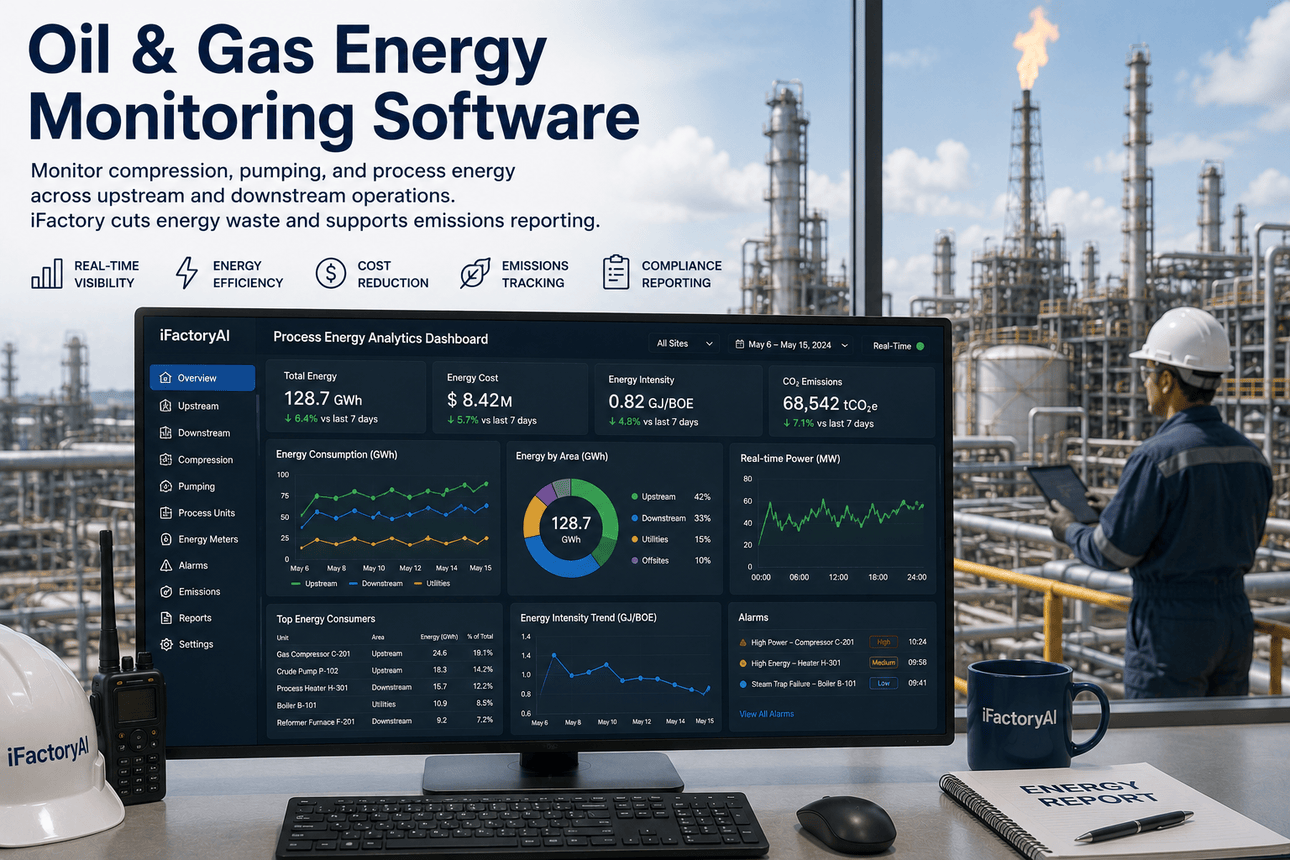
A hospital never closes, so its energy waste never shows up as downtime — it just compounds, quietly, twenty-four hours a day. Most of it hides inside a single utility meter that blends the operating room, the empty administrative wing, and the idle imaging suite into one monthly number nobody can act on. Hospitals burn roughly two and a half times the energy per square foot of a commercial building, running every system around the clock. The reason managers don't chase the waste isn't lack of will — it's fear of touching the wrong load, because an HVAC excursion in an OR isn't a comfort complaint, it's a patient-safety event. Energy monitoring separates the clinical loads you must never touch from the non-clinical waste you can cut freely — so costs fall while patient care runs exactly as before. You can book a demo to see it on your facility.
Cut the Waste That Compounds 24/7 — Without Touching a Single Clinical Load
Track HVAC, chillers, and critical loads across the hospital with 24/7 visibility, waste alerts, and sustainability reporting — separating the clinical systems that can never change from the non-clinical waste you can cut freely.
The Constraint Isn't Cost — It's That You Can't Touch the Clinical Load
Every building wastes energy, but a hospital is unique in why the waste persists: the systems consuming the most energy are often the ones that are absolutely non-negotiable, so managers leave everything running at full tilt rather than risk touching a life-safety load. That caution is correct — but applied bluntly, it protects the waste along with the patient. The path forward is separating the two, which starts with understanding what actually can't change.
Operating rooms demand 15 to 20-plus air changes an hour, isolation rooms hold precise pressure, and labs and pharmacies need validated conditions. These are patient-safety and infection-control requirements, not comfort settings — and they run at full spec regardless of anything.
An HVAC failure in an office is a service call; in an operating suite it's an emergency response, a cancelled case, patient-safety documentation, and regulatory reporting. That asymmetry is why managers over-provision everywhere rather than risk anything.
A single utility meter merges the OR, the empty admin wing, and the standby MRI into one number, so there's no way to tell whether unoccupied-wing HVAC is wasting five thousand dollars a month or fifty. The waste is invisible by aggregation.
Because the building never closes, inefficiency doesn't announce itself as a shutdown — it compounds silently every hour. An admin wing conditioned at full capacity through nights and weekends can waste tens of thousands of dollars a year with nobody noticing.
The Whole Game Is Knowing Which Load Is Which
Monitoring turns a hospital's single blended meter into per-zone, per-circuit visibility, and that resolution is what makes safe energy work possible. Once each major load is measured on its own, you can hold every clinical system exactly where it is and go after the non-clinical waste with confidence. This is the separation the whole approach rests on.
Operating suites, isolation rooms, imaging with strict thermal needs, pharmacy cold storage, and other patient-critical zones are monitored but never optimized against — their air changes, pressures, and temperatures stay at full clinical spec. Monitoring here is about assurance and early failure warning, not setback.
Administrative wings, offices, conference rooms, public areas, and low-census units follow occupancy, not the clock — so full conditioning through unoccupied nights and weekends becomes scheduled setback with zero impact on any care area. This is where the fast, safe savings live.
Chillers, boilers, and air handlers serving mixed zones can't be shut off, but they can be tuned to actual demand — right-staging chillers, trimming overcooling, and matching plant output to the real combined load rather than a worst-case assumption that runs continuously.
See Every Load on Its Own, Not Blended in One Bill
iFactory meters the hospital per zone and per circuit — so clinical loads are held safe while the non-clinical waste running through empty wings becomes visible, priced, and cuttable.
The Waste Is Real, Large, and Almost All Non-Clinical
Once loads are separated, the recoverable energy turns out to concentrate in a handful of predictable, non-clinical places — the ones a blended meter could never isolate. None of these require touching a patient-care environment. These are the pools monitoring surfaces.
Administrative HVAC and lighting running at full capacity through nights and weekends, despite occupancy only on weekday business hours, is the single most documented hospital waste — often tens of thousands of dollars a year, fixed with a schedule change.
Wards and units sitting at low census still run full environmental conditioning because it's tied to the clock, not occupancy. Per-zone monitoring reveals where conditioning can follow actual census safely, in non-clinical or transitional space.
MRI, CT, and radiology equipment draw significant power even in standby, and support systems around them run continuously. Monitoring quantifies standby consumption and surfaces where equipment scheduling can trim it without affecting availability.
Autoclaves and central sterile services are steam- and power-intensive by design, and monitoring reveals idle-cycle losses and scheduling gaps between loads — waste in the space between necessary cycles, not in the cycles themselves.
The Plant That Runs Hardest Is Where Tuning Pays Most
HVAC and the chiller plant are the largest energy block in a hospital, and because they serve both clinical and non-clinical zones they can't simply be switched off — but they can be tuned, and at their scale even small efficiency gains are large absolute savings. Monitoring the plant against its real load is what makes that tuning safe and measurable.
Multiple chillers staged inefficiently against a partial load burn energy the cooling demand doesn't justify. Monitoring plant energy against the actual heat load exposes poor staging and overcooling that can be corrected without reducing any zone's cooling.
Plant sized for peak spends most of its life at part load, where fixed-speed operation is wasteful. Monitoring reveals where variable-speed control and better part-load management recover energy during the many hours the peak isn't present.
Controls drift from their commissioned baseline over time, quietly eroding efficiency. Continuous monitoring catches that drift as a trend, so routine tuning can restore baseline performance rather than letting it decay for years unnoticed.
Because the plant is so large, even a five-to-ten-percent efficiency gain from tuning alone is a significant absolute saving — and at hospital energy intensity, a ten-percent overall reduction meaningfully lifts operating margin.
In a Hospital, Catching a Failing Chiller Early Is a Clinical Win
Energy monitoring in a hospital earns its place on more than cost, because a consumption anomaly is often the earliest sign of an equipment failure — and in a hospital, an equipment failure isn't an inconvenience, it's a clinical and financial emergency. The same meter that finds waste is watching the critical plant for trouble.
A chiller compressor beginning to fail typically draws 15 to 35 percent more power while its cooling capacity drops — weeks before it fails outright. The energy anomaly is an early warning that lets you intervene on a schedule instead of during a crisis.
A chiller taking down cooling for an imaging suite means equipment shutdown, cancelled cases, and revenue loss that can reach tens of thousands a day. Catching it early isn't just an energy saving — it prevents a patient-care disruption.
Monitoring the clinical loads you never optimize still delivers value: continuous confirmation that critical HVAC is performing to spec, so a drift toward failure in an OR or isolation system is caught before it becomes an environmental excursion.
Emergency repairs in a hospital run several times the cost of planned maintenance, before counting the clinical disruption. Turning a surprise failure into a scheduled fix is often worth more than the energy the anomaly represented.
From a Live Dashboard to a Sustainability Report, on One Dataset
The monitoring that separates clinical from non-clinical loads produces a continuous, granular energy record, and that record does several jobs at once — real-time visibility, waste alerting, and the sustainability reporting healthcare systems increasingly have to produce. One dataset serves the facility team and the reporting office together.
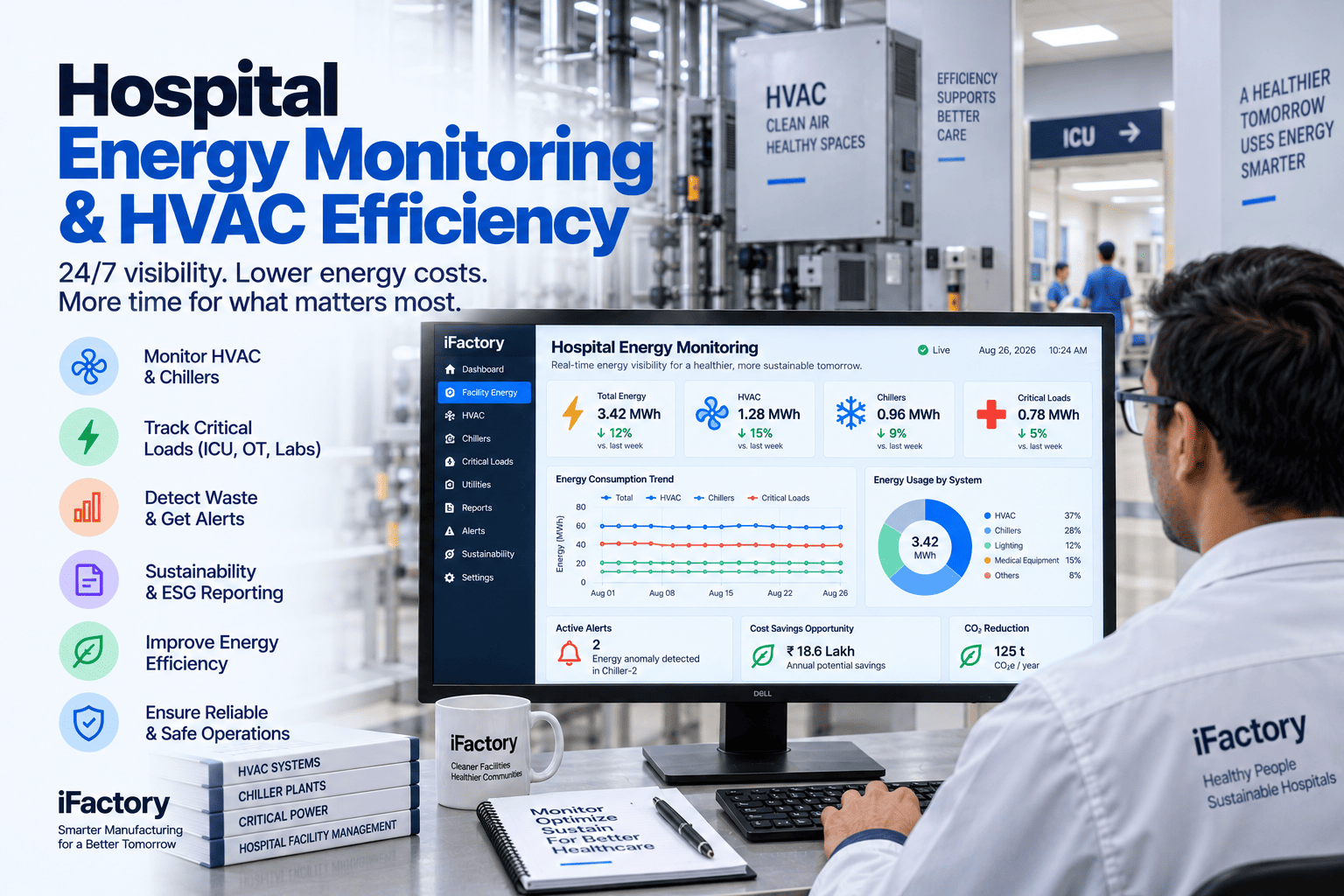
A live dashboard shows HVAC, chiller, and critical-load consumption per zone and circuit around the clock, so facility managers see true energy performance in real time instead of reconstructing it from a monthly bill weeks later.
Consumption running ahead of baseline — an unoccupied wing at full conditioning, a chiller drawing high — raises an alert with its cost, so waste and developing faults surface as they happen rather than in a quarterly review.
The same data aggregates into the energy-intensity, carbon-footprint, and decarbonization reporting healthcare systems face from regulators, accreditation, and their own commitments — produced from operational data, not assembled by hand.
For a multi-building or multi-site health system, consistent metering lets you benchmark energy intensity building against building, surfacing the outlier facility that's the highest-return target — a comparison a pile of separate bills can't make.
Clinical Loads Held Safe, Non-Clinical Waste Cut, Everything Reported
iFactory meters the hospital at the zone and circuit level, keeps clinical loads under assurance while making non-clinical waste visible and cuttable, watches the critical plant for early failure, and turns the whole record into live visibility and sustainability reporting — so the facility saves energy with zero impact on patient care.
What Facility Teams Ask About Hospital Energy Monitoring
Stop Paying to Condition Empty Wings Around the Clock
iFactory meters your hospital per zone and circuit, holds every clinical load safe while cutting the non-clinical waste that compounds 24/7, watches the critical plant for early failure, and produces your sustainability reporting from the same data.