The chemical industry loses an estimated $20 billion annually to unplanned downtime. Each incident costs between $260,000 and $2 million — and that's before you count the shutdowns, investigations, EPA fines, and batch losses that follow. With 82% of all chemical plants suffering at least one unplanned shutdown in the last three years and 40% of major incidents traced to maintenance failures, launching a greenfield chemical plant without AI-native automation isn't just risky — it's a liability. This guide shows how advanced process control (APC), AI safety monitoring, and digital twin commissioning work together to eliminate these risks from day one — and why iFactory is the CMMS platform tying it all together.
A Greenfield Chemical Plant Without AI Automation Is a Ticking Clock
Chemical manufacturing is unforgiving. Corrosive environments degrade equipment faster than any other industry. Reactor excursions, pressure deviations, and toxic leaks don't just cause downtime — they cause explosions, environmental disasters, and fatalities. Approximately 1,500 chemical facility accidents occur in the United States every year, with 25% traced directly to equipment failures caused by inadequate maintenance. A single major incident can cost between $100 million and $1.6 billion when you factor in shutdowns, regulatory penalties, lawsuits, and lost production.
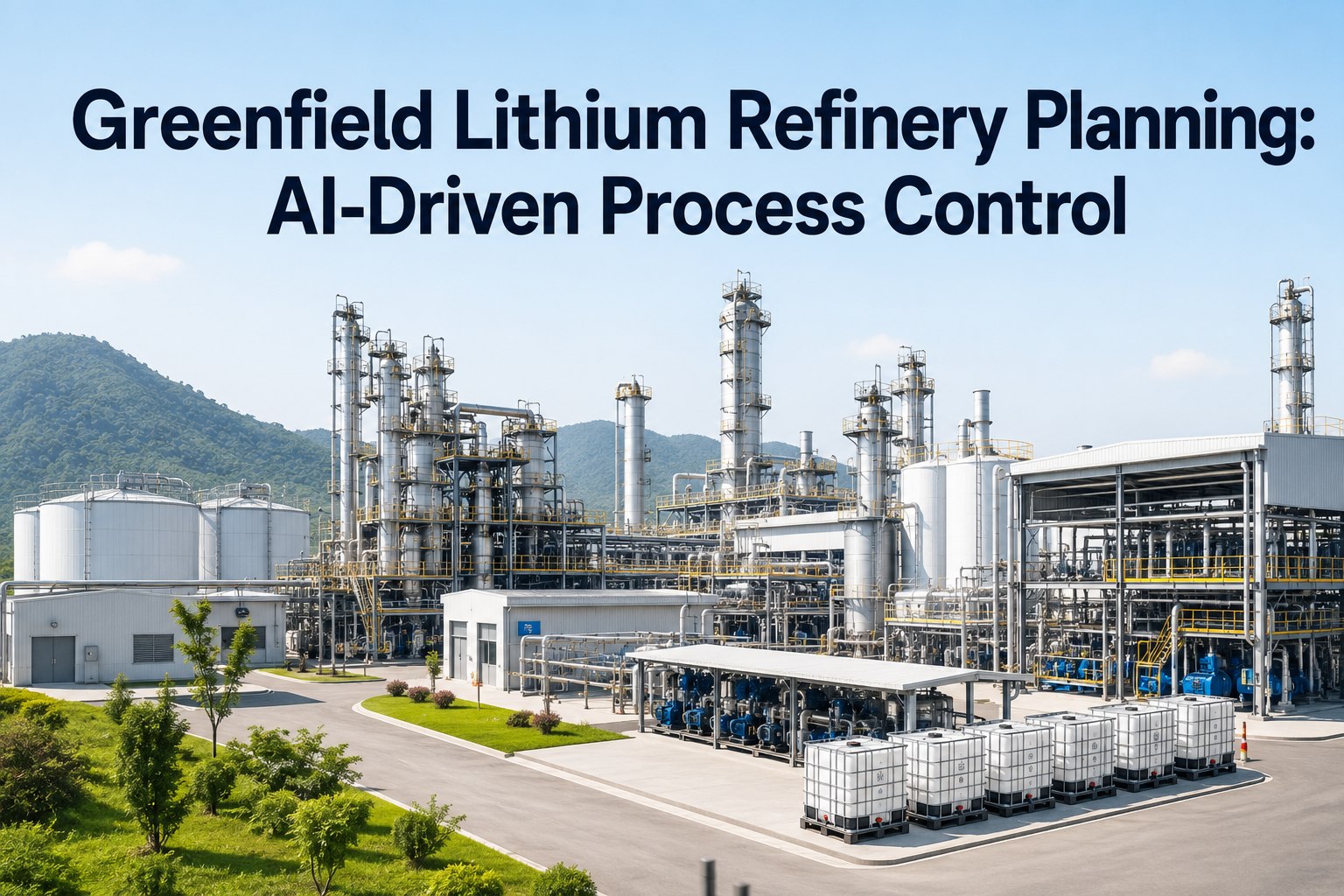
Greenfield chemical plants have a once-in-a-generation opportunity to design these risks out from the start — embedding advanced process control, AI-driven safety monitoring, digital twin validation, and predictive CMMS intelligence into the plant's architecture before the first reactor heats up. iFactory makes this possible with a single platform that connects your DCS/PLC systems, safety instrumented systems, and maintenance workflows into one AI-powered command center.
Designing a Greenfield Chemical Plant?
In 30 minutes, we'll show you how iFactory connects your APC systems, safety instrumentation, and maintenance workflows into a single AI-powered platform — configured before your first batch runs.
The 6 Pillars of AI-Native Chemical Plant Automation
Every greenfield chemical facility in 2026 needs six interconnected automation pillars working together. Miss one, and you're building blind spots into a facility that handles hazardous materials at extreme temperatures and pressures. Here's what iFactory helps you design, deploy, and manage from a single platform:
Advanced Process Control (APC)
AI-optimized reactor temperatures, distillation column pressures, and feed ratios that keep processes within tight operating windows — reducing variability, improving yield, and cutting energy waste by 10–20%.
AI Safety & Leak Detection
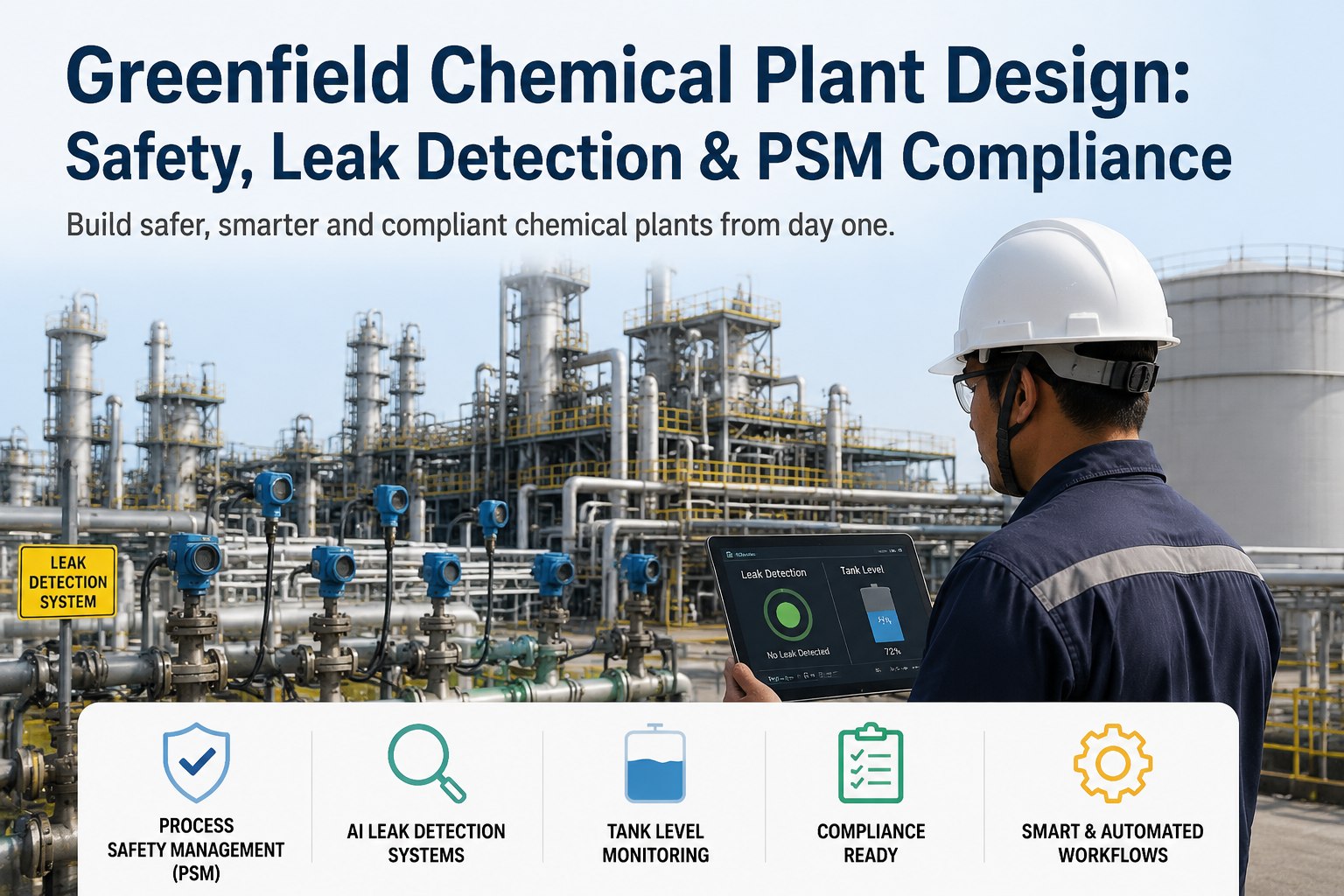
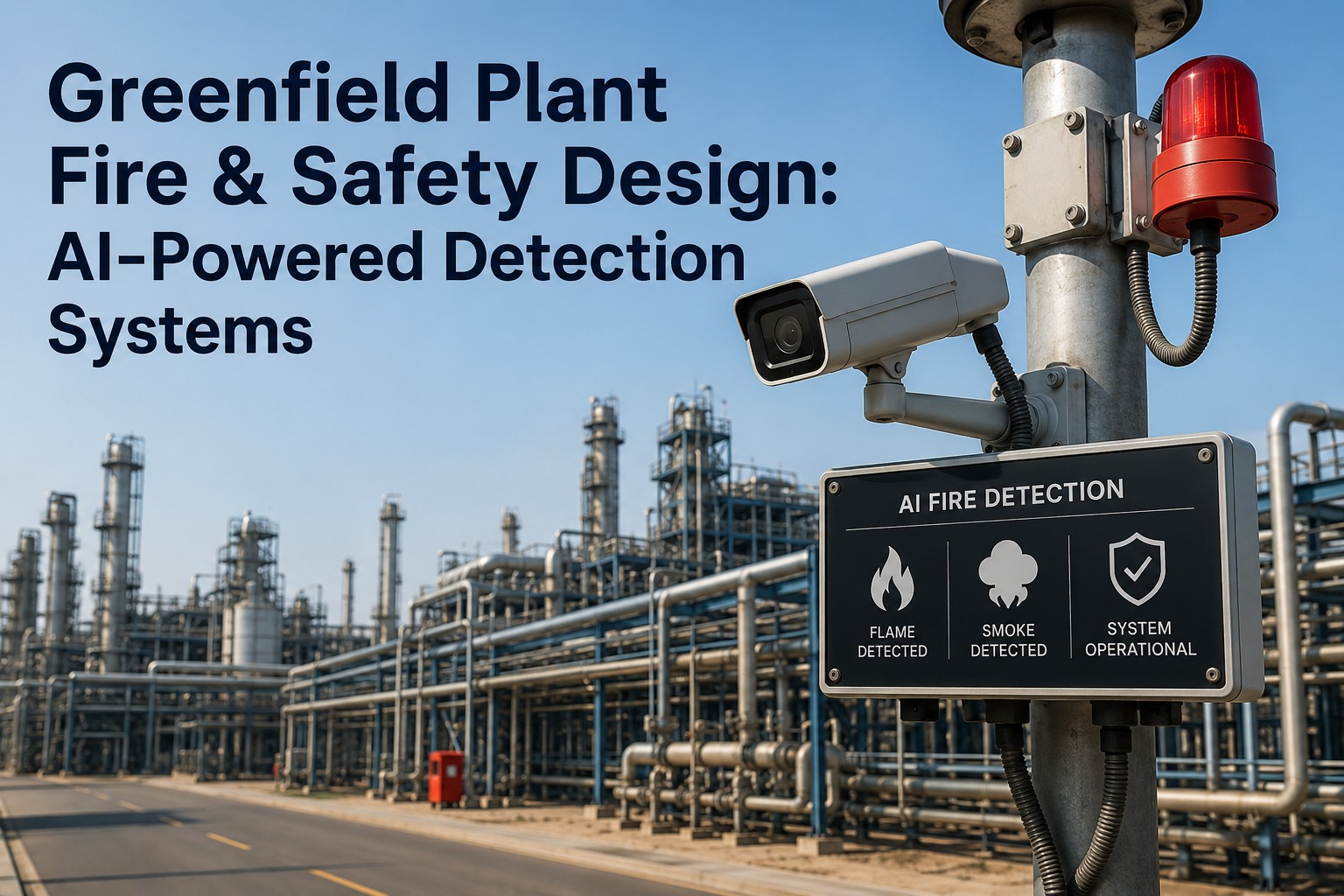
Computer vision and gas detection sensors monitor for toxic leaks, flare anomalies, and pressure excursions in real time — triggering automated alerts and safety interlocks before human operators notice anything wrong.
Digital Twin Commissioning
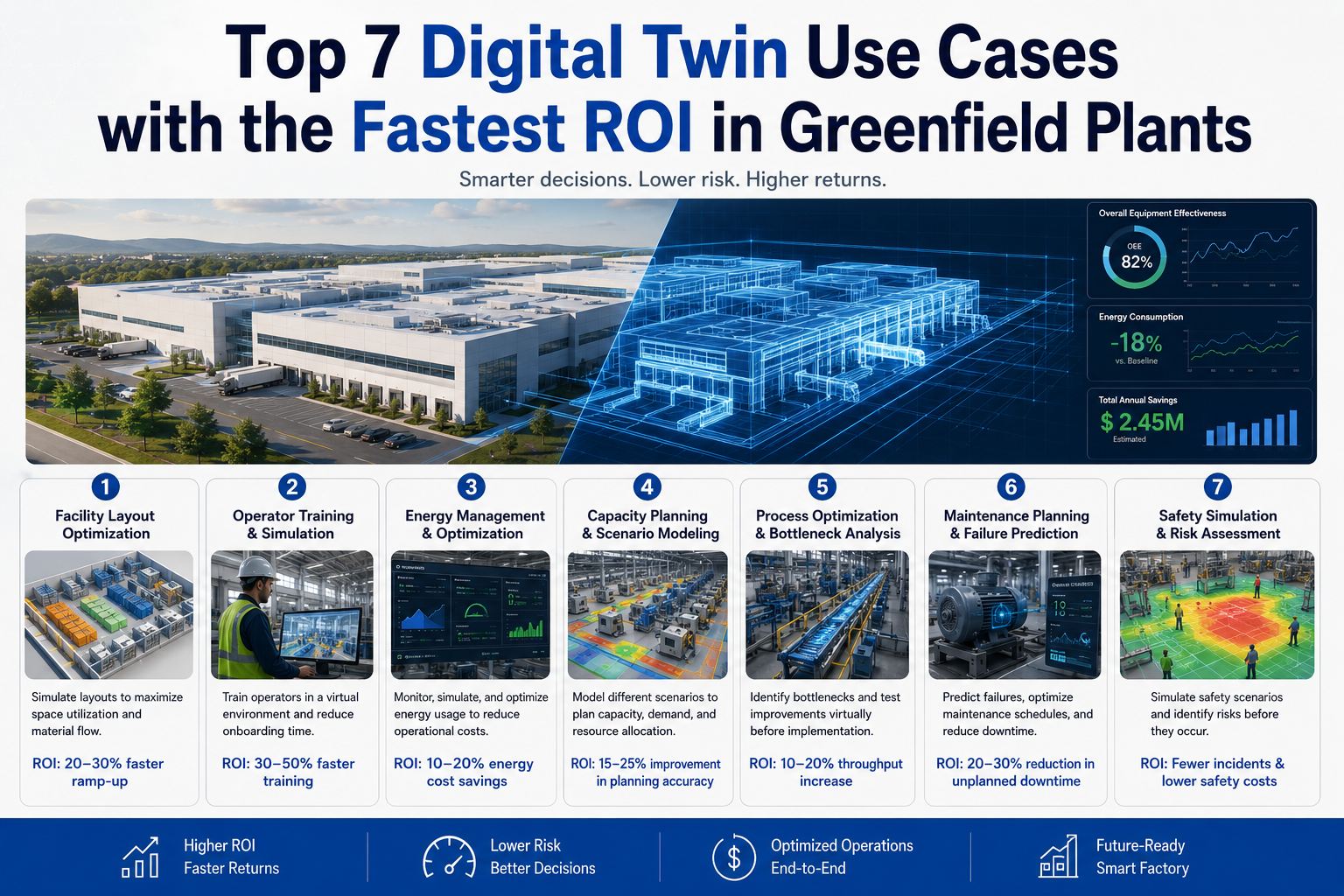
Simulate your entire chemical process virtually before startup — testing reactor configurations, safety scenarios, and control logic without risking real chemicals, real equipment, or real people.
DCS/PLC Integration with CMMS
iFactory bridges the gap between your distributed control system, PLCs, and maintenance workflows — so when a control alarm fires, a predictive work order is already queued with parts, instructions, and scheduling.
Predictive Maintenance for Chemical Assets
Vibration, thermal, and corrosion monitoring on pumps, compressors, heat exchangers, and rotating equipment — catching degradation weeks before failure in the harshest operating conditions in any industry.
Emission & Flare Monitoring
Continuous emission monitoring systems (CEMS) integrated with iFactory track VOCs, particulates, and flare efficiency — automating EPA/OSHA compliance reporting and preventing costly environmental violations.
These 6 pillars are exactly what we configure during your demo. Book 30 minutes now and we'll map each pillar to your greenfield chemical plant design.
The Cost of Getting Chemical Plant Automation Wrong
Chemical plants aren't like other factories — when things go wrong, the consequences are measured in lives, environmental disasters, and nine-figure financial losses. These are real numbers from real incidents:
$100M–$1.6B Per Major Incident
A single major chemical plant incident — explosion, toxic release, or fire — can cost between $100 million and $1.6 billion when factoring in production losses, environmental cleanup, regulatory fines, litigation, and reputational damage. The BP Texas City explosion alone resulted in $1.6 billion in costs and triggered a $13 million OSHA fine. iFactory's predictive maintenance and AI safety monitoring are designed to prevent these events entirely.
20–30% of Budget Goes to Maintenance
Chemical companies allocate 20–30% of their operating budgets to equipment maintenance — more than almost any other industry — because corrosive environments, extreme temperatures, and high pressures accelerate wear at rates that other sectors never face. Without AI-driven condition monitoring, most of this spend is wasted on unnecessary scheduled replacements or emergency repairs that cost 3–5x more than planned fixes.
825+ Chemical Incidents Since 2021 in the U.S. Alone
A coalition of health organizations documented over 825 hazardous chemical incidents in the United States since January 2021 — with 344 occurring in petrochemical and plastics facilities. 43 people were killed. More than 150 were injured. Every one of these facilities had safety systems in place. The difference between "compliant" and "safe" is AI monitoring that catches what humans and legacy systems miss.
Critical Fact: Preventing a single major incident saves more than the cost of the most comprehensive maintenance program you could build. The question isn't whether you can afford AI automation — it's whether you can afford the shutdown, the investigation, and the headlines that come without it. Let us show you the math in a free demo →
The iFactory Technology Stack for Chemical Plant Automation
Chemical plants demand a technology architecture that handles hazardous area classifications, safety instrumented systems, and corrosive environment monitoring — all feeding into a single platform. Here's how iFactory integrates every layer:
See How This Stack Protects Your Chemical Plant
In 30 minutes, our team will walk you through live iFactory dashboards showing APC integration, safety monitoring, and predictive maintenance — customized to your process chemistry and equipment.
How iFactory Deploys — From P&ID to Full Production
Other platforms make you figure out chemical plant integration yourself. iFactory provides a proven deployment roadmap that runs in parallel with your EPC contractor's schedule — so every automation layer is live when your plant starts up:
iFactory Maps Your Automation Architecture to P&IDs
During front-end engineering, iFactory designs your complete CMMS architecture aligned to P&ID drawings — mapping every critical asset, safety instrumented function, sensor placement, and maintenance strategy. Digital twin models of key process units (reactors, columns, heat exchangers) are built for virtual commissioning.
iFactory Embeds Intelligence During Mechanical Completion
As equipment arrives and gets installed, sensors are embedded during hookup — corrosion probes on vessels, vibration sensors on rotating equipment, gas detectors in classified areas. iFactory's CMMS is configured with work order automation, safety alert rules, and spare parts catalogs for every tagged asset.
iFactory Validates Safety Before Real Chemicals Flow
Virtual commissioning via digital twin tests control logic, safety interlocks, and APC models before introducing real process fluids. During hot commissioning, iFactory AI models activate — learning real equipment baselines and detecting anomalies from the first hour of live operation. Your compliance documentation is auto-generated.
iFactory Optimizes Every Process Unit Continuously
APC models refine reactor yields and column efficiency with real production data. Predictive maintenance expands to full-plant coverage. AI moves from predictive to prescriptive — generating work orders with exact repair actions, required parts, and optimal shutdown windows that minimize production impact.
This roadmap is exactly what we'll customize for your project. Book your free demo and get a deployment plan mapped to your EPC timeline in 30 minutes.
What iFactory Monitors in Your Chemical Plant
Chemical plants demand monitoring techniques that go far beyond standard vibration analysis. Corrosive environments, toxic atmospheres, and extreme pressures require specialized condition monitoring that iFactory integrates into a single platform:
Reactor & Vessel Monitoring
Temperature, pressure, and corrosion probes on reactors, distillation columns, and pressure vessels — detecting wall thinning, catalyst degradation, and thermal runaway risks before they escalate.
Rotating Equipment PdM
Vibration, thermal, and current analysis on pumps, compressors, fans, agitators, and centrifuges — the assets that fail most often in chemical service and cause the most costly unplanned shutdowns.
AI Gas & Leak Detection
Fixed gas detectors and AI-powered optical monitoring for toxic, flammable, and asphyxiant gases — integrated with SIS interlocks for automated emergency response when concentrations exceed safe limits.
Emission & Flare Intelligence
Continuous emission monitoring systems (CEMS) with AI analytics track VOCs, particulates, SO₂, NOₓ, and flare combustion efficiency — automating EPA/OSHA compliance and preventing environmental violations.
How iFactory Delivers Results Across Every Plant System
iFactory isn't a generic CMMS adapted for chemical plants — it's built for hazardous, regulated, continuous-process environments where downtime costs $100,000/hour and safety incidents cost lives.
Process Control ↔ Maintenance Loop
When APC detects a control variable drifting outside spec, iFactory automatically generates a predictive work order — connecting process performance directly to maintenance action before yield or safety is compromised.
SIS & Interlock Management
iFactory tracks safety instrumented function (SIF) test schedules, proof test results, and interlock trip histories — ensuring your SIL-rated systems maintain their required reliability throughout the plant lifecycle.
Automated Regulatory Reporting
PSM documentation, MOC records, CEMS reports, and inspection histories are auto-generated and audit-ready. iFactory turns compliance from a manual burden into an automated output of normal operations.
Energy & Yield Intelligence
AI tracks energy consumption per unit of production, identifies heat exchanger fouling, and optimizes utility systems — delivering 10–20% energy savings that compound into millions annually for large chemical facilities.
See iFactory Running a Live Chemical Plant Demo
30 minutes. Zero obligation. We'll show you APC integration, safety dashboards, predictive maintenance, and compliance automation — all customized to your process chemistry and equipment list.
Who Needs AI-Native Chemical Plant Automation?
Continuous processes running 24/7 at extreme temperatures and pressures. A single compressor failure or reactor excursion can halt an entire production train. iFactory's predictive monitoring on turbo-machinery, heat exchangers, and column internals prevents the cascading shutdowns that cost millions per day.
Batch processes with tight quality specifications and expensive raw materials. iFactory's APC integration optimizes reactor conditions to maximize yield on every batch — and predictive maintenance prevents the mid-batch equipment failures that destroy entire production runs worth hundreds of thousands.
High-volume continuous operations handling ammonia, nitric acid, and other hazardous feedstocks. AI gas detection and emission monitoring are not optional — they're survival requirements. iFactory integrates safety monitoring with maintenance scheduling to keep hazardous systems operating within safe bounds at all times.
GMP-regulated environments where equipment qualification and maintenance documentation are audit requirements, not suggestions. iFactory automates compliance logging, tracks calibration schedules, and generates audit-ready records — turning maintenance from a regulatory burden into a competitive advantage.
Build Safe, or Pay for It Later
The chemical industry cannot afford to build greenfield plants the way it built plants 20 years ago. With 825+ chemical incidents in the U.S. since 2021, tightening EPA regulations, and downtime costs exceeding $100,000 per hour, the cost of launching without AI automation isn't just financial — it's measured in safety incidents, environmental damage, and regulatory shutdowns that can close a plant permanently. The facilities winning in 2026 are the ones that embed advanced process control, AI safety monitoring, and predictive maintenance intelligence into the plant's foundation — not bolt it on after the first explosion or leak.
iFactory is purpose-built for this. One platform that connects your DCS, PLC, SIS, and CEMS data into unified AI-powered dashboards, automated work orders, and compliance documentation — all configured before your first reactor heats up. Your competitors are already building this way. The only question is whether you will too.
Your Next Chemical Plant Deserves Better Than Legacy Automation
30 minutes. Zero obligation. We'll walk you through live iFactory dashboards, calculate your projected savings, and build a deployment roadmap tailored to your EPC timeline. No generic demo — this is customized to your process.