NVIDIA Jetson sizing determines whether your AI vision deployment delivers ROI in 6 months or eats budget for 14. Oversize and you pay 3× the BOM cost plus 4× the power for inference headroom you never use. Undersize and you hit thermal throttling at peak, then face a forklift swap. The right Jetson Orin module is determined by four measurable inputs: camera count, inference complexity, latency target, and power budget. This sizing guide walks through the framework disciplined engineers apply before any hardware is procured. Book a Jetson sizing consultation to apply it to your specific vision workload.
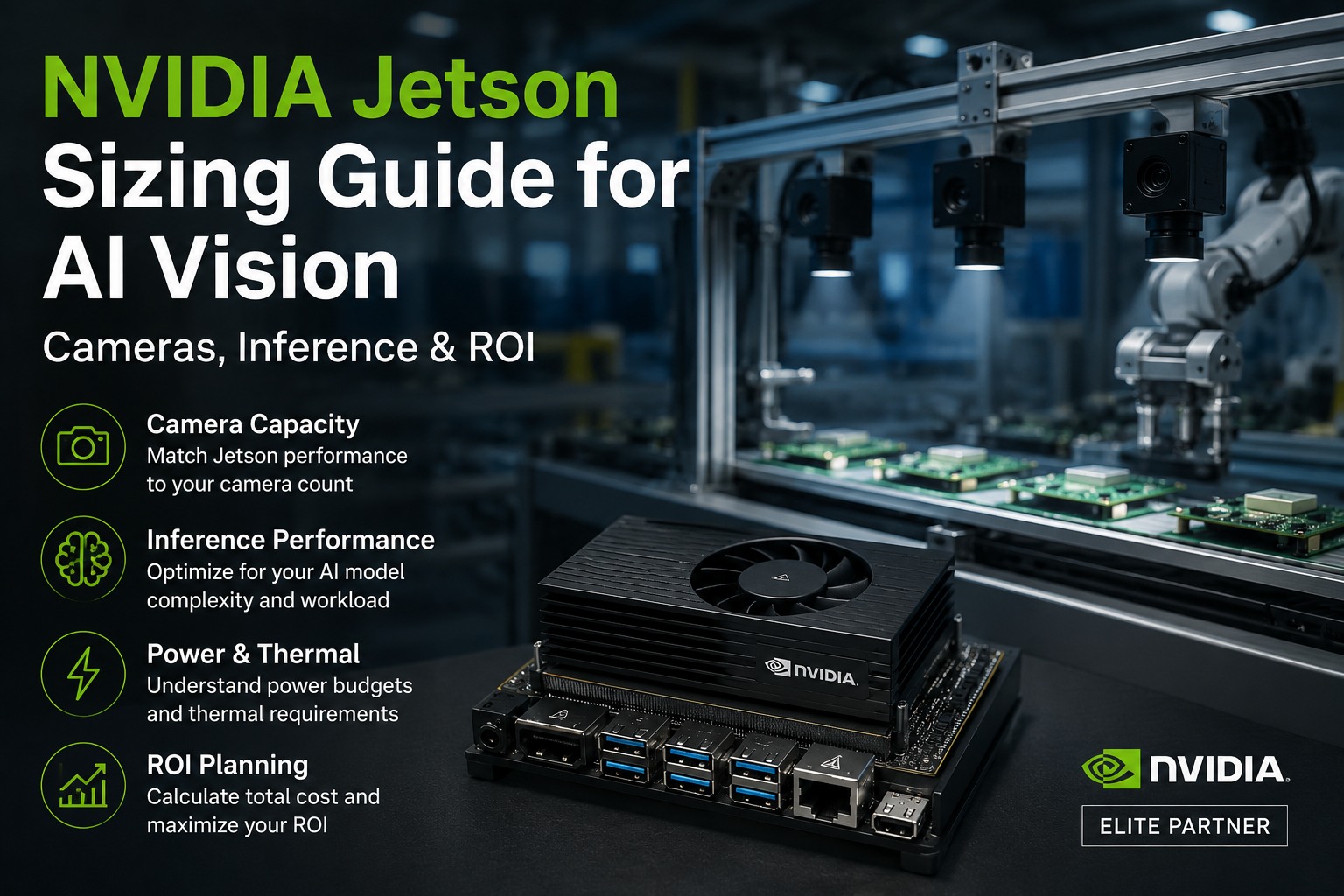
NVIDIA Jetson Sizing Guide for AI Vision — Cameras, Inference & ROI 2026
The 3 Jetson Orin Tiers — Visualized by TOPS, Power & Camera Capacity
Entry Tier
Jetson Orin Nano
Power7–25 W
Memory4–8 GB
Cameras1–2 @ 1080p
Single inspection point · Compact deployments
Mid Tier · Most Common
Jetson Orin NX
Power10–40 W
Memory8–16 GB
Cameras4–6 @ 1080p
Production line vision · Multi-model concurrent
High Tier
Jetson AGX Orin
Power15–60 W
Memory32–64 GB
Cameras8 @ 4K GMSL
Full inspection cell · 4K · Generative AI
4×Power efficiency: AGX Orin 130W vs IPC + GPU 500W+
75%Of AI applications at the edge by 2027 (Gartner)
18Concurrent AI streams on a single Orin NX in production
100msSub-100ms inference latency for line-speed vision
The 4 Variables That Actually Drive Jetson Sizing
Jetson sizing is not guesswork — it's anchored on four measurable inputs. Get these right and module selection becomes deterministic. Get them wrong and you'll over-provision or under-provision regardless of vendor recommendation. Each variable maps directly to a hardware decision.
01
Camera Count & Resolution
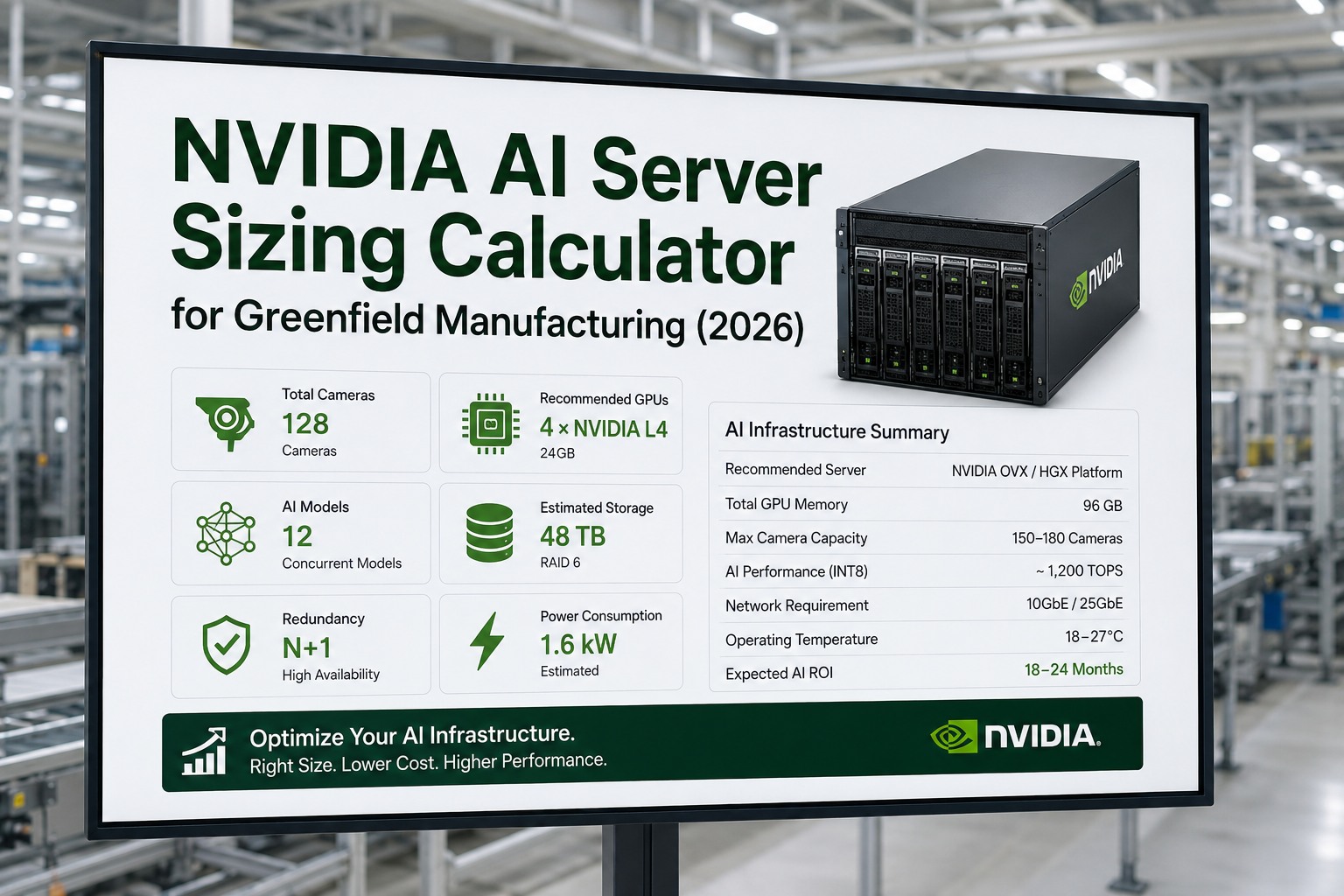
Each 1080p camera at 30 fps consumes ~15 to 25 TOPS depending on model. 4K cameras consume 4× the per-frame compute. GMSL2 cameras enable direct SerDes connection up to 8 per AGX Orin.
Drives: Total TOPS budget · I/O architecture
02
Model Complexity
YOLO v8 nano: ~5 TOPS per stream. YOLO v8 medium: ~15 TOPS. Vision Transformer (ViT): ~35 TOPS. Multi-modal LLM: 50+ TOPS. Memory footprint scales with parameter count.
Drives: Memory tier · GPU vs DLA allocation
03
Latency Target
Line-speed vision typically requires sub-100ms end-to-end latency from frame capture to defect verdict. Sub-30ms required for high-speed bottling or pharmaceutical lines.
Drives: Required headroom · Inference path tuning
04
Power & Thermal Budget
Fanless enclosures cap at 25-30W. DIN-rail cabinet installation may permit 40-60W with active cooling. Ambient temperature above 40°C reduces sustained throttle-free performance.
Drives: Module tier ceiling · Enclosure form factor
The Sizing Math: From Camera Specs to Module Recommendation
Once you have the four variables, the math is simple — but the implications are not. The four-step calculator below is what a Jetson sizing engineer runs before specifying hardware.
Calculate Required TOPS
(Cameras × Resolution × Model TOPS) × Frame Rate
4 cameras × 1080p × 15 TOPS (YOLO med) × 30 fps = ~60 TOPS workload
Apply Headroom Multiplier
Required TOPS × 1.5–2.0× (for model updates & growth)
60 TOPS × 1.7 = ~102 TOPS minimum spec
Check Power & Enclosure
Validate against enclosure thermal limit + ambient temp
102 TOPS in fanless 25W enclosure rules out AGX Orin
Select Module Tier
Match required TOPS + power + memory to Nano / NX / AGX
102 TOPS @ 25W → Jetson Orin NX 16GB (157 TOPS, 10–40W)
Want the sizing math run against your specific camera schedule and model? Book a Jetson sizing consultation — we will produce the module specification before procurement.
3 Reference Architectures by Deployment Scale
Most factory AI vision deployments fit one of three reference architectures. Match your scale and the module choice becomes obvious — and the ROI math becomes predictable.
Single Station
Jetson Orin Nano 8GB
Single defect classification or barcode/label verification. Fanless DIN-rail enclosure. 12–15W power budget.
Tier 2 · Most Common
4–6 cameras
Production Line
Jetson Orin NX 16GB
Multi-model concurrent inference: defect detection + fill verification + label check + dimensional. Fanless or active cooling.
Full Inspection Cell
Jetson AGX Orin 32–64GB
High-density vision with GMSL2 connectivity, multi-line aggregation, generative AI for defect synthesis. Active-cooled industrial enclosure.
Size the Jetson Hardware Before Procurement — Not After Deployment
iFactory's Jetson sizing consultation maps your camera schedule, model complexity, latency targets, and power budget to a specific module recommendation with reference architecture diagram and ROI window — all delivered before hardware procurement.
ROI Comparison: Jetson vs Traditional IPC + Discrete GPU
The TCO gap between a Jetson edge box and a traditional industrial PC with a discrete GPU isn't marginal — it's a structural cost advantage that compounds across power, hardware, and serviceability over the deployment lifetime.
Power Draw (275 TOPS equiv)
4× efficiency
Hardware BOM
40–60% lower
Deployment Timeline
2× faster
Expert Perspective: The 3 Sizing Mistakes That Cost the Most
The Jetson sizing mistakes we audit at 12 months in are not exotic. They are predictable. The first is reflexively specifying AGX Orin for every deployment because it has the most TOPS — when 80% of single-station applications fit Orin Nano at one-third the cost and one-fifth the power. The second is undersizing memory rather than TOPS — a model needing 12 GB of memory will fail on an 8 GB module no matter how much compute the GPU has, and memory is not upgradable. The third is ignoring the headroom multiplier — sizing exactly to current model and frame count leaves zero room for the v2 model that gets 15% more accurate at 30% higher compute.
— iFactory Greenfield Consulting, Edge AI Practice 2025 to 2026
80%
Single-station deployments that fit Orin Nano
1.5–2×
Headroom multiplier disciplined sizing always applies
14 mo
Average time before undersized Jetson needs forklift swap
Ready to size Jetson hardware against your actual vision workload? Talk to our edge AI team — we will produce the sizing analysis before any procurement.
Get Jetson Sizing Right Before Procurement — Save 40–60% on Hardware
iFactory's Jetson sizing consultation runs the full 4-variable framework against your camera schedule, model complexity, latency targets, and power budget — producing a module recommendation with reference architecture and 6 to 12 month ROI window before any hardware is procured.
Frequently Asked Questions
How do I choose between Jetson Orin Nano, Orin NX, and AGX Orin?
Orin Nano (67 TOPS, 7-25W) fits single-station deployments with 1-2 cameras and simple defect classification. Orin NX (157 TOPS, 10-40W) is the most common factory choice — fits 4-6 cameras and multi-model concurrent inference. AGX Orin (275 TOPS, 15-60W) is for full inspection cells with 8 cameras, 4K resolution, or generative AI workloads. Match your TOPS budget plus 1.5-2× headroom to the right tier.
How many cameras can a single Jetson module handle in production?
Orin Nano typically handles 1-2 cameras at 1080p with simple models. Orin NX handles 4-6 cameras at 1080p with concurrent multi-model inference — one production deployment runs 18 concurrent AI streams. AGX Orin supports up to 8 GMSL2 cameras directly via integrated SerDes, with full 4K processing capability. Camera count drives module selection more than any other variable.
What is the realistic power budget for a fanless industrial deployment?
Fanless industrial enclosures typically cap at 25-30W sustained — putting Orin Nano (7-25W) and lower-power Orin NX (10W mode) in scope. DIN-rail cabinet installation with airflow may permit 40-60W with active cooling, enabling full Orin NX or AGX Orin deployment. Ambient temperature above 40°C reduces sustained throttle-free performance regardless of nominal TDP.
What is the typical ROI window for a Jetson-based AI vision deployment?
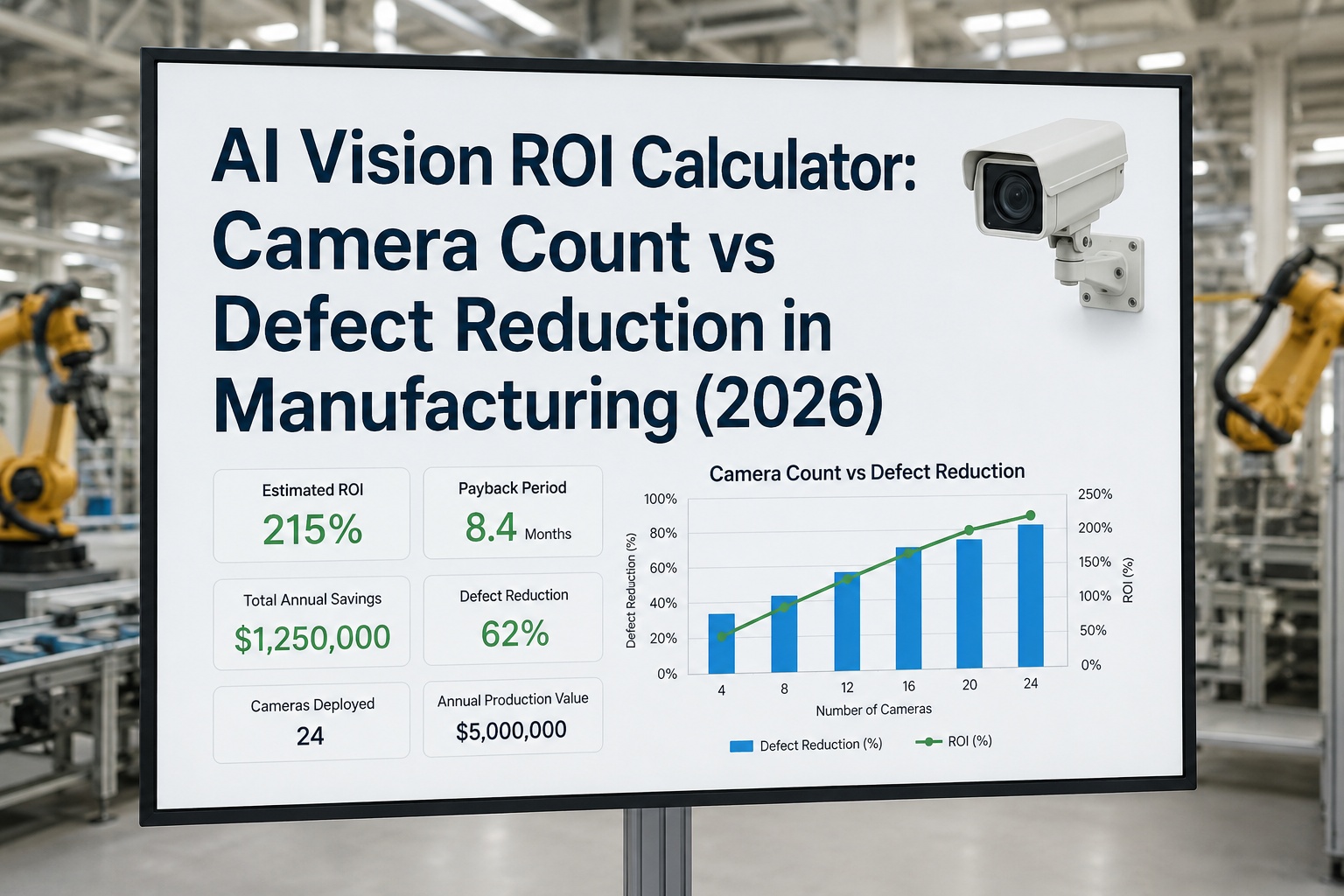
Single-station deployments (Orin Nano) typically deliver 6-9 month payback at one defect prevented per shift. Production-line deployments (Orin NX) deliver 4-8 month payback at full throughput from multi-defect prevention. Full inspection cells (AGX Orin) deliver 7-12 month payback including software stack. Power and BOM savings vs IPC+GPU alternatives accelerate payback by 30-40%.
How does iFactory's Jetson sizing consultation actually work?
iFactory's consultation maps your camera schedule, model complexity, latency targets, and power budget against the 4-variable sizing framework. Output includes a module tier recommendation with reference architecture diagram, GMSL2 vs USB camera connectivity strategy, enclosure thermal analysis, software stack specification, and 6-12 month ROI window — all delivered before hardware procurement begins.
Book your sizing consultation here.