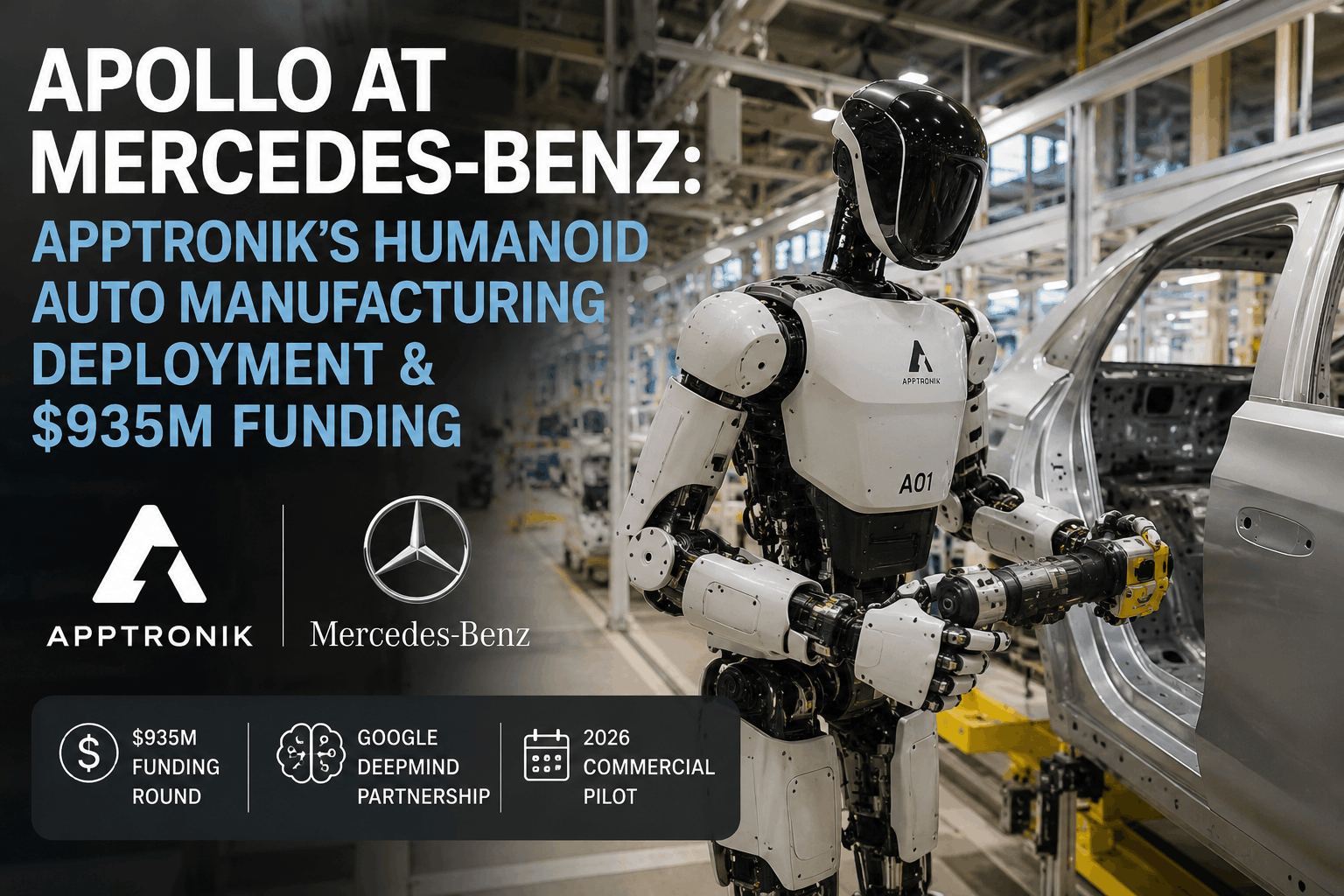
While BMW's deployment of Figure 03 captured the world's first humanoid headline, Mercedes-Benz was running its own programme in parallel — and by 2026, Apptronik's Apollo has become the second most significant humanoid robot deployment in automotive manufacturing history. The Apollo-Mercedes partnership is backed by $935M in funding, a Google DeepMind AI collaboration, and a commercial manufacturing relationship with Jabil that is designed to produce humanoid robots at automotive-grade scale. This is not a research project. It is a production programme — and the lessons it contains are different from, and complementary to, what BMW and Figure demonstrated at Spartanburg. Book a demo to see how iFactory's on-premise and cloud platforms integrate with humanoid robot deployments.
Case Study — Mercedes-Benz & Apptronik
Apollo at Mercedes-Benz: The #2 Humanoid Automotive Deployment and the $935M Ecosystem Behind It
Multi-plant pilot · Google DeepMind AI · Jabil manufacturing partnership · $935M funding · 2026 commercial expansion across European assembly plants.
$935M
Total funding raised — largest Series B in humanoid robotics
Multi-Plant
Mercedes pilot running across European assembly facilities
22-DOF
Apollo hand dexterity — among the highest in production humanoids
2027
Target year for scaled commercial fleet deployment
Why Mercedes-Benz Chose Apollo — and Why It Matters
Mercedes-Benz's decision to partner with Apptronik rather than any of the better-known humanoid platforms reflects a deliberate technology evaluation process that considered five factors: payload capacity, hand dexterity for fine assembly tasks, modularity for maintenance in a production environment, proven aerospace and defence heritage, and the quality of the AI development partnership. Apollo scored highly on all five — and the Google DeepMind collaboration gave Mercedes confidence in the AI roadmap for complex assembly tasks that go beyond what current generation systems can perform.
The deployment target zones — final assembly ergonomic relief stations, kitting, and logistics — are strategic. Mercedes-Benz final assembly involves the highest concentration of complex, low-repetition, multi-variant tasks in the plant. Deploying Apollo here requires a more capable and more adaptable system than body shop panel loading. iFactory's platform provides both on-premise edge deployment and cloud-based analytics for humanoid-equipped production lines — meeting Mercedes-grade data sovereignty requirements.
01
Proven Aerospace Heritage
Apollo is a direct commercial descendant of NASA's Valkyrie robot — developed by the same Austin, Texas team led by CEO Jeff Cardenas. The NASA lineage gave Mercedes confidence in the platform's reliability engineering standards, which exceed typical consumer-grade robotics safety margins.
02
Modular Architecture
Apollo is designed with swappable modules — arms, hands, and the torso can be exchanged without specialised tools. For a manufacturing plant, this means a robot can be back in service in 20 minutes rather than sent offsite for days. Maintenance downtime is a production cost, and Apollo's architecture directly addresses it.
03
Google DeepMind AI Integration
Apptronik's partnership with Google DeepMind gives Apollo access to world-leading robot learning research — including the RT-2 and RT-X vision-language-action models. For Mercedes, this means Apollo's task intelligence will improve continuously through fleet learning, not just on-site model updates.
04
Jabil Manufacturing Partnership
Apptronik partnered with Jabil — one of the world's largest electronics manufacturing services companies — to produce Apollo at scale. This gives Mercedes confidence that the fleet they are piloting in 2025–2026 can be delivered in commercial quantities by 2027, unlike robotics companies building prototypes in small batches.
Apollo Technical Profile: The Specification That Won the Mercedes Evaluation
Physical
Height1.73 m
Weight73 kg
Max Payload25 kg
ReachHuman-equivalent bilateral
Power
BatteryLithium-ion — hot-swappable
Runtime~4 hours per charge
Swap Time<5 minutes (no tools)
Power SourceBattery or tethered AC
Dexterity
Hand DOF22-DOF per hand
Grip ModesPower, pinch, tool, precision
Force SensingTactile feedback — all fingers
Tool CompatibilityStandard automotive hand tools
Intelligence
VisionStereo RGB-D + wide-angle
AI PlatformGoogle DeepMind collaboration
LearningFleet learning across all Apollo units
Modular SwapArms, hands, torso — tool-free
The Mercedes-Benz Deployment: What Apollo Does on the Line
The Mercedes-Benz deployment spans multiple European assembly facilities, with the primary focus on three task categories where Apollo's payload capacity, hand dexterity, and modular architecture deliver the most value relative to alternatives. Unlike the BMW-Figure deployment which concentrated on a single task in one zone, the Mercedes-Apollo programme is designed from the outset as a multi-task, multi-plant deployment — a more ambitious scope that reflects both Apollo's capability and Mercedes-Benz's manufacturing scale. Book a demo to see iFactory's multi-plant humanoid integration architecture.
Apollo is deployed at the highest ergonomic-risk stations in final assembly — overhead fastening, under-vehicle access, and awkward-angle connector seating. These are the tasks with the highest worker injury rate and the lowest human job appeal. Apollo's 22-DOF hands and human-equivalent reach allow it to operate in these positions without fixture modification.
Primary benefitErgonomic injury risk eliminated
Tasks performedOverhead fastening · Connector seating · Under-vehicle assembly
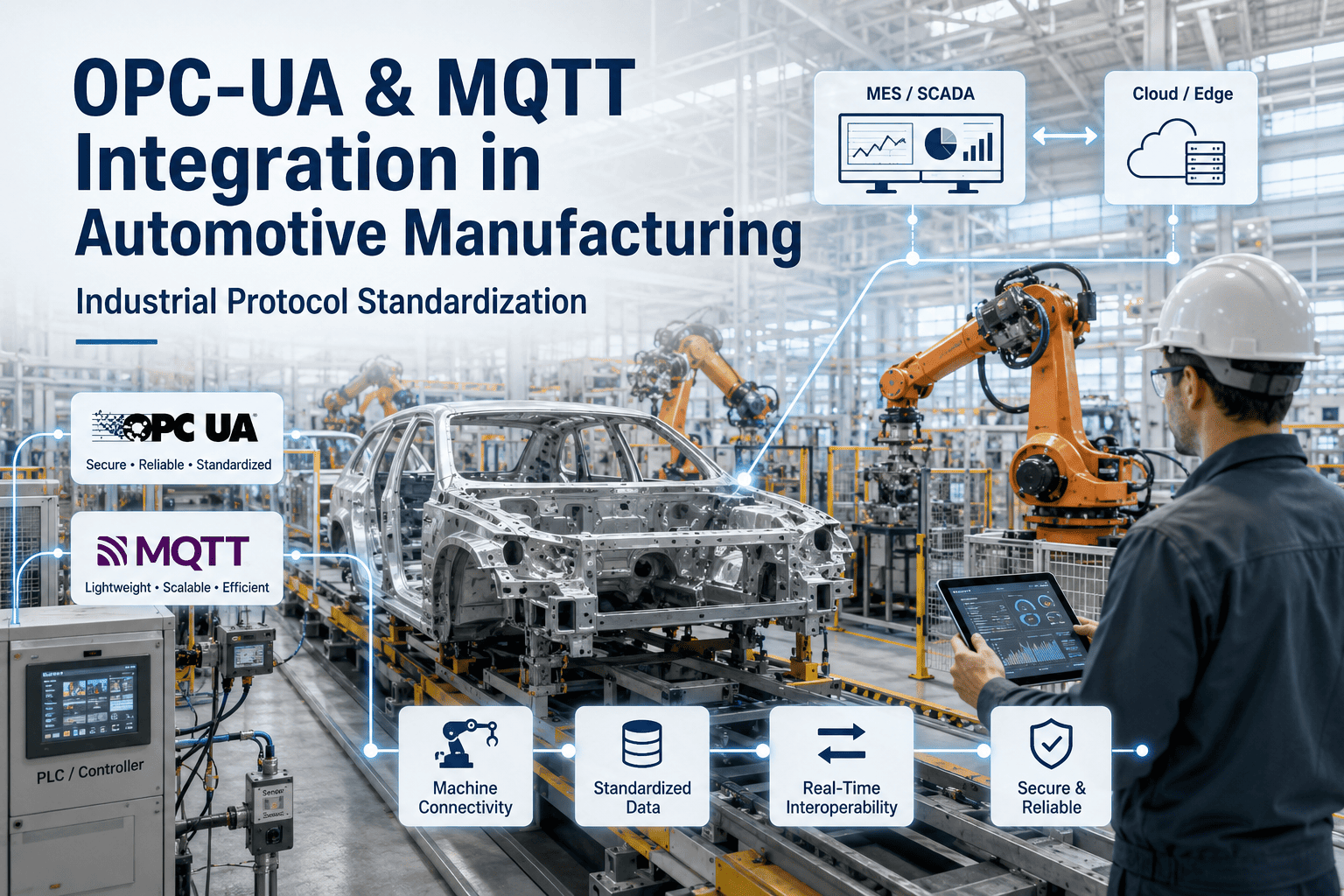
Apollo transports kitted parts from supermarkets to assembly stations using the plant's standard material handling routes. The 25kg payload capacity handles totes and sub-assemblies that were previously carried manually. Apollo receives work orders directly from the MES and uses onboard vision to navigate dynamic plant floor environments without fixed-path guidance.
Primary benefitLabour cost reduction in non-value-add transport
IntegrationMES work order receiving — autonomous route navigation
Apollo's stereo vision and DeepMind AI image interpretation allow it to perform structured quality checks — verifying fastener presence, connector seating confirmation, and visual surface checks at accessible locations. Quality results feed directly into Mercedes-Benz's quality management system via the iFactory integration layer, creating a complete digital quality record per vehicle. Talk to iFactory about quality data routing from humanoid robots.
Primary benefit100% check coverage at selected verification points
Data destinationiFactory quality integration → MES → Customer-facing quality record
The $935M Funding Story: How Apollo Got Here
Apptronik Funding Timeline — From NASA Lab to $935M
2016
Founded
Jeff Cardenas and team spin out of NASA's Human Centered Robotics Lab at UT Austin. Core team includes engineers from the NASA Valkyrie humanoid project — the same bipedal platform developed for disaster response and deep space missions.
2021–22
$14.5M
Seed and early-stage funding. Apollo prototype development begins. Focus on modular hardware architecture and hot-swap battery system — both driven by lessons from NASA operational requirements where downtime is catastrophically expensive.
2023
$53M Series A
Series A closes as Apollo alpha units begin testing in industrial environments. Mercedes-Benz evaluation begins. Jabil manufacturing partnership announced — establishing the production scale pathway that later OEM customers will require for confidence in fleet availability.
2024
$350M Series B
Series B closes with Mercedes-Benz as a strategic investor alongside Google DeepMind partnership announcement. Total capital raised reaches $417M. The Google DeepMind collaboration — combining Apptronik's hardware with DeepMind's robot learning research — is widely cited as the most significant AI-hardware partnership in industrial humanoid robotics.
2025
$518M Extension
Series B extension brings total funding to $935M as Mercedes deployment results validate commercial viability. The raise is the largest single financing event in Apptronik's history and positions the company for the 2027 commercial fleet scale-up planned for Mercedes and other OEM customers entering evaluation in 2025–2026.
Total Raised
$935M
Largest funding total for a humanoid robotics company with an active automotive manufacturing deployment
How iFactory Connects Apollo to Mercedes-Benz Production Systems
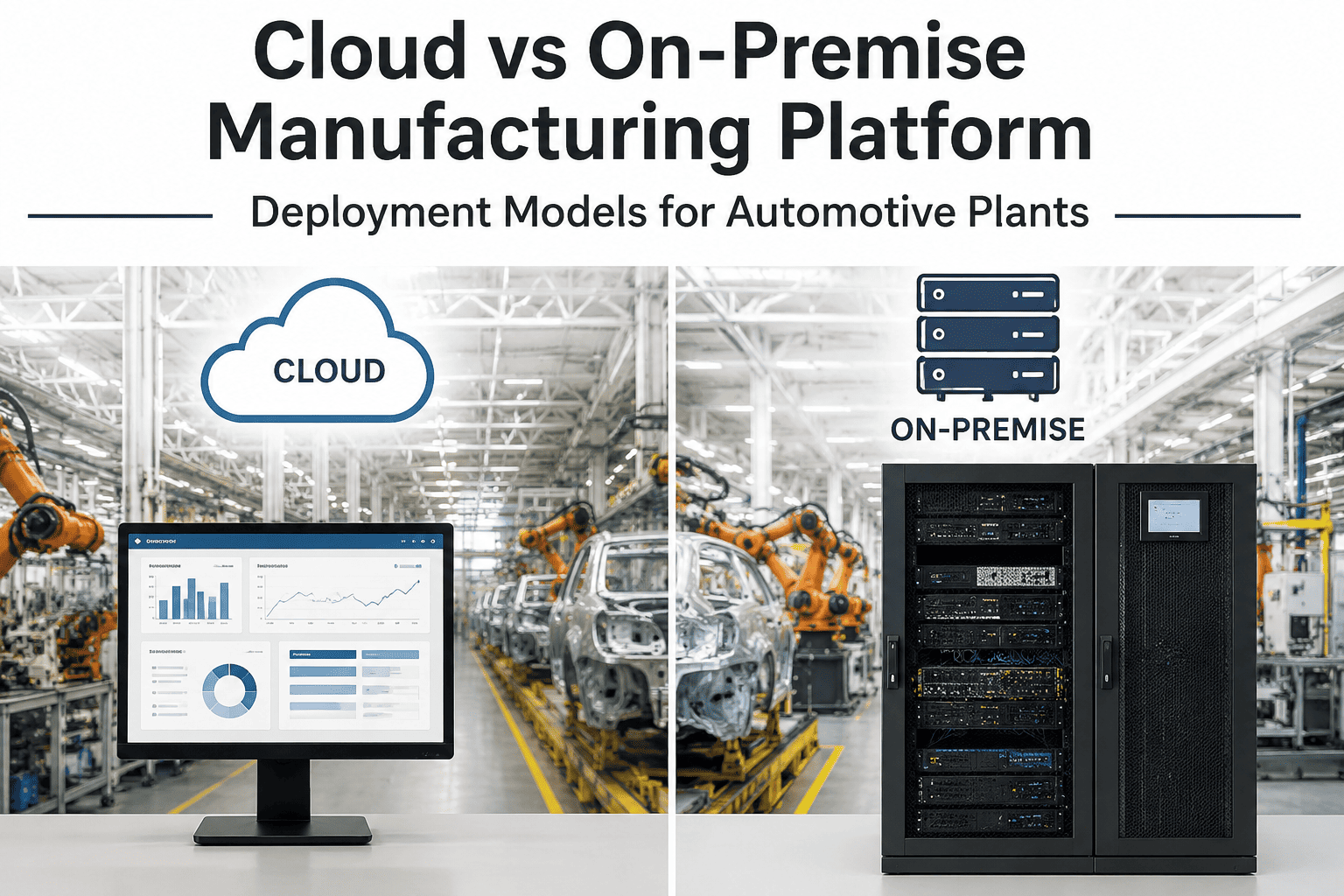
A humanoid robot operating without production system integration is generating no structured data, receiving no production context, and creating no traceable quality record. The integration layer is where the industrial value of Apollo's hardware capability is realised — or lost. iFactory provides both on-premise edge deployment for plants with data sovereignty requirements and cloud-based analytics for enterprise-level fleet management across multiple facilities — exactly the architecture that Mercedes-Benz's multi-plant programme requires.
On-Premise Deployment
For Plants With Data Sovereignty Requirements
iFactory's edge nodes process all robot task data, quality records, and production events locally — within the plant's own infrastructure. Raw production data never leaves the facility. Suitable for Mercedes-Benz European plants operating under GDPR and automotive supplier data protection agreements.
Zero cloud dependency for production decisions
Sub-5ms edge inference latency
Operates during WAN outages
GDPR-compliant by architecture
Cloud-Based Analytics
For Multi-Plant Fleet Management
iFactory's cloud platform aggregates fleet performance data across all Mercedes plants running Apollo deployments — providing enterprise-level visibility into robot utilisation, task success rates, maintenance schedules, and cross-plant benchmarking. Model updates and fleet-wide learning improvements are distributed from cloud to all edge nodes.
Cross-plant fleet performance dashboard
AI model updates distributed to edge
Enterprise sustainability reporting
Predictive maintenance fleet analytics
Apollo → iFactory → Mercedes Production Systems Integration
1
Apollo Robot
Task data · Vision results · Force readings · Battery status
2
iFactory Edge Node
On-premise processing · Real-time inference · MES context join
3
MES / Quality System
Work order receipt · Quality records · Traceability per vehicle
4
iFactory Cloud
Fleet analytics · Cross-plant benchmarking · Model distribution
Apollo vs Figure 03: How the Two Leading Automotive Humanoids Compare
FAQ: Apollo at Mercedes-Benz and the Apptronik Programme
Deploy Humanoid Robots With Production-Grade Integration — On-Premise or Cloud
iFactory provides the integration layer connecting humanoid robots like Apollo to your MES, quality systems, and production analytics — available as on-premise edge deployment for data sovereignty, cloud-based analytics for multi-plant fleet management, or both.
On-Premise Edge
Cloud Analytics
MES Integration
Quality Data Routing
Fleet Management