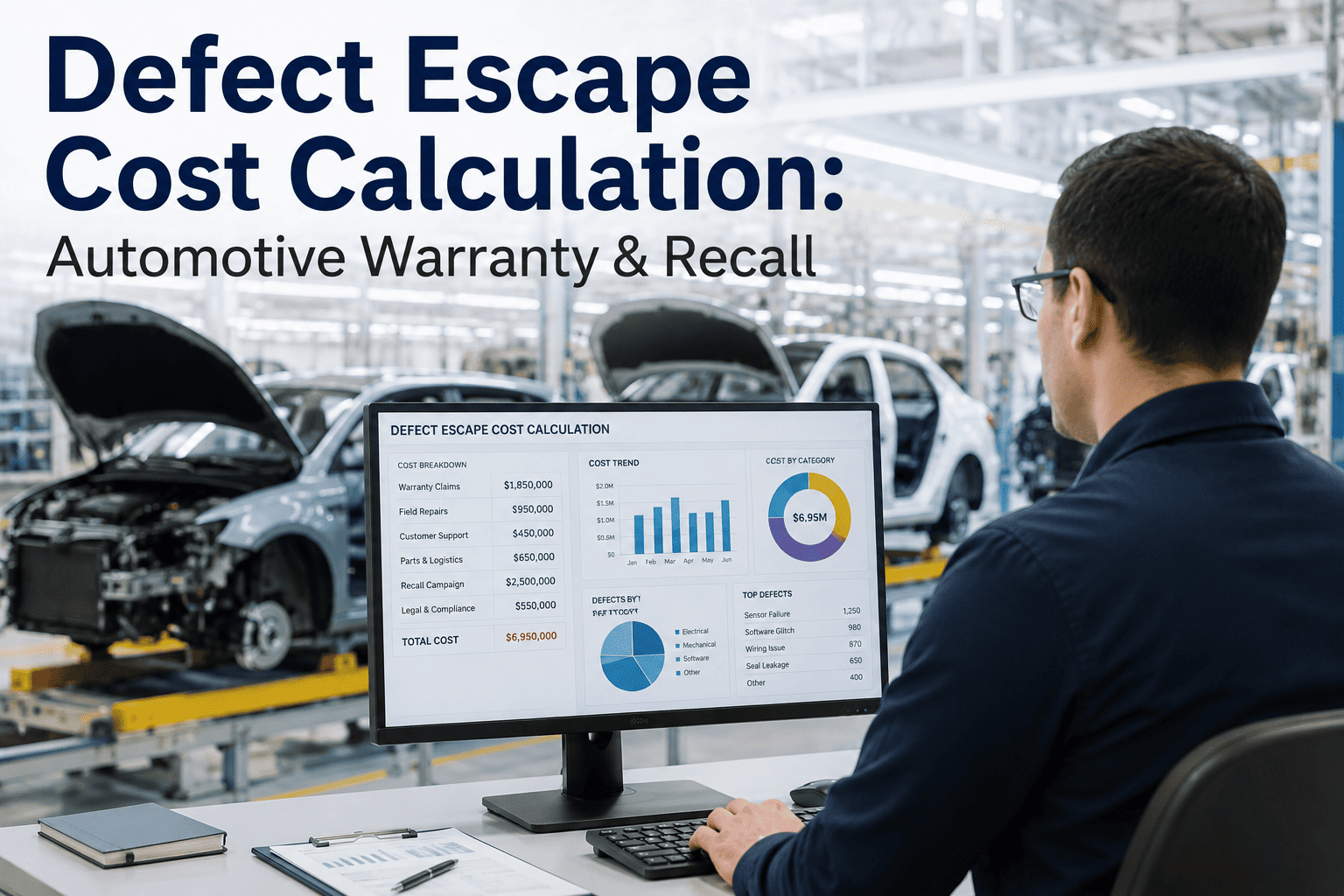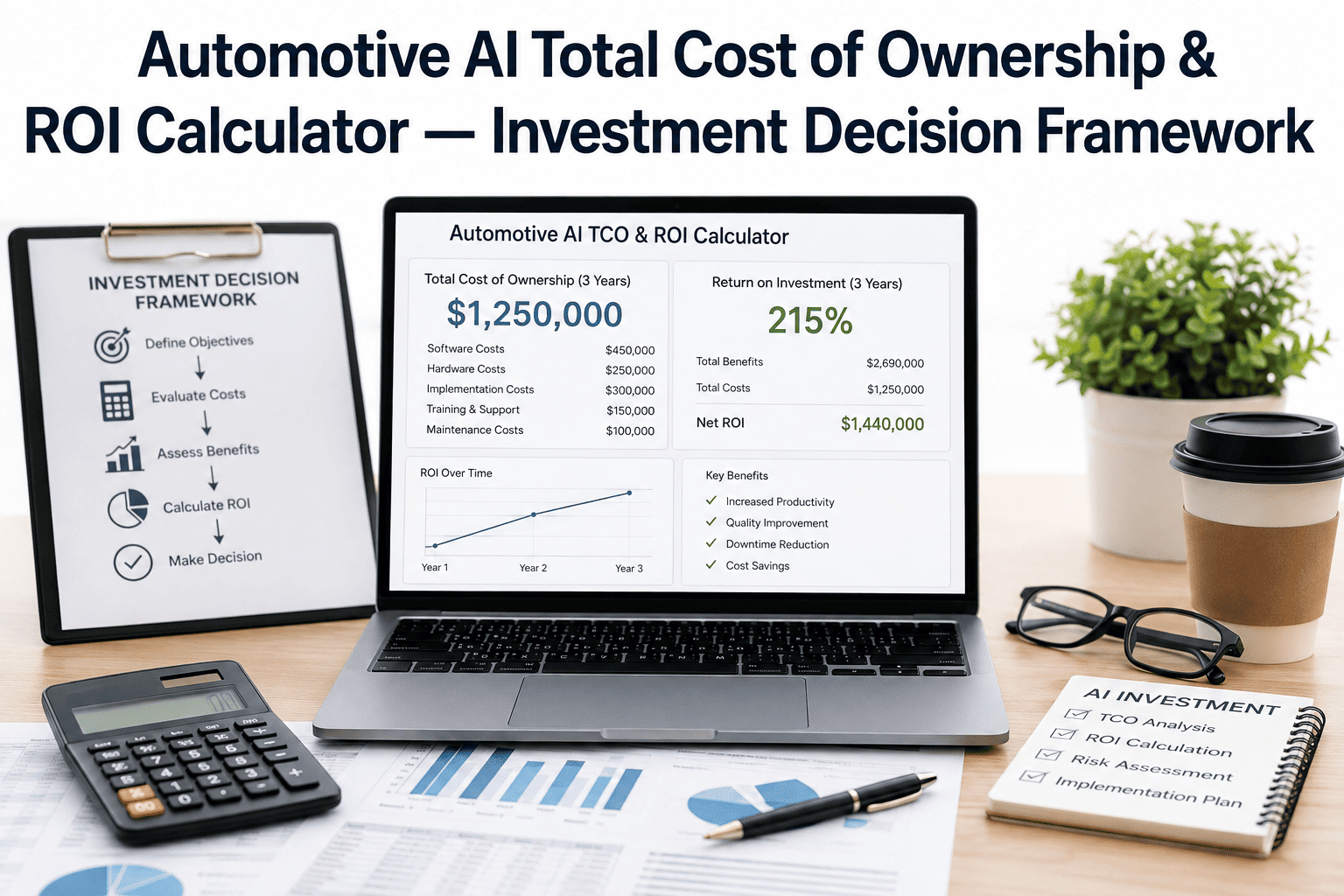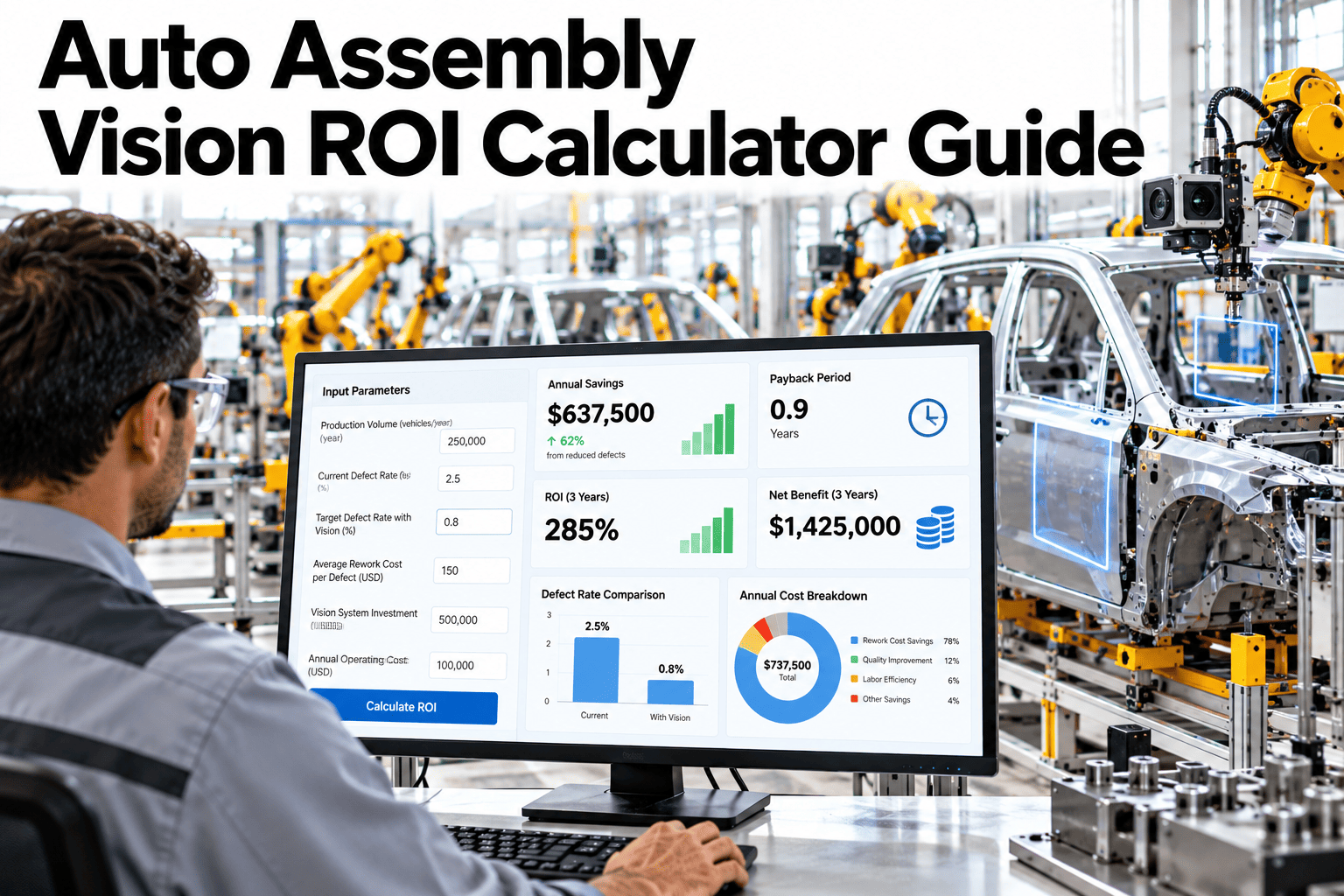
An OEM CFO evaluating an assembly vision investment usually gets a single, vague "quality improvement" number from the project proposal, when the real business case is built from three distinct, separately quantifiable sources of value. Defects caught before they reach the next station avoid rework and scrap cost. Labor previously spent on manual inspection gets redirected to higher-value work. Defects that would have reached a customer get avoided entirely, which is where warranty cost avoidance comes from. Breaking these apart, rather than bundling them into one soft number, is what makes an investment case defensible. CFOs and engineering leaders can build their own ROI case this way in a short session.
Three Separate Value Sources, One Defensible Case
iFactory builds the ROI case from defect capture value, labor savings and warranty cost avoidance, each quantified separately.
Three Value Sources, Each Quantified Separately
Bundling everything into one "quality improvement" number makes the case easy to dismiss in a finance review. Breaking it into three separately defensible figures makes it much harder to wave away.
| Value Driver | Mechanism | Typical Range |
|---|---|---|
| Defect capture value | Avoided rework and scrap cost from catching defects before the next station | Scales with assembly complexity and part cost |
| Labor savings | Manual inspection hours redirected to higher-value work | Depends on current inspection headcount and station coverage |
| Warranty cost avoidance | Field defects prevented from reaching the customer at all | Often the largest single category, but slowest to materialize |
Get Your Own Three-Part ROI Case Built
Book a 30-minute session and iFactory will build a sample ROI workbook using your own assembly and warranty data.
What Each Category Needs to Be Credible
Defect Capture Value
Needs current escape rate, average rework cost per defect type, and expected detection improvement to be defensible, not a flat industry estimate.
Labor Savings
Needs current inspection headcount and hours, and a realistic plan for what that time gets redirected to, not just assumed to disappear.
Warranty Avoidance
Needs historical warranty cost by defect type and a defensible assumption about what share vision inspection would have caught.
Signals Your Current ROI Case Won't Hold Up
Where iFactory Fits
iFactory builds the ROI case from your own assembly, labor and warranty data, structured as three separately auditable figures.
Defect Capture Modeling
Current escape rate and rework cost are combined with expected vision detection improvement to quantify this category precisely.
Labor Reallocation Planning
Labor savings are modeled against a realistic redirection plan, not an assumed headcount cut.
Warranty Data Analysis
Historical warranty cost by defect type grounds the avoidance estimate in your own field data.
Post-Deployment Verification
Actual results are tracked against the original case after go-live, confirming the investment delivered as projected.
Reviewed by iFactory's Automotive Solutions team for alignment with standard investment justification practice. The value categories shown are illustrative; actual figures should be built from your own assembly, labor and warranty data rather than industry averages.
Frequently Asked Questions
How quickly can we validate the defect capture value number?
This is usually the fastest category to validate, often within the first few months of deployment, since escape rate and rework cost reduction show up quickly in production data. Support can walk through a validation timeline.
Does labor savings always mean reducing headcount?
No, and assuming so often weakens the case. Most successful proposals model labor savings as redirected time toward higher-value tasks rather than reduced headcount, which tends to be a more realistic and better-received assumption.
How is warranty avoidance estimated before the system has run long enough to prove it?
It's modeled from historical warranty cost by defect type combined with a defensible assumption about detection improvement, then verified against actual field data as it accumulates post-deployment. See a warranty avoidance model built for your own defect history in a short session.
What if our current defect escape rate isn't well documented?
An initial assessment phase can establish a baseline escape rate through a short measurement period, which then anchors the rest of the ROI model.
Can this ROI model be presented alongside a capital request?
Yes, it's built specifically to support a capital investment process, with each value category structured to survive finance scrutiny. Ask support for a sample capital request format.
Build a Case Finance Can Actually Audit
iFactory breaks the ROI case into defect capture, labor savings and warranty avoidance. Book a walkthrough on your own data.