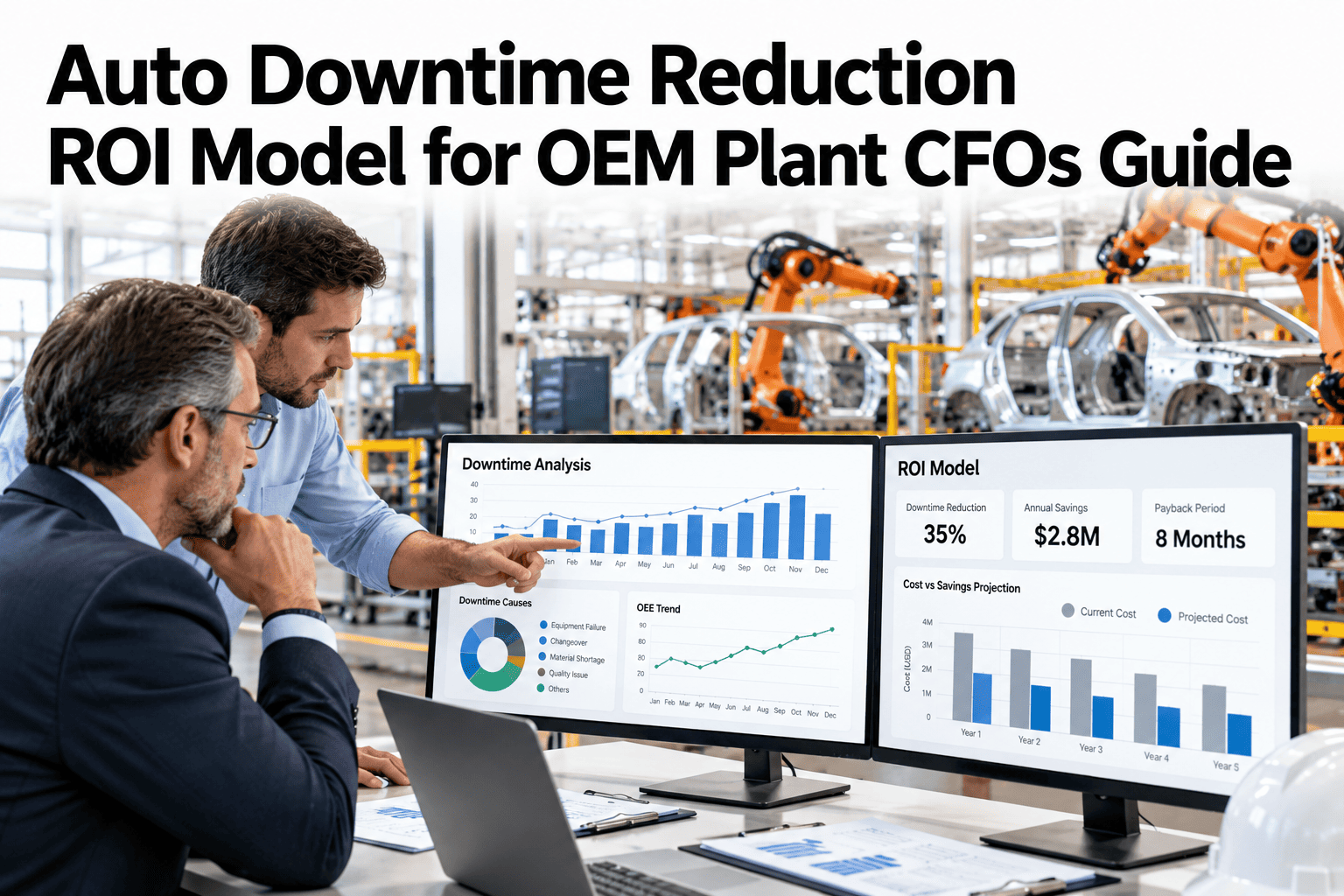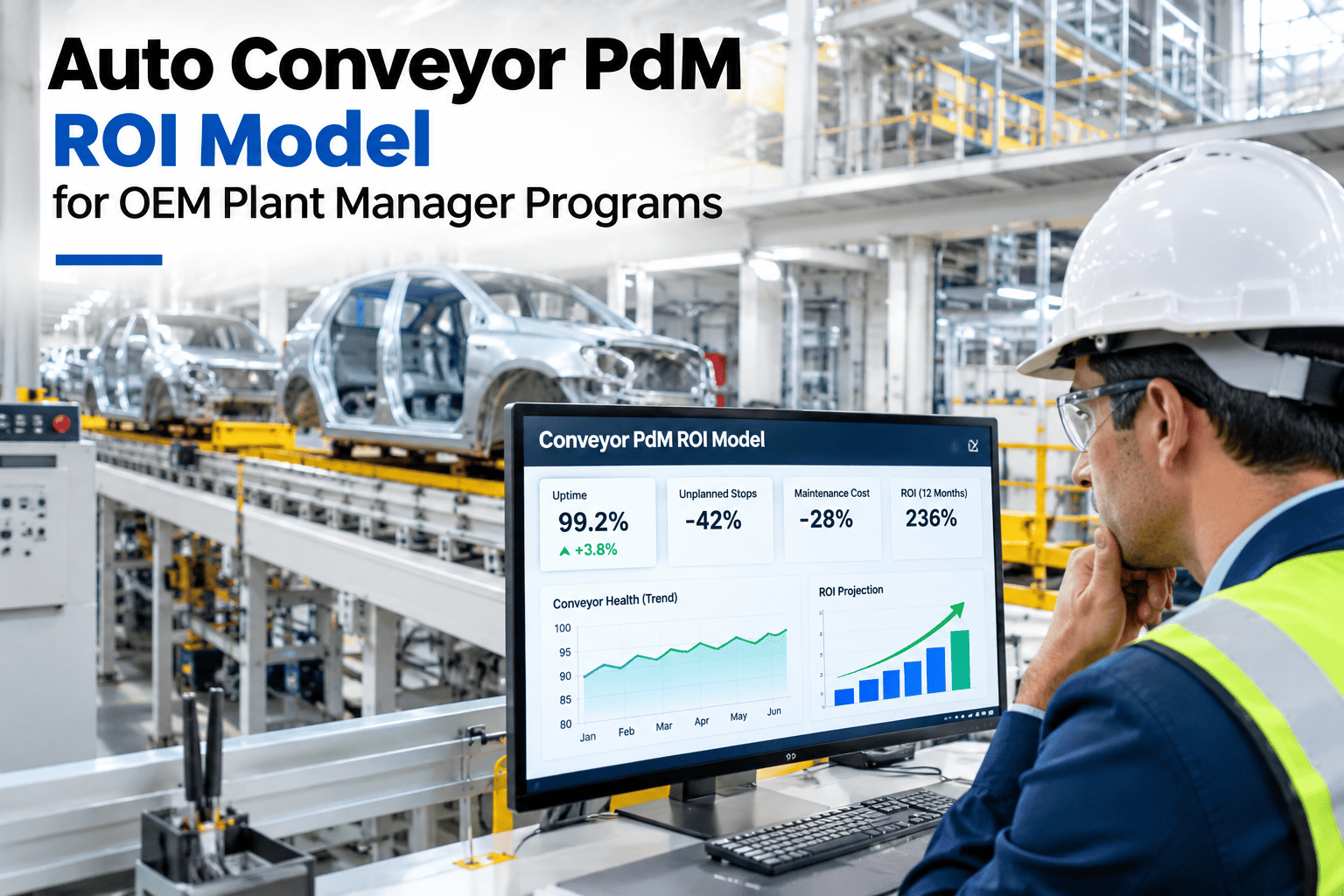
A plant manager pitching a conveyor predictive maintenance program rarely loses the argument on whether the technology works — they lose it on whether the number they bring to the budget meeting actually holds up under questioning. A defensible ROI model stacks three distinct savings sources separately instead of blending them into one optimistic figure: avoided line stoppages, spare-parts savings, and technician time reduction. Auto OEM plant managers building their own case can build an ROI model using their own conveyor data with iFactory AI.
A Budget Number That Survives the Follow-Up Questions
iFactory AI stacks avoided stoppages, spare-parts savings and technician time reduction into a single defensible model instead of one blended estimate.
Three Separate Savings Sources, Not One Blended Number
A single combined "savings" figure invites skepticism, because nobody can tell which part of it is real and which part is optimistic rounding. Separating the three sources lets each one be checked against your plant's own actual numbers.
What Each Line Item Actually Needs to Be Credible
| Savings source | What to use | What to avoid |
|---|---|---|
| Avoided stoppages | Your plant's own cost-per-hour of downtime | An industry-average figure that may not fit your line |
| Spare parts | Actual emergency-order premiums paid historically | Assuming every avoided failure skips a full part purchase |
| Technician time | Hours actually redirected to planned work, tracked | Counting the same hour saved twice across categories |
Put Your Own Numbers Into This Model Before the Budget Meeting
Bring your conveyor downtime history and a short session will build a stacked ROI estimate using your actual costs.
A Composite Scenario: The Model That Survived Finance's Questions
A plant manager's first ROI pitch used one combined savings number that collapsed the moment finance asked which part was downtime avoidance versus parts savings. Rebuilding the same case with three separate line items, each tied to a specific historical cost the plant already tracked, let finance verify each piece independently rather than taking the total on faith. The program was approved on the second pass, not because the underlying savings had changed, but because the model could finally be checked — the structure iFactory AI's team can help build around your own cost data.
Why Technician Time Savings Are the Hardest to Prove — and the Most Valuable
Avoided downtime and spare-parts savings show up clearly on a cost report. Technician time redirected from reactive firefighting to planned work is harder to quantify but often the most durable gain, since it compounds — fewer surprises this month free up time that prevents more surprises next month. Tracking it honestly, even conservatively, strengthens the model rather than weakening it.
Frequently Asked Questions
Bring a Number to the Budget Meeting That Actually Holds Up
iFactory AI builds a stacked, defensible ROI model from your own conveyor and cost data. Book a working session before your next budget cycle.