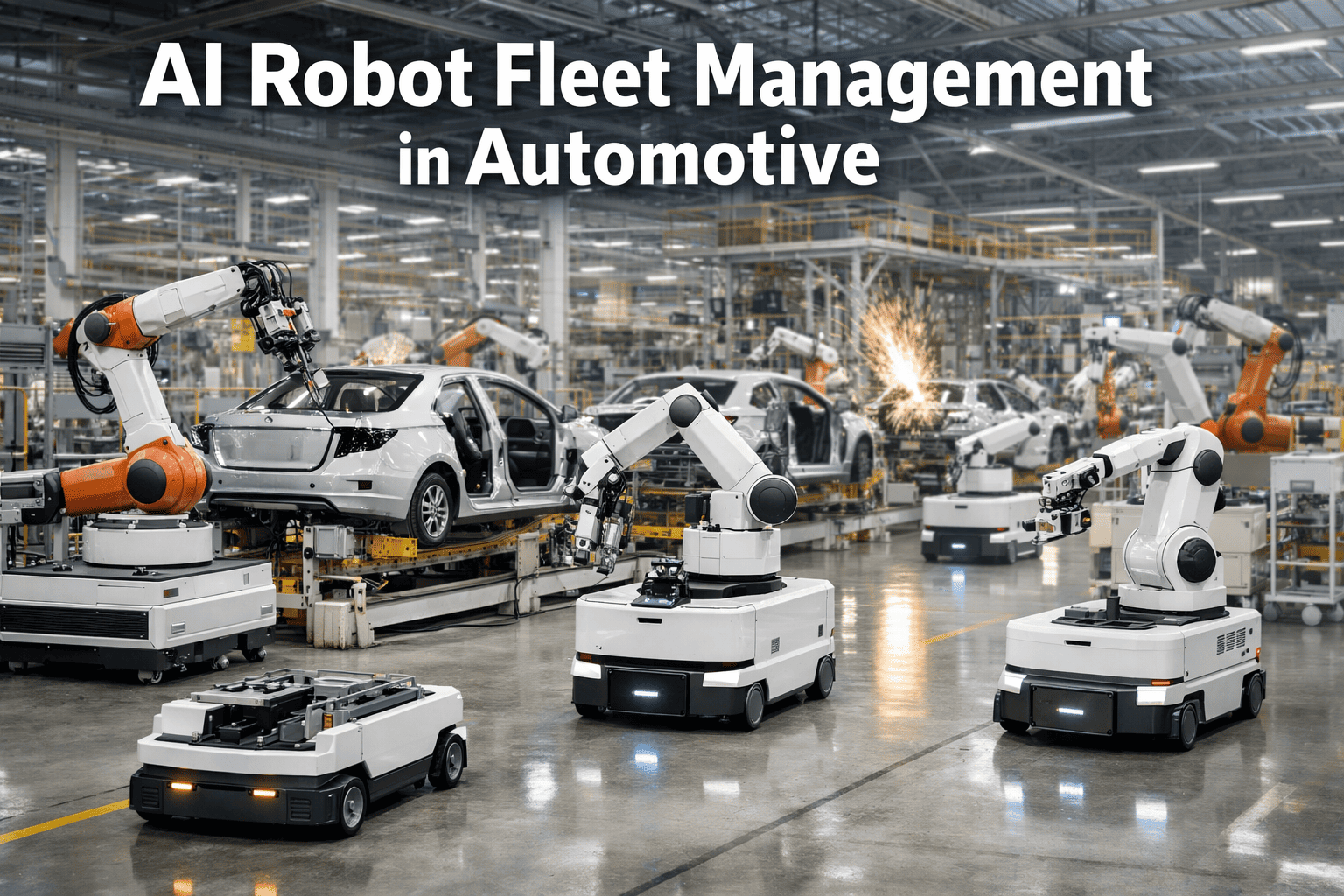
Every automotive plant runs a constant, largely invisible logistics operation underneath its production line — parts moving from receiving to staging, from staging to lineside, from lineside back to empty rack return, on a schedule that can't be late without stopping the line it feeds. That work has historically run on forklifts, tuggers, and a lot of coordination between people who know the routes by memory. AGVs automated the repeatable parts of that flow by following fixed paths between defined points, and more recently AMRs have taken it further, navigating dynamically around obstacles and adapting routes without requiring the facility infrastructure a fixed-path AGV depends on. The distinction matters more than it sounds, because it determines which technology fits which part of your logistics operation — and getting that match wrong is the most common reason mobile robot deployments underperform their business case. Walk through your material flow with a Book a Demo.
Your Lineside Delivery Problem Isn't One Problem — It's a Mix That Needs Two Different Robots
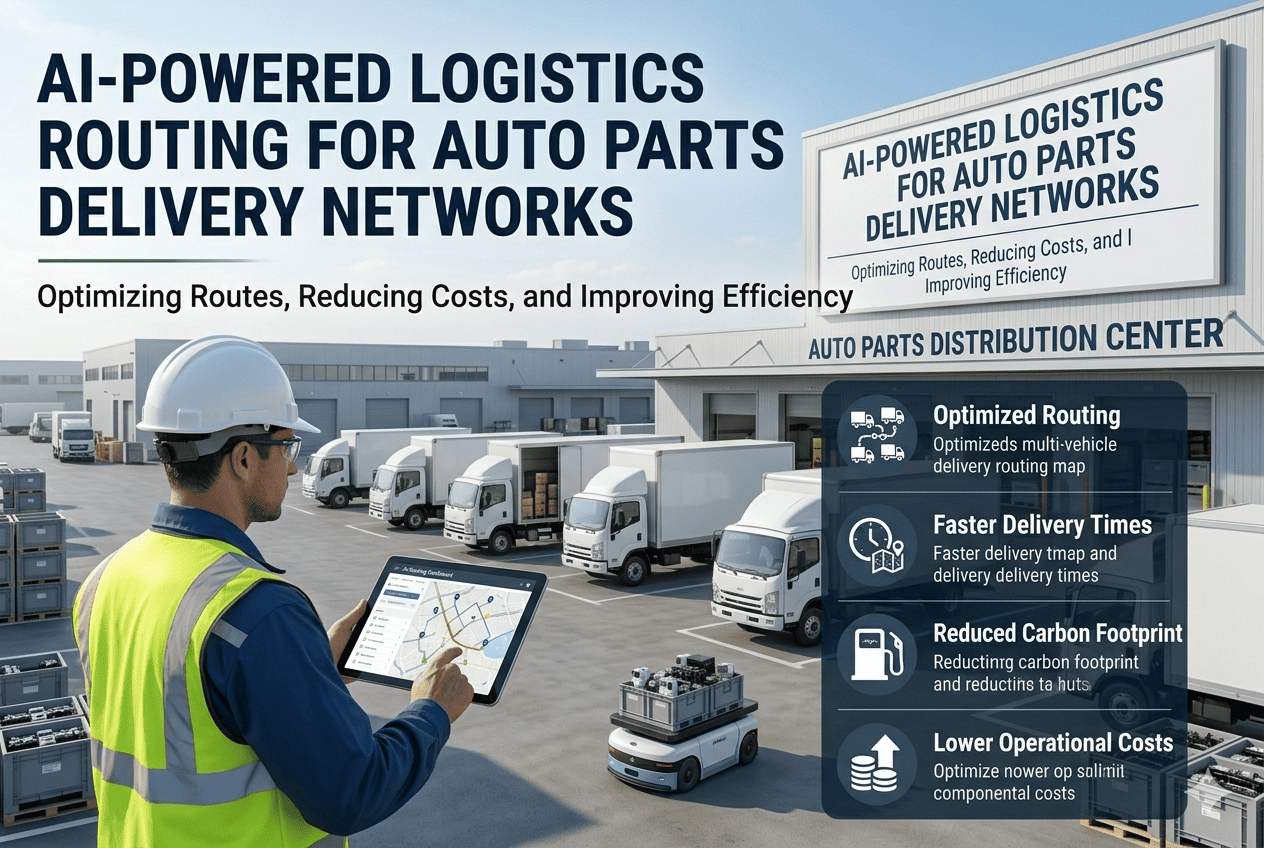
AI fleet management coordinates AGVs and AMRs together, optimizing lineside delivery routes, charging schedules, and traffic management so material shows up exactly when the line needs it, not before and not late.
AGV or AMR? The Difference Is Bigger Than the Acronym
An AGV works like a conveyor belt without the belt — moving material from a fixed point A to a fixed point B along a pre-determined path, whether that's a magnetic strip, wire guidance, or a mapped route it can't deviate from. An AMR functions more like a material handler with independent judgment, using onboard sensors and machine learning to navigate dynamically, avoid obstacles it hasn't seen before, and adapt its route as the facility layout or task priority changes.
| Characteristic | AGV | AMR |
|---|---|---|
| Navigation | Fixed path — wire, magnetic strip, or defined route | Dynamic — onboard sensors and mapping |
| Infrastructure requirement | Pre-determined pickup and drop-off points | Minimal — adapts to existing layout |
| Response to obstacles | Stops or requires cleared path | Routes around dynamically |
| Best fit | Stable, repeatable, high-volume routes | Variable routes, mixed-model production |
| Deployment speed | Requires path infrastructure setup | Can be operational within a day per unit |
Most Plants Need Both — Not One or the Other
iFactory's fleet management layer coordinates mixed AGV and AMR fleets, assigning each route to the vehicle type that actually fits it.
Where Mobile Robots Are Replacing Manual Material Handling
The most effective deployments target specific, well-understood material flows rather than attempting to automate an entire logistics operation at once. The use cases below represent where AGV and AMR fleets have delivered the most consistent returns across automotive plants.
Automated replenishment from warehouse staging directly to the point of use on the assembly line, timed to consumption rate rather than a fixed schedule.
Moving partially completed assemblies between production stages, particularly where mixed-model lines require flexible routing that fixed conveyors can't accommodate.
Handling oversized or irregular components that don't fit standard conveyor systems, using AMR flexibility to navigate around fixed infrastructure.
Returning empty totes and racks to staging areas — a repeatable, lower-priority task well suited to AGV fixed-path efficiency.
What Actually Determines Whether a Fleet Project Succeeds
Facility readiness matters as much as vehicle selection. A stable, documented material flow with clear pickup and drop-off points is the foundation a fleet deployment builds on — facilities where routes change daily without documentation struggle to realize the automation's full value regardless of which vehicle type is chosen.
Stable Material Flow
Consistent movement of raw materials, WIP, or finished goods along routes with clear pickup and drop-off points.
Documented Process
A facility layout and current-state process map that remains relatively stable, not subject to frequent undocumented reconfiguration.
Digital Infrastructure
Reliable network coverage across travel areas with the ability to integrate into existing WMS, MES, and ERP systems.
We deployed eight AMRs in our interior systems division for material movement between the work cell and the warehouse, and honestly expected a slower payback than we got. Eleven months to ROI and a fifteen percent reduction in work-cell footprint because we no longer needed the staging space forklift traffic used to require. We're expanding the fleet by half now that we've seen it run for over a year.
Frequently Asked Questions
Q: Do AGVs and AMRs need to run on separate fleet management systems?
No — modern fleet management software is built to coordinate mixed AGV and AMR fleets in real time, pairing job requests with whichever vehicle type is best suited to the specific route rather than requiring a separate management layer for each. This single-platform coordination is what makes it practical to run AGVs on your stable, high-volume routes and AMRs on your variable ones without doubling your operational overhead.
Q: How much facility infrastructure does an AMR deployment actually require?
Considerably less than an AGV — AMRs use onboard sensors and mapping rather than physical guidance infrastructure like magnetic strips or wires, so many facilities report units becoming operational within a single day of installation. Reliable network coverage across the travel area and integration access to existing systems like your WMS or MES matter more than physical infrastructure changes to the floor itself.
Q: What happens when an AMR encounters a person or obstacle in its path?
AMRs use laser scanners and object recognition to detect people and obstacles in real time and navigate around them or stop safely, which is a core part of what makes fenceless operation in shared spaces with operators and forklifts viable. This dynamic obstacle response is the primary functional difference from a fixed-path AGV, which generally requires a clear, pre-mapped route to continue moving.
Q: How do we decide how many AGVs or AMRs our fleet actually needs?
Fleet sizing depends on your material flow volume, the distance and cycle time of each route, and how much buffer capacity you want for charging and maintenance downtime — questions best answered by mapping your actual production schedule against candidate routes before committing to a fleet size. Getting this wrong in either direction either strands capital in idle vehicles or creates the same lineside delivery delays automation was meant to solve. Talk through your material flow with Support to model fleet size against your specific routes.
Q: Can a mobile robot fleet integrate with our existing ERP and MES systems?
Yes — fleet management platforms are designed to bridge enterprise-level planning and shop-floor execution, synchronizing transport jobs generated by production schedules in the MES with real-time vehicle availability and routing. This integration is what allows lineside delivery timing to reflect actual consumption rate rather than a static schedule that drifts out of sync with production. See how integration maps to your specific ERP and MES stack with a Book a Demo.
Match the Right Vehicle to Every Route on Your Floor
Get a material flow assessment that tells you where AGVs fit, where AMRs fit, and where manual handling still makes sense.