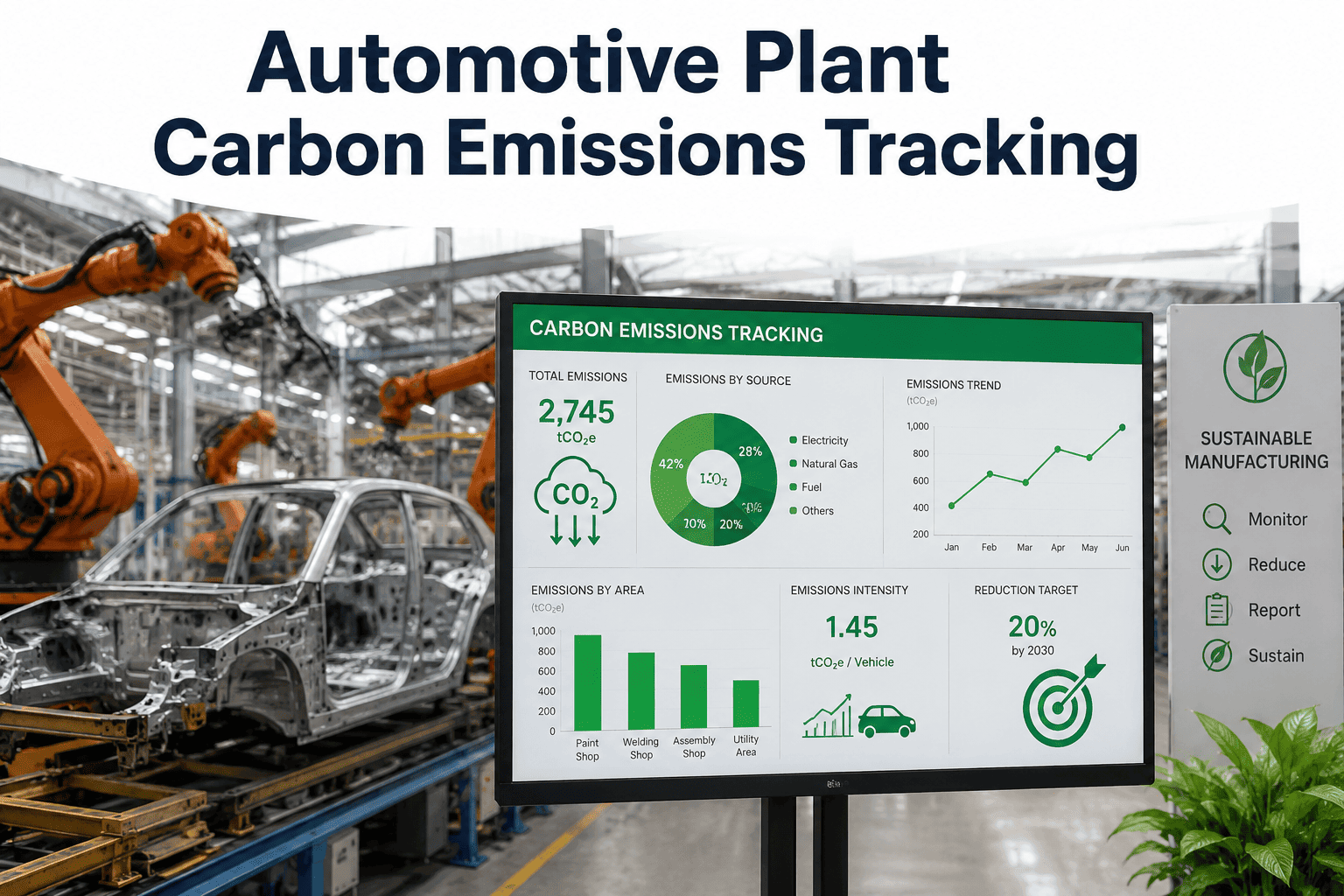
A sustainability team asked to file a Scope 3 emissions disclosure by a fixed regulatory deadline is usually starting from a spreadsheet stitched together from utility bills, supplier surveys, and whatever production data someone remembered to export that quarter. That process might have been tolerable when disclosure was voluntary, but CSRD and similar rules in key markets now make it mandatory, audited, and unforgiving of gaps in the data trail. AI-driven emissions tracking replaces that spreadsheet with a continuous, audit-ready pipeline, and you can book a demo to see it running against your own plant's operations data.
CARBON TRACKING · SCOPE 1 2 3 · CSRD READY · AUTOMATED DISCLOSURE
Mandatory Emissions Disclosure Has Made the Spreadsheet Era of Carbon Accounting Obsolete
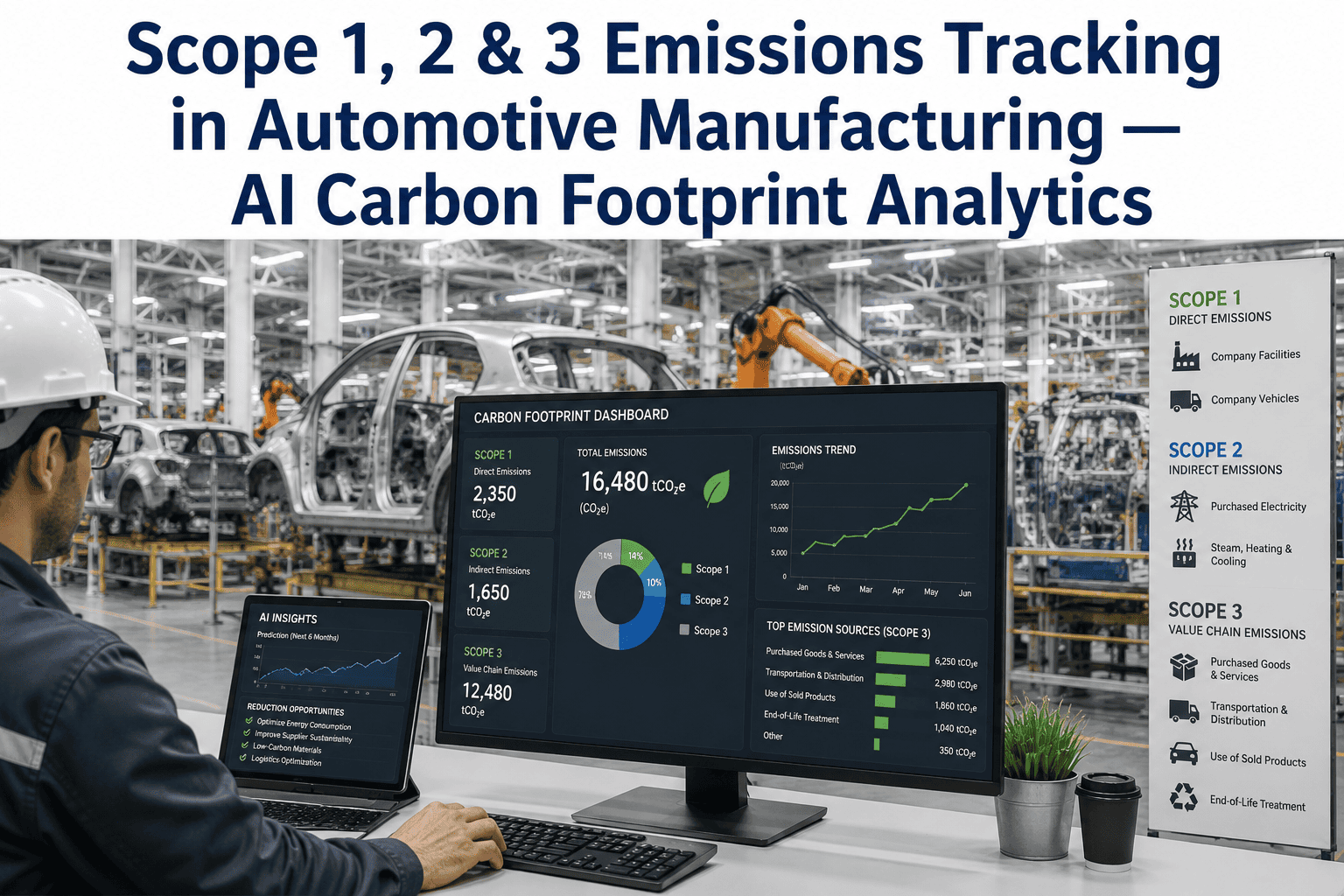
iFactory automates emissions capture directly from plant operations data, tracking Scope 1, 2, and 3 continuously and producing an audit-ready disclosure instead of a quarterly scramble.
Scope 1
Direct emissions from on-site combustion and plant vehicles
Scope 2
Purchased electricity, steam, and heating consumed on site
Scope 3
Upstream supplier materials and downstream logistics emissions
THE MANDATORY DISCLOSURE PROBLEM
Voluntary Reporting Was Forgiving of Gaps, Mandatory Disclosure Is Not
Regulations such as CSRD in the EU and comparable rules in other major markets have turned carbon disclosure from a marketing exercise into an audited legal requirement with real penalties for inaccuracy or omission. A spreadsheet-based process that relied on manual utility bill entry and periodic supplier surveys was never built to withstand that level of scrutiny, and most sustainability teams know it.
3 Scopes
Now Required Together
Regulations increasingly require Scope 1, 2, and 3 disclosure together rather than Scope 1 and 2 alone
Audited
Not Just Self-Reported
Growing share of jurisdictions now require third-party assurance on submitted emissions disclosures
Quarterly
Manual Scramble, Common
Typical reporting cadence where teams still assemble emissions data by hand from multiple disconnected sources
MANUAL SPREADSHEET VS AUTOMATED PIPELINE
What Changes When Emissions Data Flows Continuously Instead of Quarterly
Manual Spreadsheet Tracking
Utility bills and meter readings entered by hand each period
Supplier Scope 3 data collected through periodic surveys
Gaps and estimation errors surface only during audit review
Disclosure prepared under time pressure near the deadline
AI-Automated Emissions Pipeline
Energy, fuel, and process data pulled directly from plant systems
Supplier and logistics data integrated on an ongoing basis
Data gaps flagged continuously, not discovered at audit time
Audit-ready disclosure available well ahead of any deadline
See Your Plant's Emissions Tracked Continuously, Not Quarterly
iFactory connects to your existing plant data sources and builds a continuous emissions picture ready for audit at any time.
WHAT THE PLATFORM AUTOMATES
Turning Scattered Data Sources Into One Continuous Emissions Record
Direct Meter and Utility Integration
Energy and fuel consumption data is pulled directly from utility meters and plant systems, removing manual entry and the errors that come with it.
Production-Linked Emissions Factors
Emissions are calculated per unit of production using process-specific factors, giving a more accurate picture than generic industry averages.
Supplier Data Integration
Scope 3 upstream data is collected and validated on an ongoing basis rather than through a once-a-year supplier survey cycle.
Audit-Ready Reporting
Disclosure reports are generated in formats aligned with current reporting frameworks, with a full data trail available for third-party assurance review.
DATA MATURITY LEVELS
Where Most Plants Sit Today on the Path to Continuous Tracking
| Maturity Level |
Data Source |
Reporting Cadence |
| Level 1 |
Manual utility bill entry and estimation |
Annual, under deadline pressure |
| Level 2 |
Spreadsheet consolidation from multiple sources |
Quarterly with manual reconciliation |
| Level 3 |
Automated meter and system integration |
Monthly, largely automated |
| Level 4 |
Continuous data pipeline across all scopes |
Real-time, audit-ready at any point |
MEASURED RESULTS
Outcomes Reported After Automating Emissions Tracking
71%
Reduction in hours spent assembling data for a disclosure cycle
4x
More frequent visibility into emissions trends compared to a quarterly manual process
89%
Fewer data gaps identified during third-party audit review
Weeks
Earlier disclosure readiness ahead of regulatory deadlines
GETTING STARTED
Moving From Spreadsheet Tracking to a Continuous Pipeline
Step 1
Inventory Existing Data Sources
Utility meters, production systems, and supplier data feeds are catalogued to identify what can be automated first.
Step 2
Connect Scope 1 and 2 Sources
Direct combustion and purchased energy data is integrated first, since these sources are typically the most straightforward to automate.
Step 3
Extend Into Scope 3
Supplier and logistics data feeds are integrated progressively, replacing periodic surveys with ongoing data collection.
Step 4
Generate Audit-Ready Reports
Disclosure reports are produced continuously, giving sustainability teams a ready position well ahead of any filing deadline.
FREQUENTLY ASKED QUESTIONS
Questions Sustainability Teams Ask About Automated Emissions Tracking
How does the platform handle Scope 3 data when our suppliers are not equally digitized?
Supplier data quality varies significantly across any supply chain, so the platform integrates whatever automated data feeds are available while still supporting structured supplier submissions for those not yet capable of a direct integration. Over time, more suppliers typically move toward automated feeds as the process proves easier than a manual survey, but the pipeline is built to work with a mixed-maturity supply base from day one.
Book a demo to review how a mixed supplier base is handled in practice.
Will the emissions factors used hold up to third-party audit scrutiny?
Emissions factors are aligned with recognized methodologies and current regulatory guidance, and every calculation retains a traceable data lineage back to its original source, which is exactly what an auditor needs to verify a disclosure rather than simply trust it. This traceability is built in from the start rather than reconstructed after the fact when an audit request arrives.
Contact support to review the methodology documentation available for audit purposes.
Can this integrate with our existing sustainability reporting software rather than replacing it?
Yes, the platform is designed to feed clean, continuously updated emissions data into your existing sustainability reporting or disclosure software rather than requiring you to abandon a tool your team already knows, since most of the value comes from fixing the data collection layer underneath whatever reporting tool sits on top. Integration specifics are reviewed during the initial assessment based on your current software stack.
Book a demo to discuss integration with your current reporting tools.
How quickly could we be audit-ready if a new disclosure deadline came up unexpectedly?
Once the continuous pipeline is fully connected across your relevant scopes, disclosure-ready reports can typically be generated on demand rather than requiring weeks of manual data assembly beforehand, since the underlying data is already flowing and validated on an ongoing basis. The initial connection and validation phase does take time, which is exactly why starting before a deadline is approaching matters most.
Contact support to discuss a realistic readiness timeline for your plant.
Does automating emissions tracking also help identify actual reduction opportunities, not just reporting?
Yes, because the same continuous data pipeline that supports disclosure also surfaces where energy and emissions intensity are highest across specific processes or shifts, which sustainability and operations teams typically use to prioritize actual reduction projects rather than only producing a compliant report. Many plants find this operational insight becomes as valuable as the disclosure itself once the data is flowing continuously.
Book a demo to see how emissions intensity data supports reduction planning.
Stop Scrambling for Emissions Data Before Every Deadline
iFactory builds a continuous, audit-ready emissions pipeline across Scope 1, 2, and 3 from data you already generate.