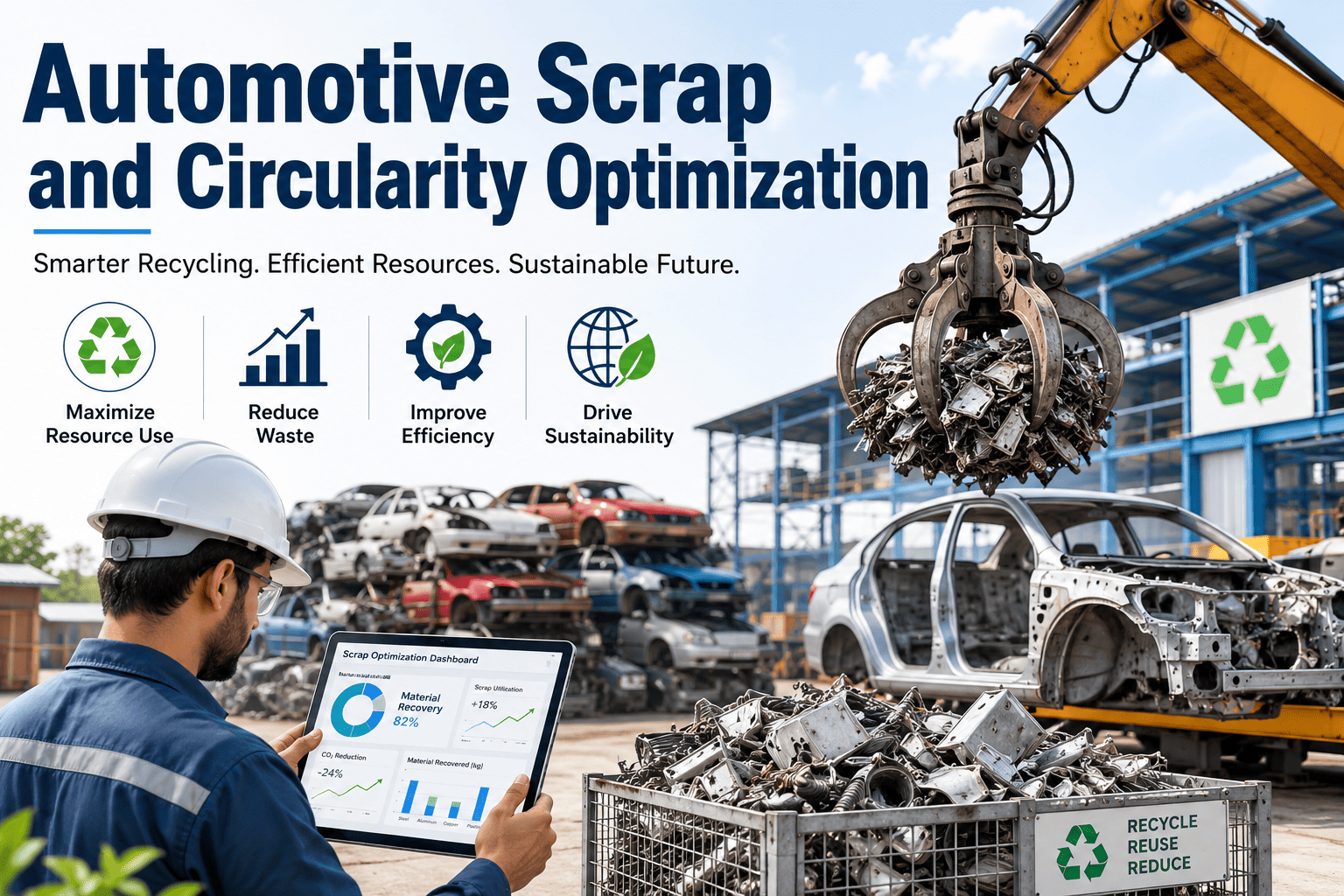
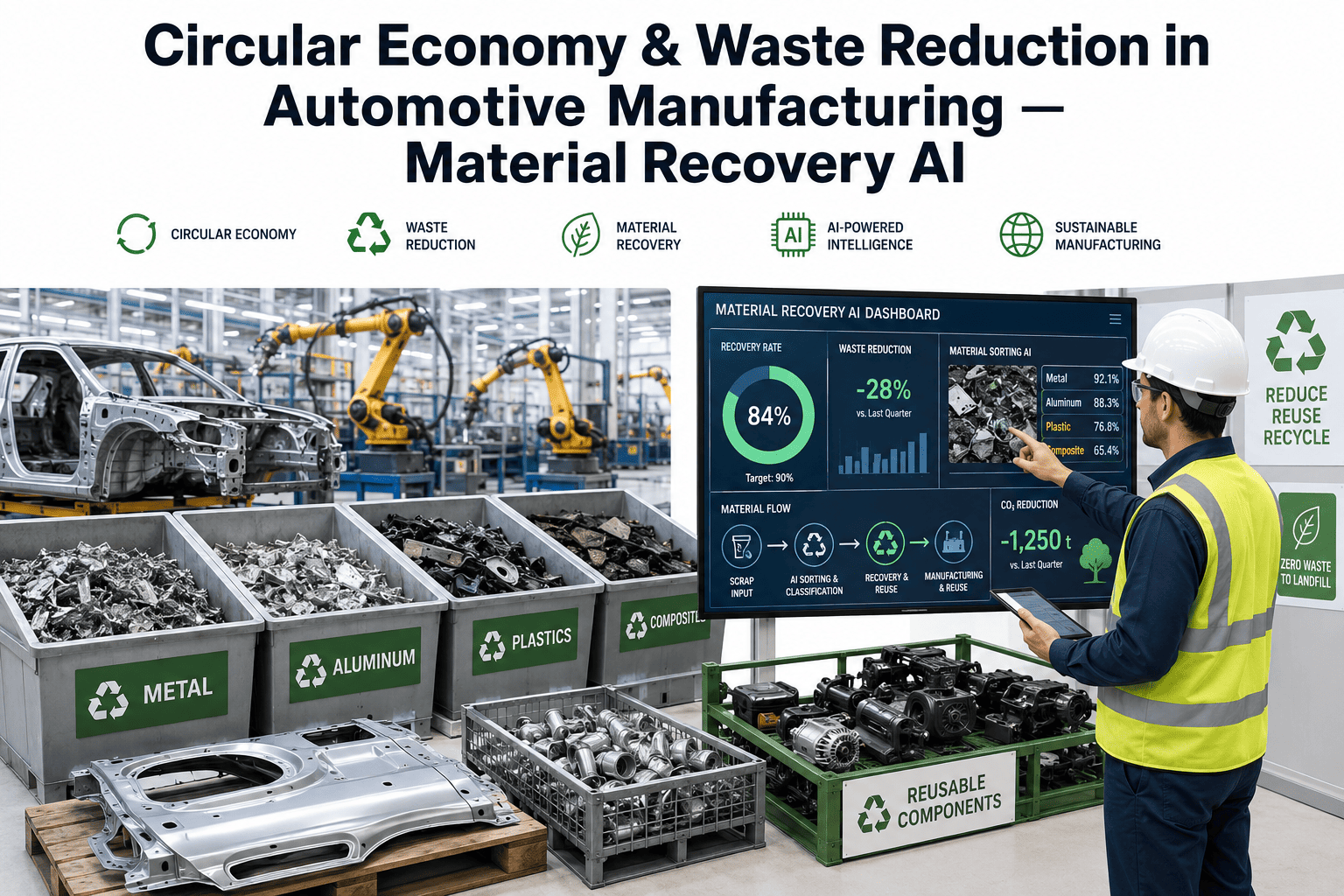
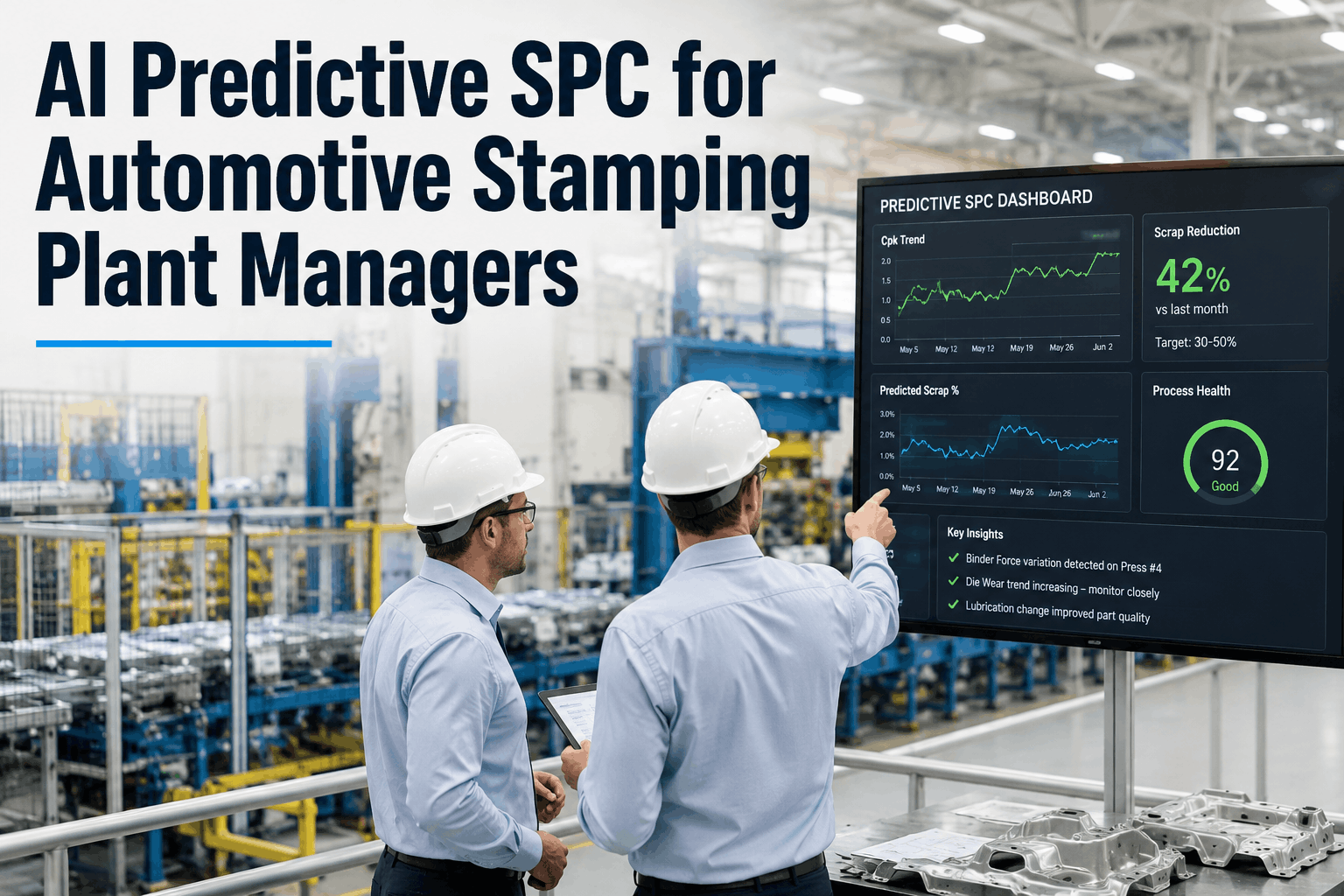
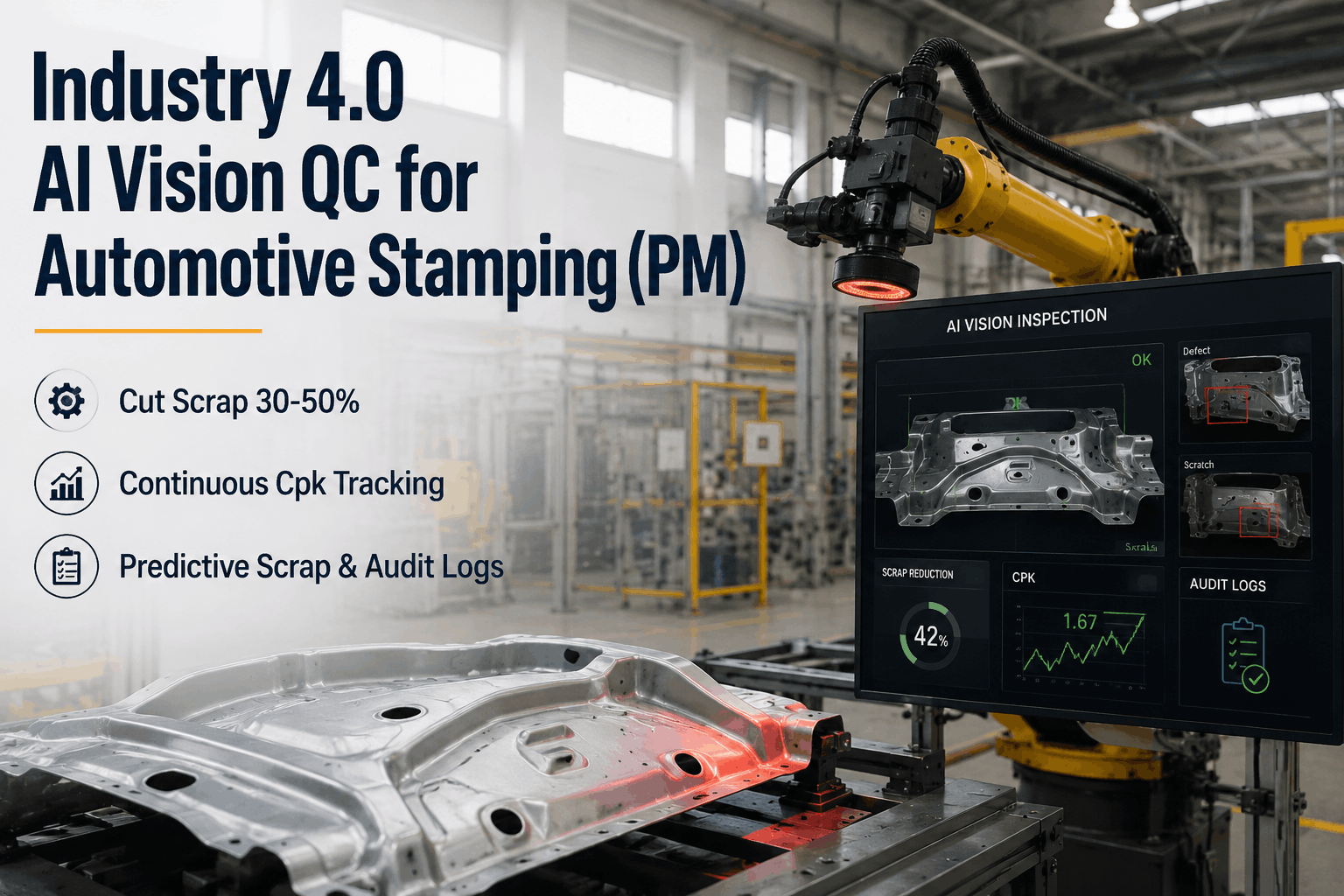
A stamping plant running three shifts can generate hundreds of tons of sheet metal scrap a month, and the difference between segregated and mixed scrap can be worth 20 to 30 percent per ton at the scrap yard gate. Most plants still sort scrap by habit rather than by tracked value, mixing grades at the press line because segregation feels like it slows the operator down. That habit quietly erodes a recovery stream that, done right, can offset a meaningful share of raw material cost. iFactory tracks scrap by press, by grade, and by shift so plant managers can see exactly where value is being lost before the material ever leaves the building, and you can book a demo to see your own scrap data modeled this way.
CIRCULARITY INTELLIGENCE FOR AUTOMOTIVE PLANTS
Scrap Is Not Waste — It Is Inventory That Left the Line Without a Barcode
iFactory tracks scrap generation by press, grade, and shift, then routes segregation and recovery decisions through AI so plants stop leaving recoverable value mixed in with low-grade bins.
Scrap Generated at Press
Skeletons, trim, punch-outs
Graded and Segregated
Sorted by alloy and coating
Recovered at Full Value
Sold or returned to supplier loop
THE VALUE LEAK
How Much Value a Plant Loses When Scrap Grades Get Mixed
The numbers below reflect the typical spread between segregated and commingled scrap pricing that stamping and body shop plants see when they first start tracking scrap by grade instead of by total tonnage.
20-30%
Price premium for grade-segregated scrap versus mixed commingled loads
1 in 4
Bins found contaminated with a second alloy grade during unannounced audits
15%
Typical reduction in scrap-to-part ratio achievable through nest and blank optimization
Days
Time it takes contamination to compound across a full production week if uncaught
SCRAP STREAM MAP
Six Scrap Streams Every Stamping and Body Shop Should Segregate Separately
Treating all metal scrap as one commodity is the single biggest reason plants under-recover value. Each stream below carries a different price basis and contamination sensitivity.
Prime Sheet Skeletons
Clean, single-grade steel or aluminum trim from blanking, typically the highest-value stream when kept uncontaminated.
Coated and Galvanized Trim
Zinc-coated material priced differently from bare steel and must never be mixed into the prime skeleton bin.
Aluminum Body Panel Offcuts
High-value stream where even minor steel contamination can void a supplier buy-back agreement entirely.
Weld Slag and Spatter
Low recovery value but must be separated to protect the value of adjacent clean metal streams.
Paint Sludge and Filter Media
Regulated waste stream requiring separate handling and documentation, distinct from recyclable metal scrap.
Mixed Line Rejects
Rejected parts and assemblies that often still qualify for closed-loop return to a material supplier if identified quickly.
Every Mixed Bin Is a Discount You Are Giving the Scrap Buyer for Free
iFactory tags scrap by grade at the point of generation and flags contamination before a bin ever reaches the yard, so your plant captures the full segregated price on every load. Book a demo to see scrap value modeled against your own press schedule.
PRICING REFERENCE
Segregated Versus Mixed Scrap Value Across Common Automotive Streams
The table below illustrates the relative value gap between properly segregated and commingled scrap across the streams most stamping and body shop operations generate.
| Scrap Stream | Contamination Risk | Segregated Value | Mixed/Commingled Value |
|---|
| Prime Steel Skeletons | Low if isolated at press | High | Medium |
| Galvanized Trim | Medium, easily mixed with bare steel | Medium-High | Low-Medium |
| Aluminum Offcuts | High, buy-back void risk | Very High | Low |
| Mixed Line Rejects | High, needs fast identification | Medium | Very Low |
CIRCULARITY ROADMAP
Building a Scrap Circularity Program From First Metric to Closed-Loop Supplier Return
Plants that succeed with circularity programs move through these stages in order, since each stage depends on the data discipline established in the one before it.
1
Tag Scrap by Press and Grade
Install grade tagging at the point of generation so every bin is attributed to a source press and material lot from day one.
2
Audit Contamination Weekly
Run unannounced spot checks on bins to catch grade mixing before it becomes an operator habit across a full shift.
3
Optimize Nest and Blank Layouts
Feed scrap ratio data back into blank nesting decisions to reduce the volume of scrap generated per part in the first place.
4
Negotiate Grade-Based Contracts
Use tracked, verified grade purity data to negotiate scrap buyer contracts priced on actual segregation quality rather than blended averages.
5
Establish Closed-Loop Supplier Returns
For aluminum and high-grade streams, route qualifying scrap directly back to the material supplier for a buy-back credit instead of the open scrap market.
COMMON MISTAKES
Five Mistakes That Quietly Drain Scrap Value Out of a Plant
These patterns show up repeatedly across stamping and body shop operations that have never formally tracked scrap by grade.
Treating All Scrap as One Commodity
Bins get combined by convenience rather than by grade, collapsing a high-value stream down to the price of the lowest-grade material mixed in.
No Attribution to Source Press
Without knowing which press or die generated a given scrap volume, engineering cannot connect scrap ratio problems back to a specific nesting or tooling issue.
Infrequent Contamination Audits
Checking bins once a month means a contamination habit can run for weeks before anyone notices the value loss on the settlement statement.
Pricing Based on Blended Averages
Accepting a single blended price per ton from a scrap buyer removes any incentive to maintain the segregation discipline that would earn a higher rate.
No Feedback Loop to Nesting Engineers
Scrap ratio data stays with the quality or EHS team instead of reaching the engineers who design blank layouts and could reduce scrap volume at the source.
READINESS CHECK
Circularity Program Readiness Checklist
Confirm these fundamentals are in place before setting recovery targets or renegotiating scrap buyer contracts.
Scrap tagged by press, grade, and shift at point of generation
Contamination audit schedule defined with a documented response process
Scrap-to-part ratio tracked per part number and reviewed monthly
Grade-based pricing terms established with scrap buyers or recyclers
Closed-loop return eligibility confirmed with key material suppliers
Nesting and blank engineers receive scrap ratio data on a recurring basis
FREQUENTLY ASKED QUESTIONS
Questions Plant Managers Ask About Scrap and Circularity Programs
How quickly can grade tagging show up as a measurable value improvement?
Most plants see the first measurable pricing improvement within one to two scrap settlement cycles after grade tagging goes live, since buyers respond immediately to demonstrably purer loads. The larger gains from nesting optimization and closed-loop supplier returns typically take a full quarter to materialize as engineering changes work their way through production.
Book a demo to see a realistic value timeline for your scrap volumes.
Does this require new bins or physical changes to the press line layout?
In most cases no, since the tagging and tracking layer works with existing bin locations and simply adds identification and weight capture at the point scrap already leaves the press. Some plants choose to add a small number of dedicated bins for high-value streams like aluminum offcuts once the value case is clear, but this is optional rather than required to start.
Contact support to review your current bin layout for compatibility.
Can scrap data be tied into our nesting or blank design software?
Yes, scrap-to-part ratio data by part number can be exported or connected directly to most common nesting and blank layout tools, giving engineering a feedback loop between what actually happens on the floor and what the design software assumed. This closes a gap that most plants currently manage through periodic manual reviews rather than continuous data.
Book a demo to see the nesting feedback workflow.
How do we prove grade purity to a scrap buyer to negotiate better pricing?
iFactory generates a documented audit trail of grade tagging and contamination check results for every load, giving your team verified data to present during scrap contract negotiations instead of relying on the buyer's own testing at the yard. This shifts leverage back to the plant since purity claims are backed by a time-stamped record rather than a verbal assurance.
Contact support to discuss reporting formats accepted by your current scrap buyers.
Is closed-loop supplier return realistic for a plant that has never done it before?
Closed-loop return is realistic once grade purity can be proven consistently, since most material suppliers that offer buy-back programs require documented evidence that returned scrap meets their contamination thresholds. Plants typically start with their highest-value stream, usually aluminum, and expand to additional streams once the supplier relationship and logistics are established.
Book a demo to evaluate closed-loop eligibility for your material suppliers.
Stop Selling Prime-Grade Scrap at Commingled Prices
iFactory gives plant managers a live, grade-level view of scrap generation, contamination risk, and recovery value across every press and shift. Book a demo to see your scrap program modeled against your own settlement data.