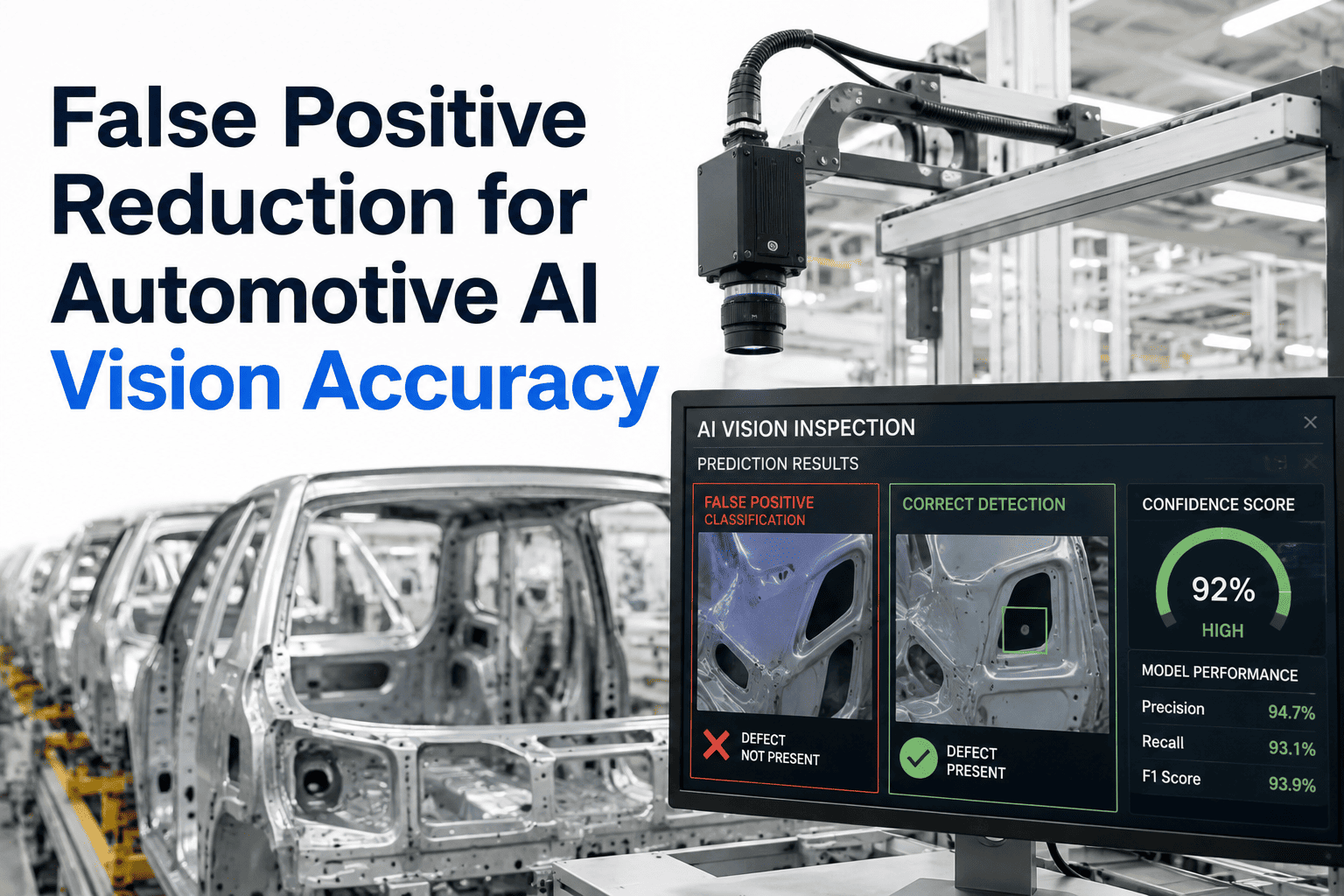
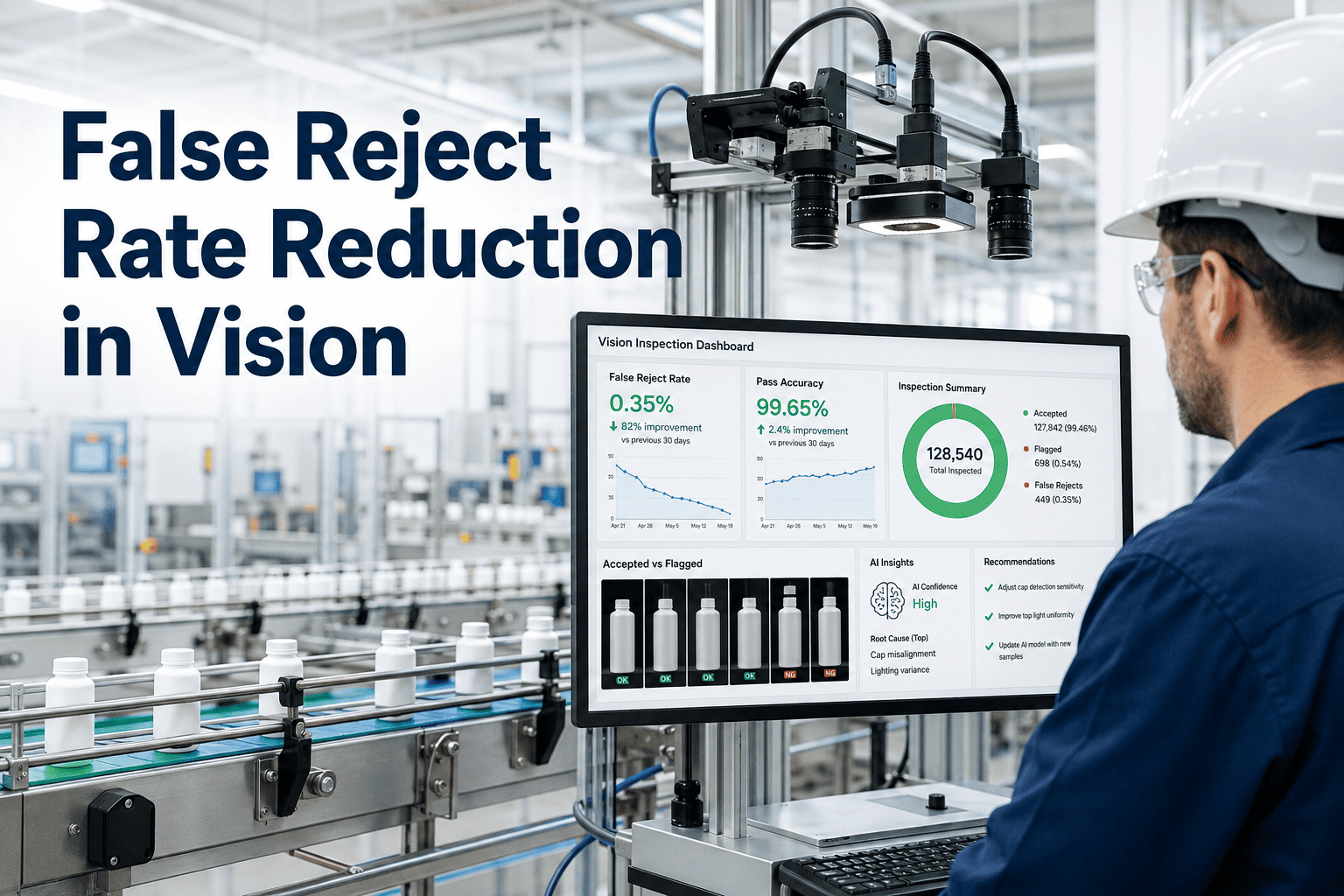
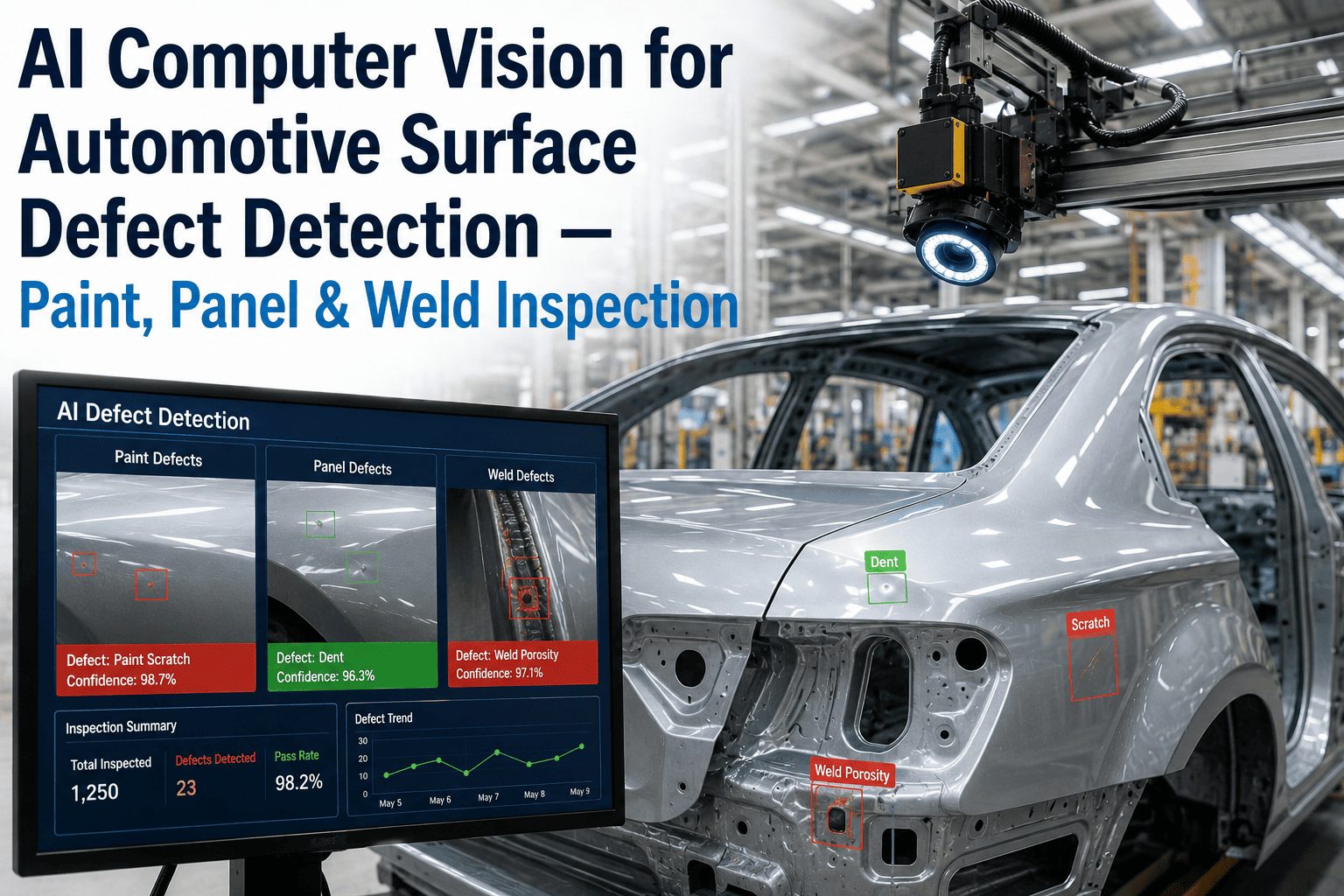
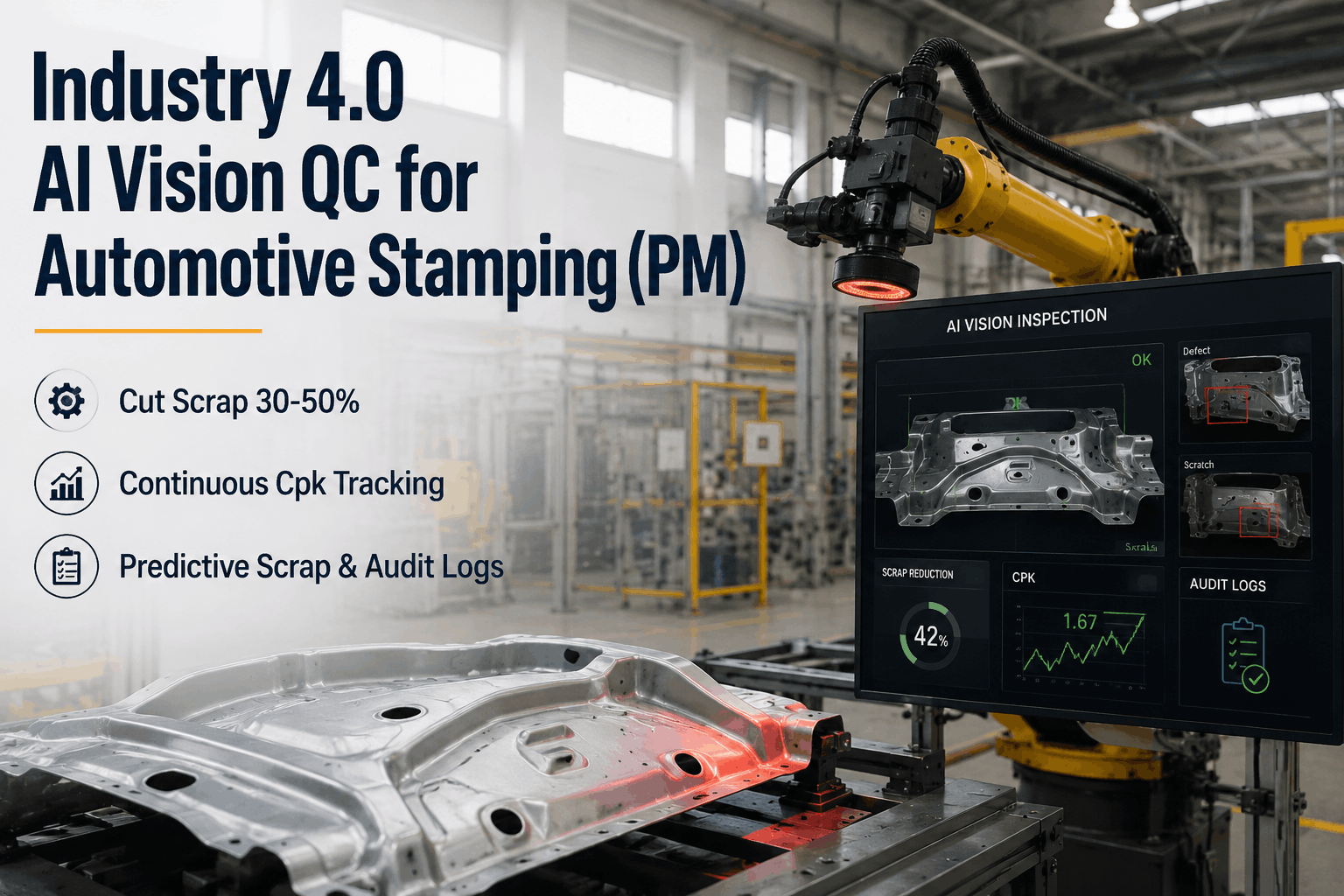
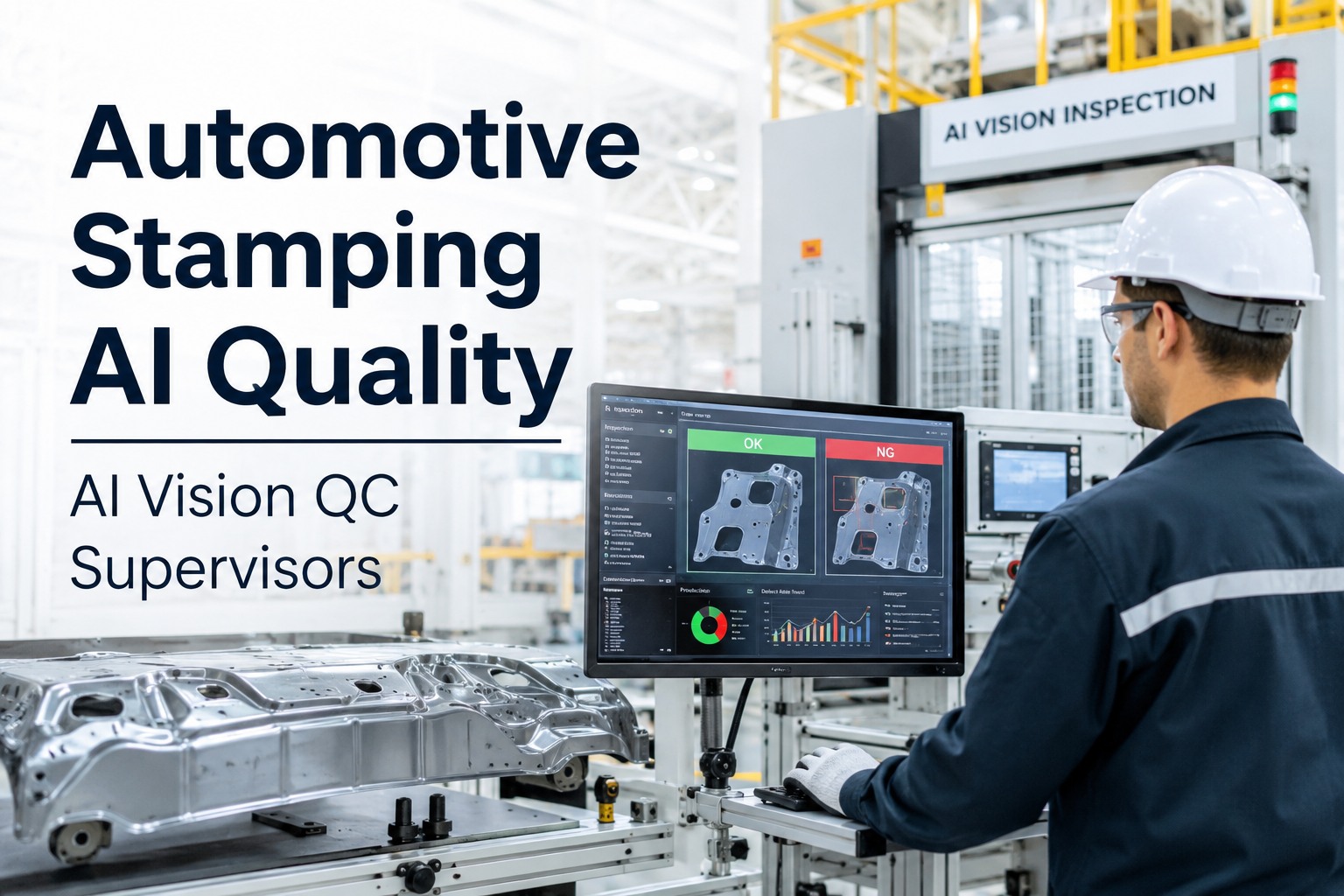
An AI vision system that flags fifteen false alarms for every real defect will get switched off within a month, no matter how impressive its detection rate looks in the vendor's pilot deck. Operators who stop a line for a false alarm three times in one shift stop trusting the alerts, and once trust is gone they start overriding or ignoring the system entirely, which quietly undoes the entire investment. False positive reduction is not a cosmetic tuning exercise — it is the difference between a vision system operators actually rely on and one that gets bypassed within weeks of go-live. Book a session with iFactory's accuracy engineering team to see how threshold tuning and contextual filtering bring false alarm rates down to a level your line will actually trust.
Automotive AI Vision · Accuracy Engineering
Reducing False Positives in Automotive AI Vision Systems
Every false alarm erodes operator trust a little more. Here is how threshold optimization, contextual filtering, and ensemble modeling bring accuracy to a level your production floor will actually accept.
Why It Matters
The Real Cost of a High False Positive Rate
A vision system's headline detection accuracy means little if its false positive rate is high enough to trigger unnecessary line stops, wasted rework investigations, and operator fatigue. The metrics that actually determine whether a system survives past its pilot phase are the ones measuring how often it cries wolf.
Operator Trust
Collapses fast when false alarms exceed a few per shift
Line Stop Cost
Every unnecessary stop compounds across a full production day
Investigation Time Wasted
Quality staff chase phantom defects instead of real ones
Core Techniques
Three Approaches That Actually Move the Needle
Method 01
Threshold Optimization
Rather than using a single generic confidence threshold across every defect class, threshold optimization tunes the cutoff separately for each defect type based on its specific false positive and false negative cost, since a cosmetic scratch and a structural weld crack warrant very different sensitivity levels.
Method 02
Contextual Filtering
Contextual filtering incorporates surrounding information — lighting conditions, part orientation, known reflective surfaces, prior inspection history of the same station — to suppress detections that are statistically likely to be artifacts rather than genuine defects.
Method 03
Ensemble Modeling
Running two or more independently trained models against the same image and requiring agreement before triggering an alert dramatically cuts false positives, since a spurious detection from one model rarely gets confirmed by a second model trained differently.
Get Your Current False Positive Rate Benchmarked
Find Out Exactly Where Your Vision System Is Losing Operator Trust
iFactory's accuracy review benchmarks your current false positive rate against comparable automotive lines and identifies the specific tuning changes that will bring it down fastest.
Warning Signs
How to Tell Your False Positive Rate Is Already a Problem
Operators Manually Overriding Alerts
When operators start clicking through alerts without inspecting the flagged part, the system has already lost credibility on the floor.
Rising Investigation Backlog
Quality engineers spending more time closing out false alarm investigations than reviewing genuine defect trends is a clear signal the threshold is miscalibrated.
Shift-to-Shift Inconsistency
If the same physical defect gets flagged on one shift and missed on another, it often points to lighting-dependent false triggering rather than a genuinely inconsistent defect.
Requests to Disable the System
Line supervisors asking to turn a station's AI vision off during peak production is the clearest possible sign that false positives have exceeded what the operation will tolerate.
Before and After Tuning
What Proper Accuracy Engineering Typically Changes
| Metric |
Before Tuning |
After Accuracy Engineering |
| False alarms per shift |
Often in the double digits |
Reduced to a small, manageable handful |
| Operator override rate |
High, indicating lost trust |
Low, with alerts treated as reliable |
| Investigation time per alert |
Long, since many turn out to be false |
Shorter, since alerts are more consistently genuine |
| Genuine defect miss rate |
Can rise if thresholds are set too loosely to fight alarms |
Held stable or improved through targeted tuning, not blunt threshold raising |
Field Perspective
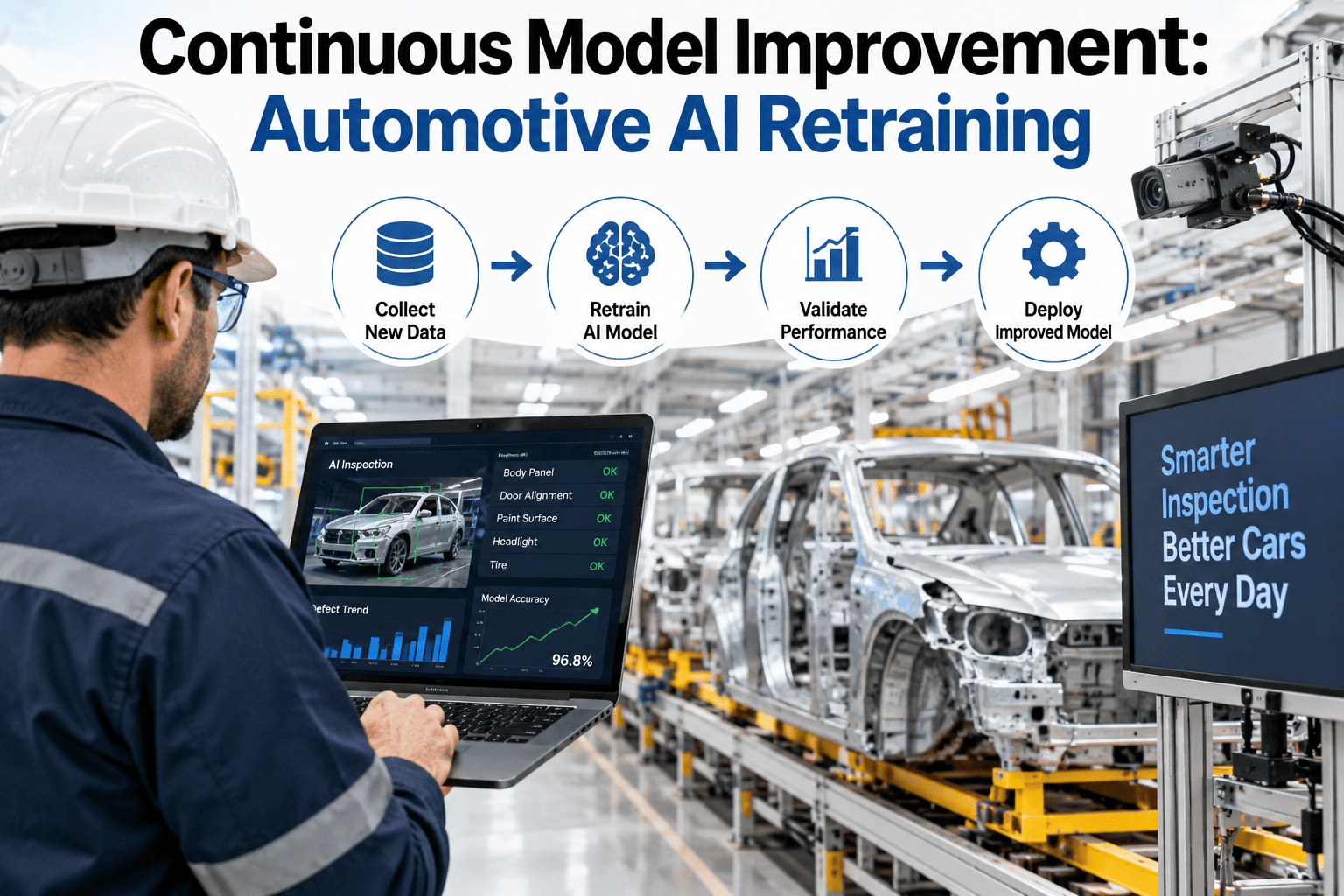
The mistake I see most often is a plant reacting to a high false positive rate by simply raising the confidence threshold across the board, which does quiet the alarms but also quietly starts missing real defects, and nobody notices until a customer complaint arrives months later. Real false positive reduction is defect-class-specific and context-aware, not a single dial you turn up until the complaints stop. The plants that get this right treat accuracy tuning as an ongoing discipline with its own metrics and review cadence, not a one-time calibration during commissioning.
Casimir Obuya-Whitlock
Machine Vision Accuracy Specialist · 12 years tuning industrial inspection systems · Former Applications Engineer, automotive vision systems integrator
Common Questions
False Positive Reduction — Frequently Asked
How quickly can we expect to see a false positive rate improve after tuning begins?
Meaningful improvement is often visible within the first few weeks once class-specific thresholds and contextual filters are applied, though full stabilization across all shifts and lighting conditions typically takes a full production cycle to validate.
Book a demo to see a realistic tuning timeline for your specific line.
Does reducing false positives risk missing more genuine defects?
Not when tuning is done correctly — the goal is precision, not blanket threshold raising, and defect-class-specific tuning combined with ensemble confirmation typically improves both false positive and false negative rates simultaneously.
Book a demo to review how our tuning methodology protects detection sensitivity.
Can we tune false positive rates ourselves without deep machine learning expertise on staff?
Much of the improvement comes from structured contextual filtering and threshold configuration that does not require in-house data science expertise, though ongoing monitoring and periodic retuning benefits from expert support as production conditions evolve.
Book a demo to discuss what level of support fits your team's capabilities.
How do we measure false positive rate accurately in the first place?
Reliable measurement requires manually verifying a sample of flagged detections against ground truth over a representative period covering multiple shifts and lighting conditions, since a single-shift sample can significantly understate or overstate the real rate.
Book a demo to set up a proper measurement baseline for your line.
What role does ensemble modeling play if we already have a single well-trained model?
Even a well-trained single model benefits from a second independent check on borderline detections, since ensemble agreement filters out the specific artifacts and edge cases that any one model is prone to misreading regardless of its overall accuracy.
Book a demo to explore whether ensemble confirmation fits your defect classes.
Stop Losing Operator Trust to False Alarms
Bring Your Automotive AI Vision False Positive Rate Down to a Trustworthy Level
iFactory's accuracy engineering combines threshold optimization, contextual filtering, and ensemble modeling to cut false alarms without sacrificing genuine defect detection.