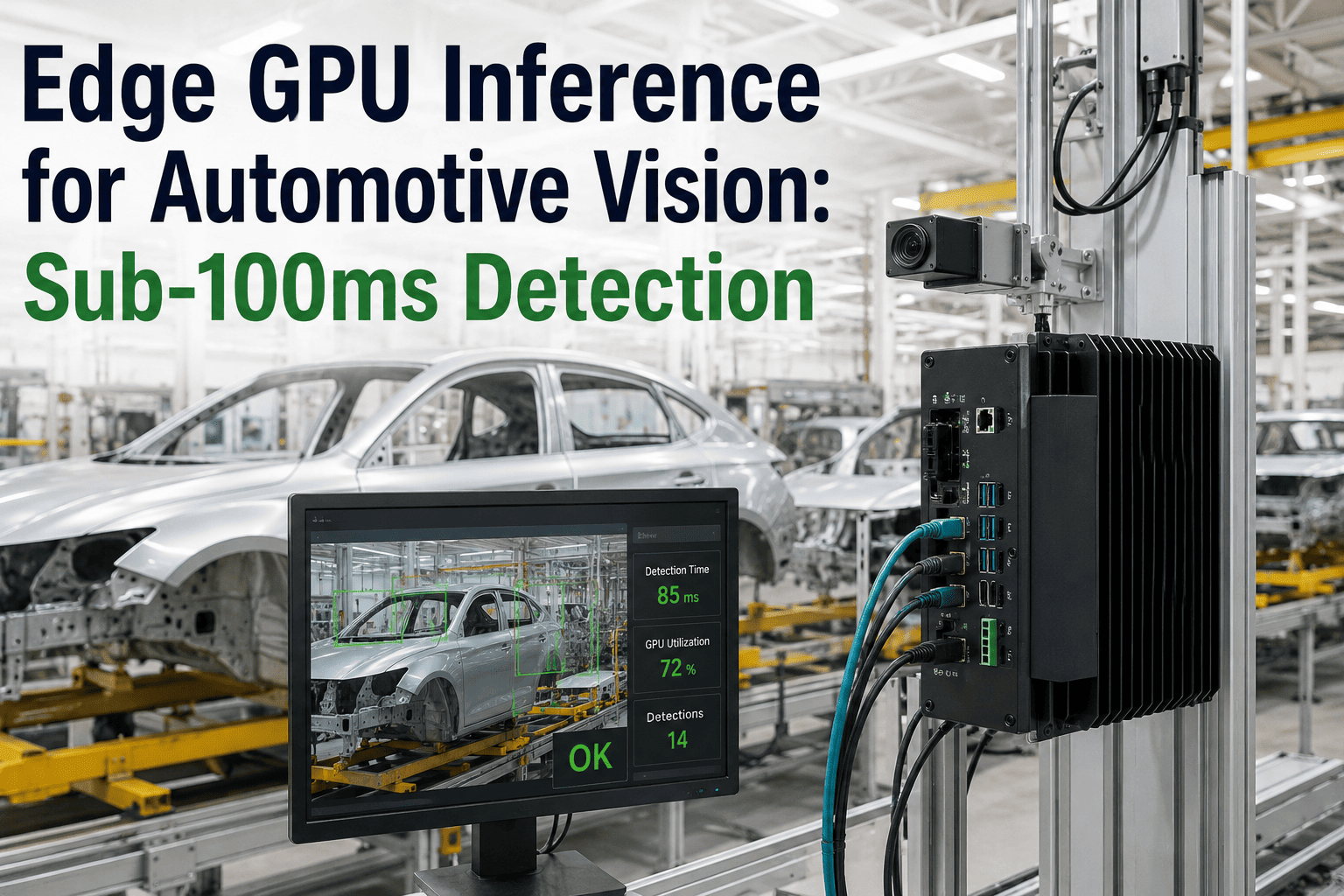
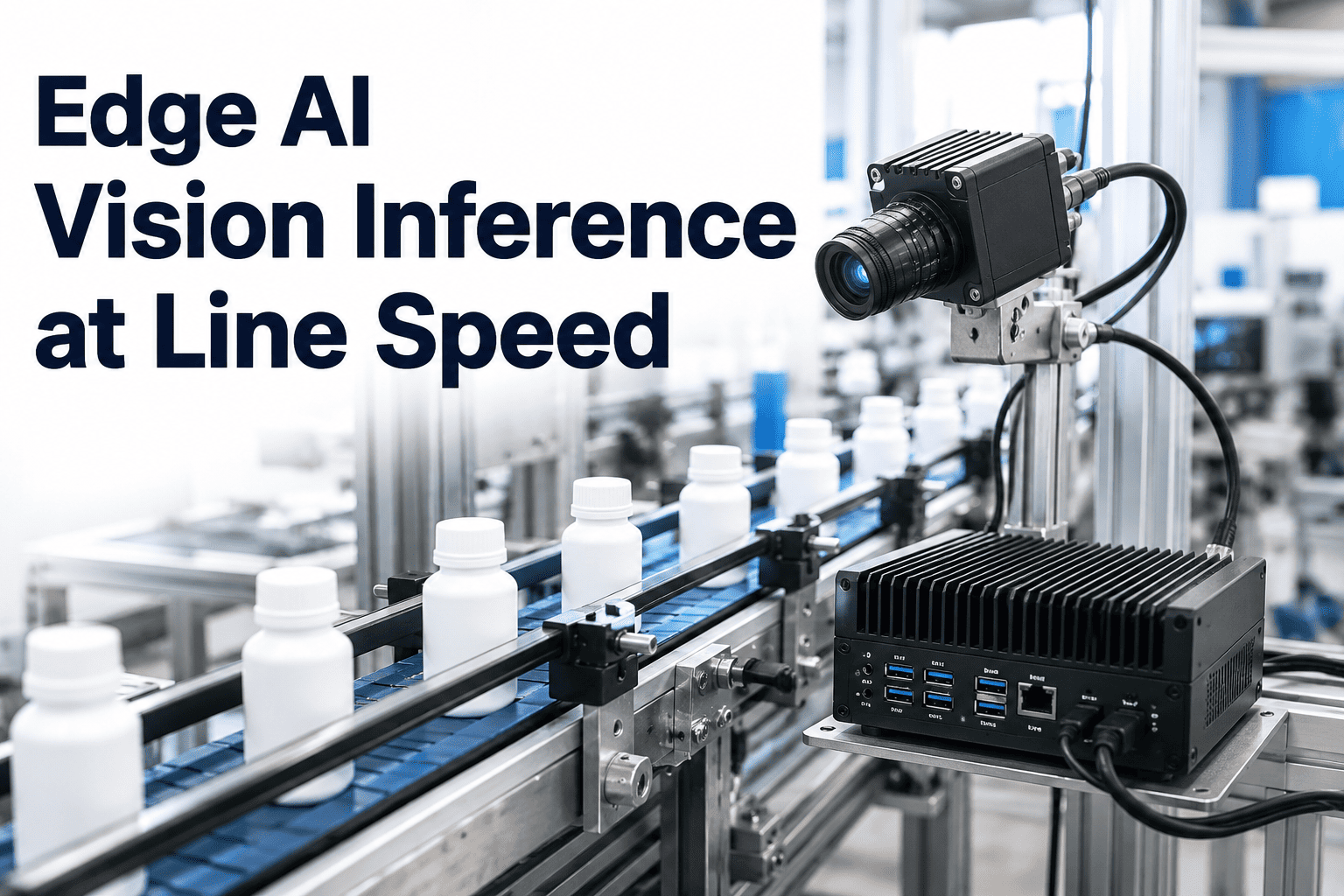
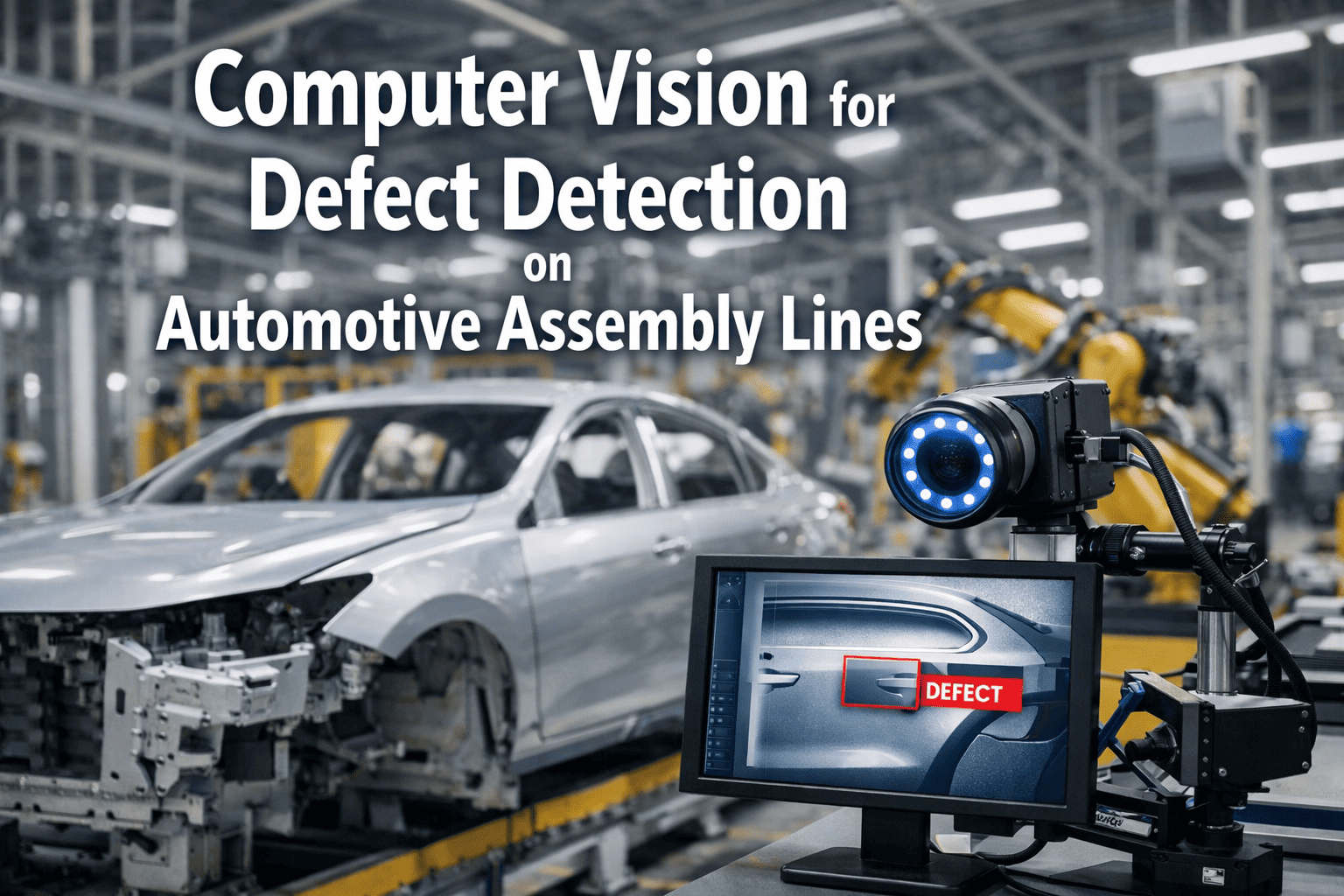
A defect detection model that takes half a second to return a result is effectively useless on a line moving a part past the camera every few hundred milliseconds, since the part has already moved to the next station before the answer arrives. Sub-100ms inference is not a nice-to-have benchmark, it is the actual constraint that determines whether a vision system can run inline at production speed or has to be relegated to a slower offline sampling process that misses most units entirely. iFactory designs edge inference architecture specifically around your line's takt time rather than a generic GPU sizing guess, and you can book a demo to see inference latency measured against your own line speed.
EDGE AI · SUB-100MS AUTOMOTIVE VISION
If Inference Is Slower Than Takt Time, It Is Not Really Inline
iFactory selects GPU hardware, optimizes the model, and designs the inference pipeline around your actual line speed, so detection keeps pace with production instead of forcing a slower offline sampling workaround.
<100ms
Target inference window per frame
Edge
Processing at the line, not round-tripped to the cloud
Line Speed
Architecture sized to your actual takt time
WHY LATENCY BREAKS INLINE INSPECTION
A Model That Works in a Lab Can Still Fail on the Line
Inference latency numbers published for a model in a lab benchmark rarely account for the full pipeline a production line actually runs, image capture, preprocessing, network transfer if cloud-based, the inference call itself, and post-processing before a decision reaches the line controller. Each step adds delay, and a model that looks fast in isolation can still miss the production window once the full pipeline is accounted for.
4 stages
Capture, preprocess, inference, and decision each add latency
Round-trip
Cloud inference adds network latency that edge processing avoids
Consistency
Edge inference avoids variable latency from shared network conditions
THE INFERENCE PIPELINE
Where Time Is Actually Spent, Stage by Stage
Stage 1
Image Capture
Camera trigger and sensor readout time, minimized through hardware triggering rather than software polling.
Stage 2
Preprocessing
Resizing, normalization, and region cropping done on GPU rather than CPU to avoid a data transfer bottleneck.
Stage 3
Model Inference
The actual forward pass through the optimized model, run on GPU hardware sized to the model's compute requirement.
Stage 4
Decision and Signal
Result translated into a pass, flag, or hold signal sent directly to line controls with minimal handoff delay.
Measure Your Actual Line's Inference Requirement
iFactory benchmarks the full pipeline against your real takt time, not a lab number, before recommending hardware.
MODEL OPTIMIZATION TECHNIQUES
How Models Get Fast Enough for the Line
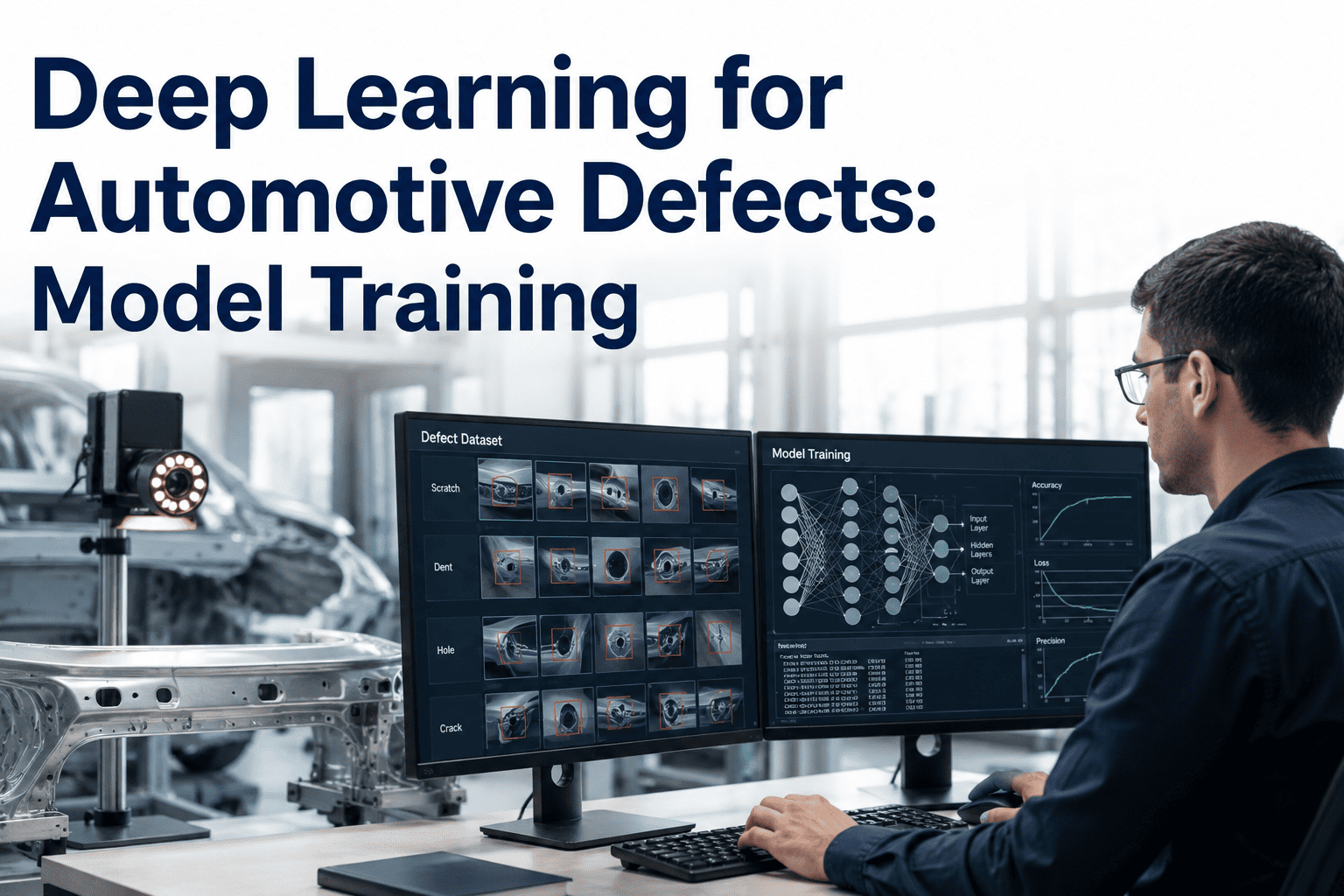
A model trained for accuracy first often needs to be optimized for speed before it can run inline, and this optimization step is where most of the achievable latency reduction actually happens, not in hardware alone.
Quantization
Reducing numeric precision of model weights to cut compute time with minimal accuracy trade-off.
Pruning
Removing redundant model connections that contribute little to accuracy but add inference time.
Batching Strategy
Balancing single-frame latency against throughput depending on whether the line needs immediate per-unit results.
Hardware-Specific Compilation
Compiling the model against the specific GPU architecture it will run on rather than a generic runtime.
EDGE VS CLOUD FOR INLINE INSPECTION
Why Edge Processing Wins for Line-Speed Decisions
| Factor |
Cloud Inference |
Edge Inference |
| Latency |
Variable, includes network round trip |
Consistent, processed at the line |
| Network Dependency |
Requires stable, low-latency connection |
Runs independently of network conditions |
| Data Volume |
Every frame transmitted off-site |
Only flagged results or summaries transmitted |
| Best Fit |
Offline training, aggregate analytics |
Real-time inline pass or fail decisions |
WHERE SUB-100MS INFERENCE MATTERS MOST
Lines Where Every Frame Has to Keep Up
High-Speed Stamping Lines
Parts move fast enough that any inference delay means the part has already left the inspection zone.
Paint Inspection Booths
Continuous panel flow requires consistent per-panel decisions without a queue building up behind the camera.
Multi-Camera Stations
Several camera feeds processed in parallel need a GPU architecture that scales without each stream slowing the others.
Final Assembly Verification
Fast decisions needed so a flagged unit can be held before it physically advances to the next station.
FREQUENTLY ASKED QUESTIONS
What Engineering Teams Ask About Edge Deployment
How is the right GPU hardware selected for a specific line?
Hardware selection starts from the measured compute requirement of the optimized model combined with your actual takt time and camera count, rather than defaulting to the most powerful available card, since oversizing wastes budget and undersizing misses the production window entirely. The selection process benchmarks the model against candidate hardware before committing to a purchase.
Book a demo to review hardware sizing for your specific line.
Does model optimization for speed reduce detection accuracy?
Some optimization techniques carry a small accuracy trade-off, but this is measured explicitly during the optimization process and validated against your actual defect set before deployment, so the final model is confirmed to hold acceptable accuracy at the achieved speed rather than assumed to.
Contact our support team to review accuracy validation for an optimized model.
Can existing plant hardware be reused for edge inference or does it require new equipment?
Some existing industrial PCs or edge servers may already meet the compute requirement depending on the model and line speed involved, and an assessment of current hardware is typically the first step before recommending new equipment, so reuse is considered wherever it is a genuine fit rather than a compromise.
Book a demo to assess whether your current hardware fits.
What happens if inference briefly falls behind during a production speed increase?
The architecture is designed with margin against the current takt time specifically so that normal speed fluctuations do not push inference past the available window, and monitoring flags any sustained latency drift so it can be addressed before it becomes a bottleneck rather than being discovered after units have already passed uninspected.
Contact our support team to discuss margin planning for a speed increase.
Is edge inference harder to maintain than a cloud-based setup?
Edge hardware does need to be maintained on-site, but it removes the ongoing dependency on network reliability that a cloud setup requires for real-time decisions, and remote monitoring of edge device health is included so maintenance teams are alerted before a hardware issue affects the line.
Book a demo to see how edge device health is monitored.
Get Inference Speed That Actually Matches Your Line
iFactory sizes GPU hardware and optimizes your model against real takt time, not a generic benchmark. See it measured on your line.