A deep learning defect detection model that performs beautifully in a data science notebook and then falls apart on the actual production line is one of the most common and most expensive disappointments in automotive AI vision projects. The gap almost always traces back to the same handful of stages — data collection that didn't represent real production variation, annotation that was inconsistent between labelers, augmentation that trained the model on unrealistic scenarios, or a deployment step that never accounted for edge-device latency limits. Getting a defect detection model from a training dataset to a reliable, production-speed inspection station running at full line rate takes discipline at every one of those stages, not just a good architecture choice. Book a working session with iFactory's model deployment engineers to see where your current training pipeline may be leaving detection accuracy on the table.
Automotive AI Vision · Model Engineering
Deep Learning for Automotive Defect Detection: From Training Data to Line-Speed Deployment
Data collection, annotation, augmentation, and edge deployment each shape whether your defect model actually holds up on a moving line — here is how to get every stage right.
The Full Pipeline
Four Stages That Determine Whether a Model Survives Production
Each stage of the deep learning pipeline compounds the effect of the ones before it — a data collection gap cannot be fixed with better annotation, and inconsistent annotation cannot be fixed with more aggressive augmentation. Treating each stage with equal rigor is what separates a model that generalizes on the floor from one that only worked in testing.
1
Data Collection
Images gathered across every shift, lighting condition, and product variant the model will actually encounter, not just a convenient sample from one favorable time window.
2
Annotation Strategy
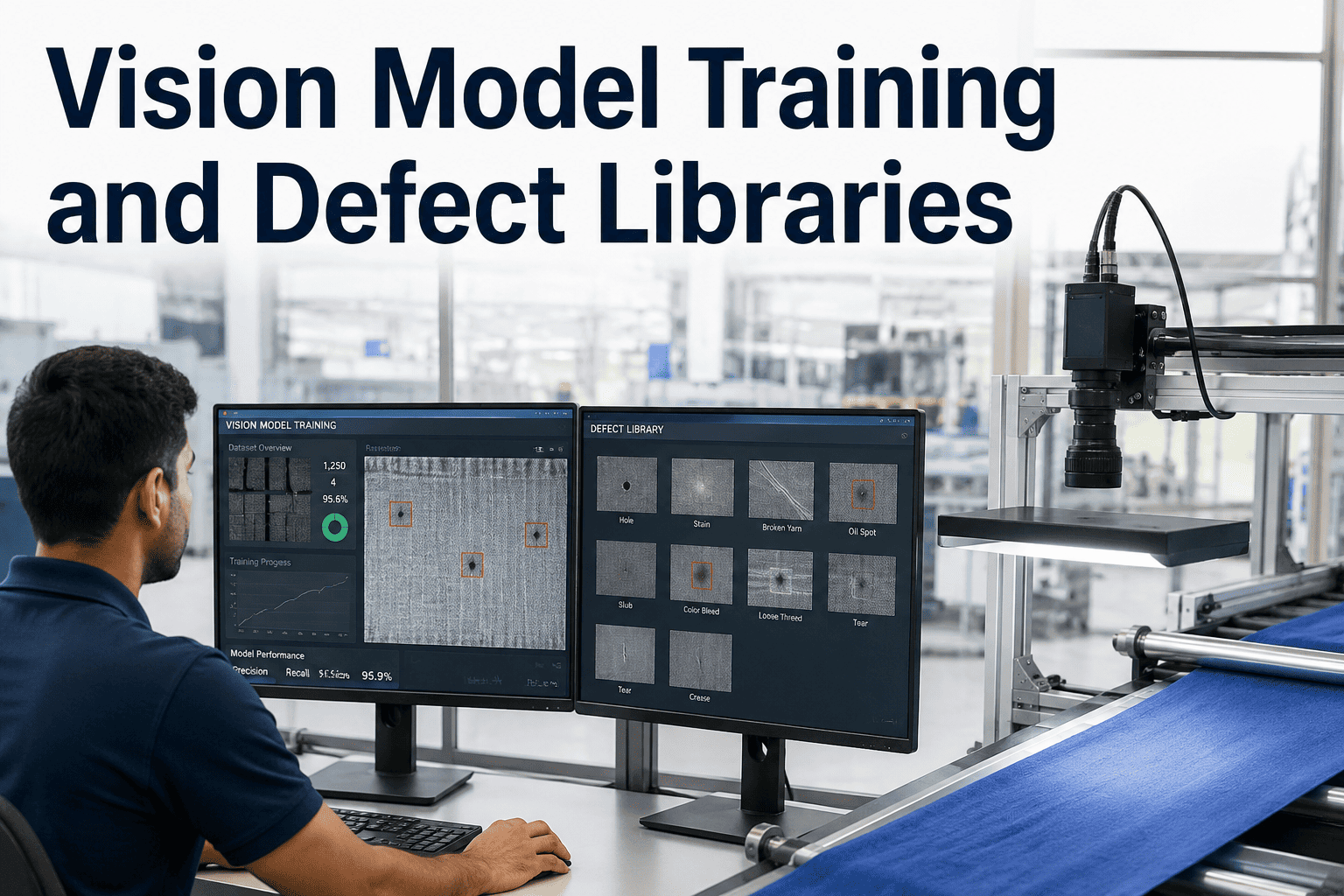
Consistent labeling standards enforced across every annotator, with defined boundary rules for ambiguous defects so the model isn't trained on contradictory examples of the same defect type.
3
Augmentation Technique
Synthetic variation applied in ways that mirror realistic production conditions — lighting shifts, minor occlusion, camera angle drift — rather than generic augmentation that trains the model on scenarios it will never actually see.
4
Edge Deployment
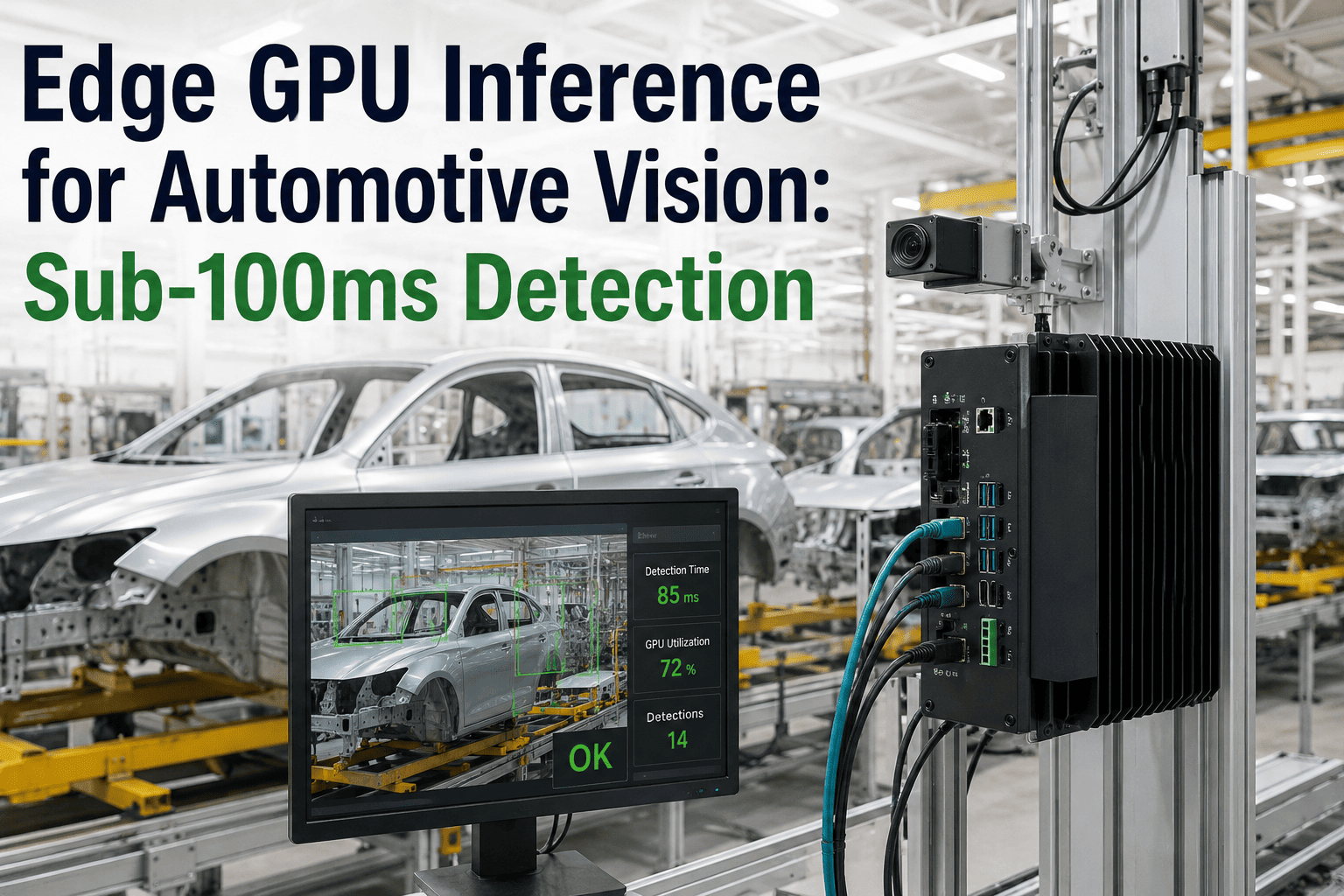
Model optimization and hardware selection tuned to hit production-speed inference, since a model that takes two seconds per frame is unusable on a line moving one part per second.
Have Training Data Already? Let's Look At It Together
Find Out Whether Your Dataset Is Ready for Production-Grade Training
iFactory reviews existing defect image datasets for coverage gaps, annotation consistency issues, and class imbalance before a single model gets trained.
Data Collection Deep Dive
What "Representative" Training Data Actually Requires
Shift and Time-of-Day Coverage
Natural lighting changes throughout a plant's day, and second and third shift conditions often differ meaningfully from the daytime images a pilot dataset was built from.
Product Variant Coverage
Different trims, colors, and body styles running down the same line each present visual variation a model needs to see during training, not just at deployment.
Defect Severity Spectrum
Borderline, hard-to-classify defects near the acceptance threshold matter more for training than obvious ones, since those edge cases are where the model actually needs to learn discrimination.
Rare Defect Representation
Low-frequency but high-severity defects need deliberate oversampling in the dataset, since natural production rates alone will rarely provide enough examples for reliable learning.
Pre-Deployment Checklist
Questions to Answer Before a Model Goes Live on the Line
✓Has the model been validated against a holdout set collected from a different time period than the training data?
✓Does inference speed meet the actual line takt time under peak production conditions, not just idle benchmark tests?
✓Has annotation consistency been audited across all labelers who contributed to the training set?
✓Is there a defined retraining trigger and process for when production conditions or defect patterns shift over time?
✓Has the model been tested against known edge cases and adversarial-like conditions such as reflections or dust on the lens?
Field Perspective
The single most predictive question I ask when evaluating whether a defect detection model will hold up in production is not about the architecture — it's whether the training data was collected across enough shifts and lighting conditions to actually represent the full production environment. I have seen technically sophisticated models trained on a beautifully lit, single-shift dataset fail within a week of deployment because nobody accounted for the way second shift's overhead lighting changes shadow patterns on the part. Model quality is a data problem disguised as an architecture problem more often than most teams expect.
Thaddeus Okonkwo-Marsh
Computer Vision Engineering Lead · 11 years deploying deep learning inspection models in automotive manufacturing · Former ML Engineer, autonomous inspection systems startup
Common Questions
Model Training and Deployment — Frequently Asked
How much training data do we actually need for a reliable automotive defect model?
There is no universal number, since it depends heavily on defect complexity and how many distinct product variants the model needs to cover, but representative coverage across shifts and conditions matters more than raw image count. Book a demo to review data requirements for your specific defect classes.
Can we use synthetic or simulated defect images to supplement real production data?
Synthetic augmentation can help fill gaps for rare defect types, but it works best as a supplement to real production images rather than a replacement, since real images capture texture and lighting nuances that are hard to simulate convincingly. Book a demo to discuss where synthetic data fits your dataset strategy.
How often should a deployed model be retrained once it's running in production?
Retraining cadence should be triggered by measured performance drift or known production changes like a new product variant, rather than a fixed calendar schedule, since a stable process may not need retraining for a long stretch while a changing one might need it frequently. Book a demo to set up a drift-monitoring approach for your line.
What edge hardware is typically needed to hit line-speed inference for automotive inspection?
Hardware requirements depend on model complexity and line takt time, but modern edge GPU or specialized inference accelerators are commonly used to keep latency within the tight windows automotive lines demand. Book a demo to size hardware against your specific line speed.
Who should be doing the annotation work — our own quality team or an outside labeling service?
Either can work, but whoever annotates needs deep familiarity with what actually counts as a defect on your line, since generic outside labelers without that context tend to introduce inconsistency that shows up later as model confusion. Book a demo to review annotation workflow options for your team.
From Training Data to a Model That Holds Up on the Line
Build a Defect Detection Model That Survives Contact With Production
iFactory engineers the full pipeline — data collection strategy, annotation standards, augmentation design, and edge deployment — so your model performs at line speed, not just in a notebook.