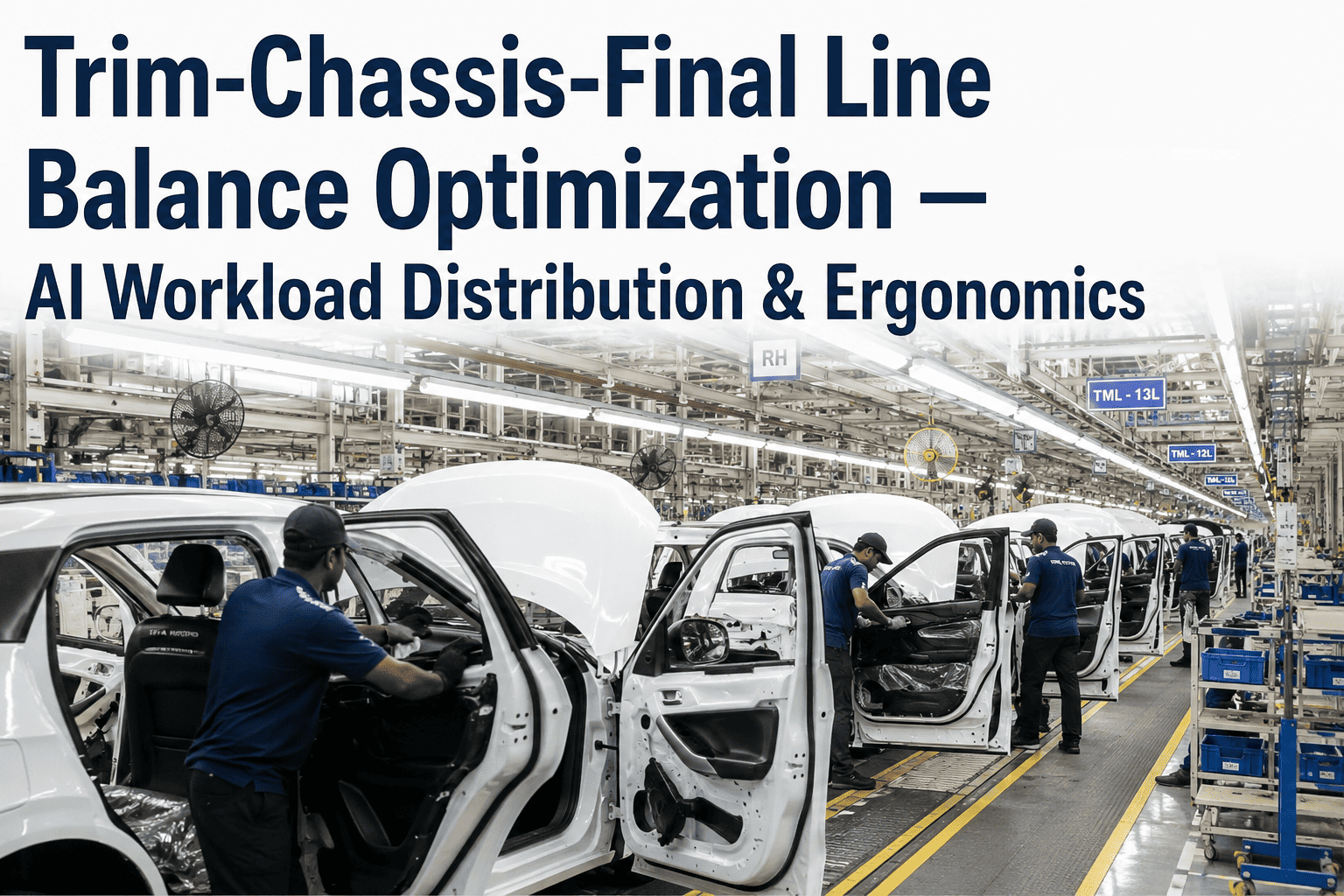
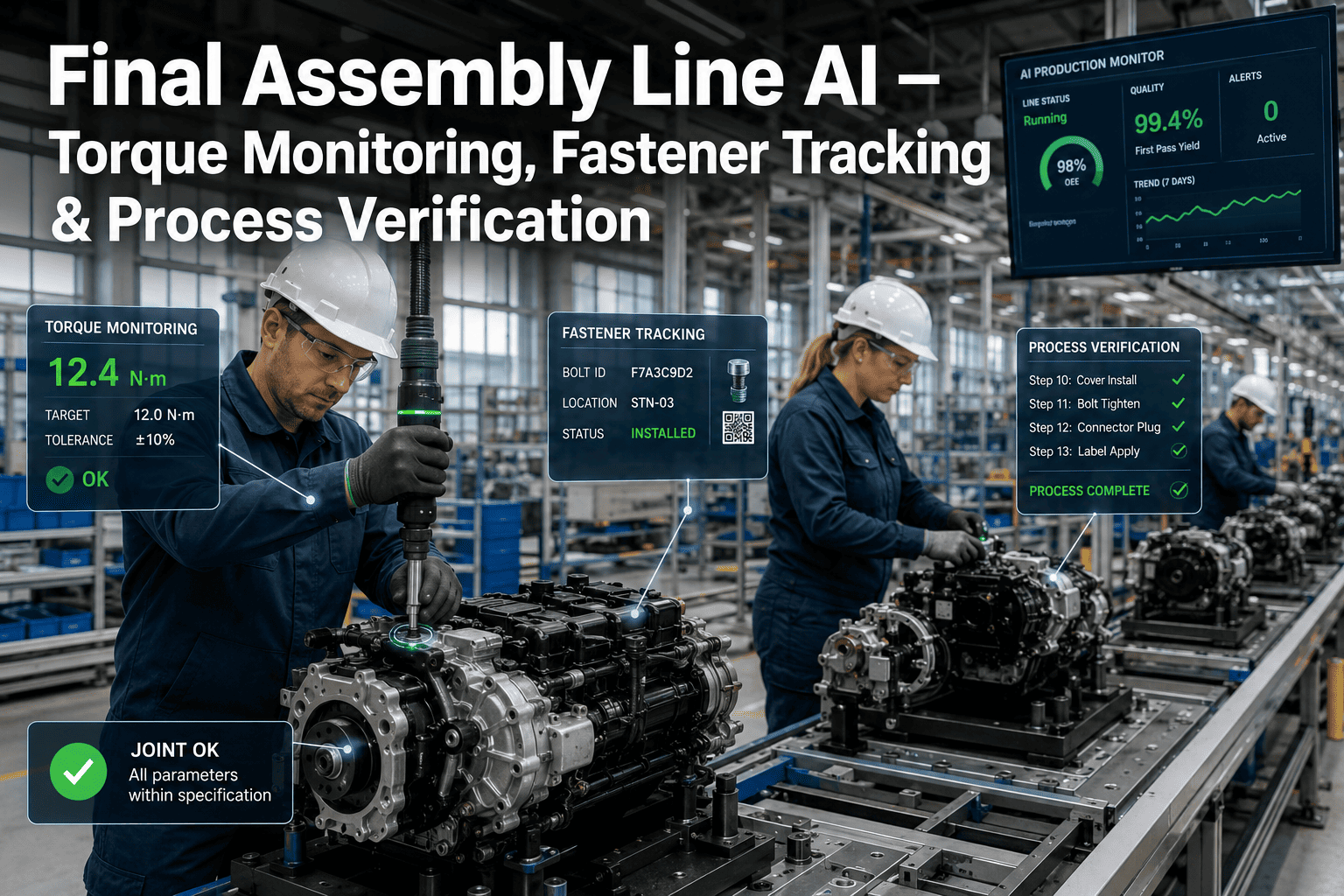
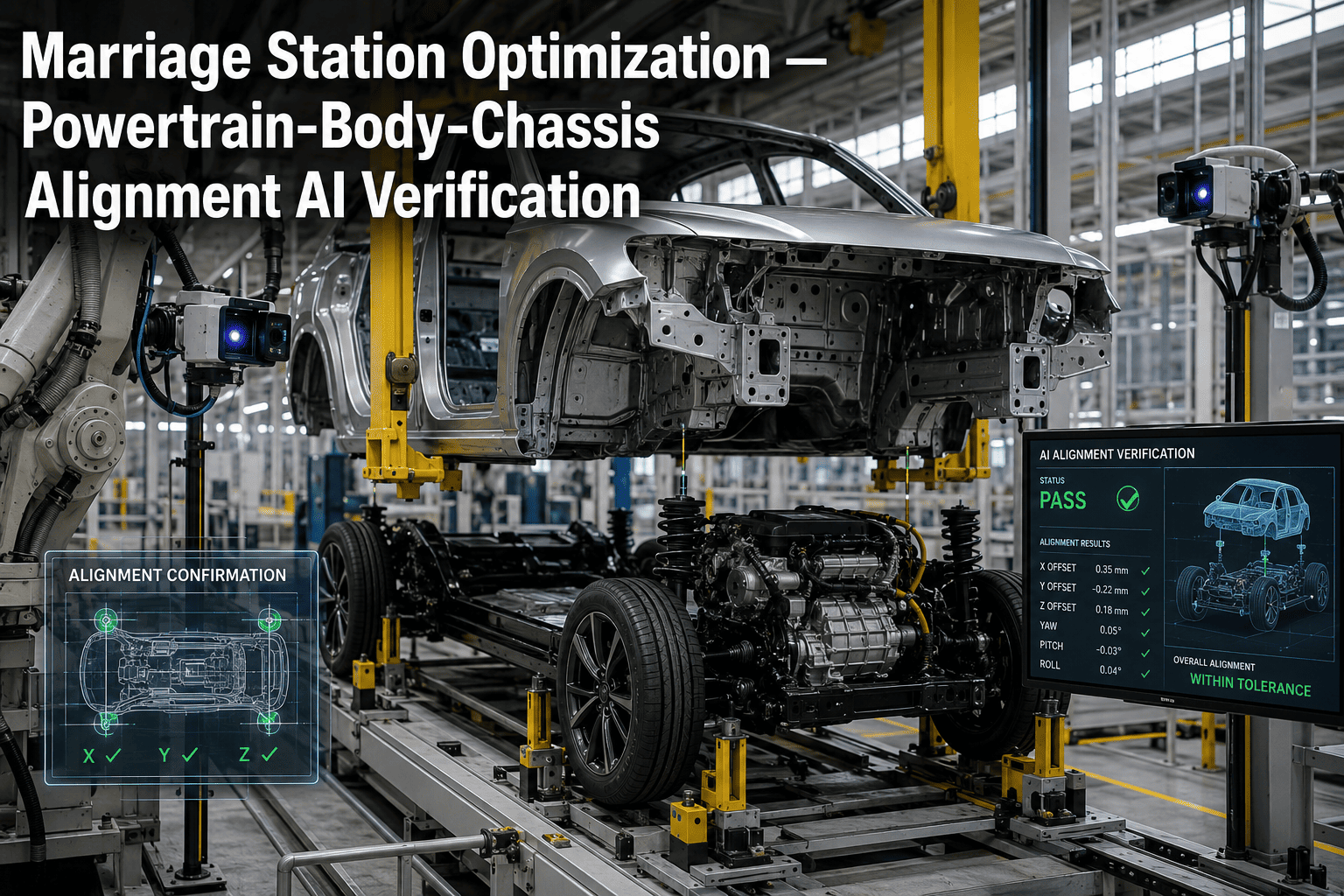
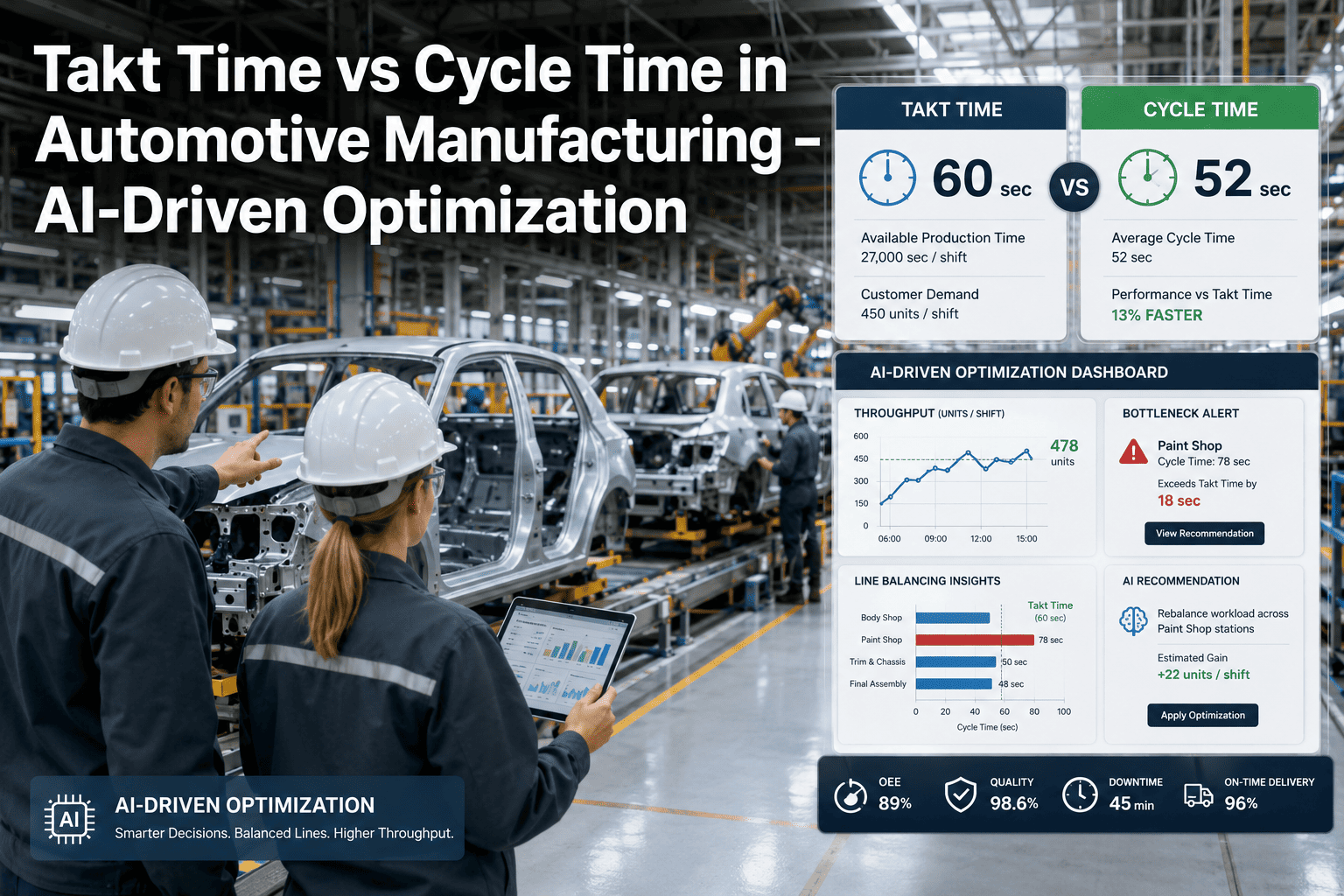
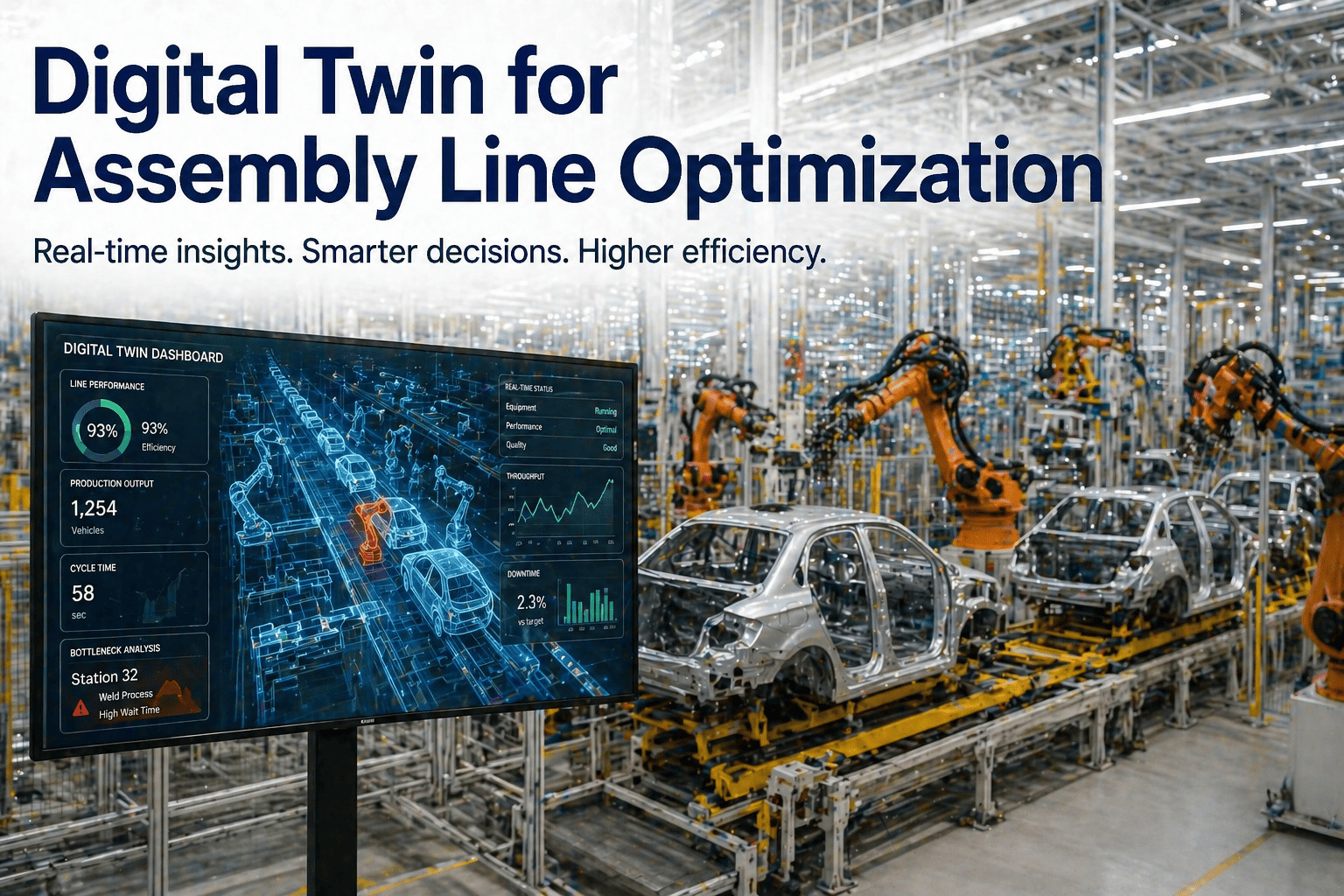
A trim-chassis-final line only moves as fast as its slowest station, and on most TCF lines that station was balanced once, months or years ago, against a model mix and takt time that no longer match what is actually running today. New trims, added content, and shifting model mix quietly overload some stations while leaving others with slack nobody has revisited, and the result is a line that looks balanced on the original layout drawing but is not balanced in practice. Rebalancing manually means walking the line with a stopwatch, which is accurate for the day it is done and stale within a quarter as the mix shifts again. AI-powered workload distribution treats balancing as a continuous process instead of a one-time project, which is why plant managers running high-mix TCF lines are asking to see this workload analysis applied to their own station data.
AI-POWERED TCF LINE BALANCE OPTIMIZATION
Keep Trim, Chassis, and Final Assembly Balanced as Your Mix Shifts
Distribute workload across stations using real cycle time data, ergonomic risk scoring, and current model mix instead of a balance drawn up once and never revisited.
Before and After: Station Load Against Takt Time
Each bar represents a station's cycle time relative to the line's takt time target, making an overloaded or underused station visible at a glance instead of buried in a spreadsheet.
Trim Station 3
96% of takt
Chassis Station 5
118% of takt
Chassis Station 6
64% of takt
Final Station 2
91% of takt
Final Station 8
88% of takt
Station 5 running over takt is exactly the kind of imbalance that AI rebalancing catches early, before it becomes the reason the whole line falls behind schedule on a high-content trim day.
What Goes Into a Rebalancing Recommendation
Actual Cycle Time Data
Real station-level cycle times are used instead of the original time study, capturing how the work has actually drifted since the line was last balanced.
Ergonomic Risk Scoring
Task assignment accounts for ergonomic risk at each station, since a technically balanced line that concentrates strain on one operator is not a sustainable balance.
Current Model Mix
Recommendations reflect the trim, chassis, and content mix actually running that shift, not a single average that ignores high-content days.
Station Precedence Rules
Task reassignment respects the sequencing and precedence constraints that keep the physical build order intact across every station.
See Where Your TCF Line Is Actually Out of Balance
Bring current cycle time data and see which stations are running over takt on your highest-content model mix.
Periodic Manual Rebalance vs Continuous AI Balancing
Frequently Asked Questions
Does AI rebalancing move tasks between stations automatically without engineer approval?
No, the system generates rebalancing recommendations for engineers and supervisors to review and approve, since moving a task between stations affects tooling, fixtures, and operator training that require human judgment before implementation. What AI removes is the manual analysis burden of identifying which stations are actually out of balance and modeling several reassignment options quickly, rather than removing the decision itself. Teams can walk through a sample recommendation during a
demo session.
How does ergonomic risk scoring factor into a rebalancing recommendation?
Each task carries an ergonomic risk profile based on posture, force, and repetition, and rebalancing recommendations are checked against cumulative risk per station rather than optimizing purely for cycle time. This prevents a mathematically balanced solution that happens to stack every high-strain task onto one operator, which tends to show up later as increased injury risk or turnover at that specific station.
Can this handle a line that runs multiple vehicle platforms through the same stations?
Yes, workload analysis is calculated per platform and trim combination, since a station balanced for one platform's content can be significantly over or under takt when a different platform runs through the same physical station later in the shift. Recommendations account for the actual sequence of platforms scheduled through the line rather than treating the line as if it only ever builds one configuration.
What happens when a rebalancing recommendation would violate a precedence or safety constraint?
Precedence rules, required sequencing, and safety constraints are built into the recommendation engine, so a suggested reassignment that would violate build sequence or place an incompatible pair of tasks at the same station is filtered out before it ever reaches the review stage. This keeps the recommendations practical rather than theoretically optimal but physically impossible to implement on the actual line.
How is current cycle time data collected without disrupting the line?
Cycle time data is typically pulled from existing line sensors, andon systems, or station-level timing already in place rather than requiring a new stopwatch time study to be conducted. Where a plant does not yet have this instrumentation at every station, a phased rollout starting with the highest-variance stations can be discussed through
support.
STOP LETTING ONE STATION SET THE PACE FOR THE WHOLE LINE
Bring Continuous Balance to Your TCF Line
Get a rebalancing analysis built around your current stations, model mix, and takt time targets.