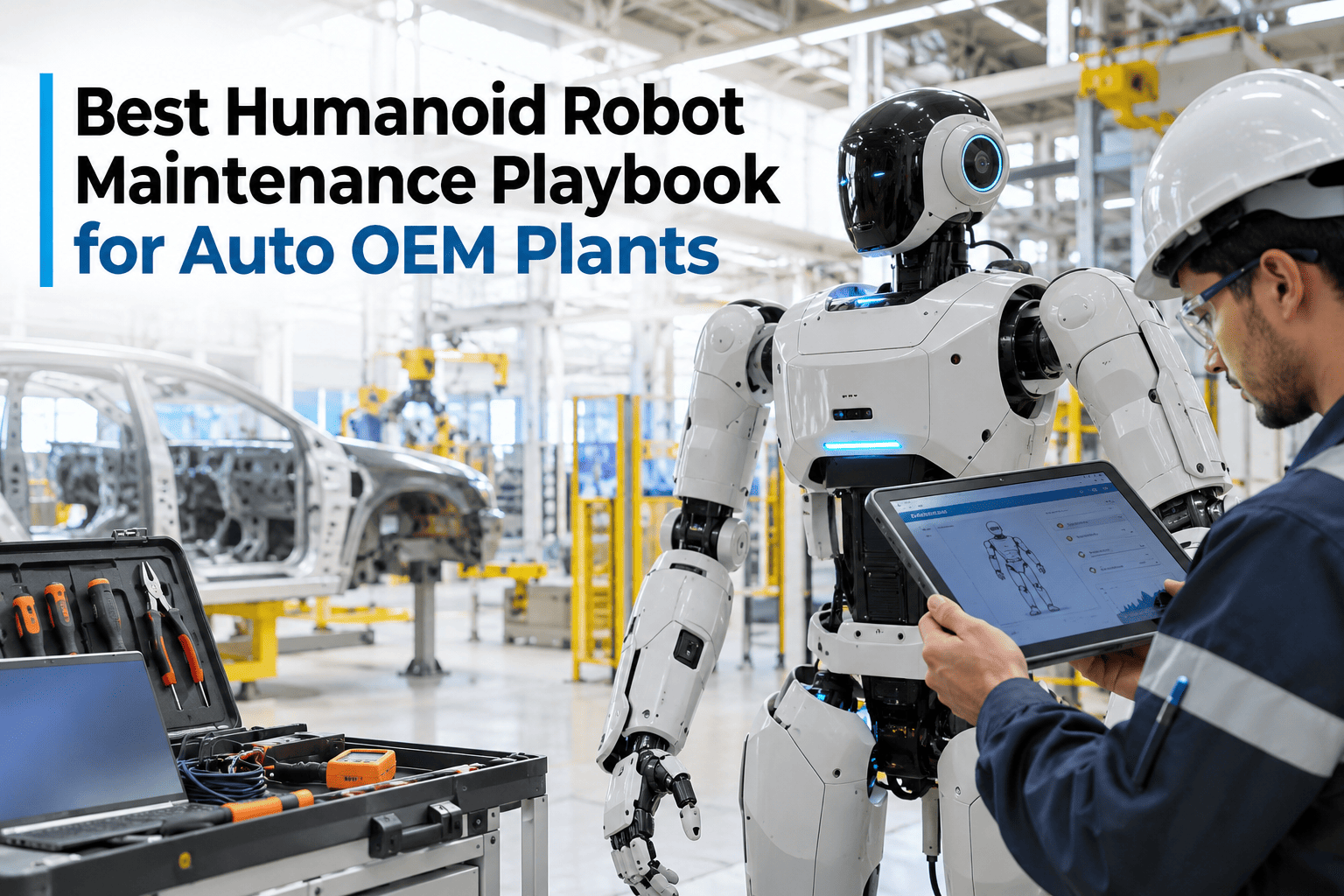
A humanoid robot that works reliably in its first month on the floor can quietly degrade over the following months if nobody owns a maintenance routine for it, since joint wear, battery health and sensor calibration don't announce themselves the way a stalled conveyor does. A maintenance playbook built around daily checks, joint wear tracking and battery health tactics keeps a humanoid fleet production-ready instead of discovering problems mid-shift. Auto OEM plants running their own humanoid fleet can review a maintenance playbook against their current routine with iFactory AI.
A Humanoid Degrades Quietly Unless Someone Owns the Maintenance Routine
iFactory AI structures daily checks, joint wear tracking and battery health tactics into one playbook, keeping humanoid fleets production-ready shift after shift.
The Daily Check Routine Checklist
A short, consistent daily check catches most developing issues before they affect a shift. These checks take minutes, not hours, when built into the start-of-shift routine.
Tracking Joint Wear Before It Becomes a Failure
Check Whether Your Current Routine Covers These Basics
Walk through your current humanoid maintenance process against this checklist to find what's missing.
Battery Health Tactics That Extend Fleet Life
| Tactic | Why it matters |
|---|---|
| Avoid deep discharge cycles | Repeated full discharge shortens overall battery life |
| Track charge cycle count | Degradation accelerates past a known cycle threshold |
| Monitor charging temperature | Excess heat during charging accelerates wear |
| Rotate standby and active units | Even wear across a fleet rather than overusing one unit |
A Composite Scenario: The Fleet That Found Its Rhythm
A plant running several humanoids on different tasks had no consistent maintenance routine across units, with each one serviced reactively whenever something went wrong. Introducing a shared daily check routine and joint wear tracking across the full fleet surfaced two units already trending toward joint issues that had gone unnoticed, allowing service to be scheduled before either caused a production stoppage. Standardizing the routine also made it far easier to compare units and catch when one was wearing faster than the rest — a pattern iFactory AI's team can help build into your own fleet's maintenance routine.
Frequently Asked Questions
Keep Your Humanoid Fleet Ready for Every Shift
iFactory AI structures daily checks, joint wear tracking and battery health tactics into one maintenance playbook. Book a walkthrough with your own fleet.