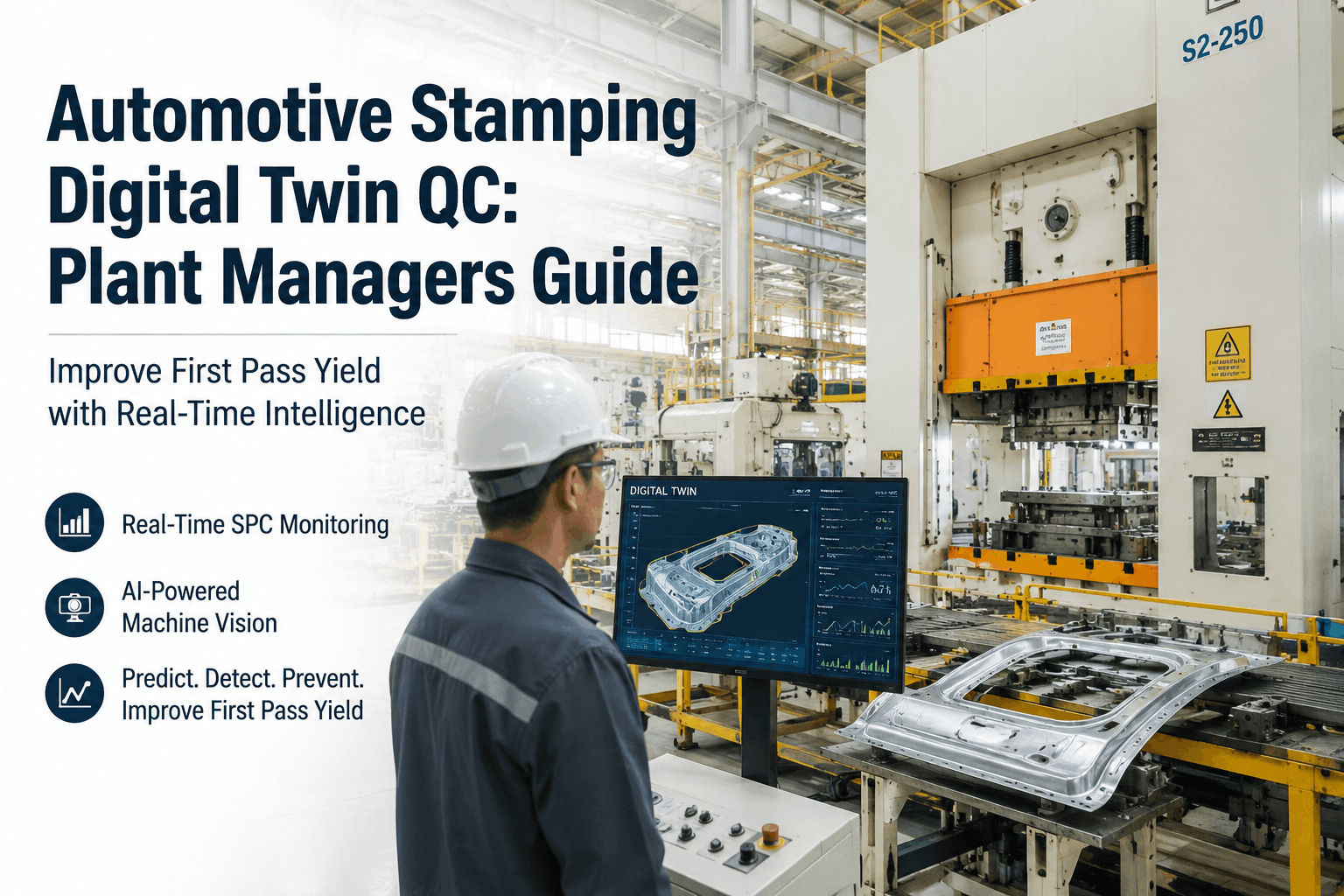
In the high-stakes environment of automotive body shops, first-time quality (FTQ) is not merely a metric—it is the linchpin of operational excellence and warranty cost containment. When a weld spatter, dimensional deviation, or surface irregularity escapes detection, the consequences cascade: rework queues swell, downstream assembly lines stall, and ultimately, warranty claims erode margins. Traditional quality approaches rely on end-of-line inspections and manual audits, which detect defects too late, when corrective action is expensive and disruptive. The modern body shop demands a paradigm shift toward real-time, predictive, and interconnected quality assurance. By integrating weld parameter monitoring, dimensional measurement systems, and surface inspection data into a unified AI-driven analytics platform, manufacturers can achieve FTQ rates exceeding 95%, dramatically reducing rework and scrap. This comprehensive guide explores the technical architecture, implementation strategies, and measurable business impact of deploying AI for first-time quality in body shops. For a personalized strategy session, Book a Demo with our Industry 4.0 experts.
Achieve First-Time Quality in Your Body Shop with AI-Driven Analytics
Turn weld, dimensional, and surface data into actionable insights. Reduce rework by 40% and warranty costs by 25%.
Real-Time Weld Quality Monitoring
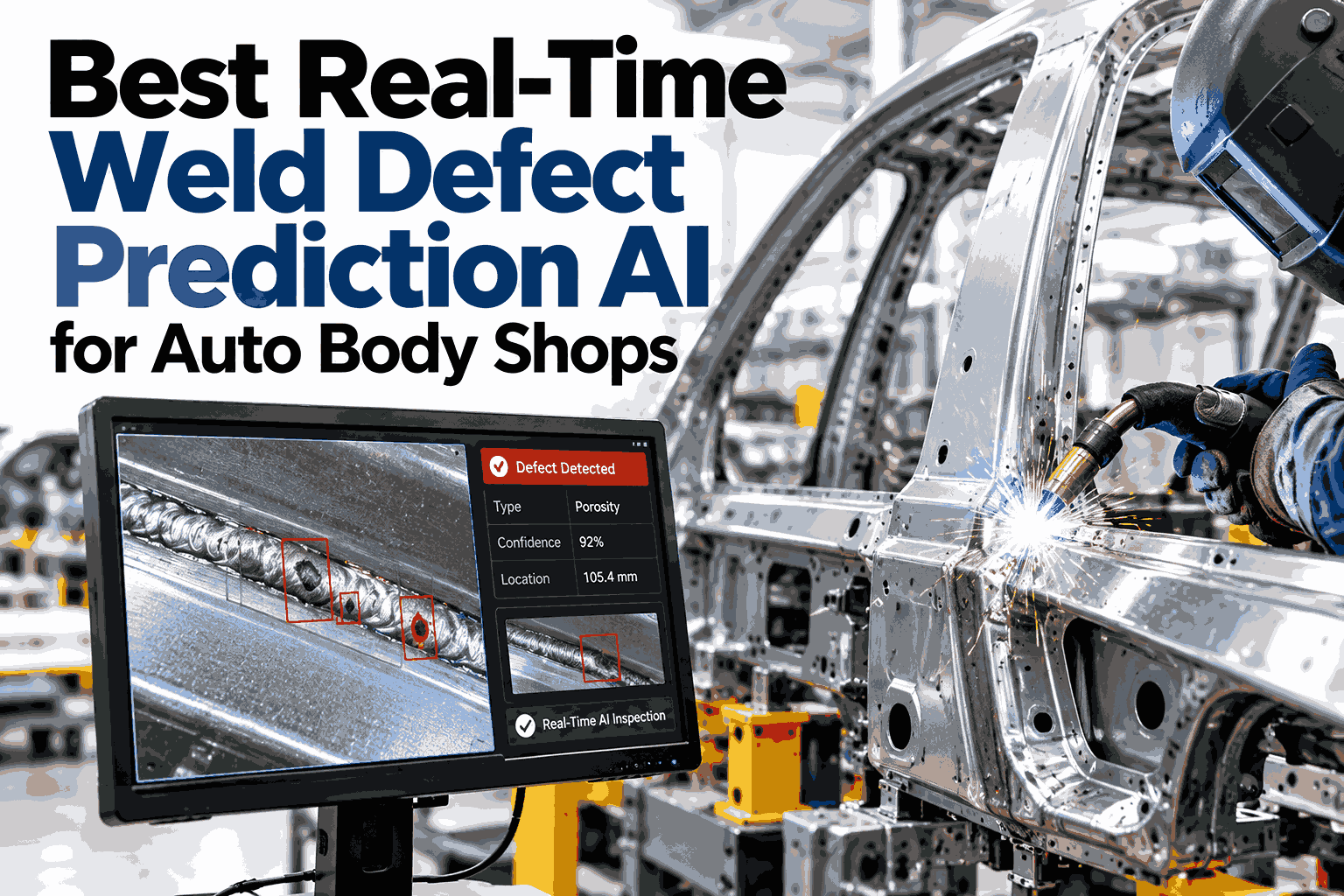
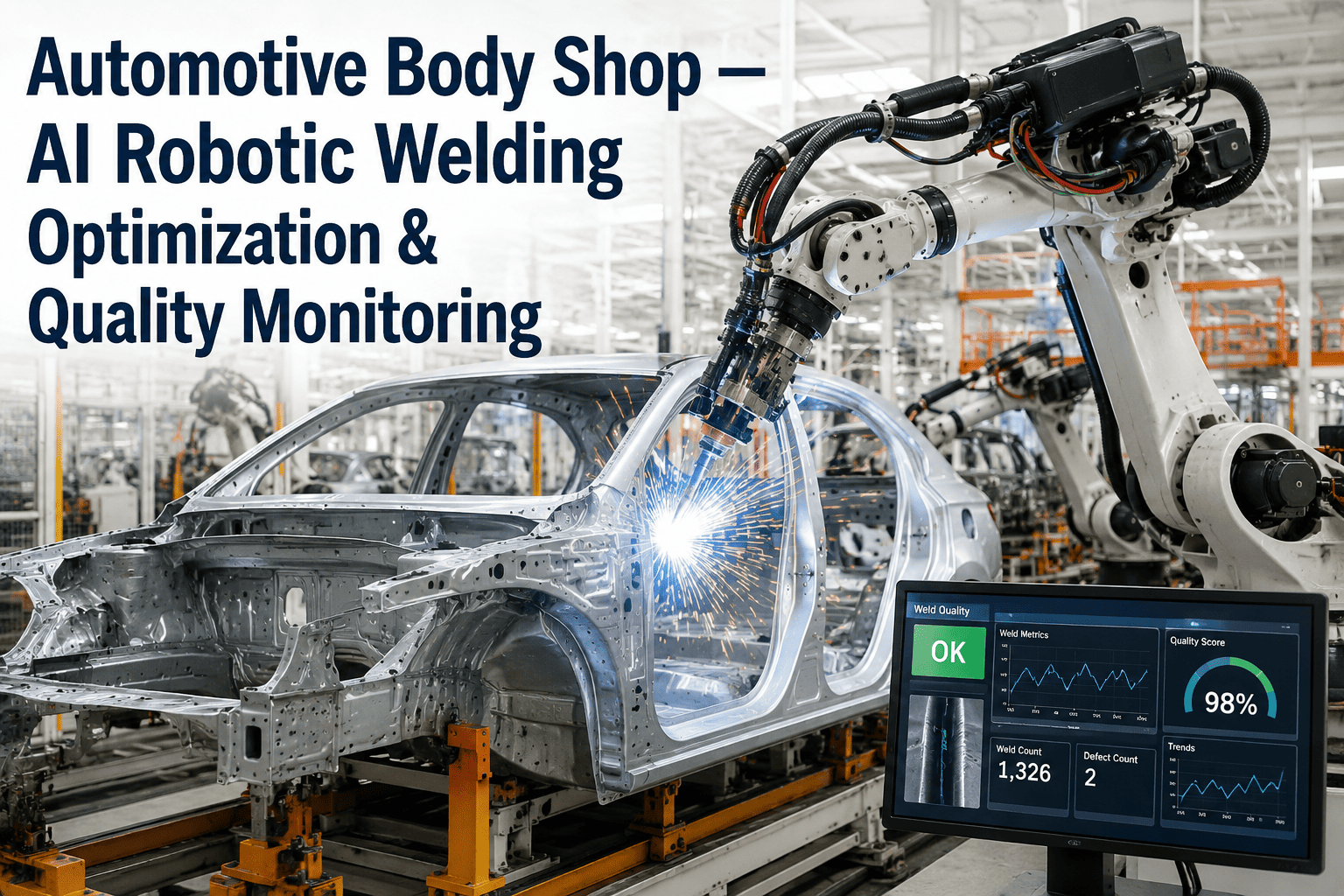
Deploy AI algorithms that analyze welding parameters—current, voltage, wire feed speed, and torch angle—in real time. The system detects spatter, porosity, and incomplete fusion within milliseconds, flagging defects before the next cycle begins. Integration with robotic controllers allows automatic parameter adjustments, maintaining optimal weld quality without human intervention. This closed-loop control reduces rework by up to 35% and ensures consistent joint integrity across thousands of welds per shift.
Dimensional Deviation Analysis
Leverage laser scanning and vision systems to measure critical body dimensions—gap, flushness, and hole positions—after each welding station. AI models compare measurements against CAD tolerances, identifying trends that precede out-of-spec conditions. By correlating dimensional drift with upstream process parameters (clamping force, weld sequence), the system predicts when adjustments are needed, preventing dimensional non-conformances that would require costly rework in the paint shop or final assembly.
Surface Defect Detection
High-resolution cameras and structured light sensors capture surface topography after each major welding operation. Deep learning models trained on millions of defect images classify dents, scratches, and weld burn-through with 99.2% accuracy. The system provides real-time feedback to operators via augmented reality overlays, showing exact defect locations and recommended repair actions. This instant visibility reduces surface-related rework by 50% and prevents defects from reaching the paint line.
Predictive Process Control
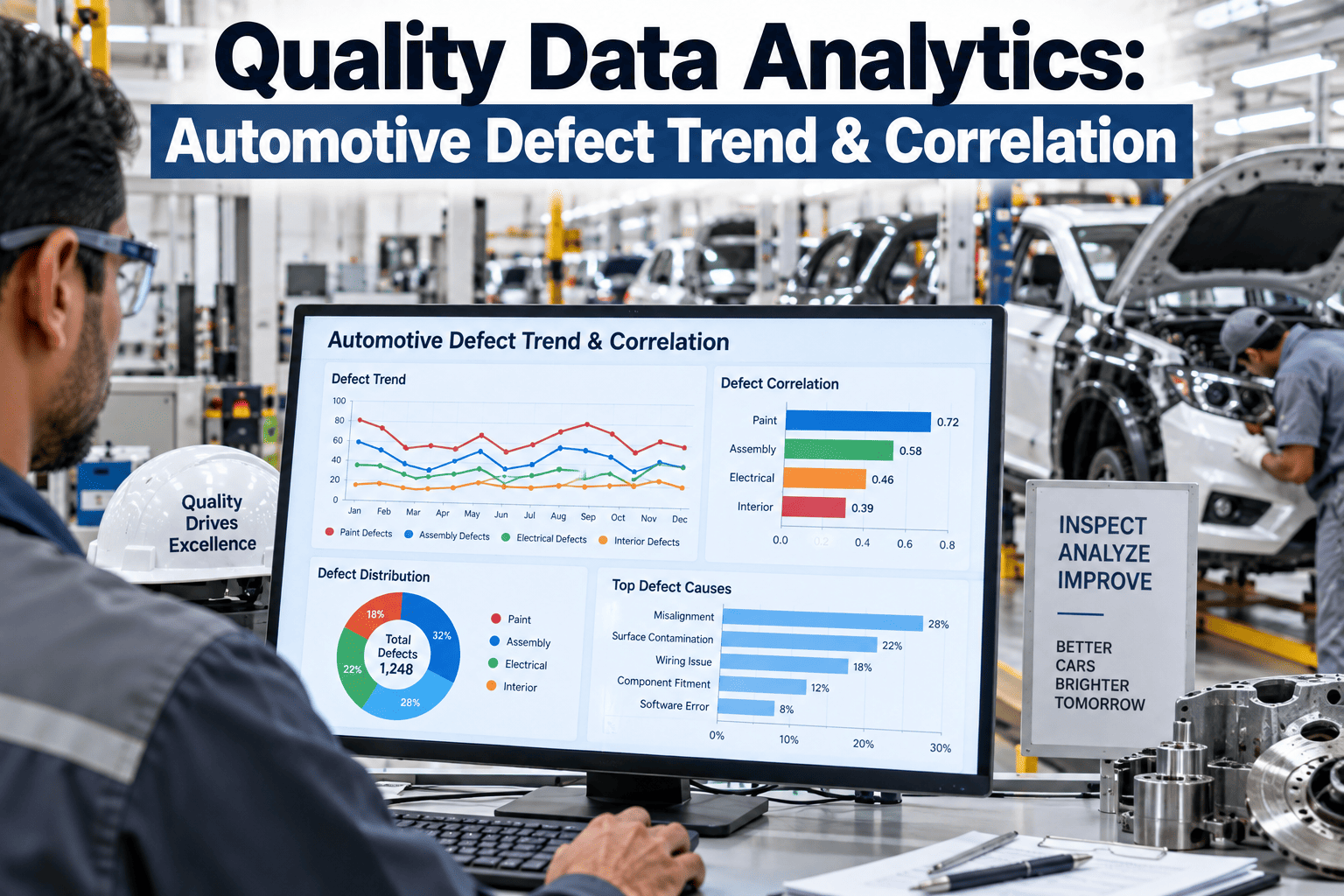
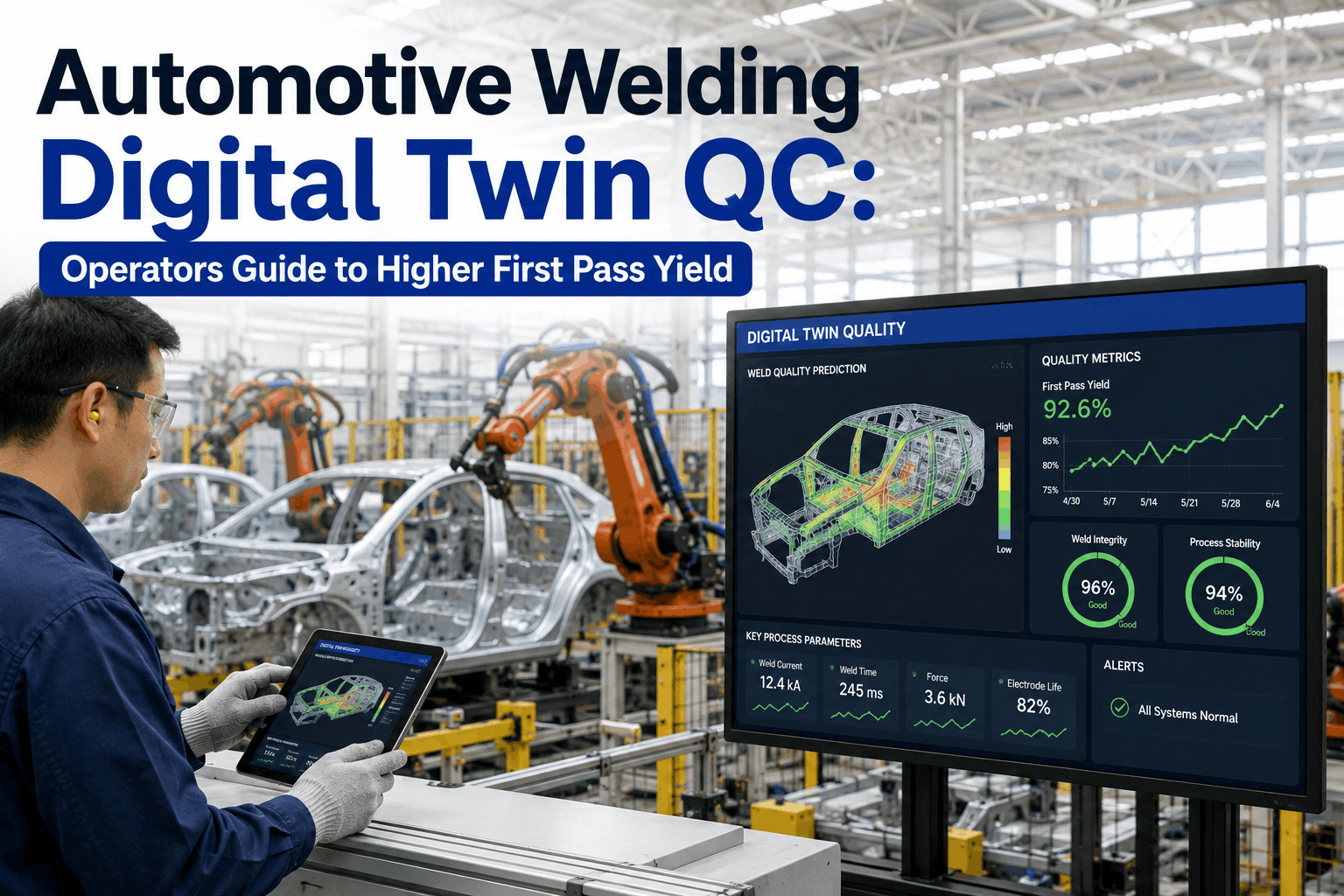
By aggregating weld, dimensional, and surface data into a unified time-series database, AI models identify correlations between process variables and downstream quality. For example, a slight increase in weld voltage may lead to dimensional drift 50 cycles later. The system proactively adjusts parameters or alerts maintenance teams, preventing defects before they occur. This predictive approach shifts quality from reactive inspection to proactive control, achieving first-time quality rates above 95%.
Implementation Roadmap for AI-Driven FTQ
Sensor Infrastructure Deployment
Install weld monitoring sensors (current/voltage transducers, spectrometers), laser scanners, and vision cameras at key stations. Ensure data synchronization via industrial IoT gateways with sub-millisecond latency.
Data Ingestion & Normalization
Build a data pipeline that ingests high-frequency sensor streams, normalizes units, and aligns timestamps. Store in a time-series database optimized for manufacturing analytics.
AI Model Training & Validation
Train deep learning models on historical defect data, using transfer learning from similar body shop lines. Validate against hold-out datasets to ensure precision above 95%.
Real-Time Dashboard Integration
Deploy interactive dashboards showing FTQ trends, defect heatmaps, and predictive alerts. Configure role-based views for operators, engineers, and plant managers.
Closed-Loop Control Activation
Enable automatic parameter adjustments via PLC integration. Implement safety limits and manual override protocols to ensure fail-safe operation.
Transform Your Body Shop Quality Today
Deploy AI-driven FTQ analytics and reduce rework by 40%. Our experts will guide you from sensor setup to closed-loop control.
Comparative Analysis: Traditional vs. AI-Driven FTQ
| Metric | Traditional Approach | AI-Driven Approach |
|---|---|---|
| First-Time Quality Rate | 75-85% | 95-98% |
| Defect Detection Latency | Hours (end-of-line) | Milliseconds (in-process) |
| Rework Cost per Vehicle | $150-$250 | $50-$80 |
| Warranty Claim Rate | 3-5% | 1-2% |
| Operator Intervention | High (manual inspection) | Low (automated alerts) |
| Scalability | Limited by labor | Unlimited (software-defined) |
Weld Spatter Reduction Case Study
A Tier 1 supplier reduced weld spatter by 60% using real-time parameter monitoring. AI detected a 2% current drift and adjusted wire feed speed, eliminating spatter-related rework across 12,000 welds per shift. The system paid for itself in 4 months.
Dimensional Drift Prevention
An OEM body shop prevented a major dimensional drift event by correlating clamp force degradation with gap measurements. AI predicted the drift 200 cycles before it reached tolerance limits, allowing maintenance to replace a worn clamp during a scheduled break.
Surface Defect Reduction Program
A luxury automaker deployed surface inspection AI across 5 body shop lines. The system identified a recurring dent pattern caused by a misaligned conveyor roller. Corrective action reduced surface defects by 70% and saved $2.3M annually in rework.
Technical Architecture for Real-Time FTQ Analytics
The foundation of AI-driven FTQ is a robust data architecture that supports high-frequency sensor ingestion, low-latency inference, and closed-loop control. At the edge, industrial PCs running containerized AI models process weld and vision data with sub-10ms latency, enabling real-time feedback to robotic controllers. These edge nodes communicate via OPC UA or MQTT to a central data lake, where historical data trains and retrains models. The cloud layer provides dashboards, reporting, and multi-site benchmarking. Security is enforced via TLS encryption, role-based access, and immutable audit logs. This architecture ensures that FTQ improvements are scalable, repeatable, and compliant with automotive quality standards such as IATF 16949.
A critical component is the data normalization layer, which harmonizes data from disparate sources—weld controllers, laser scanners, vision systems, and PLCs—into a unified schema. This layer applies timestamp alignment, unit conversion, and outlier filtering. The normalized data feeds feature engineering pipelines that extract relevant metrics (e.g., weld energy, seam width, gap deviation) for model input. Model versioning and A/B testing frameworks allow continuous improvement without disrupting production. The entire system is designed for high availability, with redundant edge nodes and automatic failover to ensure zero downtime during critical production shifts.
Frequently Asked Questions
What is first-time quality (FTQ) in a body shop?
First-time quality, also known as first-pass yield, measures the percentage of body shop assemblies that pass all quality inspections without requiring rework or repair. In the body shop, this includes weld integrity, dimensional accuracy, and surface finish. Achieving high FTQ is critical because defects caught downstream—in paint, trim, or final assembly—are exponentially more expensive to fix. For example, a weld defect detected in the body shop might cost $50 to repair, but if it escapes to the dealership, warranty costs can exceed $1,000. AI-driven analytics enable real-time defect detection and process control, pushing FTQ rates above 95%. To see how our solution can improve your FTQ, Book a Demo.
How does AI improve first-time quality in welding?
AI improves weld quality by monitoring key parameters (current, voltage, wire feed speed, torch angle) in real time and comparing them against optimal ranges derived from historical data. When a parameter drifts, the AI model predicts the likelihood of a defect (e.g., porosity, spatter, incomplete fusion) and either alerts operators or automatically adjusts the welding robot's settings. This closed-loop control prevents defects from occurring, rather than detecting them after the fact. Additionally, AI can correlate weld parameters with downstream dimensional data, identifying root causes that span multiple stations. For a detailed technical walkthrough, please contact our support team.
What is the typical ROI for deploying AI-driven FTQ in a body shop?
The ROI for AI-driven FTQ is substantial and typically realized within 6 to 12 months. Key savings come from reduced rework labor, lower scrap costs, decreased warranty claims, and improved throughput. For example, a mid-volume body shop producing 200,000 vehicles per year with a 15% rework rate can save $3M annually by reducing rework to 5%. Additional savings from warranty reduction can add another $2M. The total investment—including sensors, edge computing, software licenses, and integration—ranges from $500K to $1.5M, yielding a payback period of 4 to 9 months. To calculate your specific ROI, Book a Demo with our financial modeling team.
How does AI handle dimensional quality in body shops?
AI handles dimensional quality by fusing data from laser scanners, vision systems, and coordinate measuring machines (CMMs) into a real-time analytics pipeline. Deep learning models detect deviations in gap, flushness, hole position, and profile against CAD tolerances. The system not only flags out-of-spec conditions but also predicts trends—for example, a gradual increase in door gap may indicate a worn fixture. By correlating dimensional data with upstream weld parameters, AI identifies root causes and recommends corrective actions, such as adjusting clamp force or weld sequence. This proactive approach prevents dimensional defects from propagating to the paint shop or final assembly. For integration details, contact our support team.
Can AI-driven FTQ be integrated with existing MES and ERP systems?
Yes, AI-driven FTQ platforms are designed to integrate seamlessly with existing Manufacturing Execution Systems (MES) and Enterprise Resource Planning (ERP) systems via standard APIs (REST, OPC UA, MQTT). The platform exports real-time quality data, defect logs, and KPI dashboards that can be consumed by MES for production tracking and by ERP for cost accounting and warranty analysis. Integration is typically achieved through a middleware layer that maps data schemas and handles authentication. This ensures that FTQ insights are available across the enterprise without disrupting existing workflows. To discuss your specific integration requirements, Book a Demo with our solutions architects.
Ready to Achieve 95%+ First-Time Quality?
Join leading automotive manufacturers who have transformed their body shop quality with AI. Reduce rework, cut costs, and boost throughput.