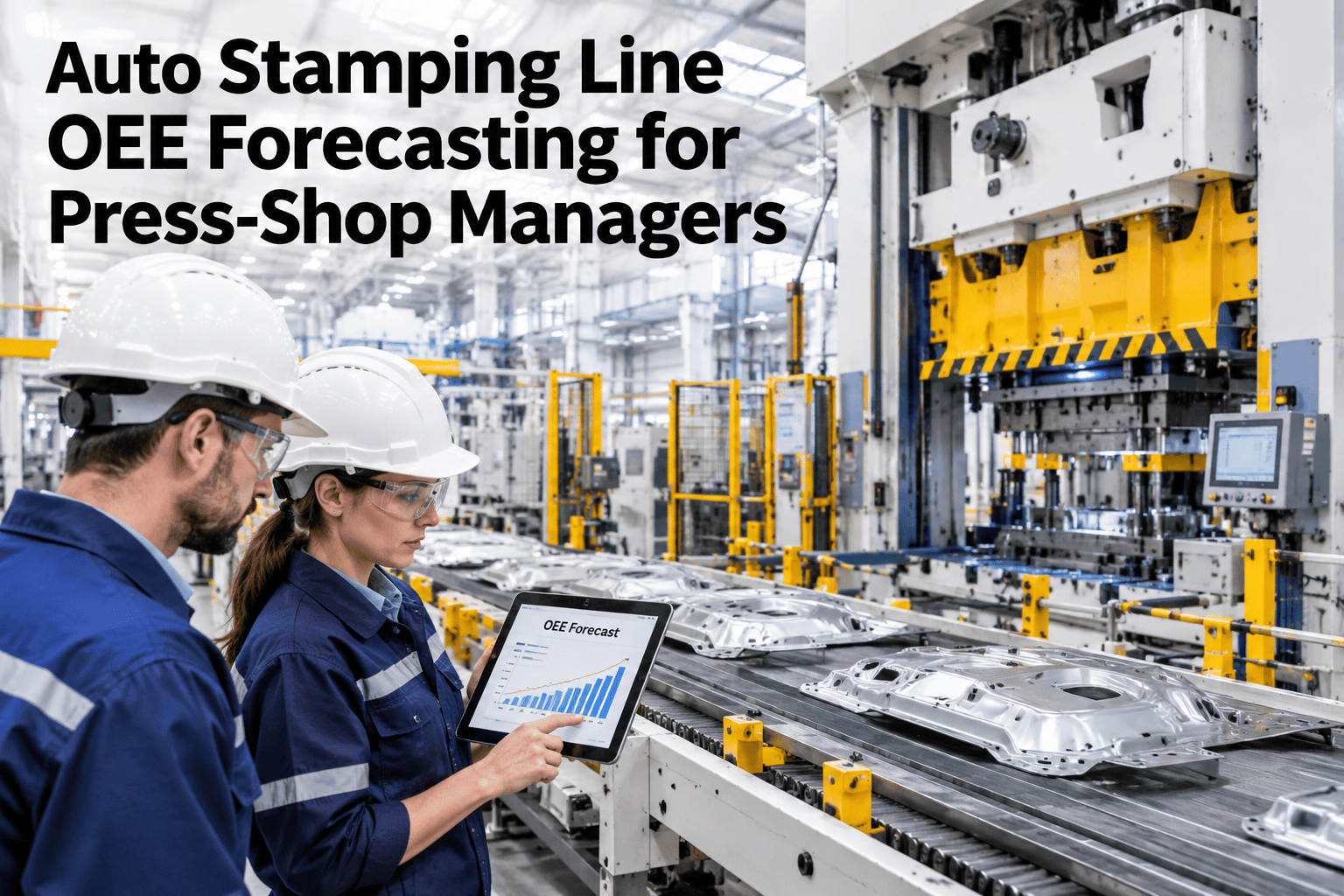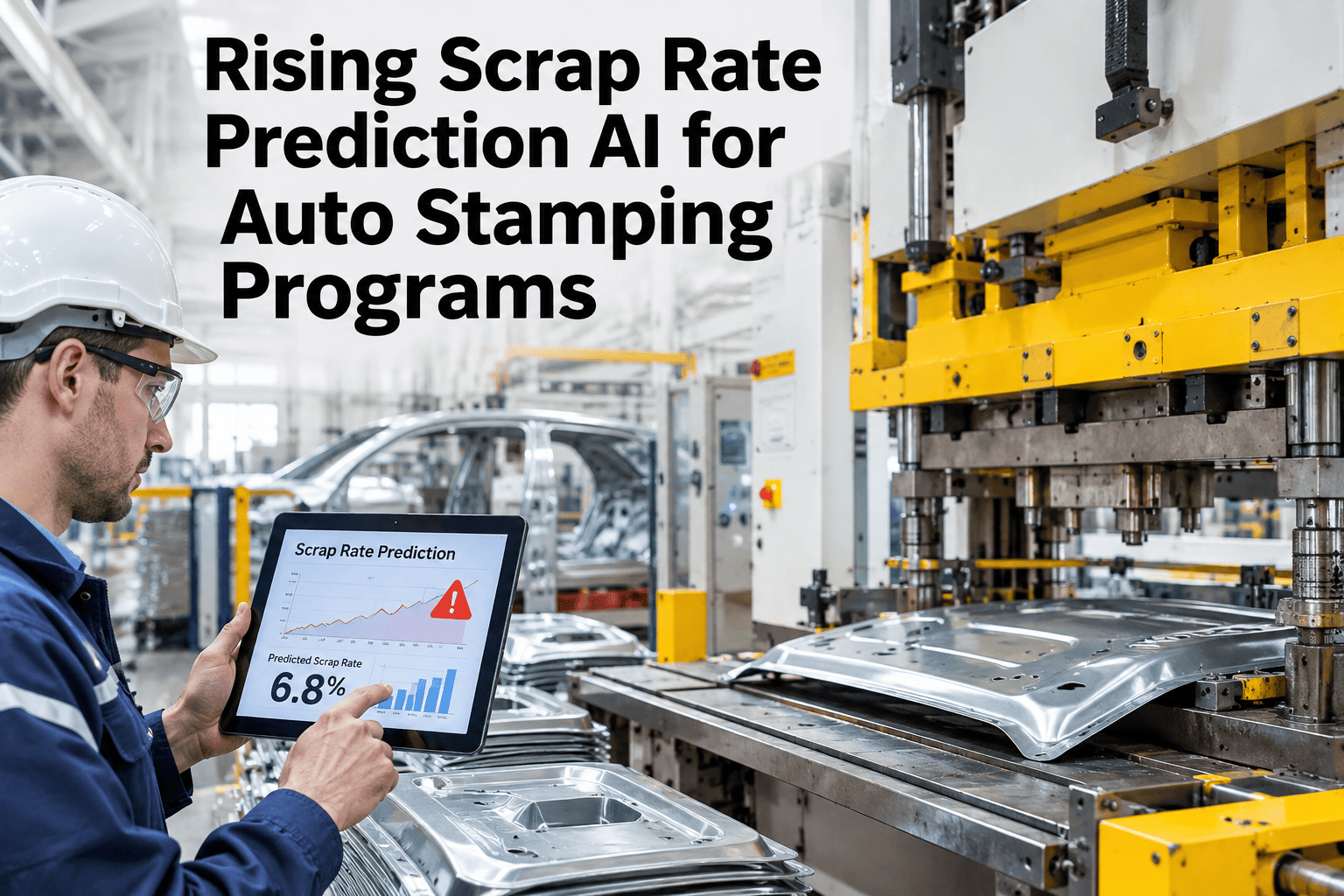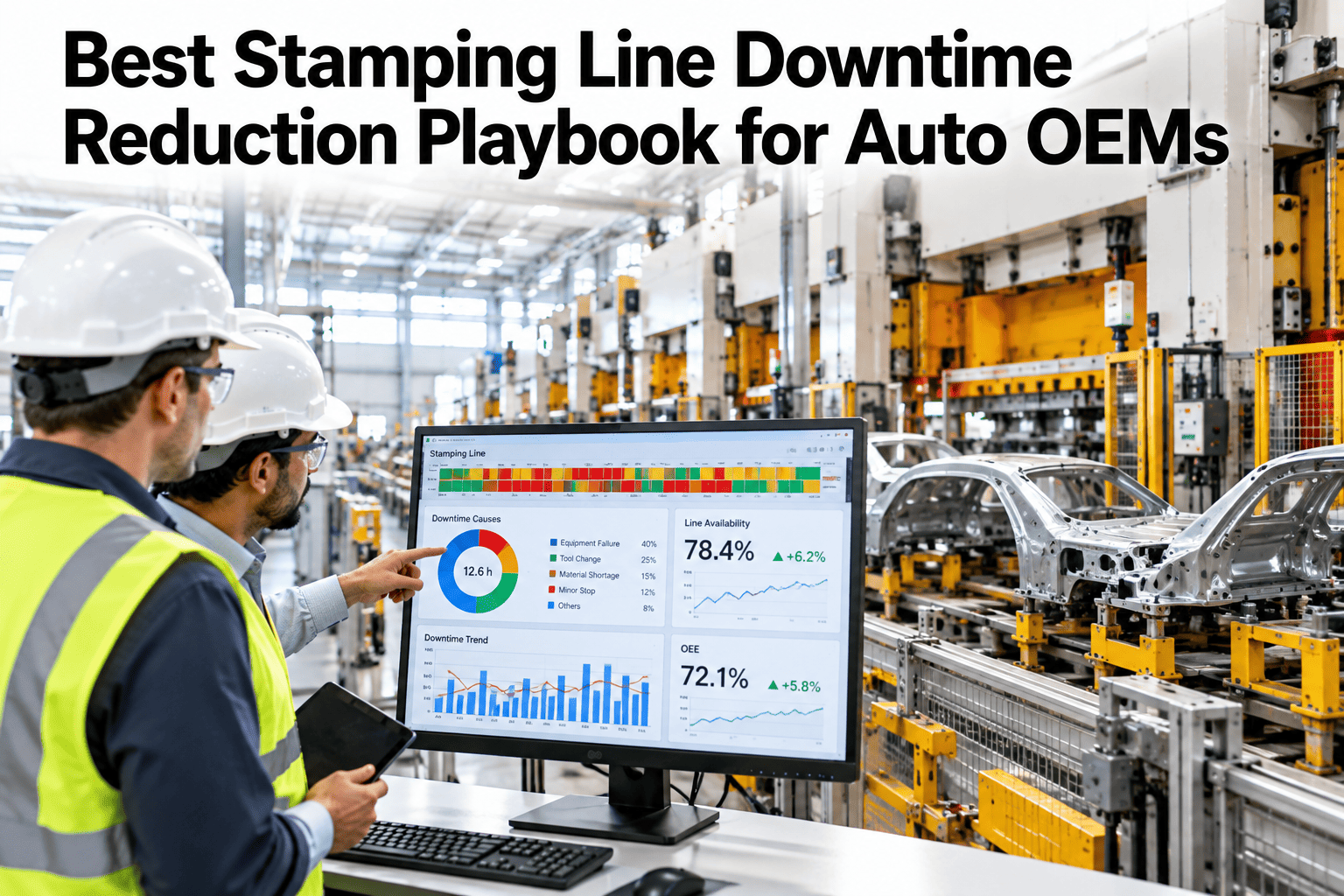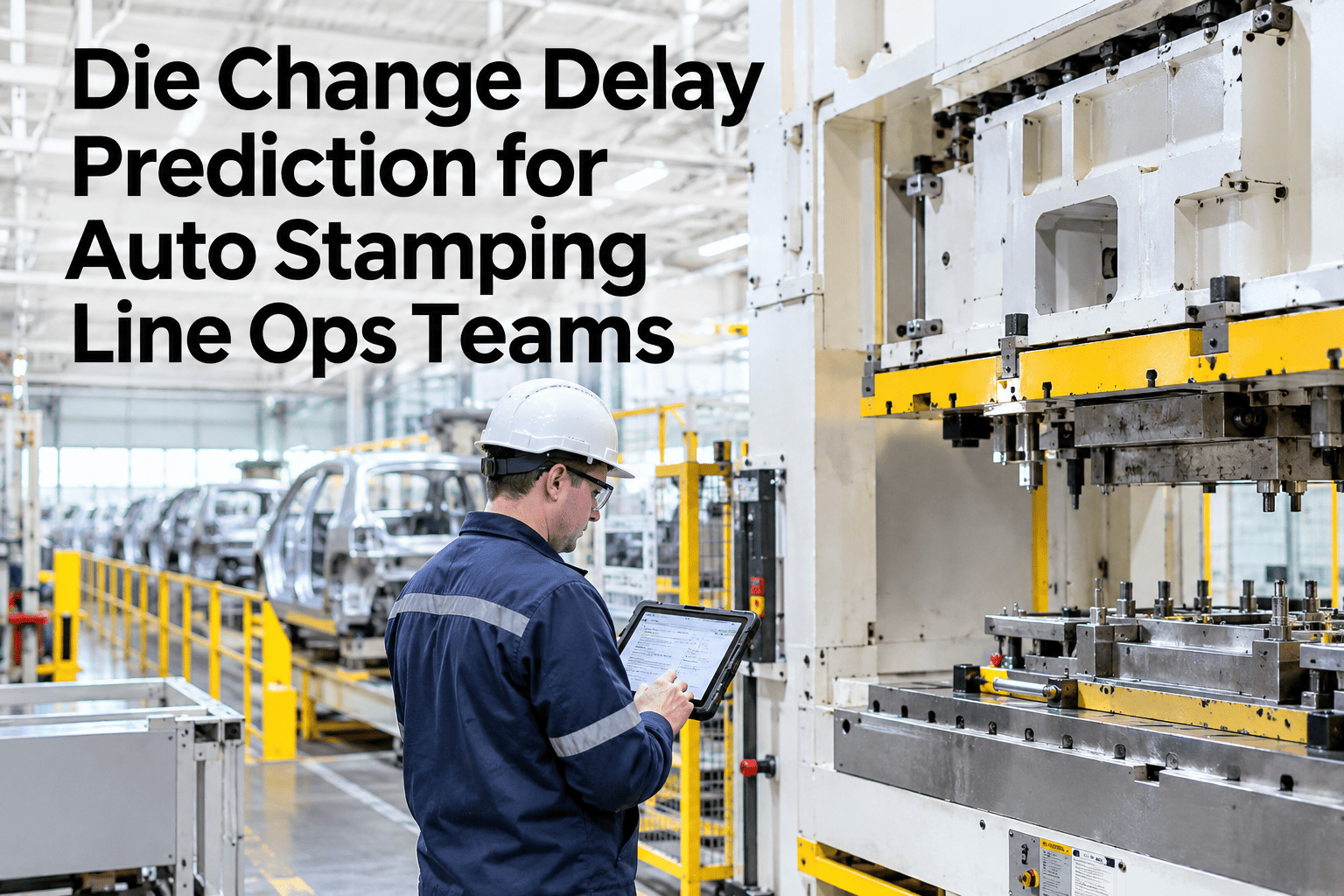
Die changes are the largest single block of avoidable lost time in most automotive press shops, and the most consistently underestimated. A planned 45-minute change regularly becomes 75 minutes, and no one in the morning meeting knows whether the overrun was a coil-load problem, a setup crew gap, a die alignment issue, or simply a job that has always taken longer than its standard. Die change delay prediction uses historical duration data, die complexity scoring, and real-time resource signals to forecast which upcoming changes are likely to overrun — and by how much — so ops teams can intervene before the overrun hits the shift schedule. Teams that want to see this modelled against their own press and die data can book a session with iFactory AI before any platform commitment.
Know Which Die Change Will Overrun Before the Crew Walks to the Press
iFactory AI models historical die change durations, scores complexity factors, and reads resource loading to flag overrun risk on every upcoming change — shift-by-shift, press-by-press.
What Is Die Change Delay Prediction?
Die change delay prediction is the use of historical changeover duration data, die-level complexity attributes, and real-time resource signals to forecast the expected duration of each upcoming die change — and identify, before the change begins, which jobs are likely to overrun their standard time and by how much.
For ops teams running multi-press stamping lines on automotive OEM schedules, the value is specific: OEE time lost to changeover overruns is avoidable if it is forecast rather than observed. A standard die change baked into the shift plan as 45 minutes and actually running 70 minutes creates a cascade — subsequent runs are compressed, part counts are short, and the OEM ship window may be missed before the line supervisor knows there is a problem. iFactory AI, an on-premise AI platform deployed on NVIDIA GPU servers within the plant, builds the prediction layer from press line data that already exists.
Why Die Changes Overrun: The Five Root Causes
Die change overruns in automotive stamping are not random. They cluster around five identifiable root causes, each of which produces a different delay signature in historical data. Separating these causes is the prerequisite for accurate prediction.
The Prediction Model: Three Inputs, One Ranked Forecast
The die change delay prediction model in iFactory AI combines three data streams into a ranked duration forecast for every planned die change in the upcoming shift window. The model is not a generic time estimator — it is calibrated to the specific historical pattern of each die ID on each press in your plant.
Flag the Overrun Before It Happens — Not After the Shift Plan Breaks
iFactory AI ranks every upcoming die change by overrun risk before shift start — giving ops teams the window to act before OEM shipment schedules are at risk.
Using the Forecast: What Ops Teams Do Differently
A delay forecast changes the conversation from reactive to preventive. The morning standup covers flagged changes in the same way it covers planned maintenance events — with assigned pre-actions before the crew walks to the press.
Die Change Benchmarks for Automotive Stamping
World-class press shops in automotive stamping target die change times well below what most Tier 1 suppliers currently achieve. The gap between current performance and best-in-class is the delay-reduction opportunity the prediction model quantifies.
| Press Type | Typical Current Duration | World-Class Target | Primary Delay Drivers |
|---|---|---|---|
| Tandem press line (800–1200T) | 55–90 min | 30–40 min | Multi-station bolster, die alignment, cushion reset |
| Single-action press (600–800T) | 35–60 min | 20–30 min | Coil change, feed-line height adjustment, tryout parts |
| Transfer press (1000–2000T) | 70–120 min | 45–60 min | Transfer bar removal, multiple die stations, NC reconfiguration |
| Progressive die press (400–600T) | 25–45 min | 15–22 min | Strip threading, feed pitch setting, first-off inspection |
Frequently Asked Questions
How much historical die change data is needed to build a reliable prediction model?
A minimum of 60–90 recorded die changes per die-press combination provides enough statistical basis for a first-generation prediction model, with accuracy improving as the dataset grows. Mills with less history start with a complexity-scoring model that uses die attributes rather than duration history, and transition to a history-based model as data accumulates. Book a session to review your available data before any commitment.
Can the model differentiate between die-specific delays and crew-specific delays?
Yes — this is one of the most operationally valuable outputs. When overruns cluster on specific die IDs regardless of crew, the die is the problem. When overruns cluster on specific shift rosters regardless of die, the crew configuration is the problem. Separating these two patterns directs investment to the right place. Ask our team how the attribution analysis is structured for your press shop data.
Does this integrate with existing press shop scheduling systems?
Yes. iFactory AI connects to existing ERP and production scheduling systems to pull the planned die change sequence and push the risk forecast back into the planning view before shift start — no separate login required for ops teams. See how the scheduling integration works in a live walkthrough.
What is the typical OEE improvement from die change delay prediction?
Automotive press shops deploying structured die change prediction typically recover 3–8 OEE percentage points within 12 months, primarily from availability recovery on the die change component of their loss Pareto. The recovery is largest on plants where die change overruns represent 40%+ of their total availability loss. Ask our team to benchmark your current die change loss position before building a business case.
How does the prediction handle dies that have never been run on a specific press?
When no history exists for a specific die-press combination, the model uses the die's complexity score combined with the historical duration pattern of similar dies on that press — producing a derived estimate with a wider confidence range that narrows after the first actual change is recorded. See how new-die cold-start estimation works in a session.
Stop Planning Die Changes to Their Standard — Start Planning to Their Prediction
iFactory AI flags every overrun-risk die change before shift start, with the primary delay driver and the pre-action that prevents it. Book a session built around your press shop data.