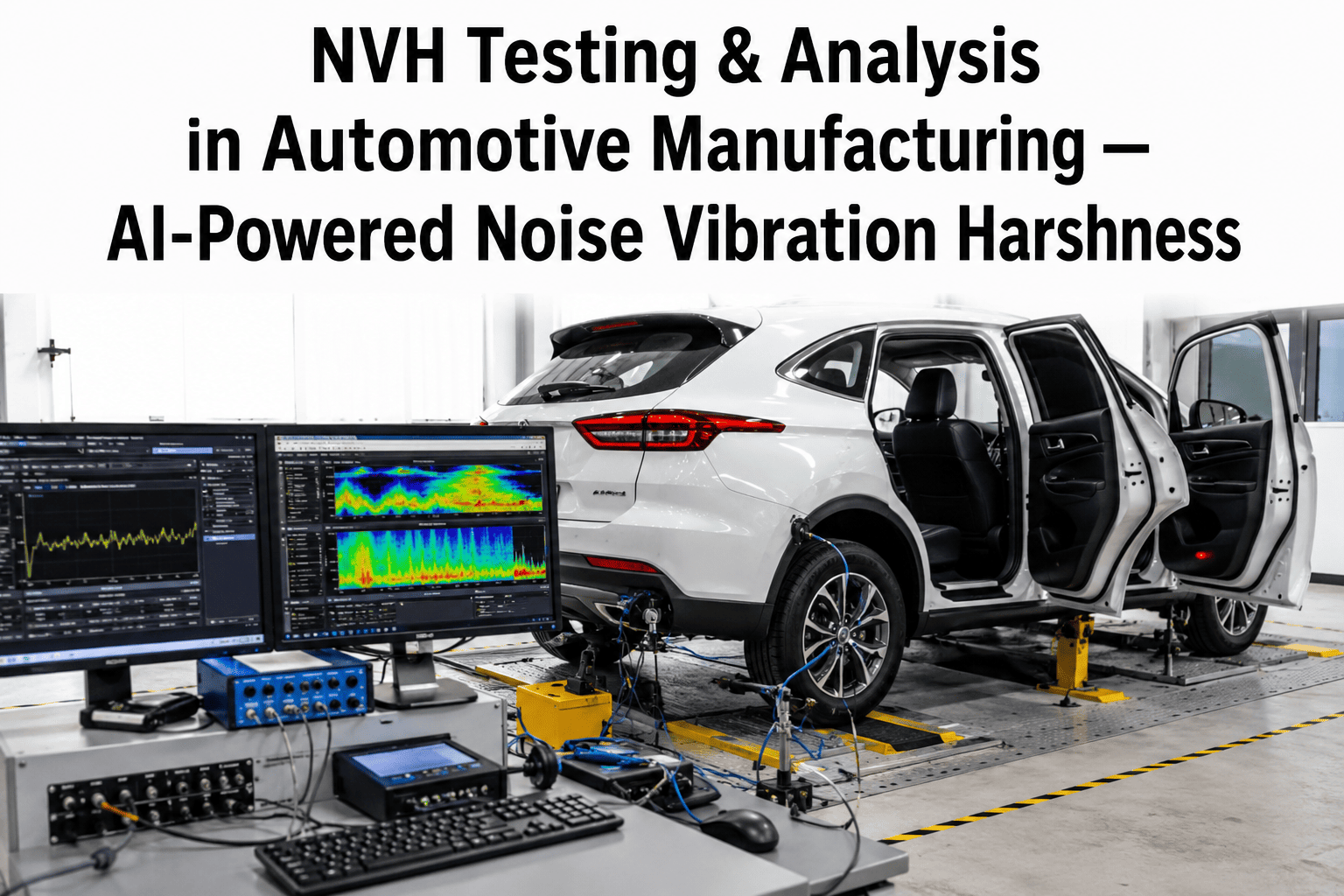
A global automotive manufacturer's end-of-line test system was passing vehicles with a bearing defect in the e-motor drivetrain — not occasionally, systematically, until warranty claims and returns made the pattern impossible to ignore. The EOL station was running the test. The test just wasn't sensitive enough to catch that specific failure signature. This is the uncomfortable reality behind end-of-line testing: it's simultaneously the last gate before a vehicle ships and a system that can run every scheduled test, pass every checkpoint, and still let a real defect through. Fixing that requires mining the test data itself — not adding more tests, but understanding which tests are actually catching defects and which are just consuming cycle time. The same analysis that finds a genuine escape gap frequently reveals the opposite problem sitting right next to it: tests that have never once caught a unique defect, running on every single unit regardless. See how iFactory mines EOL test data to identify which tests carry real diagnostic value, catching escapes without adding blanket test time.
The Escape Problem
A defect can pass every scheduled test if the test isn't actually sensitive to that failure mode
End-of-Line Vehicle Testing Analytics
End-of-line testing is the last gate before a car ships. AI mines EOL test data to catch the defects the current test suite is missing — and cut the testing that isn't catching anything at all.
Peer-reviewed research on large-scale automotive test data found most defects are caught by a small fraction of available tests — the rest add cycle time, not detection
Two Opposite Failure Modes
EOL Testing Fails in Two Directions, Not One
Most conversations about EOL testing focus on one failure mode: something bad ships that shouldn't have. That's real and costly, but it's only half the picture. The other failure mode gets far less attention because it doesn't generate a warranty claim — it's the accumulated cycle time, labor cost, and throughput loss from tests that consistently pass without ever catching a defect, running on every single unit regardless of whether they add any diagnostic value. Both failure modes exist simultaneously in nearly every EOL test suite, and treating them as unrelated problems misses how directly connected they actually are.
Treating these as a single "more testing is safer" problem misses the actual opportunity. The goal isn't more test time or less test time in the abstract — it's understanding, for the specific test suite a given line actually runs, which tests are carrying real diagnostic weight and which are along for the ride. A test suite built this way is both more likely to catch a real escape and less bloated with tests that were never actually protecting anyone.
How Test Mining Actually Works
Correlating Test Results Back to Actual Defect Detection
Test mining treats the EOL test suite itself as a dataset to analyze, not a fixed checklist to execute unchanged forever. For every test in the sequence, the analysis asks a specific question: across a large sample of units, did this test ever catch a defect that no other test in the sequence also caught? A test that consistently duplicates what another test already covers contributes redundant diagnostic evidence, not additional protection. This reframes test suite management as an ongoing data analysis problem rather than a fixed engineering specification decided once and never revisited.
The dashed box in this chart is the part worth sitting with. It isn't that the long tail of low-value tests is worthless in some absolute sense — several may still be worth keeping for reasons beyond pure defect-catch rate, such as regulatory documentation requirements or customer contract specifications. What the analysis actually delivers is visibility into which category each test falls into, so that decision gets made deliberately, with the data in front of you, instead of by default because the test has always been there.
Most Tests Aren't the Problem
A Small Fraction of Your Test Suite Is Doing Nearly All the Diagnostic Work
iFactory analyzes your actual EOL test history to identify which specific tests carry unique diagnostic value — and which ones have been running on every unit without ever catching anything.
A documented case involving e-motor drivetrains illustrates the escape problem concretely. A manufacturer began seeing a spike in warranty claims and returns tied to bearing failures on the rotor shaft — the kind of defect an EOL noise and vibration test station is specifically designed to catch. The existing EOL system was running its scheduled test on every unit. The defect was still shipping, which is exactly the scenario that makes escape analysis so counterintuitive: the failure wasn't a gap in coverage, it was a gap in sensitivity.
SymptomRising warranty claims tied to e-motor bearing failures
EOL StatusScheduled NVH test running normally on every unit
Root IssueExisting analysis technique wasn't sensitive to this specific failure signature
FixDeviation-spectrum analysis applied to the same test data, run in parallel to compare
OutcomeFaulty bearings detected at the EOL stand before shipment, using data the station was already collecting
The test station wasn't at fault for lacking a sensor or a checkpoint — it was collecting the right data all along. The gap was in how that data was being analyzed. This is the pattern behind most documented EOL escapes: the raw signal existed, but the analysis method applied to it wasn't sensitive enough to the specific failure mode actually occurring.
Building the Program
Reducing Test Time Without Adding Escape Risk
These four steps reflect the sequence that actually separates genuine test optimization from a risky blanket cut, keeping escape prevention and cycle time reduction as complementary goals rather than competing ones.
01
Establish a Large Historical Test-Result Dataset First
Test value analysis is only as reliable as the sample it's based on — a small dataset can make a genuinely valuable test look redundant simply because it hasn't had the chance to catch a rare-but-real defect yet.
02
Identify Tests With Overlapping, Not Unique, Coverage
Flag tests that never catch a defect independently of another test already in the sequence — these are the strongest candidates for consolidation or reduced frequency, not tests that catch defects rarely but uniquely.
03
Apply Deeper Analysis to Existing Signals Before Adding New Tests
Before assuming a new escape means a new test station is needed, confirm whether the existing test was already collecting the relevant data — as the e-motor bearing case shows, the fix is frequently a better analysis method applied to data already being captured.
04
Monitor for Concept Drift, Not Just a One-Time Analysis
A test's diagnostic value can change as upstream processes, suppliers, or designs evolve — a test reduction decision made on last year's failure patterns needs periodic re-validation against current data, not a permanent "set and forget" removal.
Field Perspective
“
Every EOL Lead I know can tell you their test suite has grown over the years — a station gets added after an escape, a test gets extended after a warranty spike, and nobody ever goes back and asks whether the old tests are still earning their keep. The interesting finding, every time we actually run the analysis, is that the answer isn't "cut everything" or "test more." It's usually two or three specific tests carrying almost all the real detection value, and a long tail of tests that haven't caught a unique defect in years. You don't find that by guessing. You find it by actually mining the history you already have sitting in your test data — and most plants have years of exactly that data, just never analyzed this specific way.
Marcus Aldenhoven-Ibori
End-of-Line Test Engineering Lead · 15 years in automotive final-assembly quality gates and test system optimization
Common Questions
Frequently Asked Questions
How can a defect escape end-of-line testing if the relevant test station is running normally?
A test station running on schedule and collecting data doesn't guarantee the analysis applied to that data is sensitive to every possible failure signature — a documented case involving e-motor bearing defects found the EOL noise and vibration station was collecting the right raw data throughout, but the existing analysis technique wasn't detecting the specific deviation pattern the failing bearings produced. Applying a more advanced analysis method, such as deviation-spectrum analysis, to the same underlying signal caught the defect using data the station was already generating. This is a common and often overlooked category of escape: not a missing test, but an under-powered analysis of an existing one, and it's frequently a faster and lower-cost fix than adding new test hardware would be. Book an EOL data review to assess whether your current test analysis is extracting full value from your existing signals.
Is reducing EOL test time inherently risky, given testing exists specifically to catch defects?
Not when the reduction is based on actual test-value analysis rather than blanket cuts — peer-reviewed research on large-scale automotive test data has found that a small fraction of available test patterns catch the majority of real defects, while a substantial remainder contribute no additional unique diagnostic value because they duplicate coverage already provided by other tests in the sequence. The risk isn't in reducing test time generally; it's in reducing test time without first confirming which specific tests are actually redundant, based on a sufficiently large historical dataset rather than assumption. Removing a test that rarely fires but catches a genuinely unique defect type would be the wrong cut, which is exactly why the analysis needs to precede the decision.
How much historical data is needed before trusting a test-value analysis to guide test reduction decisions?
There's no single universal threshold, but the core requirement is a sample large enough that rare-but-real defect types have had a genuine statistical opportunity to occur and be caught — a test that hasn't fired in a small dataset could be either genuinely redundant or simply unlucky, and those two situations require very different responses. Programs that get this right generally lean toward a conservative, larger sample before removing or reducing any specific test, and treat borderline cases as candidates for reduced frequency or ongoing monitoring rather than outright elimination until more data accumulates. Talk to solutions engineering about the dataset size needed for a reliable test-value analysis on your specific product line.
Does a test that never catches a defect in an existing dataset mean it's safe to remove permanently?
Not necessarily and not permanently — a test's diagnostic value can shift over time as upstream suppliers, manufacturing processes, or product designs change, a phenomenon sometimes called concept drift in the underlying data. A test that was genuinely redundant against last year's failure patterns could become newly relevant if a process change introduces a failure mode it happens to catch, so test reduction decisions benefit from periodic re-validation against current production data rather than being treated as a one-time, permanent removal. Ongoing monitoring of test value, not just an initial analysis, is what keeps a reduced test suite from quietly drifting back into risk.
Should EOL test optimization focus on removing tests or on improving the analysis applied to existing tests?
Both matter, but improving the analysis applied to existing test signals is frequently the higher-value and lower-risk starting point, since it doesn't require removing any coverage — it extracts more diagnostic value from data already being collected, as demonstrated in cases where a more sophisticated analysis technique caught defects an existing test station's data already contained but the original analysis method missed. Test suite reduction is a complementary, separate effort that should follow a rigorous test-value analysis on a sufficiently large dataset, rather than being the first or only lever pulled when a line is looking to reduce EOL cycle time.
Test Smarter, Not Just Faster or Longer
Find the Tests That Actually Catch Defects — And the Ones That Don't
iFactory mines your existing EOL test data to identify which tests carry real diagnostic value, catches escapes the current analysis is missing, and reduces test time only where the data genuinely supports it.