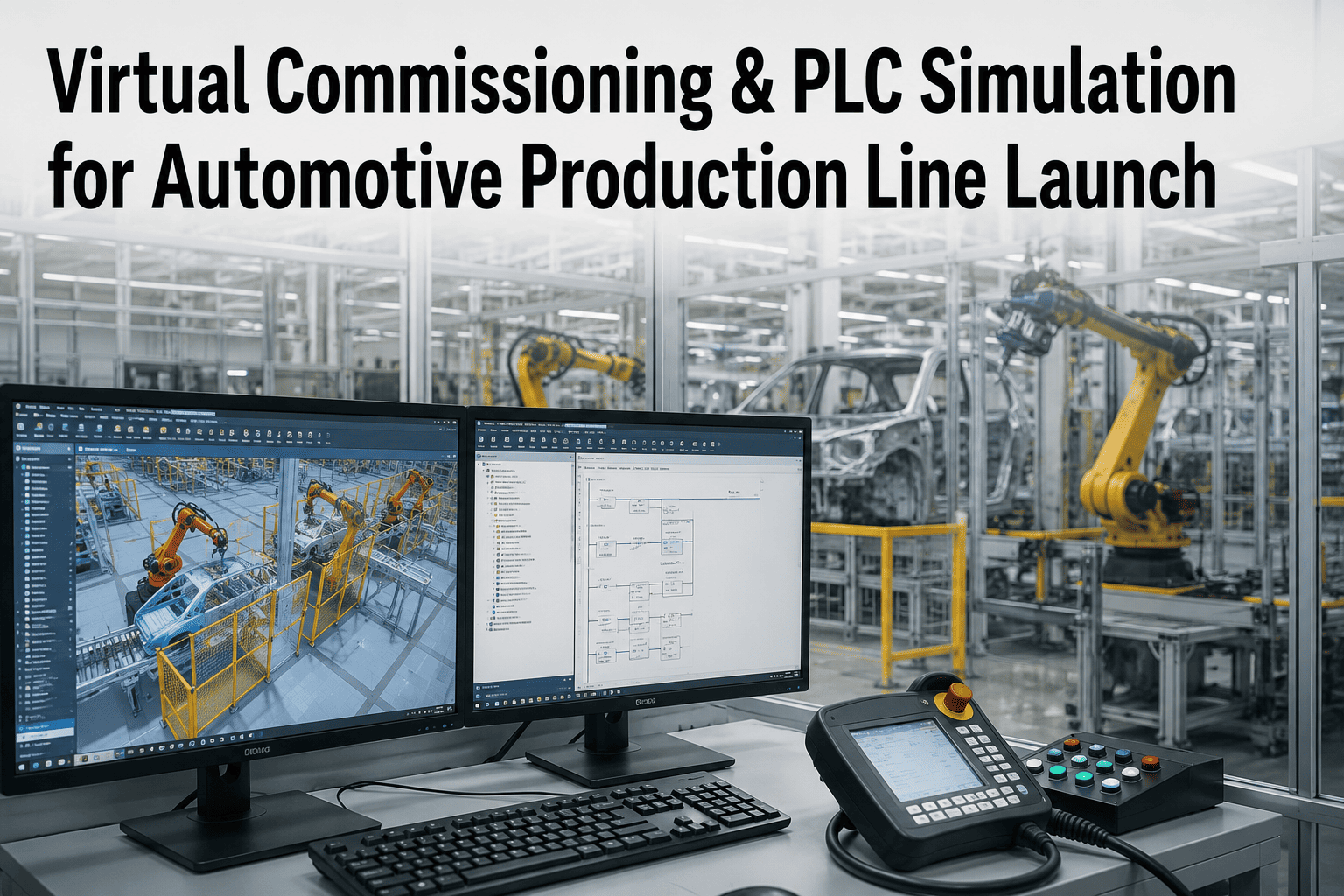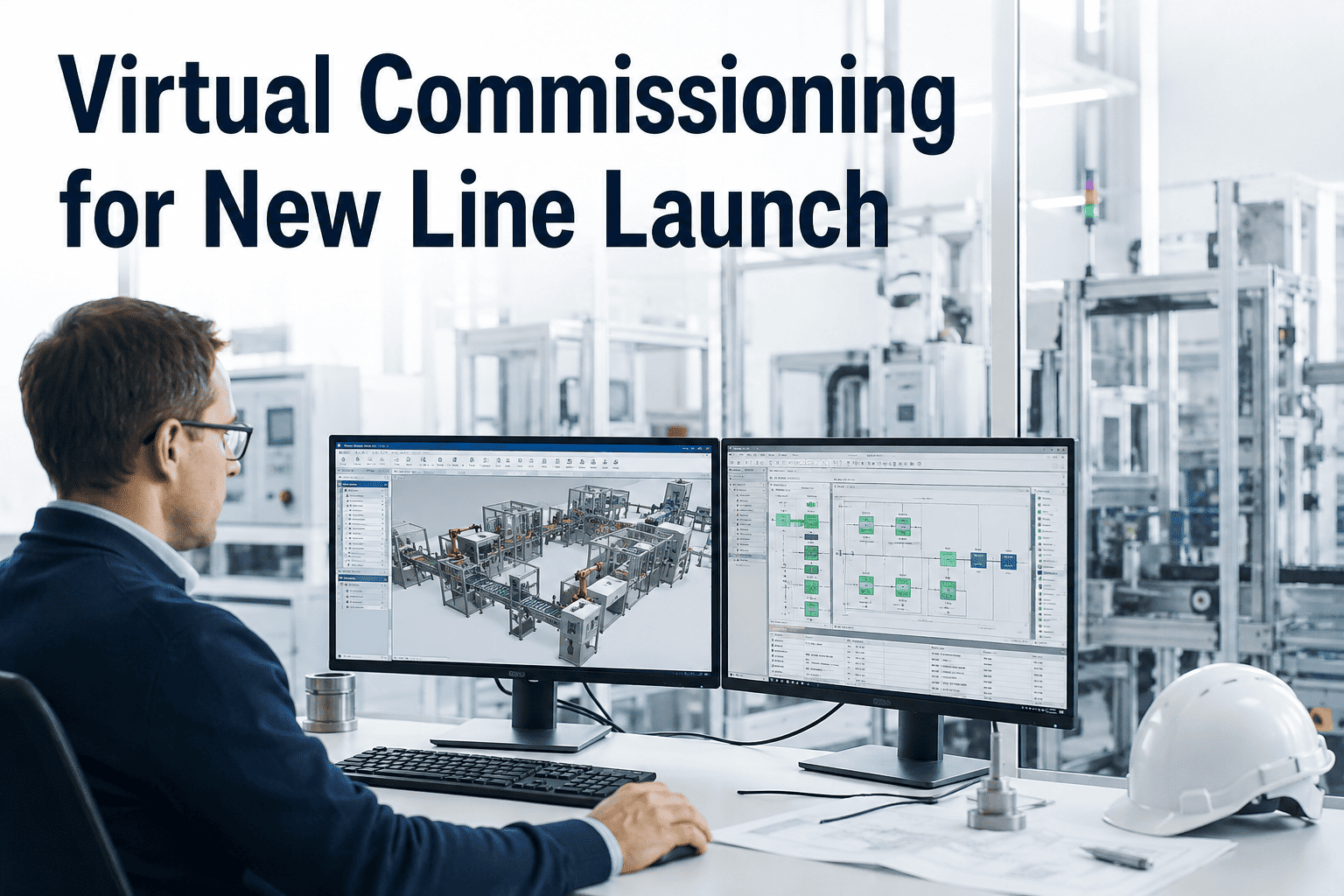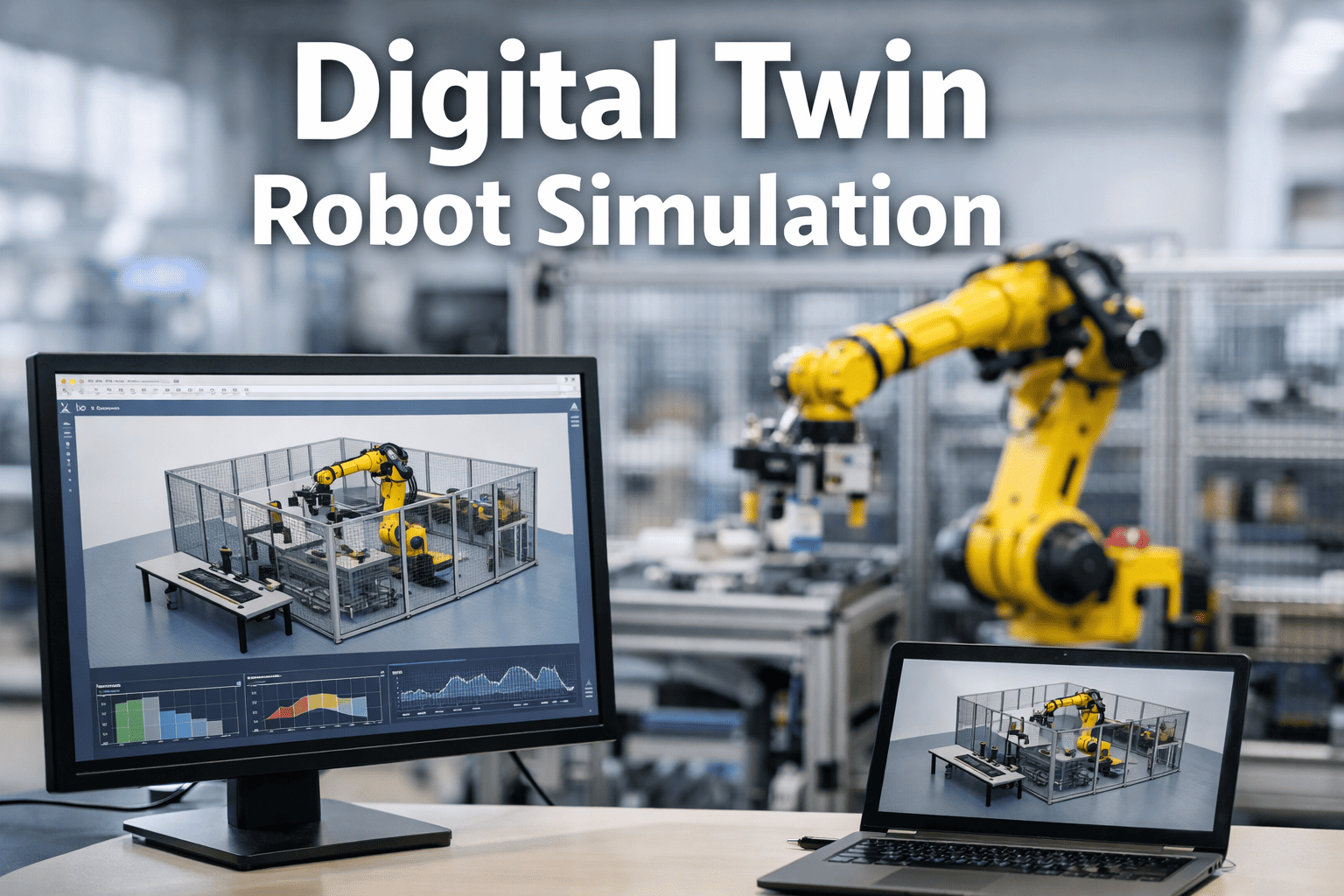
A new model launch fails on the floor for the same handful of reasons every time: the line was balanced on paper using standard cycle times that never accounted for a new fastener requiring an extra motion, a station's equipment turned out not to reach a part in its actual mounted position, or the ramp-up plan assumed a training curve that took three times longer in practice. Every one of these failures is theoretically knowable before launch day, but most plants discover them during the first week of actual production because the launch plan was validated on a spreadsheet and a floor walk rather than in a model that could actually simulate the new process running at speed. A digital twin lets the launch team simulate the new model's line balance, equipment readiness, and ramp-up curve before physical changeover begins, catching the problems that would otherwise cost real launch days to discover. If your next model launch still relies on paper line balancing and hope, you can book a demo with iFactory's team.
Validate Line Balance and Ramp-Up Before Physical Changeover Begins
iFactory's digital twin simulates your new model's line balance, equipment readiness, and ramp-up plan in advance, catching launch problems before they cost real production days.
Four Areas a Launch Simulation Actually Validates
A launch simulation is not a single pass or fail check. It validates several distinct dimensions of readiness, each of which can independently derail a launch even if the others are perfectly prepared.
Line Balance
Whether the planned cycle time distribution across stations actually holds up once the real task sequence and motion requirements are modeled in detail.
Equipment Readiness
Whether existing or newly installed tooling and fixtures can physically access and process the new part geometry at every station along the line.
Ramp-Up Curve
How quickly the line is realistically expected to reach full rate given operator learning curves and typical early-production quality issues.
Resource and Material Readiness
Whether staffing levels, training completion, and inbound material supply are actually aligned with the planned start-of-production date.
Where Paper Line Balancing Typically Goes Wrong
Line balancing done on a spreadsheet using standard time estimates consistently misses specific details that only become visible when the actual task sequence is modeled against real part geometry and station layout. The comparison below shows common gaps between planned and simulated cycle time.
| Station | Planned Cycle Time | Simulated Cycle Time | Gap Source |
|---|---|---|---|
| Station 3 - Fastening | 42 seconds | 51 seconds | New fastener location requires an extra reach and reposition motion |
| Station 7 - Wire Routing | 38 seconds | 44 seconds | Revised harness routing path was not reflected in the original time study |
| Station 11 - Trim Install | 35 seconds | 35 seconds | No significant deviation, task matches original assumption |
| Station 14 - Final Torque | 29 seconds | 37 seconds | New torque specification requires an additional verification step |
Building a Realistic Ramp-Up Plan Instead of an Optimistic One
Ramp-up plans built on an assumed straight-line path to full rate consistently underestimate the time needed, since they rarely account for the combined effect of operator learning curve, early-production quality issues, and equipment settling-in period happening simultaneously.
Operator Learning Curve
Historical data from comparable past launches on how quickly operators typically reach standard cycle time on a new task sequence.
Early Quality Issue Rate
Expected defect and rework rate during the first weeks of production, which reduces effective output even when cycle time targets are met.
Equipment Settling Period
Time typically required for newly installed or reconfigured equipment to reach its rated reliability and uptime performance.
Results From Automotive Plants Simulating Launch Readiness
The figures below reflect aggregated outcomes from automotive plants that adopted digital twin simulation for new model launch planning, compared to their prior paper-based launch preparation process.