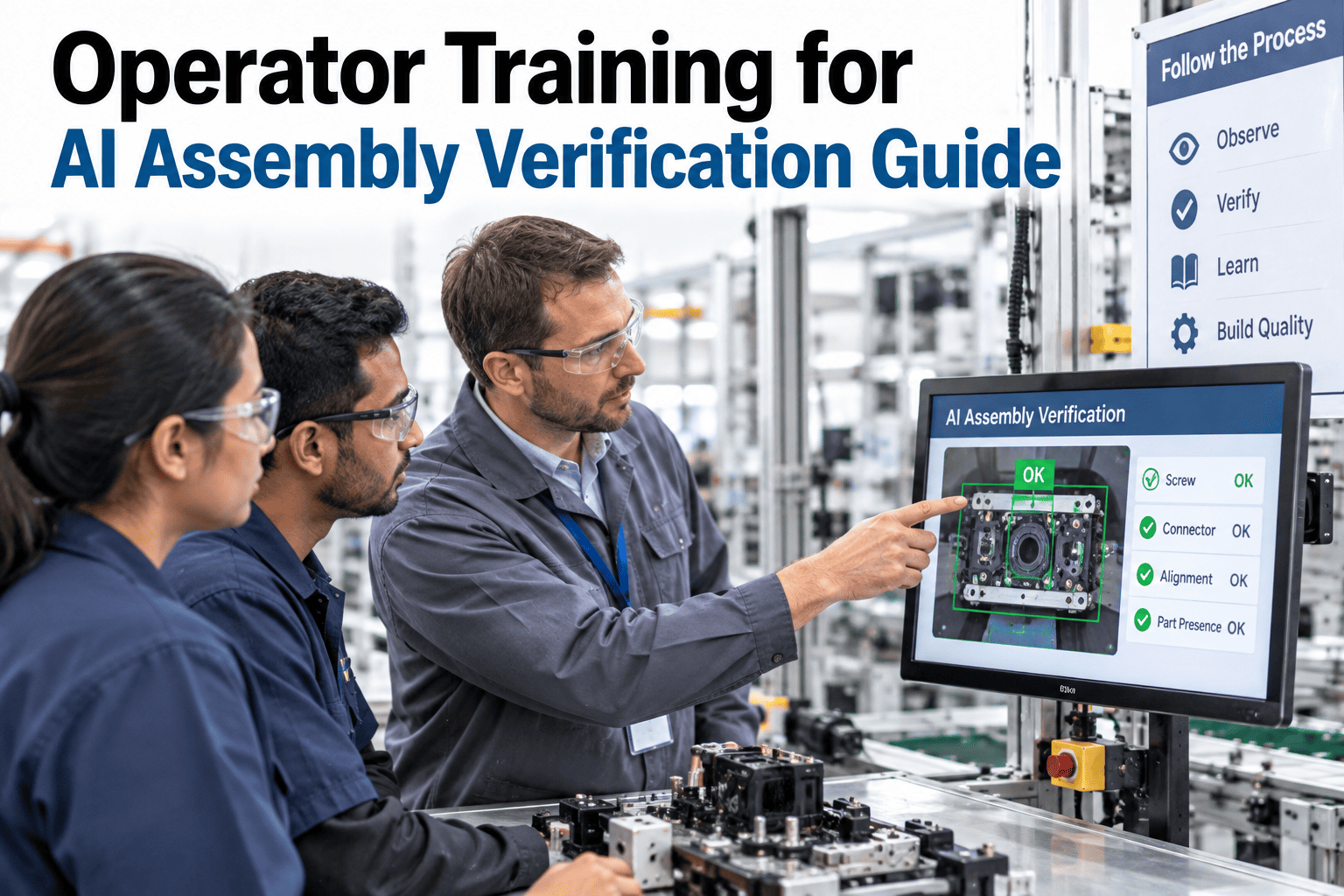
An AI assembly verification system can catch a defect the instant it happens, but that catch is only worth something if the operator standing next to it knows what to actually do when the alert fires. A system that flags a torque anomaly or a missing component means nothing if the response is to silence the alert and keep the line moving, which happens more often than most plants would like to admit when training stops at "here's the new screen" instead of covering what each alert actually means and when it needs to escalate. Getting real value out of assembly verification technology depends as much on operator training as it does on the system itself. See what a real operator training program for AI verification actually covers.
The System Catches the Defect. The Operator Decides What Happens Next.
An AI verification alert is only as useful as the response behind it. Training that covers interaction, alert response, and escalation is what turns a catch into a corrected line.
system interaction, alert response, and escalation — the core skill set every operator needs before verification technology delivers real value
the most common failure mode when training stops at basic screen navigation instead of covering what each alert means
verification technology is designed to work with operator judgment, not replace it, which is exactly what training needs to reinforce
Three Levels of Operator Readiness
Training that builds through these three levels produces an operator who doesn't just tolerate the verification system, but genuinely relies on it as part of how they work.
System Interaction
Navigating the verification interface, reading a station's current status, and understanding what a green, yellow, or red indicator actually means during normal operation.
Alert Response
Responding correctly to a specific alert type — stopping the line, correcting the flagged issue, and confirming the correction before resuming, rather than dismissing the alert to keep pace.
Quality Escalation
Recognizing when a pattern of alerts signals something beyond a one-off correction, and escalating to a supervisor or quality engineer before a systemic issue compounds.
Build a Training Program Operators Actually Use
iFactory reviews your current verification rollout to show exactly where training gaps are leaving alerts unanswered or dismissed on the floor.
Training Depth and Resulting Alert Behavior
How thoroughly operators are trained on the verification system correlates directly with what actually happens when an alert fires on the floor.
Building the Training Program Itself
A training program that actually holds up needs to be built around real alert scenarios, not just a generic system walkthrough.
Train against real alert scenarios, not hypotheticals
Using actual historical alerts from the specific line an operator works on makes the training concrete and immediately relevant, rather than an abstract walkthrough of a generic interface.
Define the escalation threshold explicitly
Operators need a clear, specific rule for when a pattern of alerts crosses from something they can correct themselves into something that needs supervisor or quality engineer involvement.
Reinforce with periodic refreshers, not a single onboarding session
Alert response skill decays without reinforcement, especially for less common alert types, so periodic scenario-based refreshers keep the full skill set current rather than fading after initial training.
What Changes When Training Actually Covers All Three Levels
Figures reflect typical outcomes within the first quarter after implementing a full three-tier operator training program alongside an existing AI verification system.
A Training Coordinator's View on Verification Readiness
Our initial rollout trained operators on how to navigate the screen and basically nothing else, and within a few weeks we noticed alert dismissal rates climbing because nobody had ever been taught what an escalating pattern actually looked like versus a one-off. Rebuilding the training around real alert scenarios and a clear escalation rule changed how operators actually treated the system, from something they tolerated to something they trusted.
The Bottom Line on Operator Training for AI Verification
An AI verification system's technical accuracy only translates into fewer defects if the operator responding to its alerts knows exactly what to do, every time. Training that stops at basic screen navigation leaves that gap wide open, and the most common result is an alert that gets silenced rather than acted on. Building training through system interaction, alert response, and escalation in sequence is what turns the technology from something operators tolerate into something they genuinely rely on.
Frequently Asked Questions
How long does a full three-tier training program typically take to complete?
Foundational system interaction training is usually completed within a shift or two, while proficiency in alert response develops over several weeks of actual exposure to real alert scenarios, with escalation judgment typically building over a few months as operators encounter a wider range of alert patterns. Book a review to see a realistic timeline for your specific verification rollout.
Does every operator need to reach the expert escalation level, or just supervisors?
Every operator benefits from at least a basic understanding of what an escalating pattern looks like, even if the formal escalation decision ultimately rests with a supervisor, since an operator who can't recognize a developing pattern won't know when to flag it in the first place.
What's the most common reason operators dismiss alerts instead of responding to them?
The most common reason is production pace pressure combined with uncertainty about what the alert actually means — if an operator doesn't fully understand the alert or fears it will unfairly slow the line, dismissing it feels like the path of least resistance, which is exactly why training needs to build genuine understanding, not just procedural compliance.
Should training differ between new hires and experienced operators being introduced to a new verification system?
Experienced operators often need less foundational system training but benefit just as much from scenario-based alert response practice, since their existing floor experience doesn't automatically translate into knowing how to interpret a new system's specific alert types and escalation thresholds.
How is training effectiveness actually measured after the program is in place?
Alert dismissal rate and time-to-correction after an alert fires are two of the clearest measurable indicators, since both directly reflect whether operators are responding to alerts as trained rather than working around them. Talk to a specialist about setting up these measurements for your specific verification system.
Make Sure Your Verification System Gets Acted On
Book a 30-minute assessment. iFactory reviews your operator training and shows exactly where alerts are getting dismissed instead of resolved.