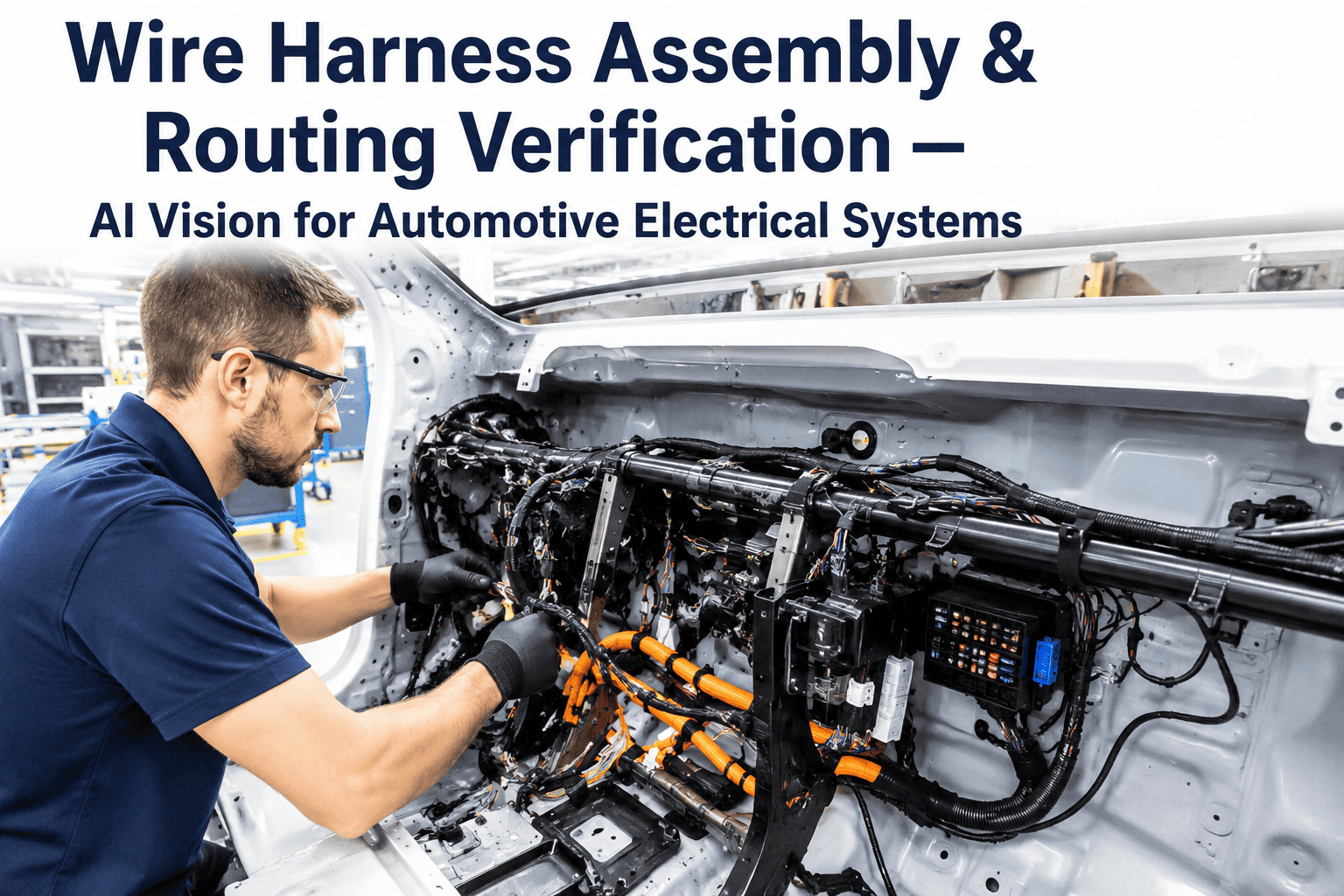
A wire harness looks simple once it is bundled and routed, but underneath that bundle is a dense bill of individual circuits, each one terminating in a specific cavity of a specific connector, and a single wire seated in the wrong cavity can pass every mechanical check while still causing an intermittent electrical fault that surfaces months after the vehicle ships. Manual harness inspection relies on an inspector visually tracing routing and checking connector locking by hand, a process that is thorough in principle but genuinely difficult to sustain at consistent accuracy across a full shift. AI vision brings pin-count verification, locking confirmation, and routing compliance into a repeatable check at the point of assembly, and you can book a demo to see it applied to your own harness stations.
An Intermittent Electrical Fault Almost Always Starts at a Connector
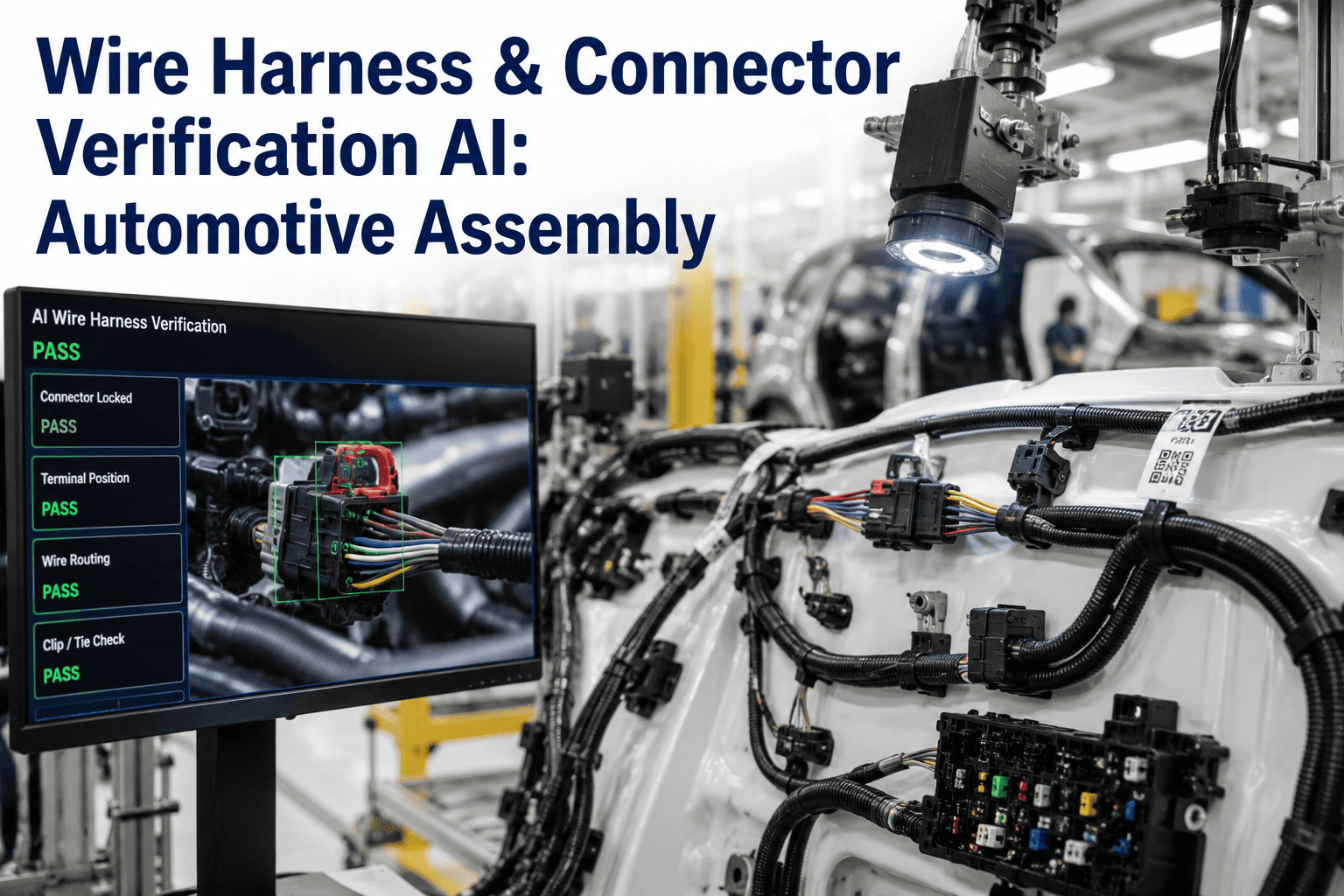
iFactory verifies pin count, connector locking engagement, and harness routing against the build specification at every station, catching the class of electrical defect that surfaces long after the vehicle has left the plant.
A Connector Can Look Seated While Sitting Unlocked
Wire harness assembly is largely manual across the automotive industry, and that manual process introduces quality risk in ways that only become visible under closer inspection, since a connector can appear fully seated to the eye while the internal locking mechanism has not actually engaged. The consequence of that gap rarely shows up immediately, an intermittent connection often passes end-of-line electrical testing under stable conditions and only manifests once the vehicle is on the road experiencing vibration and temperature cycling the test bench never replicated.
Pin Count, Locking, and Routing at Every Connector
Harness verification breaks down into three distinct checks that each catch a different failure mode, and a single camera-based system can perform all three at the same station without adding a separate inspection step to the line.
See Connector Verification Running Against a Real Harness
iFactory can walk through pin count and locking verification against a sample harness or connector from your own build spec. Book a demo to see it live.
Electrification Is Adding Circuits Faster Than Inspection Capacity
Modern vehicles carry substantially more wiring than their predecessors as electronics content expands across driver assistance, infotainment, and electrified powertrains, and every added circuit is another connector, another cavity, another opportunity for a defect that a purely manual process has to catch by eye. The inspection burden is growing faster than headcount typically grows to match it, which is exactly the kind of gap camera-based verification is built to absorb.
What Changes at the Point of Connector Assembly
The comparison between manual and camera-based harness inspection is really a comparison of consistency, since a trained inspector can catch most defects most of the time, but camera verification applies the identical standard on every single connection, every shift.
| Factor | Manual Inspection | iFactory AI Verification |
|---|---|---|
| Locking Engagement | Checked by feel or visual cue, can be missed | Confirmed against a reference locked-state image |
| Pin Count Accuracy | Dependent on inspector attention across the shift | Consistent cavity-by-cavity verification every cycle |
| Routing Compliance | Spot-checked against a routing diagram | Compared directly against the routing path on every unit |
| Defect Traceability | Limited to what the inspector noted manually | Image record retained for every verified connection |
Every Station Where a Harness Terminates or Routes
Wire harness verification is relevant wherever a harness is assembled, routed, or connected, which spans several distinct station types across a typical automotive plant.
What Electrical Quality Teams Ask Before Adopting This
Catch the Connector Fault Before It Becomes a Warranty Claim
iFactory verifies pin count, locking, and routing at every harness connection, every unit. Book a demo and see it applied to your own connectors.