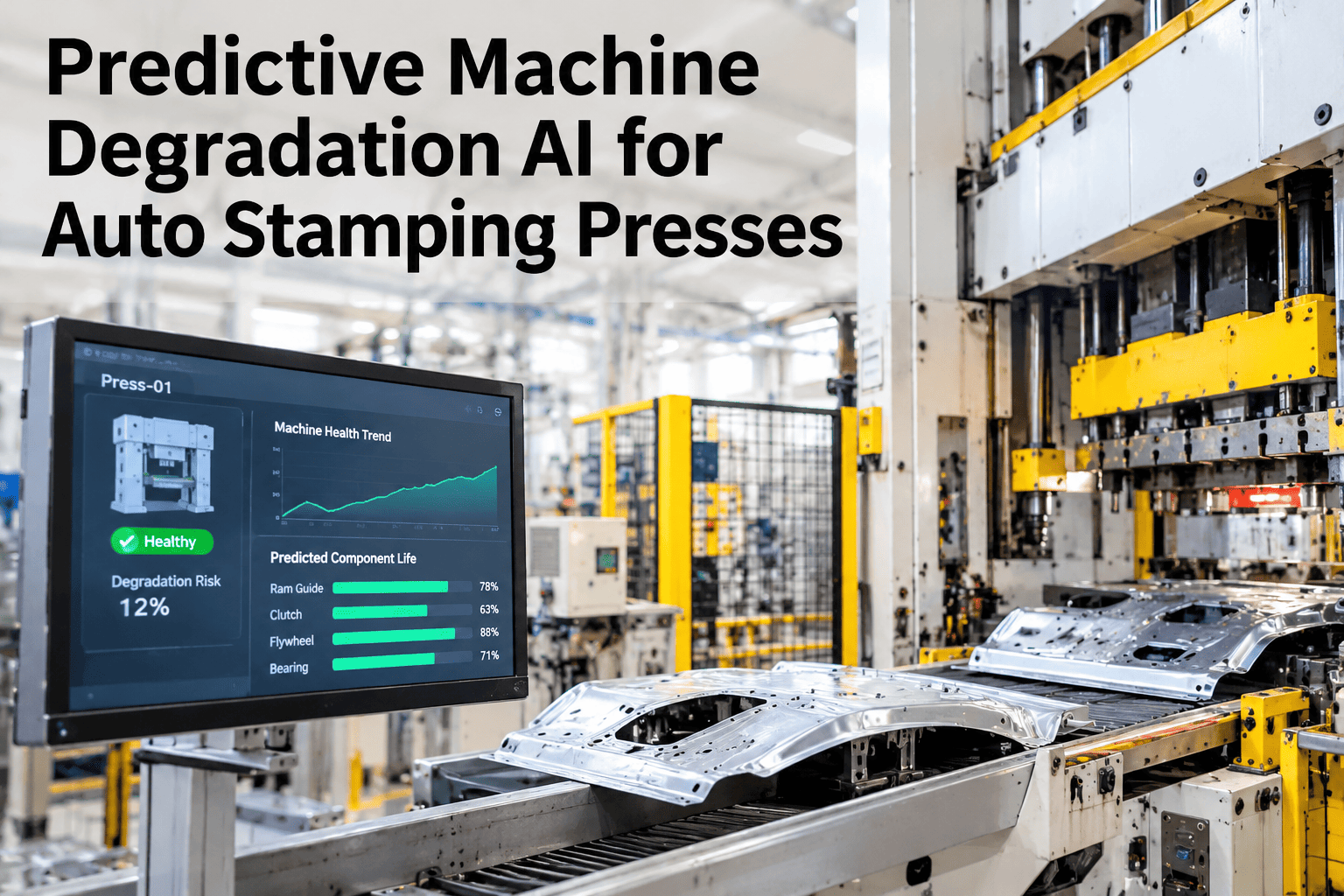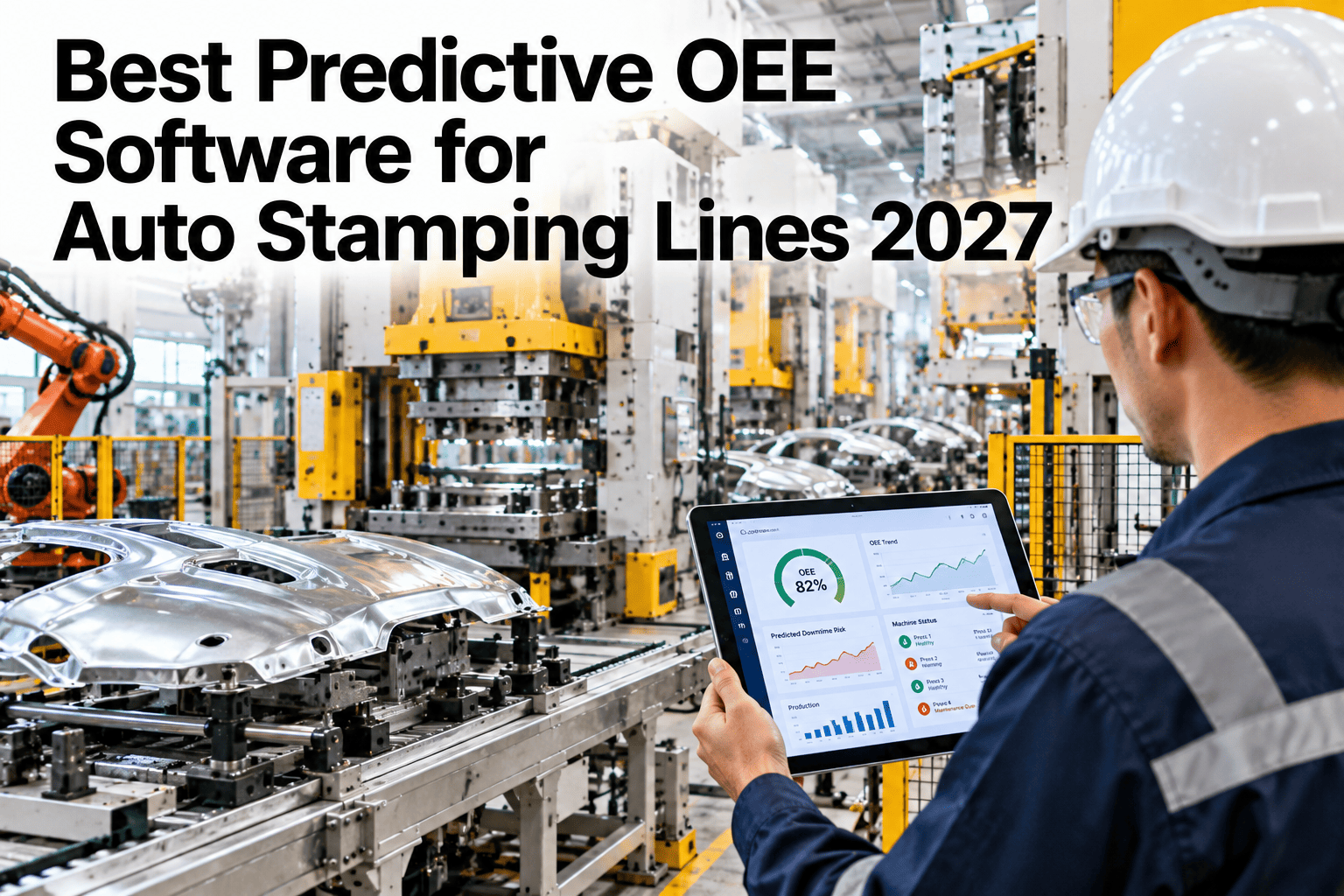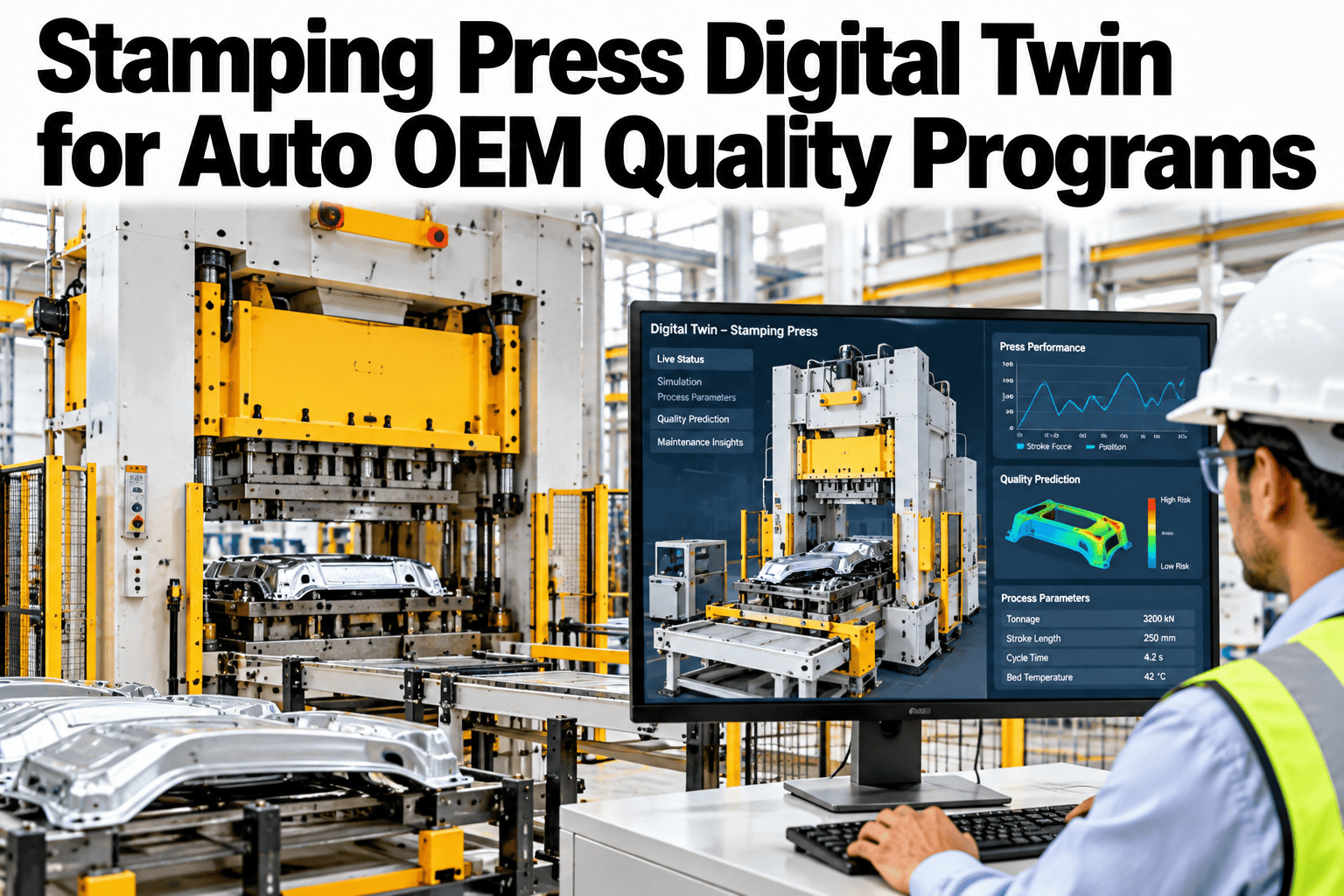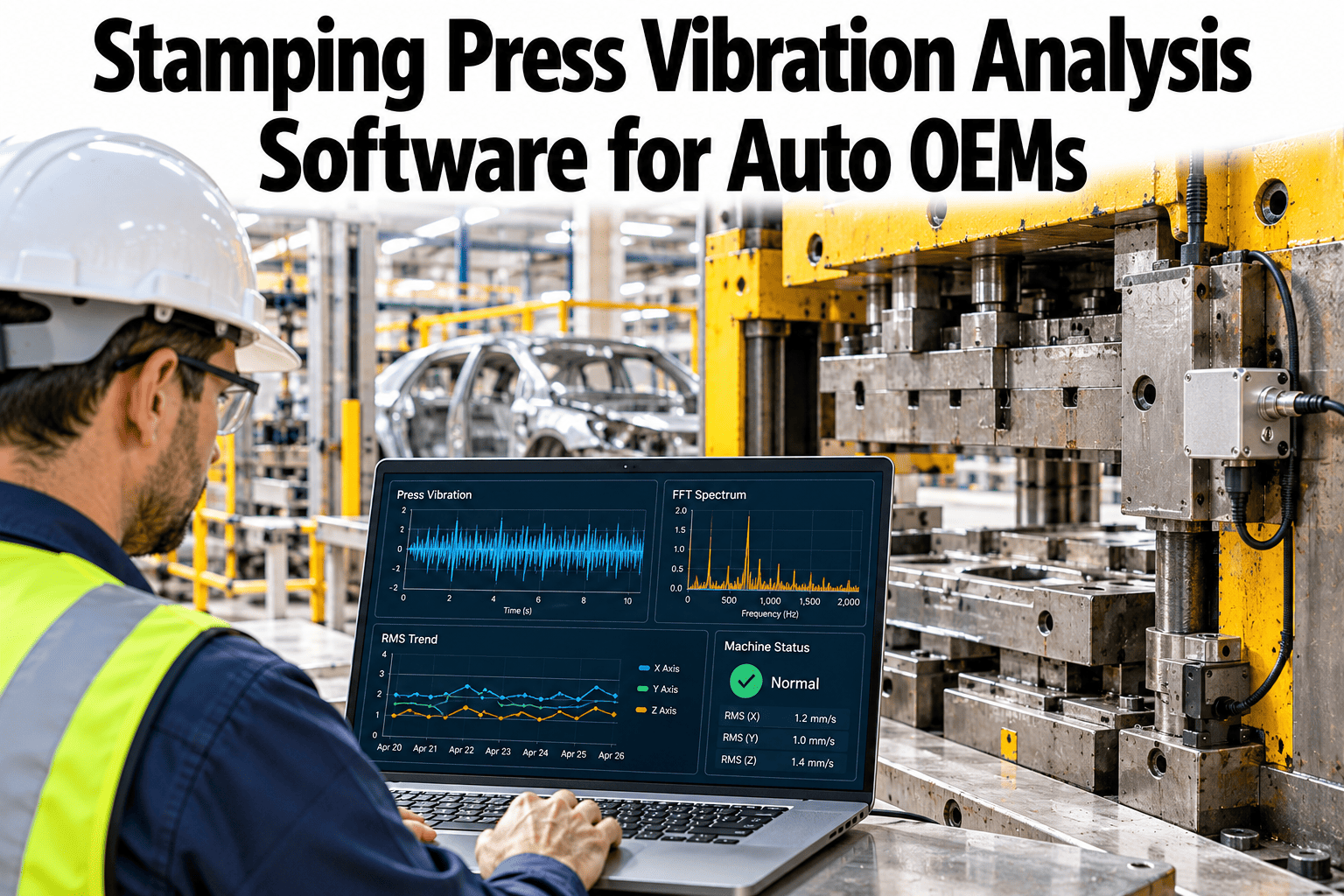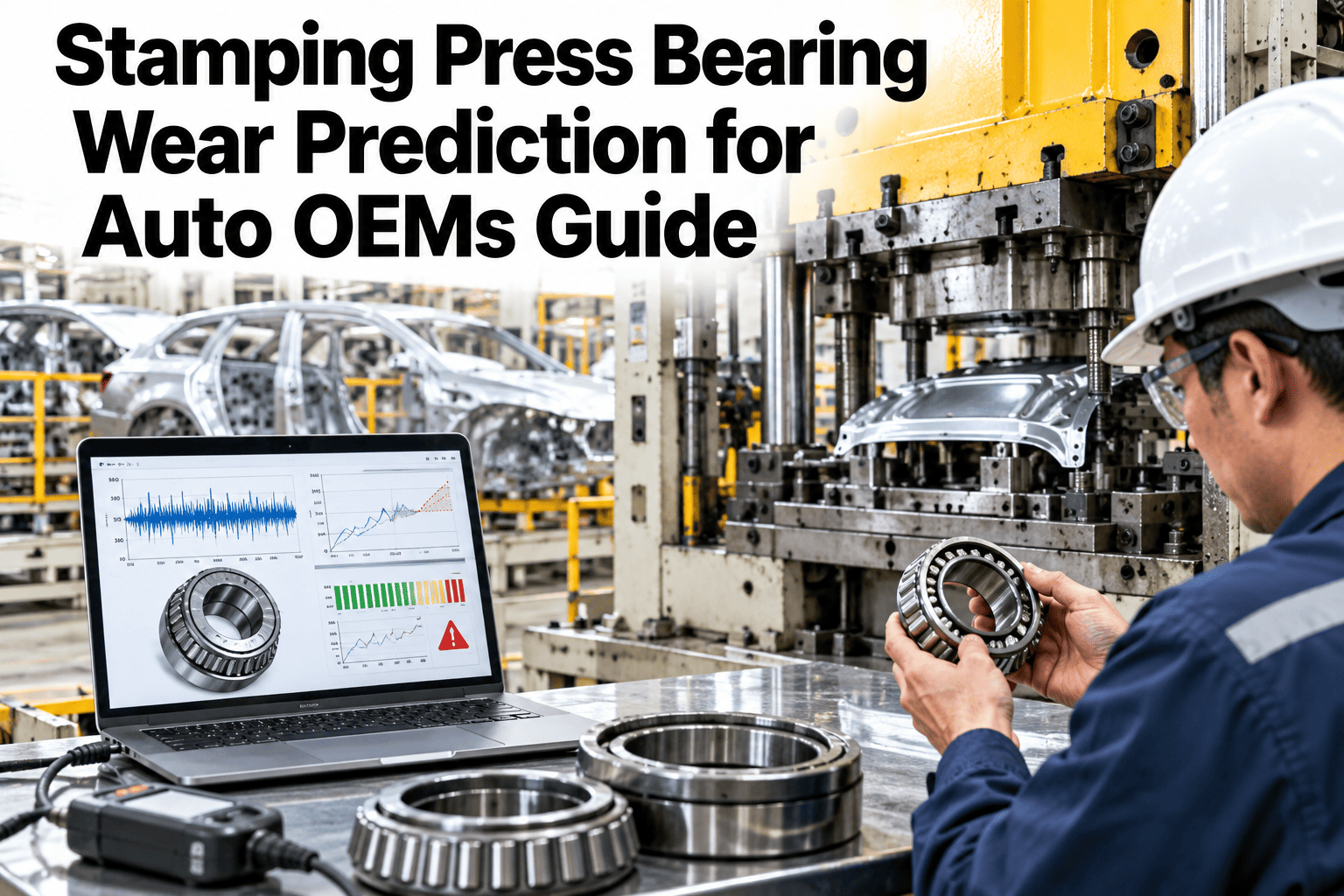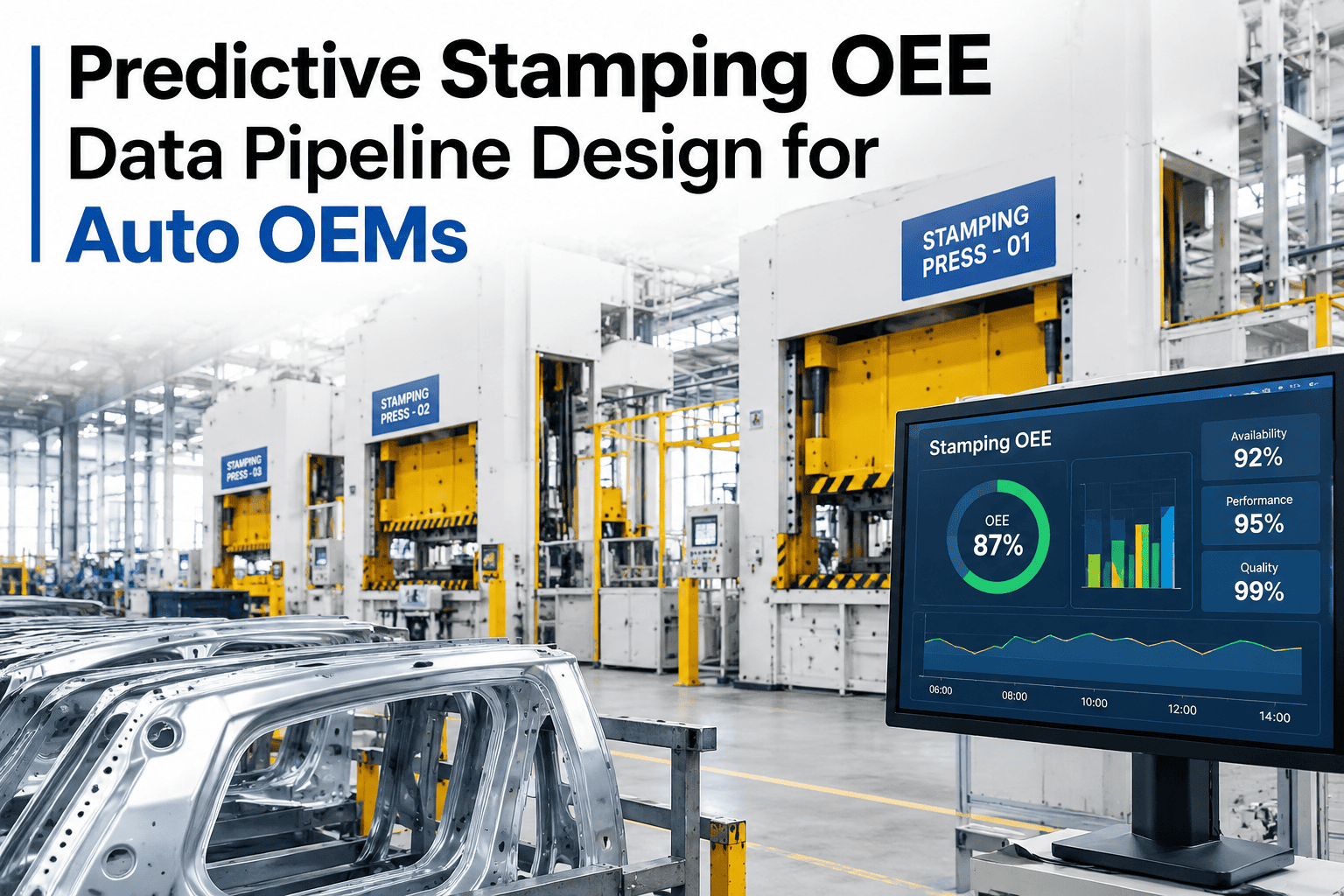
A predictive OEE model for a stamping line is only as good as the pipeline feeding it, and most stamping lines were never wired to stream press-controller signals anywhere useful — data sits in the controller until someone manually pulls a report. Building a real pipeline means capturing press signals continuously, streaming them through an event architecture, and serving them to a model that can actually predict OEE rather than just report it after the fact. Auto OEMs scoping their own predictive stamping program can review a data pipeline design against their own press controllers with iFactory AI.
A Predictive Model Is Only as Good as the Pipeline Feeding It
iFactory AI designs press-controller signal capture, event-stream architecture and an ML-serving layer that anchor a genuinely predictive stamping OEE program.
Four Layers of a Working Predictive Pipeline
Each layer depends on the one beneath it, and a weak lower layer — unreliable signal capture, for example — undermines whatever prediction sits on top of it, however sophisticated the model.
What Each Layer Actually Requires
| Layer | Requirement | Common gap |
|---|---|---|
| Signal capture | A reliable connection to the press controller's data output | Older controllers with limited or proprietary connectivity |
| Event streaming | Infrastructure to move events continuously, not in batches | Relying on periodic data pulls instead of streaming |
| ML serving | A model trained and validated on your own press data | Using a generic model never calibrated to your line |
Check What Your Press Controllers Can Already Provide
Walk through your current press controller connectivity to see what pipeline design fits your existing equipment.
A Composite Scenario: The Model That Couldn't Predict Anything Useful
An OEM invested in a predictive OEE model for its stamping lines, but the underlying data pipeline only pulled press data once per shift through a manual export, meaning the model had no way to react to anything happening faster than that interval. Predictions arrived too late to matter, since by the time a shift's data was available, whatever OEE issue it might have flagged had already happened. Rebuilding the pipeline to stream press-controller signals continuously, rather than relying on shift-end exports, gave the same model the live data it needed to actually predict issues before they fully played out — a foundation iFactory AI's team can help design around your own press controllers.
Why the Pipeline Matters More Than the Model Itself
Teams often focus budget and attention on the predictive model, assuming the data pipeline is a solved problem. In practice, the pipeline's reliability and latency set a hard ceiling on what any model can achieve — a sophisticated model fed stale or incomplete data will underperform a simpler model fed clean, continuous data every time.
Frequently Asked Questions
Build the Pipeline Before You Build the Model
iFactory AI designs press signal capture, event streaming and ML serving as one working pipeline. Book a walkthrough with your own press controllers.