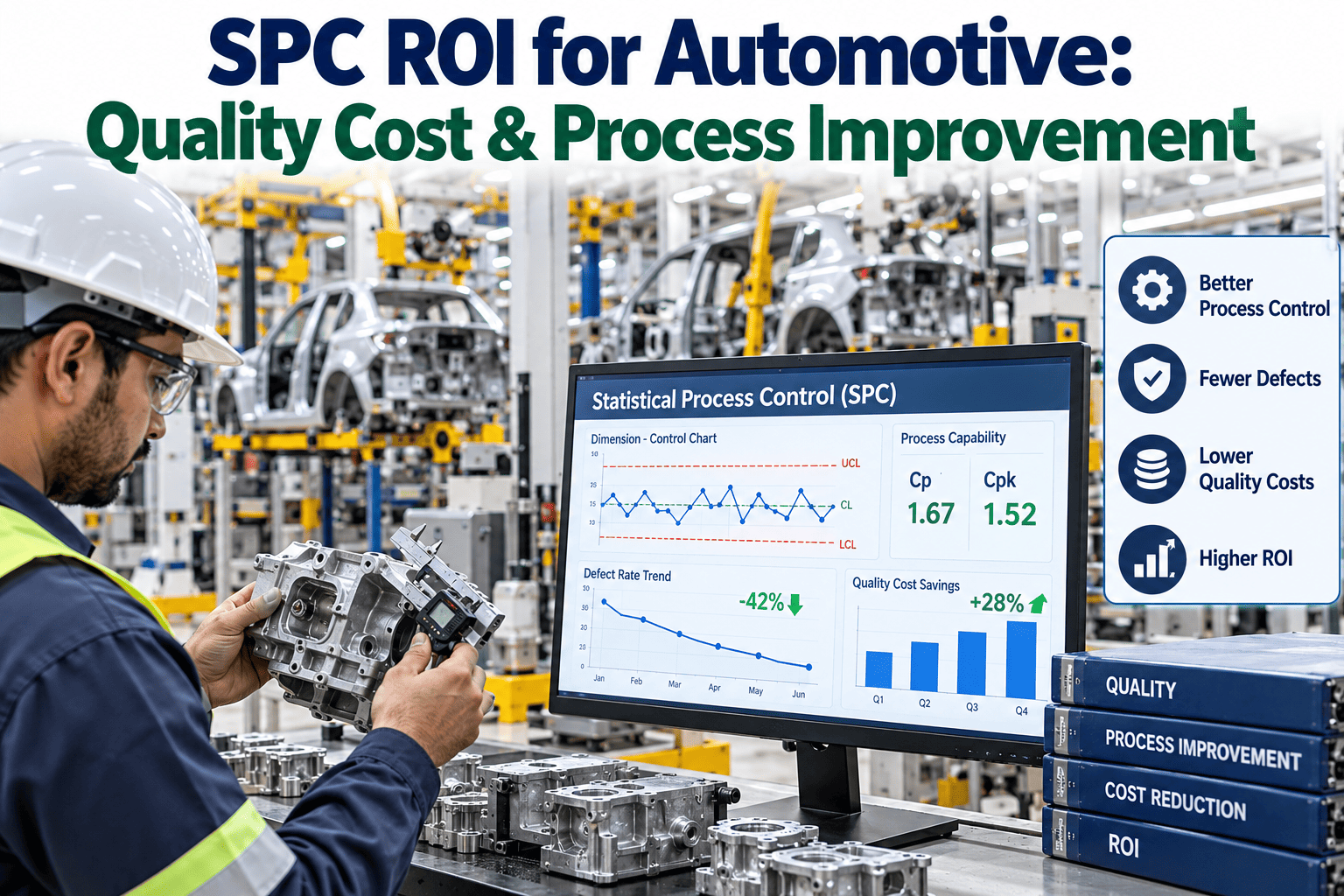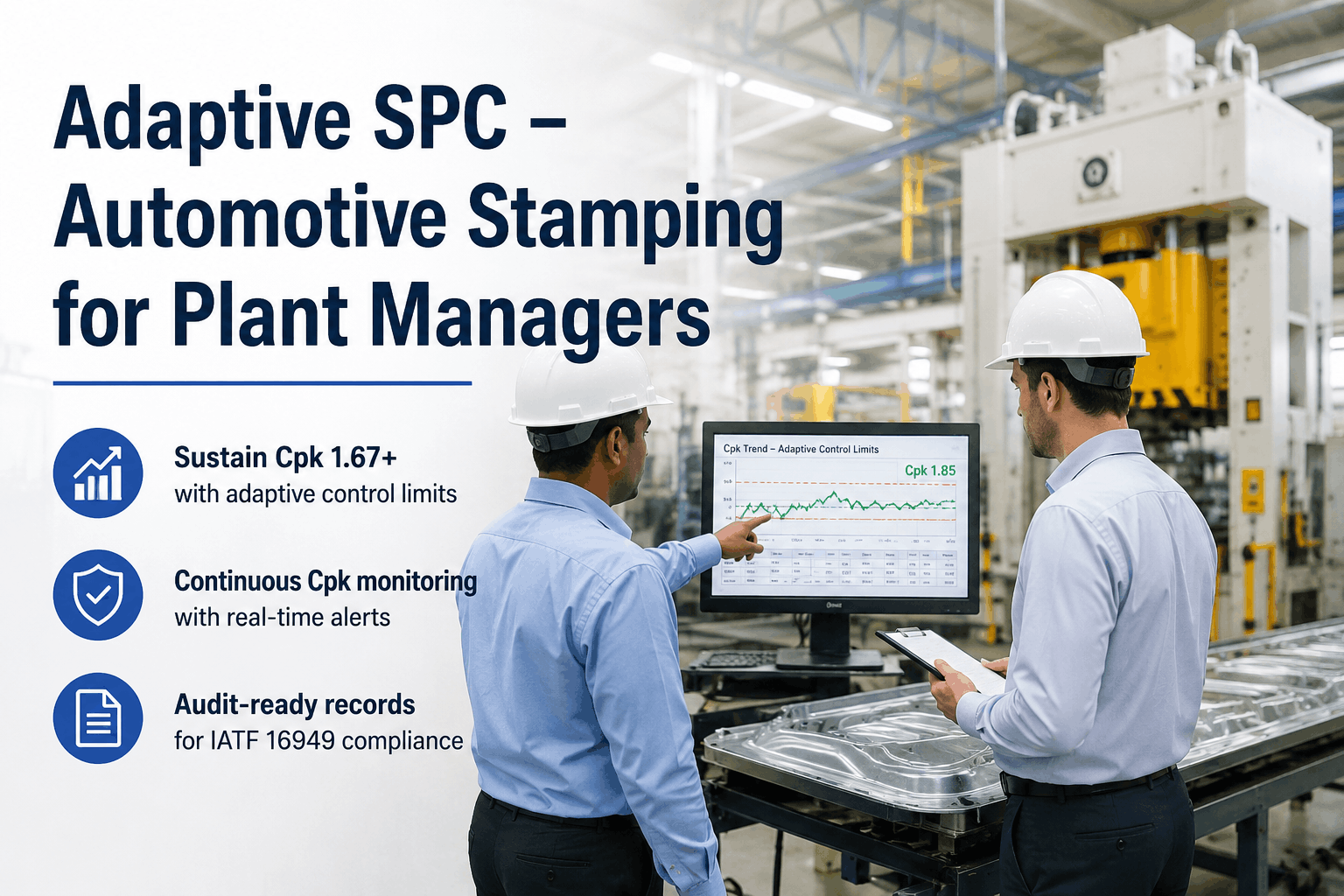
A process can run perfectly stable and still be incapable — centered, predictable, and consistently producing parts too close to the tolerance edge to call safe. Quality managers chasing a capability number often jump straight to tightening tolerances or buying new tooling, when the real fix is usually variation reduction at a station that was never stable enough to measure correctly. Auto quality teams who want their own Cpk numbers checked against real variation sources can review a station capability study with iFactory AI.
A Stable Process Is Not the Same as a Capable One
iFactory AI tracks Cpk by station continuously, separates stability issues from true capability gaps, and targets variation reduction where it actually moves the number.
Stability First, Then Capability — Why the Order Matters
Capability indices like Cpk only mean something once a process is in statistical control. Calculating Cpk on a process that is still drifting or showing special-cause variation produces a number that looks precise but describes nothing real.
Separating a Stability Problem From a True Capability Gap
Find Out Which Stations Have a Real Capability Gap
Share recent SPC data for your critical stations and a short session will separate stability issues from genuine capability gaps.
A Roadmap for Lifting Station Capability
Where Capability Gaps Usually Hide in an Auto Plant
| Station type | Common variation source | Typical fix |
|---|---|---|
| CNC machining | Tool wear over a run | Tighter tool-change intervals |
| Stamping | Die wear and material thickness | Die maintenance schedule tied to wear data |
| Weld | Fixture play, electrode wear | Fixture inspection cadence |
| Assembly torque | Tool calibration drift | Shorter calibration interval |
A Composite Scenario: Chasing a Number That Was Never Real
A quality team spent a quarter trying to lift a machining station's Cpk from 0.9 toward 1.33 by tightening its fixture, with no improvement despite the effort. A closer look at the underlying control chart showed the process mean was actually shifting between two tool batches, meaning the process was never in statistical control to begin with — the Cpk number was describing an unstable process, not a genuinely narrow-but-centered one. Once the two tool batches were separated and tracked individually, each batch's own Cpk came in well above target, and the fix turned out to be a sourcing standard for the tooling, not a fixture change — the kind of distinction iFactory AI's support team can help confirm from your own SPC data before a quarter is spent on the wrong fix.
Why Sample Size and Timing Change What Cpk Tells You
A Cpk calculated from a small, short sample window can look excellent purely by luck — catching the process during a quiet stretch between tool changes or material lot shifts. A more trustworthy number comes from a sample large enough, and spread across enough time, to capture the normal range of conditions the station actually runs under, tool wear and all.
This is also why a single capability study run once a year tells you less than most teams assume. A station's capability can drift meaningfully between studies as tooling wears or suppliers change, which is the entire argument for tracking Cpk continuously rather than as an annual checkbox.
Deciding Which Stations Deserve the Tightest Scrutiny
Not every dimension on every part needs the same level of capability rigor. Safety-related and fit-critical characteristics justify continuous Cpk tracking and a low tolerance for drift, while cosmetic or non-critical dimensions can usually be reviewed on a lighter schedule without meaningfully increasing risk.
Frequently Asked Questions
Stop Guessing Which Stations Need Attention
iFactory AI tracks Cpk continuously and separates stability issues from true capability gaps automatically. Book a walkthrough with your own station data.