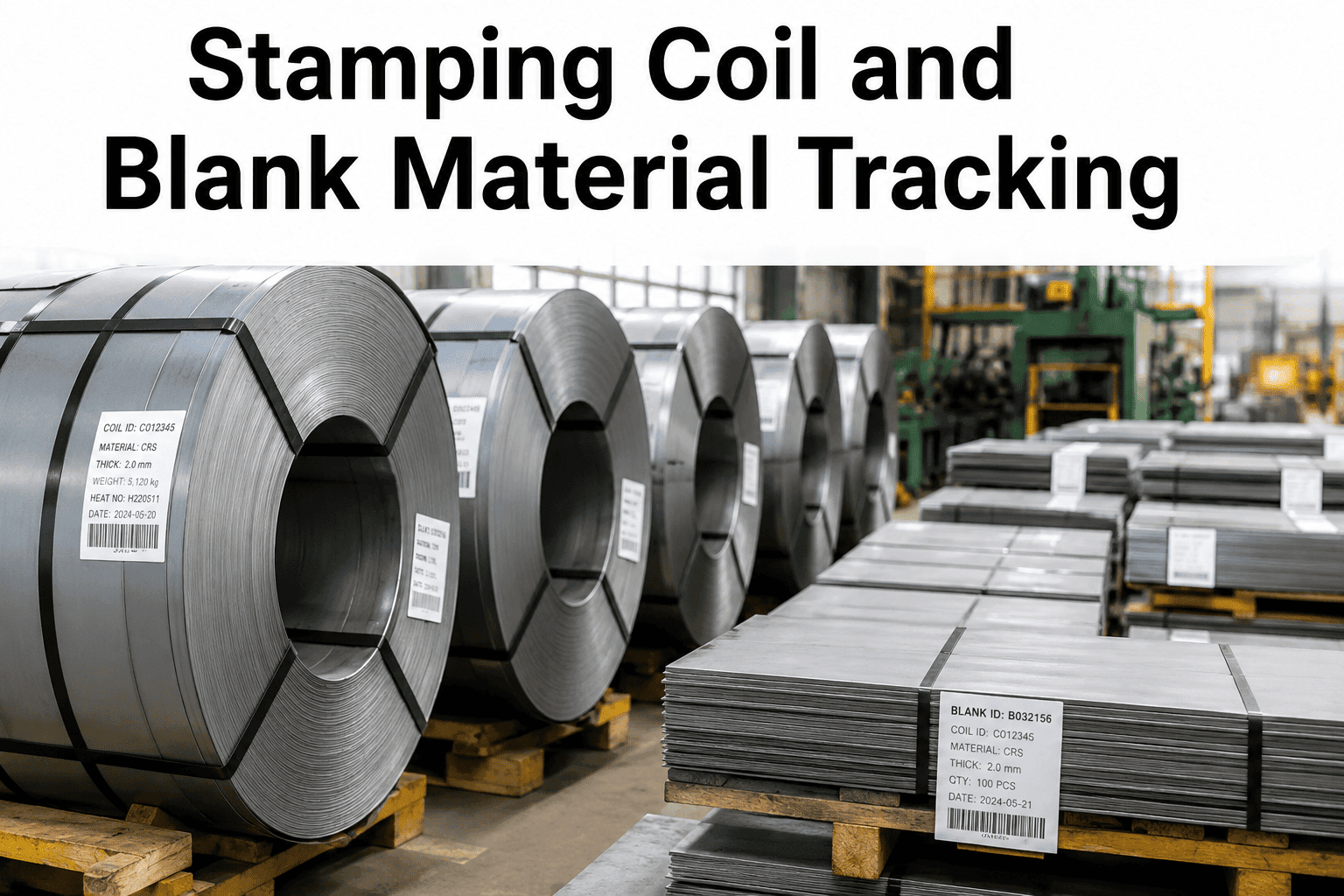
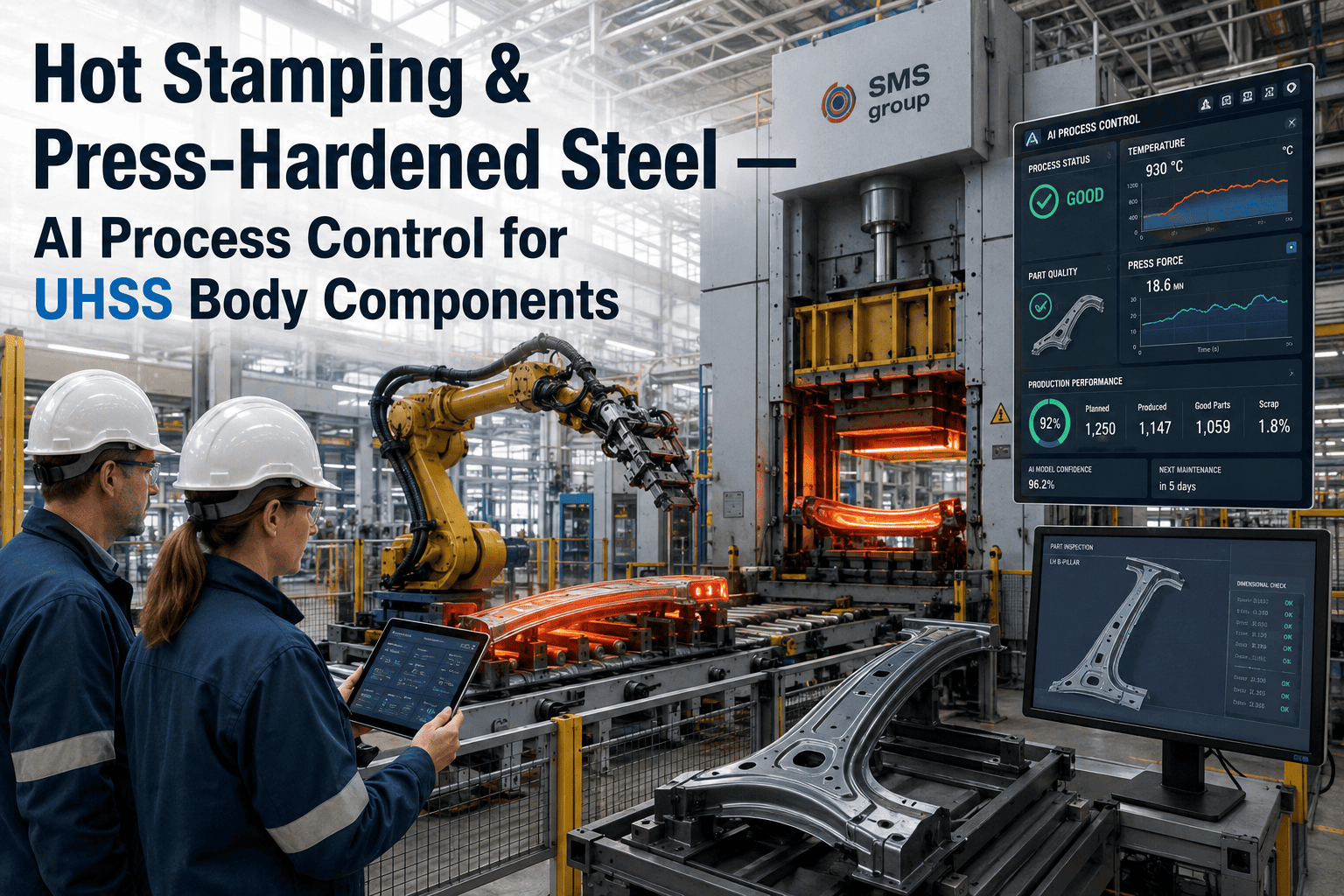
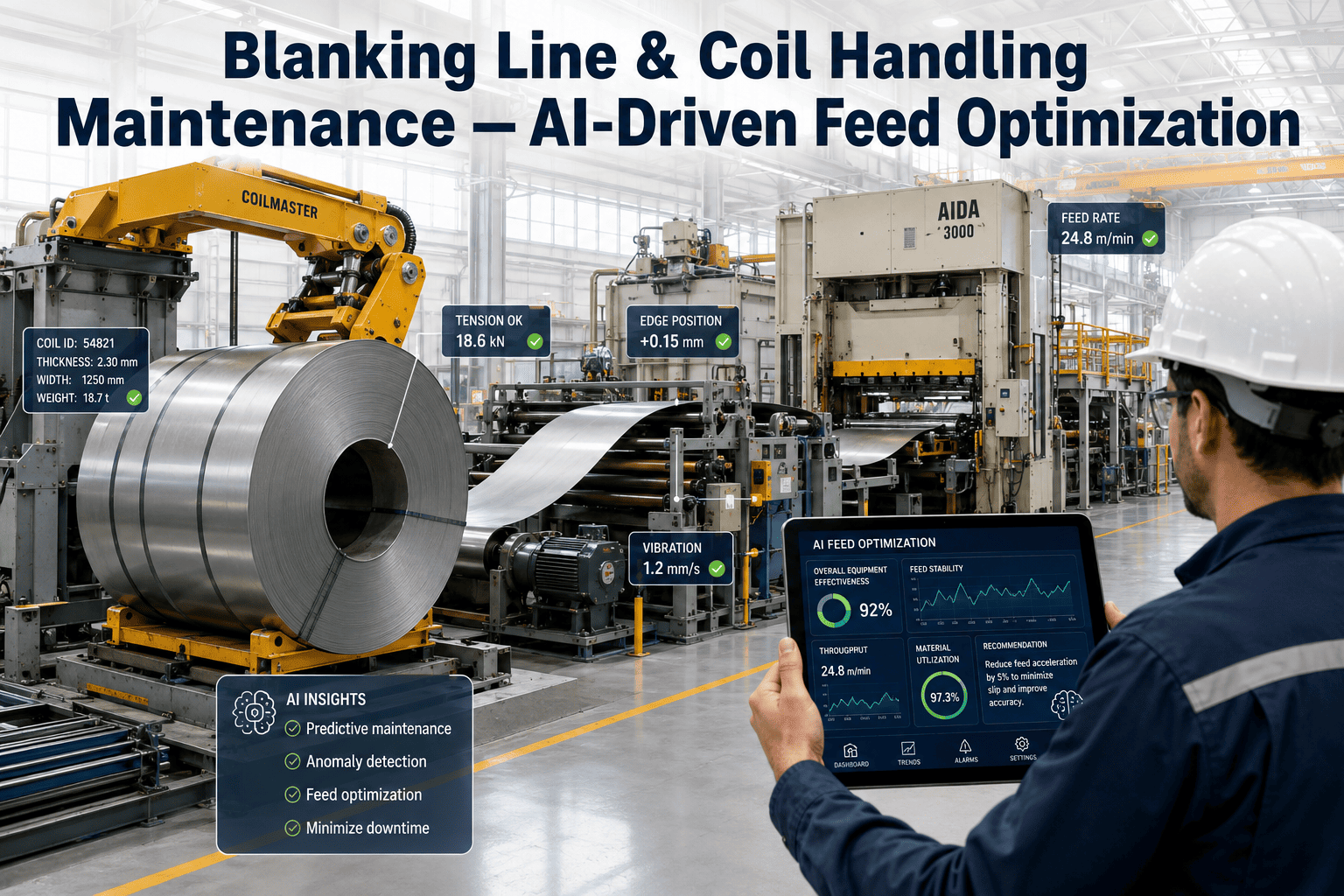
A coil of steel arrives at the press shop, gets slit and blanked into hundreds of individual pieces, and from that point forward most plants lose the ability to say with certainty which coil, which heat lot, which specific chemistry a given stamped panel actually came from. That traceability gap is invisible until it matters — a supplier quality alert on a specific steel heat, a metallurgical defect traced back to a coil, a customer recall investigation — and at that point reconstructing the material lineage from paper logs and rough date-range estimates is slow, imprecise, and sometimes simply impossible. Our material tracking specialists can walk through how automated coil and blank tracking closes that gap permanently.
Stamping & Press Shop
Every Panel Came From a Specific Coil — Can You Prove Which One?
Coil and blank mix-ups don't just create isolated defects, they create traceability gaps that turn a routine supplier quality issue into a plant-wide guessing game about which finished panels are actually affected.
Material Lineage Chain
Steel Heat Lot
→
Coil ID
→
Blank Batch
→
Stamped Panel
Where Traceability Breaks Down Today
Most plants track coils reasonably well right up to the point they're loaded onto the uncoiler, because coil receiving and inventory management is typically a well-established process with barcode or RFID identification already in place. The traceability gap opens at the blanking operation, where a single coil gets cut into potentially thousands of individual blanks, and the link between a specific blank and the specific coil section it came from is frequently lost unless the plant has built specific systems to preserve it.
Once that link is lost, a plant's only recourse during a quality investigation is estimating a date range or shift window during which a suspect coil was likely running, then treating every panel produced during that broad window as potentially affected — a far less precise and much more disruptive response than being able to identify the exact panels tied to a specific coil section.
1 Coil
can produce thousands of individual blanks, each needing traceable lineage
Exact Match
vs. broad date-range estimation when a suspect coil is identified
Blanking
is where most plants lose the coil-to-blank traceability link today
Full Lineage
from heat lot through coil, blank batch, to finished stamped panel
Building the Chain of Custody Through Blanking
Maintaining traceability through blanking requires linking each blank or blank batch produced to the specific coil, and specific position along that coil, it was cut from — not just the coil identity in general, since steel properties can vary meaningfully across the length of a single coil due to the rolling process. This means the tracking system needs to record not just which coil was running, but where along that coil's length each blank was cut, which is a finer-grained record than most plants currently maintain.
1
Coil identity and heat lot data captured at receiving
2
Coil position tracked continuously as material feeds through the blanking line
3
Each blank or blank batch tagged with its source coil position
4
Lineage carried forward through stamping to the finished panel record
Want to see how far back your current system could actually trace a specific panel to its source coil?
Book a walkthrough to test this against a real part number.
Why Coil Position Matters, Not Just Coil Identity
Steel coils are produced through a continuous rolling process, and properties like thickness, hardness, and surface finish can vary gradually along a coil's length even within the same nominal specification and heat lot. A quality issue traced to a specific section of a coil, rather than the coil as a whole, lets a plant narrow an affected-parts investigation to the specific blanks cut from that section, rather than treating every panel from the entire coil as equally suspect.
| Traceability Level | What It Identifies | Investigation Precision |
|---|
| Heat lot only | Broad steel production batch, potentially many coils | Lowest — affects large panel volumes |
| Coil identity | Specific coil, but not position within it | Moderate — still a broad panel range |
| Coil position | Specific section of a specific coil | High — narrows to specific blank batches |
| Individual blank | Exact source position for a single blank | Highest — precise panel-level traceability |
Inventory Accuracy as a Byproduct of Better Tracking
A system built to preserve material lineage through blanking also naturally produces more accurate real-time coil and blank inventory data as a byproduct, since the same tracking infrastructure that records where material came from also records how much of it remains at any point in the process. This addresses a separate but related pain point many press shops experience, where physical coil inventory counts drift from system records over time due to partial coil usage and manual tracking gaps.
Real-Time Coil Inventory
Remaining coil length and weight tracked continuously as material feeds through blanking.
Blank Batch Inventory
Finished blank counts linked automatically to their source coil for accurate WIP tracking.
Consumption Forecasting
Actual usage rates by part number improve coil procurement timing and reduce excess stock.
What a Traced Recall or Quality Investigation Actually Looks Like
When a supplier issues a quality alert on a specific steel heat lot, full material lineage lets a plant query directly which finished panels, and by extension which vehicles, actually contain material from that heat lot, rather than needing to estimate a broad production window and treat every panel from that window as potentially affected. This transforms what is traditionally a slow, imprecise, and high-anxiety investigation into a direct data query that can often be answered in hours rather than days.
Hours
Not Days, to Answer a Trace Request
Direct data query replaces manual log reconstruction during a supplier quality alert.
Narrowed
Affected Panel Scope
Precise coil-position traceability avoids treating entire production windows as suspect.
Accurate
Real-Time Inventory
Coil and blank inventory tracked automatically as a byproduct of lineage tracking.
Not sure how long a real trace request would currently take your team to answer?
Talk to our team about testing your current process against a sample scenario.
Frequently Asked Questions
How is coil position actually tracked as material feeds through the blanking line?
Coil position tracking typically combines a length encoder or similar measurement device on the blanking line feed mechanism with the coil's starting identity captured at load-in, allowing the system to calculate which position along the coil is being cut at any given moment as material feeds through. This position data is then tagged to each blank or blank batch produced, creating the link between a specific coil section and the resulting parts without requiring a physical marking on every individual blank.
Reach out to our team to review how this would integrate with your specific blanking line equipment.
Does this require replacing our existing coil handling and blanking equipment?
Material tracking is generally designed to layer onto existing coil handling and blanking equipment rather than requiring equipment replacement, using data already available from the line's feed mechanism combined with identification tagging at coil receiving. The integration work typically focuses on connecting existing PLC or line controller data to the tracking system rather than installing new mechanical equipment, though older lines with limited digital instrumentation may need targeted sensor additions to capture feed position reliably.
Book a demo to see compatibility with your current blanking line setup.
Can this trace material all the way back to our steel supplier's heat lot records?
Full lineage back to the originating heat lot depends on the supplier providing heat lot identification with each coil shipment, which is standard practice for most automotive-grade steel suppliers and is typically captured at coil receiving alongside the coil's own identity tag. Once that heat lot data is captured at the start of the chain, it carries forward automatically through coil position, blank batch, and finished panel tracking without requiring separate manual reconciliation at each downstream step.
Talk to our team about how your current supplier data would feed into this chain.
How does blank batch tracking work when multiple coils feed the same press simultaneously?
When multiple coils feed into the same blanking or stamping process, either sequentially or through a multi-strand setup, each strand's coil identity and position are tracked independently through their own feed measurement, and the resulting blank batches carry tags reflecting exactly which strand and coil position they came from. This keeps the lineage precise even in more complex line configurations, rather than defaulting to a combined or ambiguous record whenever more than one coil is involved in producing a given batch of blanks.
Reach out to discuss your specific line configuration.
What happens to traceability data for blanks that sit in WIP inventory for an extended period?
Lineage data is tied to the blank batch identity itself rather than to a time window, so it remains fully intact and queryable regardless of how long a batch sits in WIP inventory before being consumed by the stamping press. This is part of why the same system also improves inventory accuracy, since blank batches sitting in WIP are tracked with the same persistent identity used for lineage purposes, rather than being tracked separately by a less precise inventory system that loses the connection to source material over time.
Book a walkthrough to see how WIP tracking and lineage data stay connected.
Know Exactly Where Every Panel Came From
Trace Every Blank Back to Its Coil and Heat Lot
Share how your current coil and blank tracking works. We'll show you where the traceability gap sits today and what a full lineage system would recover during your next quality investigation.
Full
Coil-to-panel lineage
Hours
To answer a trace request
Real-Time
Inventory accuracy