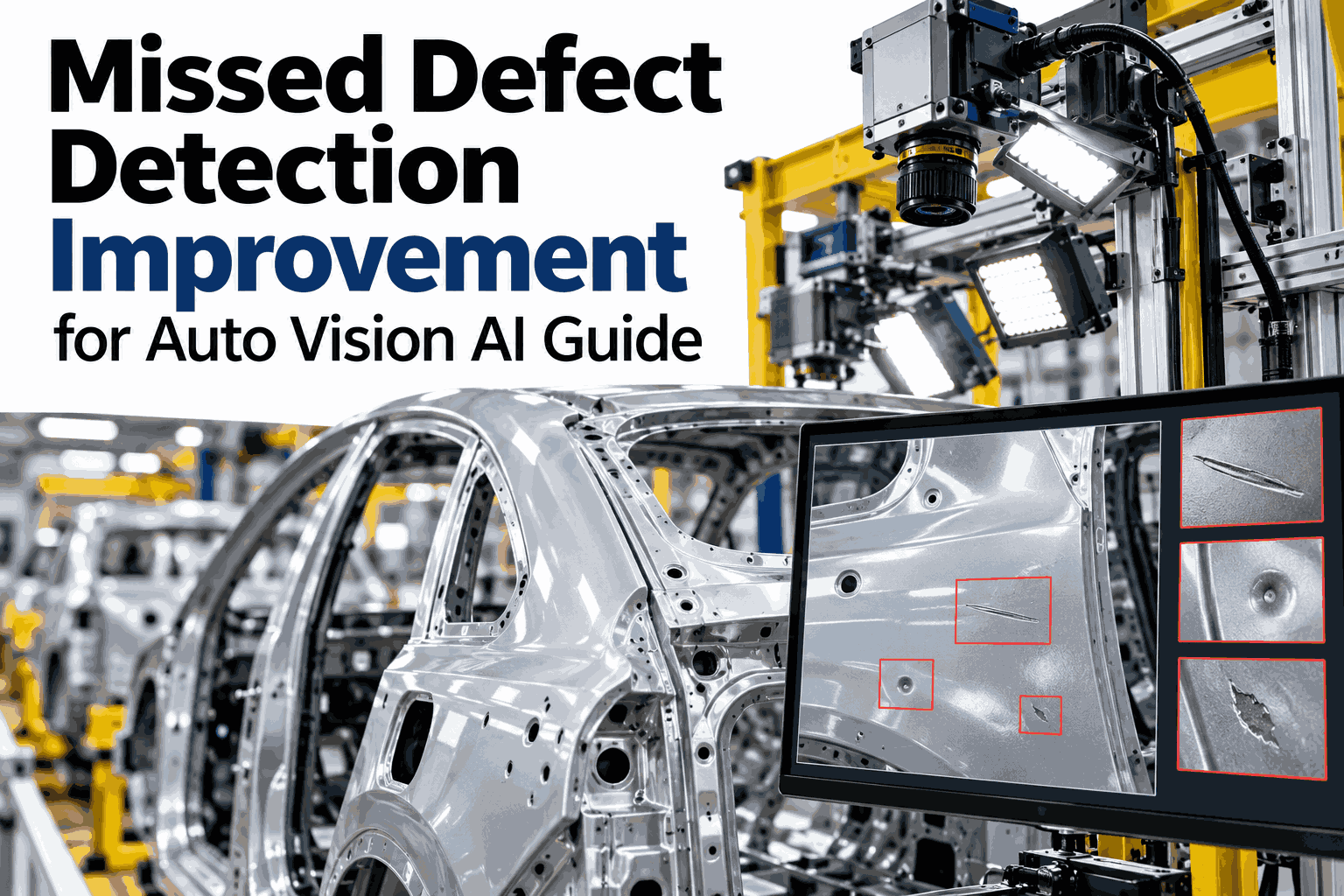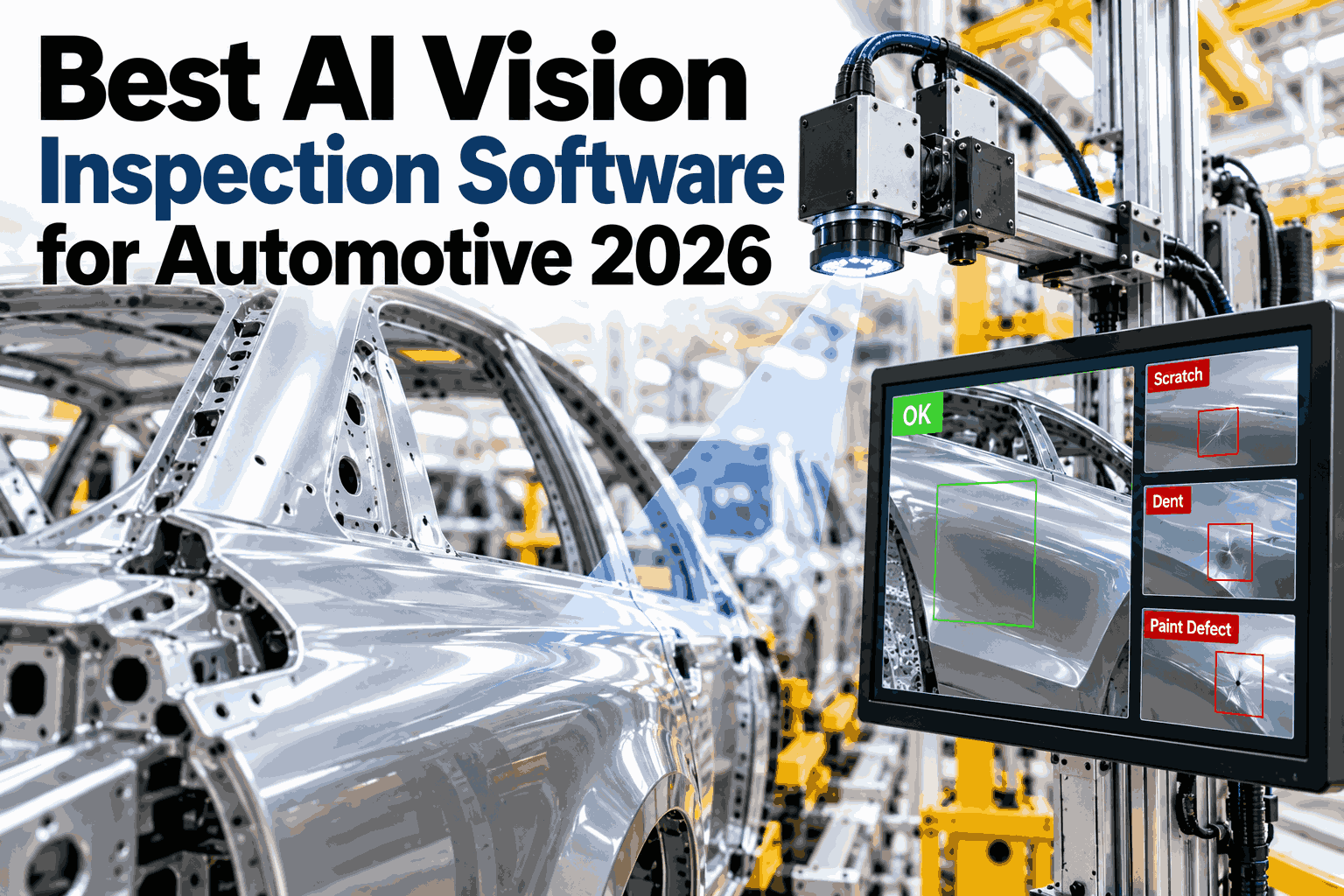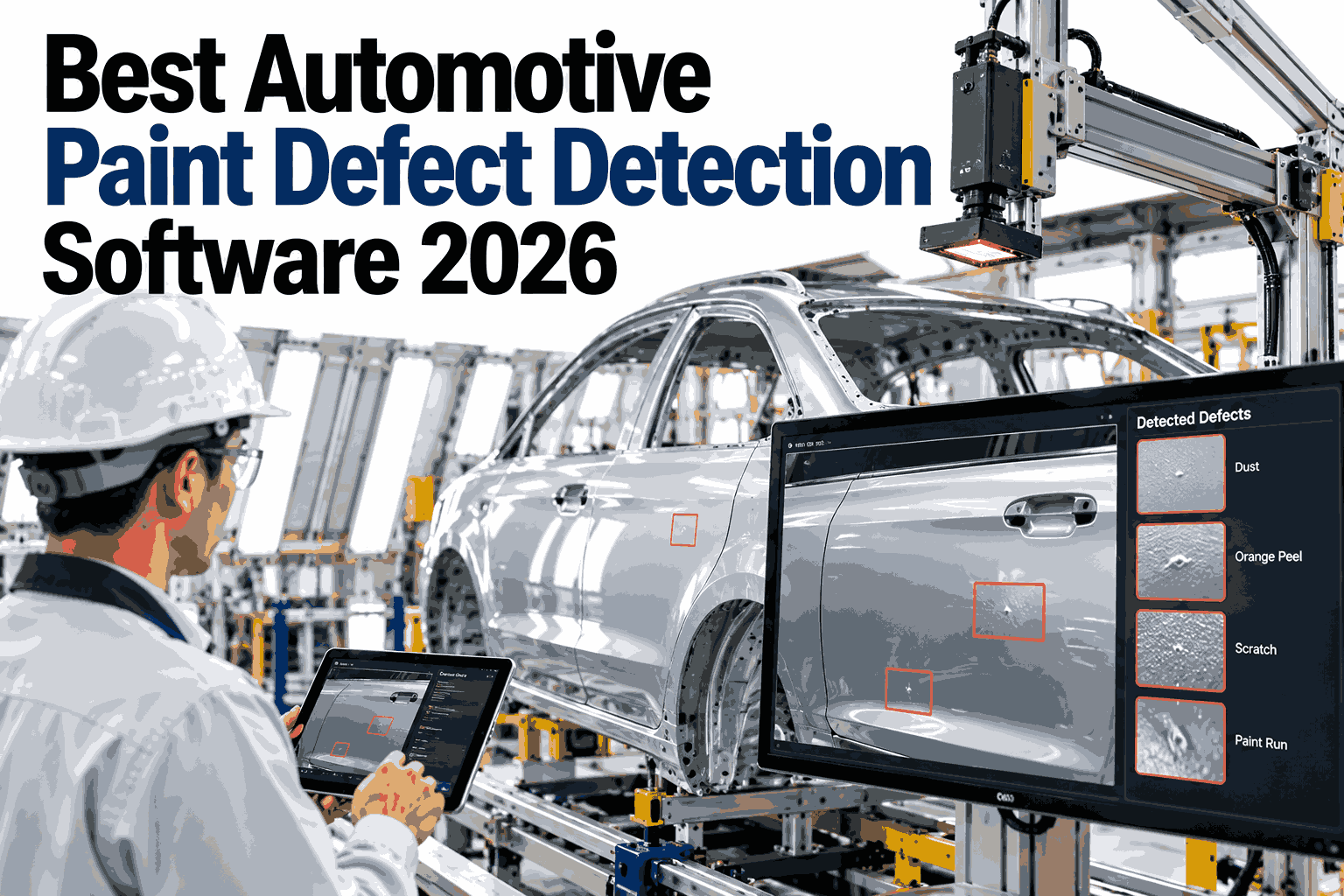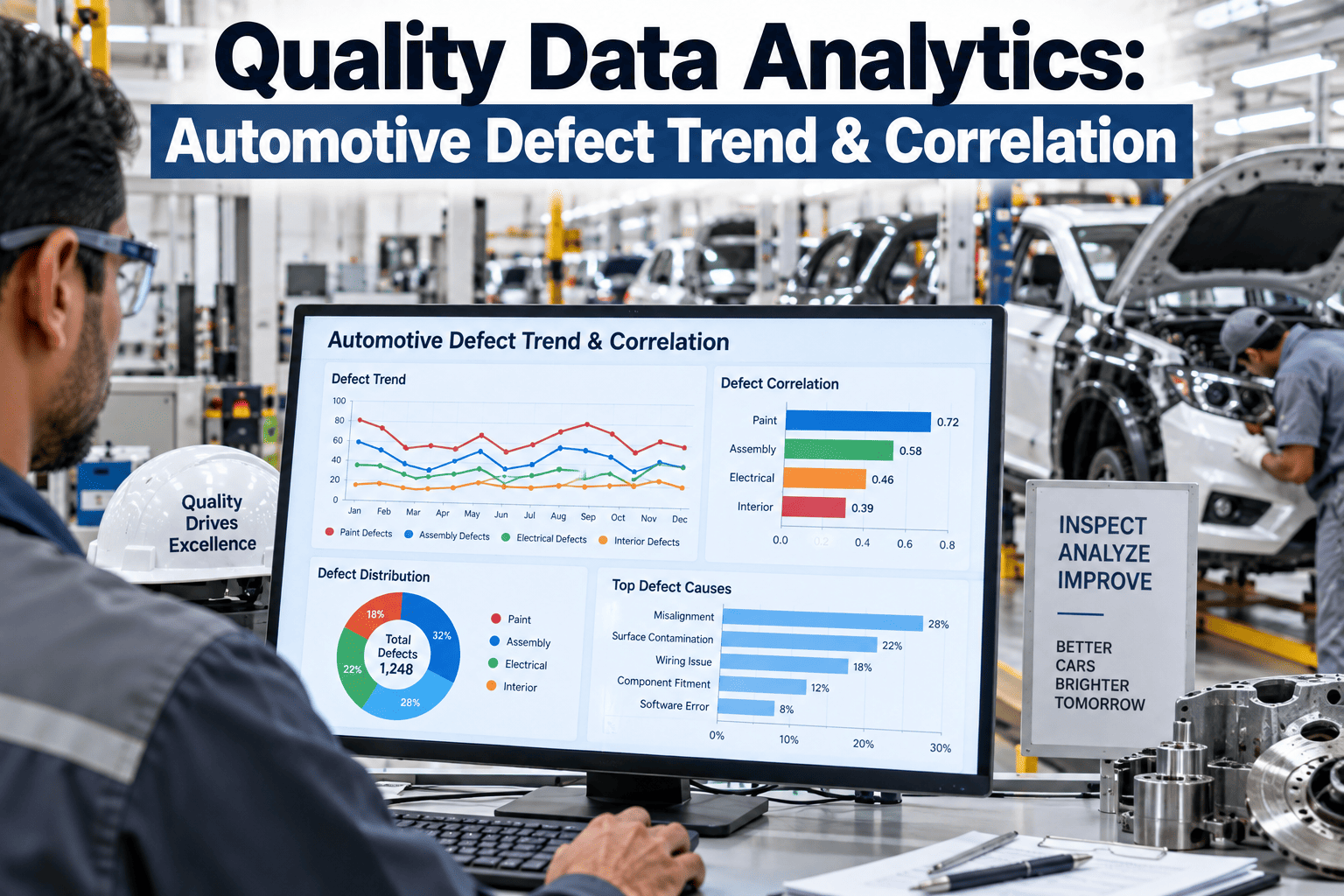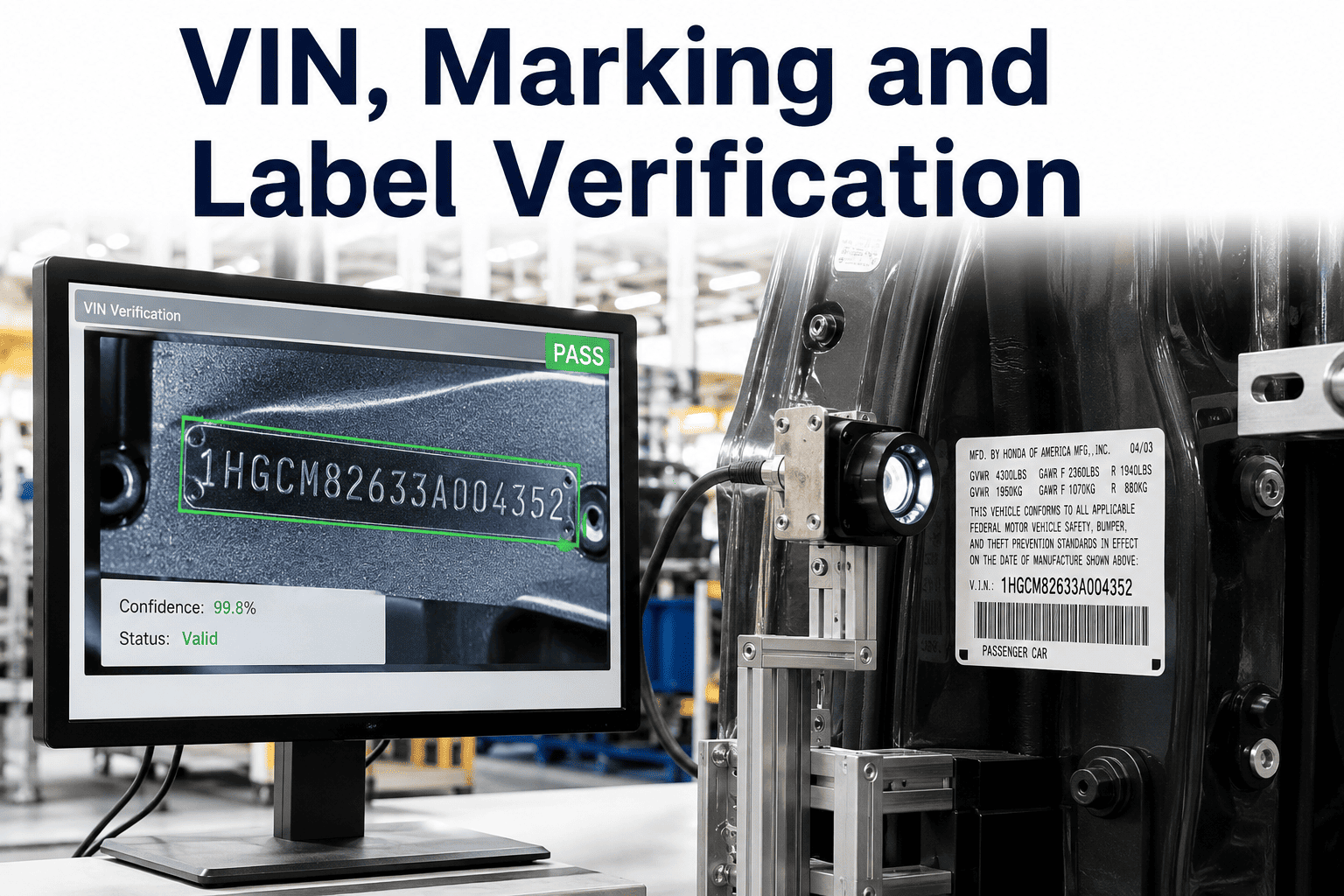
Every vehicle that leaves the plant carries a VIN that has to match the build record, the shipping manifest, the registration system, and eventually the title in a customer's name. A single misread character, a smudged laser etch, or a label applied at the wrong angle breaks that chain the moment it happens — and the break is rarely caught until a dealer, a regulator, or a customer notices it months later. Manual spot checks on VINs, data-matrix codes, and compliance labels simply cannot keep pace with a plant producing dozens of units an hour across multiple stations. AI vision verification reads and validates every mark as it is applied, catching errors at the source instead of downstream. Traceability teams looking to close this gap can Book a Demo and see live VIN and label verification running on production samples.
Why a Single Bad Mark Can Stop a Shipment
A VIN is not a cosmetic detail — it is the identity of the vehicle across every downstream system, from the plant's own MES to the dealer network to the government registration database. When a laser-etched or dot-peen VIN comes out faint, off-angle, or partially obscured by debris, the character recognition step that every downstream system depends on either fails outright or, worse, silently reads the wrong character. The same risk applies to compliance labels, tire placards, and data-matrix part marks — each one carries information that regulators, logistics partners, or warranty systems will eventually query.
Manual inspection of marks and labels is inherently inconsistent. An operator glancing at a VIN plate under variable station lighting, at the pace required to keep up with the line, will miss the subtle marking defects that later cause a scan failure at the shipping dock or a rejected registration at the dealership. AI vision verification applies the same rigorous read-and-check standard to every single unit, at every station where a mark is applied, without the fatigue or variability that comes with a purely manual process.
How AI Vision Reads and Verifies a Mark in Real Time
The verification pipeline runs entirely within the station cycle time, so a failed read or a mismatch is flagged before the unit advances to the next operation. The stages below represent the path every mark travels through, from the moment the camera captures it to the moment a pass or fail decision reaches the line controller.
Capture
High-resolution cameras with tuned lighting angles image the VIN, label, or data-matrix mark immediately after it is applied, compensating for reflective or textured surfaces.
Recognize
AI-driven OCR and data-matrix decoding extract the character string or encoded data from the captured image, trained specifically on etched, stamped, and printed mark types.
Cross-Check
The recognized value is compared against the build record for that unit — VIN sequence, part number, or expected label content — flagging any mismatch immediately.
Grade Quality
Beyond correctness, the system grades mark quality — contrast, completeness, angle — against readability standards so a technically correct but poorly formed mark is still caught.
Route
Verified units continue down the line automatically. Failed reads or mismatches trigger an immediate hold and operator alert before the unit reaches the next station.
What Gets Verified Across the Plant
Marking and label verification is not limited to the VIN plate. Plants running full traceability programs extend AI vision verification to every mark that carries regulatory, warranty, or logistics significance.
VIN Plates & Etches
Laser-etched, dot-peen, and stamped VINs on frame rails, dashboards, and door jambs, verified against the build sequence for every unit.
Data-Matrix Part Marks
2D data-matrix codes on components and sub-assemblies, decoded and cross-checked against the expected part number and revision.
Compliance Labels
Tire placards, emissions labels, and safety certification stickers, verified for correct content, placement, and legibility before final assembly.
Barcode & Serial Labels
Shipping and inventory barcodes checked for scan reliability and correct serial sequencing before units leave the plant.
What Changes When Verification Moves From Manual to AI
| Factor | Manual Spot Check | AI Vision Verification |
|---|---|---|
| Coverage | Sampled units only | Every unit, every mark |
| Consistency | Varies by operator and shift | Identical standard applied every time |
| Speed | Slows the line at peak volume | Runs within station cycle time |
| Cross-referencing | Manual lookup against build sheet | Automatic match against build record |
| Audit trail | Paper or spreadsheet logs | Digital image and result logged per unit |
The Business Cost of a Traceability Gap
A misread VIN or an unreadable data-matrix code is rarely caught at the point of failure — it surfaces downstream, when a dealer cannot register a vehicle, when a warranty claim cannot be matched to a build record, or when a recall notice cannot reach the right owner because the vehicle's identity was never captured cleanly. Each of these failures carries a real cost, whether measured in shipping delays, compliance exposure, or lost customer trust, and each one traces back to a mark that should have been verified and was not.
Character-level recognition accuracy achieved on etched and stamped VINs under production lighting conditions.
Of units verified at every marking station instead of a sampled percentage under manual inspection.
From image capture to pass/fail decision reaching the line controller for immediate routing.
Deploying Verification Without Disrupting Marking Stations
Marking and labeling stations are already tightly integrated into the line cycle, so verification cameras are added alongside existing equipment rather than replacing it. Most plants start with the VIN station, since it carries the highest downstream cost when a mark fails, then extend coverage to compliance labels and part marks as confidence in the system builds. iFactory's integration team handles camera placement, lighting calibration, and connection to the plant's build record system so verification results are matched to the correct unit automatically. Full deployment across a marking line typically completes within six to ten weeks, with the VIN station itself operational within the first two to three weeks of the project.
VIN & Label Verification — Common Questions
Can the system read VINs on reflective or curved surfaces?
Yes, camera placement and lighting angles are calibrated specifically for the surface type and mounting location during setup, whether that is a flat dash plate, a curved frame rail, or a reflective metal panel. The system is trained to handle the specific glare and shadow patterns produced by etched and stamped marks under production lighting, which is one of the main reasons a generic off-the-shelf OCR tool underperforms compared to a system tuned for the actual marking process on your line.
What happens when a VIN read fails or does not match the build record?
The unit is flagged immediately and held at the station rather than allowed to continue, with an operator alert showing the captured image alongside the expected value from the build record. This gives the operator a clear, fast way to confirm whether the issue is a genuine marking defect that needs rework or a data mismatch that needs correction upstream, rather than discovering the discrepancy days later during an audit.
Does this integrate with our existing MES and build record systems?
Yes, the verification results are pushed directly to the plant's manufacturing execution system through standard integration protocols, so every captured read, pass, or fail is tied to the correct unit in the existing traceability record. Teams can review their specific integration requirements with the iFactory Support team before deployment begins.
Can it verify both text-based VINs and 2D data-matrix codes?
Yes, the same camera and AI pipeline handles both character-based OCR for VINs and text labels as well as decoding for 2D data-matrix and barcode marks, so a single station can verify multiple mark types without separate hardware for each format. This is especially useful at stations where a part carries both a human-readable VIN and a machine-readable data-matrix code in close proximity.
How quickly can VIN verification be piloted on our line?
A single VIN verification station can typically be piloted within two to three weeks, including camera installation, lighting calibration, and integration with the build record system for cross-referencing. Teams ready to move forward can Book a Demo to walk through the pilot scope for their specific marking process.