Biogas plants operate at the intersection of explosive methane atmospheres, toxic hydrogen sulfide exposure, confined space entry, and high-pressure gas handling Facilities that have Book a demo of iFactory's biogas safety platform report reducing gas detection response times by 60% and eliminating manual confined-space entry log errors entirely.
5 Root Causes of Biogas Plant Safety Incidents
Diagnosing the Gaps Before They Become Regulatory Findings or Injuries
The Compliance Burden: Regulatory Requirements Across the Biogas Plant
What OSHA, EPA, and State Programs Require and Where Systems Typically Fall Short
Biogas plants in the U.S. operate under a multi-layered regulatory framework. OSHA Process Safety Management (29 CFR 1910.119) applies to facilities with biogas storage above 10,000 lbs. EPA Risk Management Plan requirements trigger at the same threshold. Book a demo
| Regulatory Program | Primary Requirement | Common Compliance Gap | Annual Penalty Risk |
|---|---|---|---|
| OSHA PSM (1910.119) | Process hazard analysis, mechanical integrity, hot work permit | PHA not revalidated every 5 years; MI inspection records incomplete | $125K – $500K |
| OSHA Confined Space (1910.146) | Entry permit, atmospheric testing, rescue plan | Permits signed without physical gas isolation verification | $85K – $250K |
| OSHA H2S Exposure (1910.1000) | PEL at 20 ppm ceiling; 50 ppm 10-min peak | Personal monitoring not correlated with fixed detection; exposure records incomplete | $65K – $180K |
| EPA RMP (40 CFR Part 68) | Worst-case release scenario, 5-year RMP update | Release scenario modeling not updated for facility modifications | $95K – $310K |
| ATEX / Hazardous Area Compliance | Ex-rated equipment register, periodic inspection, zone drawings current | Equipment register exists but inspection intervals for Ex-rated devices are not tracked | $45K – $130K |
The 5-Step Framework for Biogas Safety Program Modernization
Safety Risk Mitigation Across Biogas Plant Zones
Zone-Specific Hazards and Control Measures
Conclusion: The Safety Gap Is Not Awareness — It Is Integration
Biogas plant safety professionals know the hazards. Methane explosive limits, H2S toxicity thresholds, confined space entry requirements, and ATEX zone classifications are well understood. The gap is not knowledge — it is the integration of detection, documentation, and response into a single system that operates continuously and alerts the right person with enough context to act. A gas detector that alarms without location context, without confirmation from a second sensor, and without an automated notification to the confined space entry supervisor is a data point, not a safety intervention. An inspection interval tracked in a quarterly spreadsheet review rather than a real-time compliance dashboard is a retrospective finding, not a preventive action. iFactory's biogas safety platform addresses both dimensions — continuous multi-zone gas detection with correlated alarm logic that eliminates false positives, and automated compliance documentation that converts every safety action into an auditable record. Book a demo to see iFactory's biogas safety platform applied to your facility's hazard profile and regulatory requirements.
Frequently Asked Questions
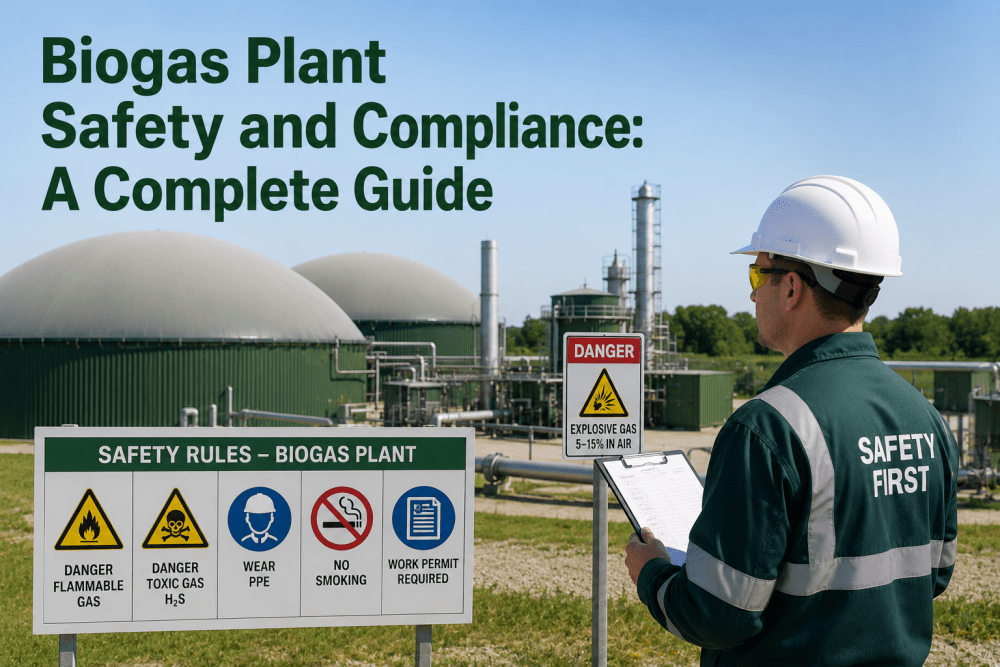
Methane is explosive between 5% and 15% concentration in air (the lower explosive limit and upper explosive limit, respectively). Below 5%, the mixture is too lean to ignite. Above 15%, it is too rich to ignite — but the transition zone between 5% and 15% is where a single ignition source produces a deflagration event. In biogas plant confined spaces, the risk profile changes with the operating condition: during normal digestion, methane concentration inside the digester headspace is 55–65% (above the UEL)Book a demo
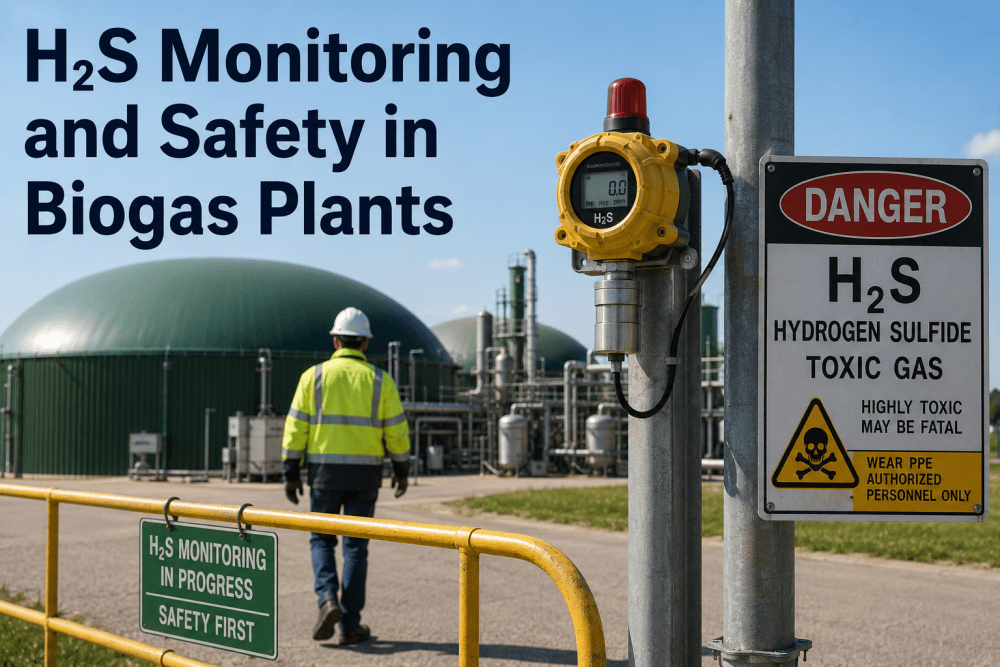
OSHA's permissible exposure limit for H2S is 20 ppm as a ceiling concentration (not to be exceeded at any time), with a maximum peak of 50 ppm for a single 10-minute exposure during a work shift. The immediately dangerous to life and health concentration is 100 ppm. H2S presents a specific challenge in biogas plants because it is denser than air — it settles in low points such as digester drain sumps, valve pits, and tank bottoms — and it desorbs from digestate during handling, meaning that an area that tested clean for H2S during pre-entry monitoring can become hazardous during the work activity.
OSHA Process Safety Management (29 CFR 1910.119) applies to any facility that contains a flammable gas or liquid in quantities exceeding 10,000 pounds — a threshold that most biogas facilities with gas storage exceed. Under PSM, the Mechanical Integrity element requires documented inspection and testing of process equipment (pressure vessels, piping systems, relief devices, controls, and emergency shutdown systems) at frequencies defined by the manufacturer's recommendations and previous inspection findings.
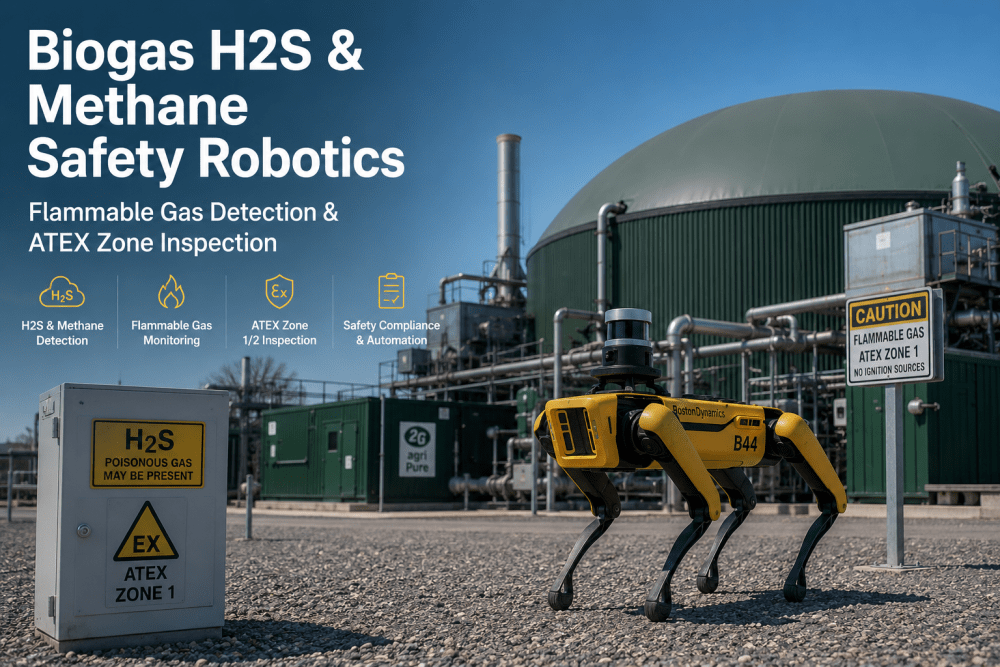
ATEX (the EU directive adopted internationally and mirrored in IECEx and NEC/CEC classifications) defines hazardous areas by the probability and duration of an explosive atmosphere. Zone 0 is continuous presence of explosive atmosphere (inside the digester headspace, gas holder). Zone 1 is occasional presence during normal operation (digester roof area, gas cleanup enclosure within 3 meters of pipe flanges). Zone 2 is rare and short-duration presence (the broader area around the gas holder, flare area perimeter).
iFactory's confined space entry automation integrates three verification layers that most biogas plants manage on paper. Layer 1 is gas isolation verification — the permit system reads valve position sensor status on the isolation valves that isolate the confined space from the biogas system. The permit cannot be opened unless all required isolation valves are confirmed in the closed position. Layer 2 is atmospheric verification — the permit reads current gas detection readings from the multi-height sensors installed in the confined space.