When a kiln shows an unexpected swing in free lime, the first question is always which fuel batch was burning at the time, and that question is harder to answer than it should be once RDF has moved from truck to storage bay to feed hopper without a consistent batch tag following it the whole way. A broken chain of custody on alternative fuel turns a five-minute check into a half-day search. See a fuel batch traced end to end on a live call.
Follow Every Fuel Batch From Truck to Kiln
iFactory AI tags each alternative fuel delivery at receipt and carries that identity through storage and consumption, so a kiln event traces back to its exact batch.
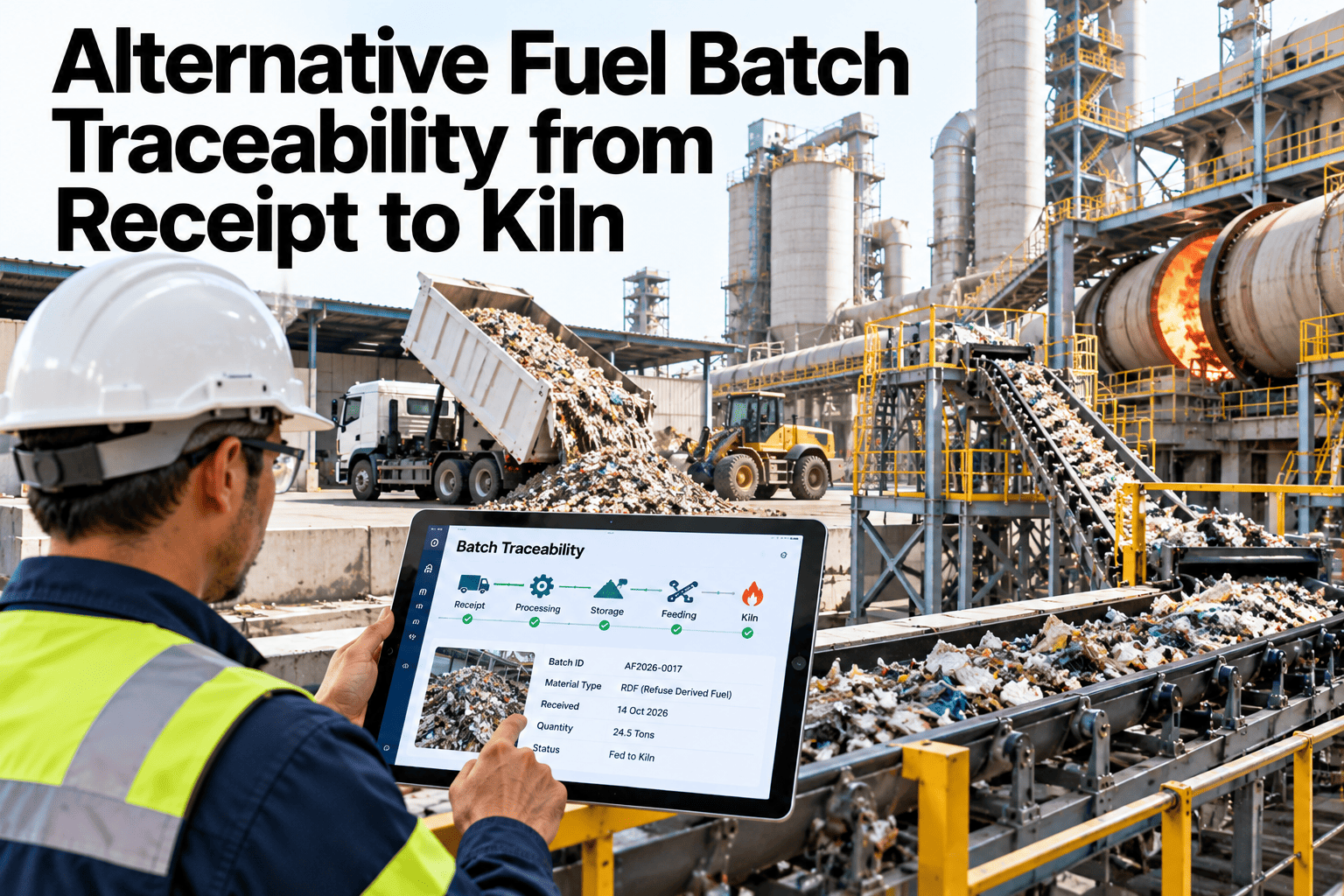
The Chain of Custody, Visualized
Five handoffs stand between a fuel delivery and the kiln. Each one is a point where a batch identity can get lost if it is not carried forward automatically.
Most plants track the first step well: a delivery arrives, gets weighed, and gets a ticket number. The identity often weakens from there, especially once fuel from different deliveries mixes in the same storage bay before reaching the feed system.
Trace a Kiln Event Back to Its Batch
Book a 30-minute session and see how a kiln reading traces back through storage to the exact delivery.
What Gets Recorded at Each Step
A full traceability record carries five pieces of data forward from the moment a truck arrives.
| Stage | Data Captured |
|---|---|
| Receipt | Batch identifier, supplier, weight, and delivery ticket |
| Sampling and Approval | Lab sample results and pass/fail decision against spec |
| Storage Location | Bay or silo assignment, with blending flagged if batches mix |
| Feed Consumption | Rate and timing of material drawn into the kiln feed system |
| Kiln Window | Exact burn window the batch corresponds to, for correlation with kiln data |
Why Blended Storage Is the Hardest Point
A storage bay rarely holds a single batch in isolation, which is exactly where traceability tends to break down.
What This Unlocks Beyond Traceability
Faster Kiln Troubleshooting
A kiln anomaly traces back to its fuel source in minutes instead of a half-day manual search.
Supplier Accountability
A low-quality batch can be tied directly back to the supplier and delivery that caused it.
Regulatory Reporting
Full traceability record available to support emissions and waste-derived fuel reporting requirements.
Process Correlation
Fuel batch quality correlated against kiln stability and clinker quality over time.
Getting It Running on Your Plant
iFactory AI connects to receiving, lab, storage, and feed systems to carry batch identity through the full chain.
Frequently Asked Questions
Does this work if our storage bays already mix multiple batches?
Yes, blended storage is handled by tracking the proportional contribution of each batch rather than requiring single-batch bays, which most plants cannot operate in practice.
How accurate is the kiln window correlation?
Accuracy depends on how feed timing data is captured at your plant, which is confirmed during setup. Support can review your feed system data before deployment.
Can this support emissions reporting requirements?
Yes, full batch traceability records can be exported to support waste-derived fuel and emissions reporting, since the underlying data is already captured for each batch.
What happens if a delivery fails the sampling stage?
A failed batch is flagged and its traceability record notes the rejection, so it is excluded from storage and feed tracking rather than being silently discarded.
Does this integrate with our existing kiln process historian?
Yes, feed and kiln data are correlated against your existing historian records rather than requiring a separate parallel system. Ask about your specific historian setup in a walkthrough.
Never Lose a Batch Between Truck and Kiln
iFactory AI carries fuel batch identity through every handoff, from receipt to the kiln feed. Book a walkthrough to see it on your own site.