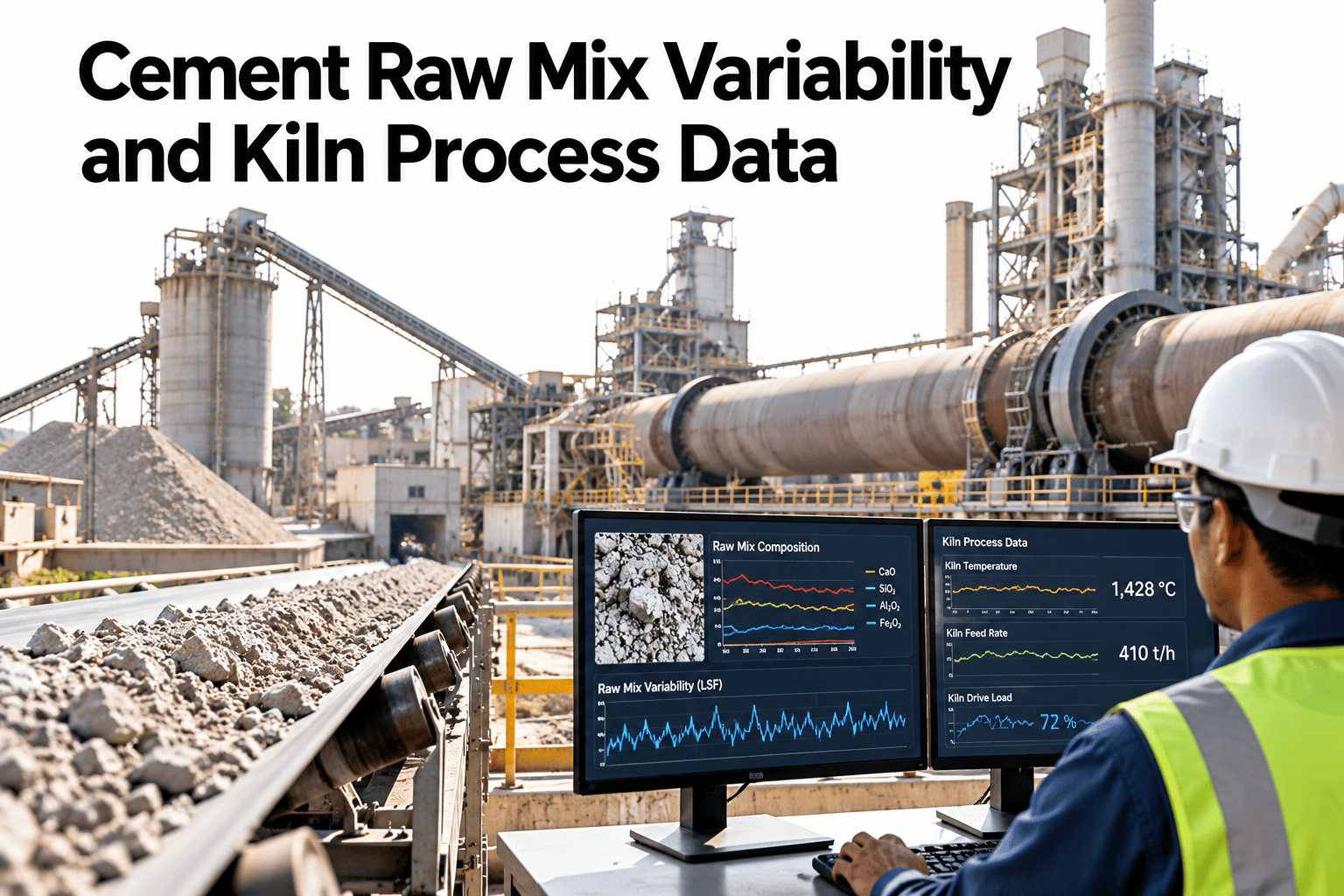
Alternative fuels rarely arrive at a cement plant with the same chlorine and moisture content twice in a row. A load of refuse-derived fuel today can run drier and lower in chlorine than the load that arrives next week, and that variation moves through the kiln as a shift in volatiles buildup, clinker chemistry and burnability, often before anyone on shift has connected the dots back to the fuel feed. Reviewing fuel sampling, lab results and kiln process data together, rather than as separate records checked at different times, is what lets a plant catch that connection early. Process and fuel teams can discuss their own fuel data and use case with iFactory AI before the next shipment changes the mix.
Fuel Variation Shows Up in the Kiln Before Anyone Notices the Fuel Changed
iFactory AI brings fuel sampling, lab results and kiln process context into one review, so chlorine and moisture shifts are visible before they become a burnability problem.
What Makes Alternative Fuel Quality Harder to Track Than Traditional Fuel
A traditional fossil fuel like coal or petcoke tends to arrive with relatively consistent, well-documented quality specifications from a small number of known sources. Alternative fuel streams, by contrast, are often blended from multiple waste-derived sources, each with its own variability, and the supporting documentation does not always keep pace with that variability.
That difference is not a reason to avoid alternative fuels, which remain an important part of thermal substitution strategy at many plants, but it does mean the monitoring approach needs to account for a wider and less predictable range of incoming quality than a traditional fuel supply chain typically presents.
Why Chlorine and Moisture Deserve Joint Attention
Chlorine and moisture are tracked for different reasons, one for volatiles cycling and preheater buildup risk, the other for combustion efficiency and flame stability, but they tend to move together in alternative fuel streams and are easiest to interpret side by side rather than as two separate reports.
Elevated chlorine encourages volatile buildup in the preheater and kiln riser over time.
Wetter fuel loads lower flame temperature and can affect combustion stability.
By the time a lab result returns, the fuel batch may already be in the kiln.
Fuel receiving, the lab and the control room often work from separate systems.
What a Joint Review Actually Covers
Reviewing fuel quality alongside kiln performance means lining up what was sampled, what the lab reported, and what the process data showed in the hours that followed, so a pattern is visible rather than three disconnected facts.
| Data Point | Source | What It Supports |
|---|---|---|
| Fuel sampling record | Receiving or fuel prep | Confirms which batch and supplier a shipment came from |
| Chlorine and moisture results | Lab analysis | Quantifies the fuel quality for that batch |
| Kiln feed timing | Process control system | Shows when the batch actually entered the kiln |
| Preheater and kiln trends | Process historian | Shows how the kiln responded after that fuel was fed |
Walk Through Your Own Fuel and Process Data
Bring a recent fuel quality question to a 30-minute working session.
From Sample to Exception Review
A fuel sample is recorded against its batch and supplier.
Chlorine and moisture figures are tied back to that batch record.
Results are viewed against prior batches, not in isolation.
Kiln data from the feed period is reviewed alongside the result.
Getting From Raw Data to a Usable Signal
Raw lab numbers and raw process trends are both useful, but neither tells the full story alone. The value comes from the transition between them, turning a chlorine figure and a kiln trend into a single, readable signal that someone on shift can act on quickly.
That transition is often where plants lose the most time, since it typically means pulling data from two or three separate systems, aligning timestamps by hand, and building a comparison that may only get made after a problem has already appeared. Automating that alignment is less about adding new data and more about removing the manual work standing between the data a plant already has and the decision it needs to support.
A Scenario: The Batch That Ran Drier Than Usual
Picture a refuse-derived fuel shipment that comes in notably drier than the previous ten batches, without an accompanying note from the supplier about the change.
Reviewed on its own, a single moisture reading outside the typical range might not draw attention, since one data point rarely tells a clear story. Reviewed against the trend of recent batches and against kiln combustion data from the hours after that batch was fed, the same reading becomes easier to connect to a flame stability shift the operators noticed but could not immediately explain. The value is not the single number, it is seeing the fuel record and the process response next to each other.
Separate Records vs a Connected Review
What to Look at Together During an Exception Review
Setting Thresholds That Reflect Your Own Fuel Mix
A generic chlorine or moisture threshold borrowed from an industry guideline rarely fits a specific plant's fuel blend, kiln design and clinker chemistry targets exactly. Thresholds that reflect a plant's own operating history tend to flag genuinely unusual batches rather than routine variation.
Built from a plant's own batch history rather than an external benchmark.
Different suppliers may warrant different acceptable ranges based on their typical variability.
Some fuel sources shift quality with season, which a static threshold misses.
Thresholds get revisited periodically as the fuel mix and supplier base evolve.
Who Benefits From Seeing This Data Together
A connected view of fuel and process data is not only useful to the person investigating a specific exception. Different roles draw different value from the same underlying record.
Why Fuel Variability Is Becoming Harder to Ignore
As alternative fuel rates increase at many plants, the share of total thermal energy coming from a more variable fuel stream grows with it, which means the downstream effect of a single off-spec batch carries more weight than it did when alternative fuels made up a smaller portion of the mix.
That shift makes a joint review of fuel quality and process response more valuable over time, not less, since the cost of missing a pattern grows as alternative fuel becomes a larger share of what actually goes into the kiln.
Where iFactory AI Fits
Connects fuel and lab records
Ties each sample and result to its batch, supplier and feed timing.
Shows the trend
Plots chlorine and moisture against prior batches, not in isolation.
Adds process context
Brings kiln and preheater trends into the same review.
Supports exception review
Lays out the full timeline for a flagged batch in one place.
Expert Review
A cement process engineering perspective, reviewed for accuracy before publication: fuel quality data and kiln process data are often reviewed by different people on different schedules, which means the connection between the two is frequently made informally, after a problem has already shown up. Bringing the two together as a routine review, not just during an investigation, is what catches drift early. Reviewing a recent fuel exception against your own process data is a useful way to see what a connected view would have shown. Confirm specific feature capabilities against your plant's systems before relying on any workflow.
Frequently Asked Questions
How often should fuel chlorine and moisture be sampled?
Sampling frequency varies by plant and fuel source, with many plants sampling each incoming batch or at a set interval tied to supplier consistency. The right cadence depends on how variable a given supplier's material tends to be. Discuss a sampling cadence that fits your fuel mix.
Can this replace existing lab testing procedures?
No, lab testing remains the source of the chlorine and moisture figures, this is about connecting those results to process data so the full picture is visible together. Ask about how lab data fits into a connected review.
What if different fuel streams come from multiple suppliers?
Multiple suppliers can be tracked separately within the same review structure, which often makes it easier to see which supplier's material tends to run more variable over time. Explore tracking quality by supplier across your fuel mix.
How quickly can a fuel-related process shift be identified?
When fuel and process data are reviewed together on a routine basis, a shift tends to surface within the same shift or the next review cycle, rather than being discovered weeks later during a broader investigation. Talk through a review cadence that fits your operation.
Does this apply to plants still ramping up alternative fuel use?
Yes, establishing the habit of connected review early, while alternative fuel rates are still growing, tends to be easier than retrofitting the practice once fuel variability becomes a larger share of total thermal input. See how this fits a plant early in its alternative fuel ramp-up.
See Your Fuel Quality and Kiln Data in One Review
iFactory AI connects fuel sampling, lab results and kiln process data so chlorine and moisture shifts are visible early. Discuss your own plant data and use case.