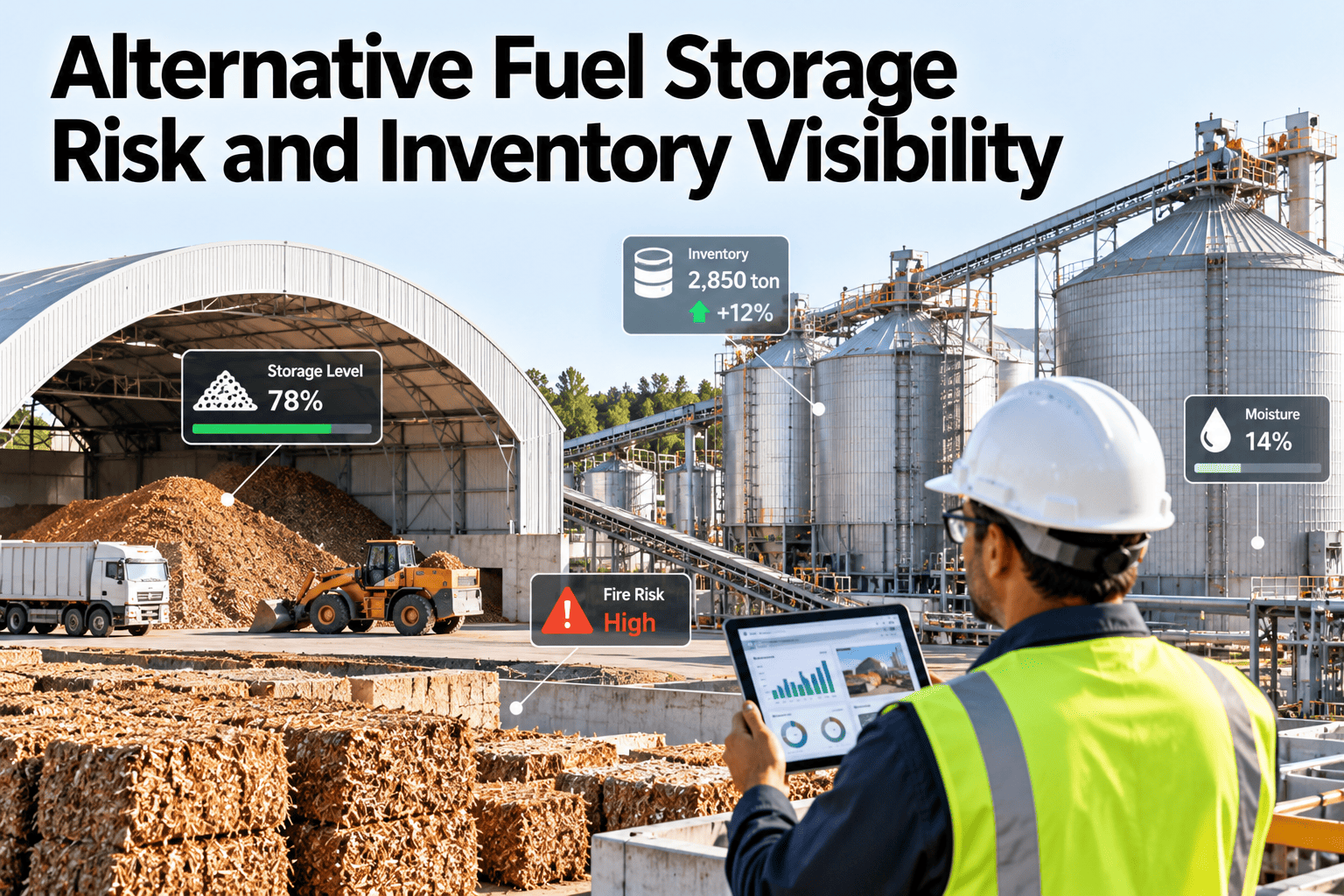
A kiln switching back to coal mid-shift because the RDF bay ran dry is not a fuel problem, it is a visibility problem. Someone knew the stock was low days earlier, it just was not written down anywhere the planning team checked. Alternative fuel inventory tends to live in a mix of walkie-talkie updates and end-of-shift notes, which works fine until the week it does not. See your current fuel stock levels in one live view.
Know Your Fuel Stock Before It Runs Out
iFactory AI tracks alternative fuel inventory by type and location, projecting days of stock remaining before a shortage forces a switch back to coal.
7.2 days
2.1 days
4.8 days
Why Fuel Stockouts Still Surprise Plants
Most plants can tell you total tonnes on-site. Fewer can tell you, by fuel type, how many days of kiln feed that translates to at the current burn rate.
Consumption rate varies by fuel mix and kiln conditions, so a tonnage figure alone is a weak signal of how much runway is actually left. The gap between "stock looks fine" and "stock runs out Thursday" is exactly where fuel planning breaks down.
See Days of Stock, Not Just Tonnes
Book a 30-minute session and see projected stock runway for every alternative fuel type on your site.
Inventory Tracked by Type and Location
Different fuel types carry different risks, and storage location changes how quickly a shortage can be resolved.
| Fuel Type | Storage Location | Rotation Risk |
|---|---|---|
| RDF | Covered storage bay | Low, high turnover |
| Tire-Derived Fuel | Outdoor yard storage | Moderate, weather exposure |
| Biomass | Covered storage bay | High, degrades if aged |
| Used Oil | Tank storage | Low, stable shelf life |
Inspection and Age Tracking
Stock that sits too long is not just a rotation inefficiency, it can be a quality and safety risk depending on the fuel type.
Age by Batch
Each batch's time in storage tracked against the material's known shelf-life guidance.
Inspection Status
Routine storage inspections logged against each bay, with overdue checks flagged automatically.
Rotation Order
Oldest eligible batches surfaced first for consumption to avoid prolonged aging.
Weather Exposure Flags
Outdoor-stored fuel flagged when exposure risk rises with forecasted weather conditions.
The Escalation Path When Stock Runs Low
A projected shortage should reach the right person with enough lead time to act, not surface as a surprise on the shift it happens.
Getting It Running on Your Plant
iFactory AI connects to storage systems and kiln feed data to track inventory and project runway continuously.
Frequently Asked Questions
How is days of stock remaining calculated?
Current inventory by fuel type is divided against live consumption rate, which updates as kiln feed mix changes, rather than using a fixed average burn rate.
Can thresholds be set differently for each fuel type?
Yes, early-warning thresholds are configured per fuel type, since lead time and risk tolerance differ between RDF, tire-derived fuel, biomass, and other types.
Does this track storage conditions, not just quantity?
Yes, age and inspection status are tracked alongside quantity, since a fuel type that degrades in storage needs more than a tonnage count to manage safely.
How far in advance does the system flag a potential shortage?
Default early-warning windows flag a projected shortfall five days out, adjustable based on your supplier lead times. Support can help set the right window for your suppliers.
Can this connect to our procurement system for reordering?
Reorder recommendations can be exported to support your procurement workflow. Ask about your specific setup in a walkthrough.
Never Get Surprised by an Empty Bay
iFactory AI projects days of alternative fuel stock remaining, by type, before a shortage forces a switch back to coal. Book a walkthrough.