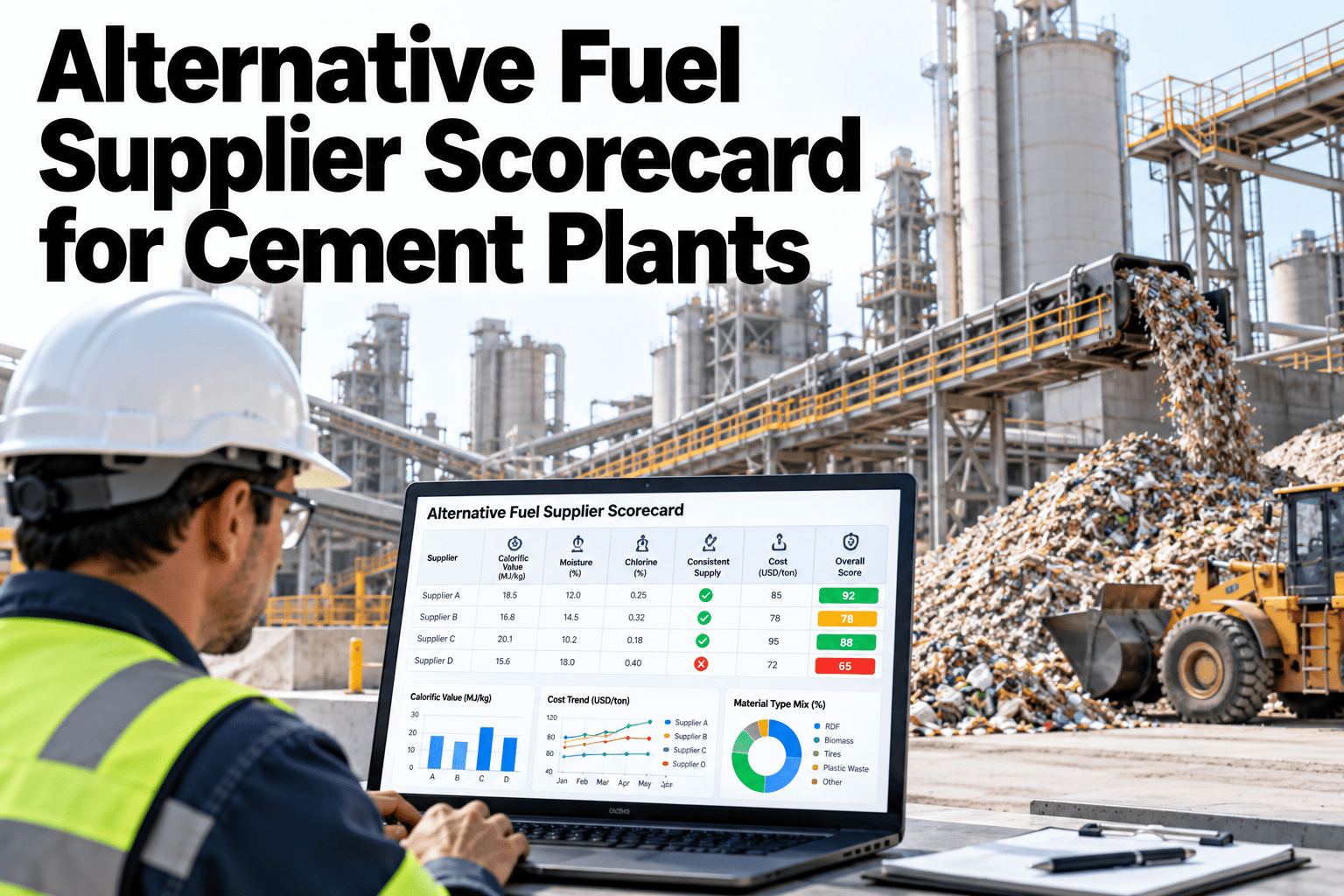
Alternative fuel contracts are usually renewed on price alone, because price is the easiest number to compare across suppliers. It is also the number that tells you least about whether a delivery will actually burn clean, arrive on schedule, or come with a certificate that matches what is in the truck. The suppliers quietly costing a plant the most are rarely the ones charging the highest rate. See a scorecard built from your own supplier deliveries.
Score Suppliers on What They Actually Deliver
iFactory AI scores alternative fuel suppliers on quality consistency, delivery reliability, and certificate accuracy, not just price per tonne.
Price Hides the Costs That Matter Most
A cheap RDF load that arrives with inconsistent calorific value forces a kiln operator to compensate in real time, often at a fuel-mix cost that erases the savings.
Supplier performance on alternative fuels is multi-dimensional in a way unit price never captures. A full scorecard weighs how consistent each delivery is against its certificate, not just how many tonnes arrive and at what rate.
Sample Supplier Scorecard
Four suppliers, scored across the same criteria, make the comparison concrete.
Grade Your Own Fuel Suppliers
Book a 30-minute session and see a scorecard built from your own delivery and certificate history.
What Goes Into Each Score
The scorecard weighs five criteria, tracked automatically from receiving and lab data.
| Criteria | What It Measures |
|---|---|
| Delivery Consistency | Share of deliveries arriving on schedule and in agreed volume |
| Quality Certificate Tracking | How often lab results match the supplier-provided certificate |
| Rejection Rate | Percentage of loads rejected at receiving against spec |
| Cost and Availability | Price per tonne weighed against actual availability over time |
| Trend Direction | Whether a supplier's score is improving or declining quarter over quarter |
Where Scorecards Change Decisions
A score only matters if it feeds into the next supplier conversation.
Four Things a Good Scorecard Should Do
Update Automatically
Scores refresh as new deliveries and lab results come in, not on a quarterly manual review.
Show Trend, Not Just Snapshot
A supplier declining over three months looks different from one holding steady at the same score.
Tie to Actual Fuel Data
Scores built from receiving and lab records, not self-reported supplier summaries.
Support the Review Conversation
Exportable scorecards ready to bring directly into a supplier review meeting.
Getting It Running on Your Plant
iFactory AI connects to your receiving, lab, and procurement records to build scorecards from real delivery history.
Frequently Asked Questions
Can we adjust how much each criteria counts toward the score?
Yes, scoring weights are configured to match what matters most for your plant, since a plant with tight kiln tolerances may weigh consistency more heavily than one prioritizing volume.
How does this handle a new supplier with limited history?
New suppliers are scored from their first delivery onward, with the score becoming more reliable as more deliveries accumulate rather than waiting for a full quarter of data.
Does this integrate with our procurement system?
Scorecard data can be exported to support procurement workflows. Support can confirm compatibility with your current system during setup.
Can scores be compared across multiple plants in the same company?
Yes, for organizations using the same suppliers at multiple sites, scores can be rolled up to show consistency across plants, not just one location's view.
What happens when a supplier's score drops sharply?
A sharp score drop is flagged for review, giving procurement an early signal before it shows up as a pattern of rejected loads. Ask how alerts work in a walkthrough.
Negotiate From a Scorecard, Not a Hunch
iFactory AI scores every alternative fuel supplier on what they actually deliver. Book a walkthrough with your own supplier data.