Most cement producers still calculate their carbon footprint the way they did a decade ago — from quarterly fuel invoices, annual production estimates, and a spreadsheet someone updates when there's time. Meanwhile the ground has shifted under them. Cement manufacturing accounts for roughly 8% of global CO2 emissions, EU ETS carbon prices have climbed past $80 per tonne, and CBAM certificate purchasing became mandatory on January 1, 2026, with non-compliance penalties of €100 per excess tonne and no upper cap. A number that used to live in a compliance filing once a year is now a live financial exposure, recalculated every time a kiln relights or a fuel blend shifts. A real-time carbon accounting platform closes that gap — turning estimated, backward-looking emissions data into a continuous, verifiable record built directly from kiln fuel consumption, calcination chemistry, and energy meters. If your plant's carbon number is still reconstructed once a quarter, book a demo to see what it looks like calculated live instead.
Your Carbon Number Is a Financial Number Now. Is It Still an Estimate?
CBAM certificates, EU ETS allowance phase-outs, and CSRD asset-level disclosure have turned carbon accounting from a sustainability report into a line item finance teams price monthly. A digital platform that tracks CO2 per tonne in real time — not once a quarter — is the difference between defending a number and guessing at one, and between planning for carbon cost and reacting to it after the invoice arrives.
Why "Estimated" Carbon Data Doesn't Work Anymore
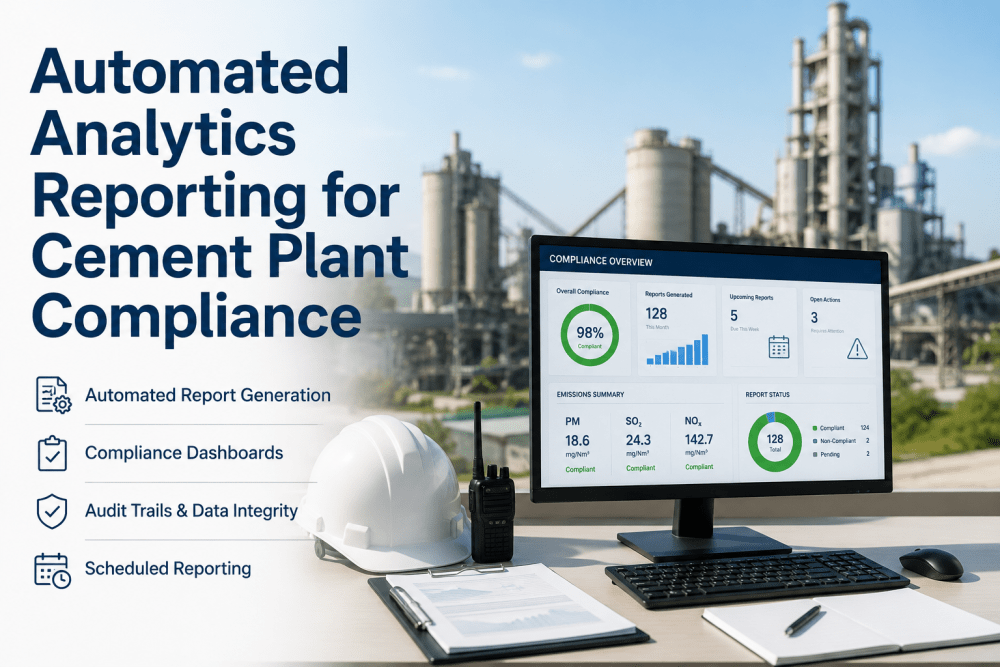
For years, an annual carbon estimate built from fuel purchase invoices and average emission factors was good enough. It satisfied a sustainability report, checked a box for an investor questionnaire, and nobody looked much closer. That era ended when carbon became a certificate you have to buy. CBAM's transitional reporting phase closed on December 31, 2025 — from January 1, 2026, importers must purchase and surrender CBAM certificates based on verified annual emissions, and default country-level values are no longer accepted for producers who want to compete on price. The number now has to be real, current, and defensible to a third-party accredited verifier.
This shift catches a lot of producers mid-transition. Many plants have spent the past few years building out alternative fuel programs, clinker substitution strategies, and waste heat recovery projects — all genuine progress on the actual emissions side. But the accounting infrastructure tracking that progress often hasn't kept pace. A plant that has meaningfully reduced its carbon intensity through process improvements can still fail verification if the underlying data trail can't prove it happened, asset by asset, shift by shift.
What a Real-Time Carbon Accounting Platform Actually Tracks
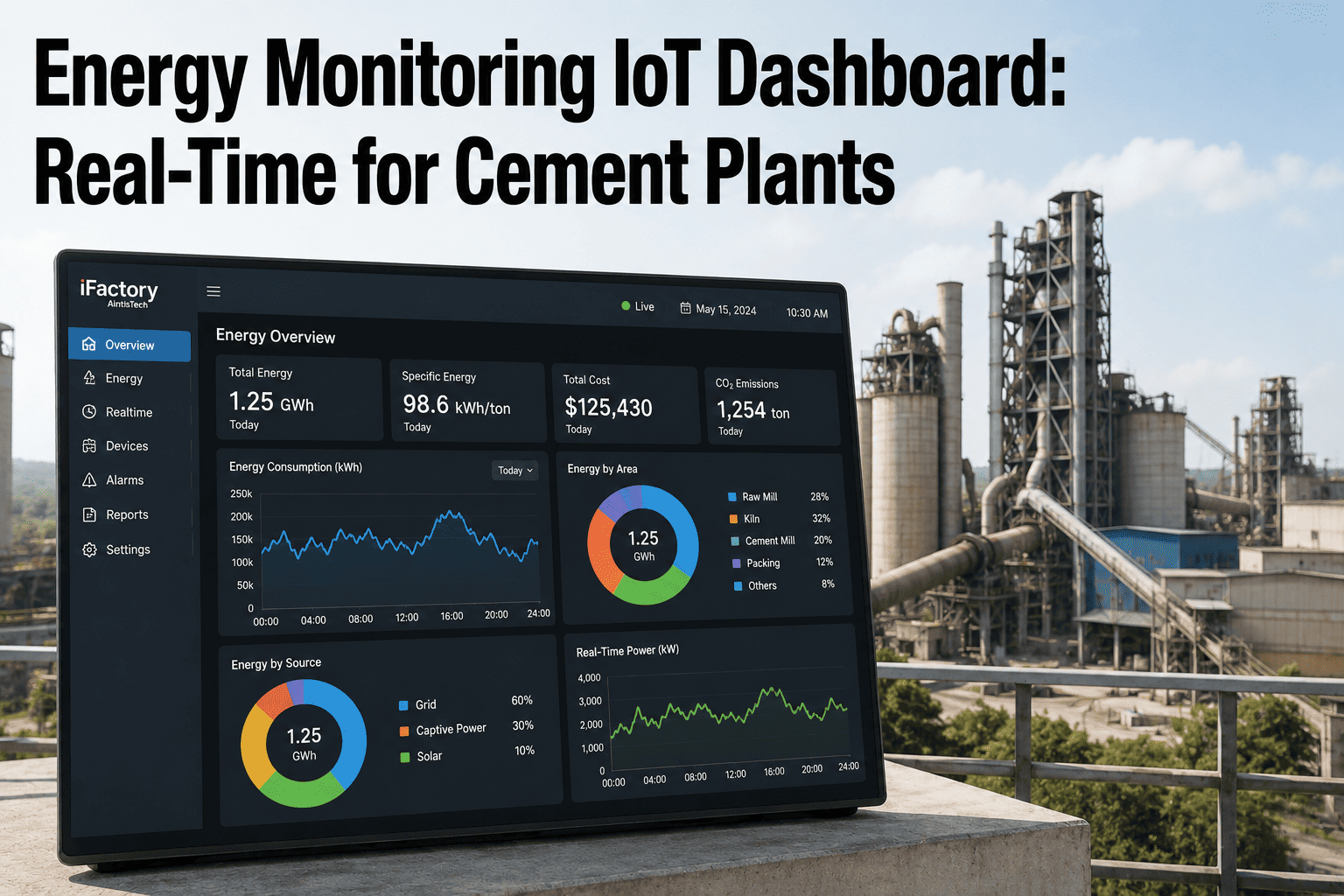
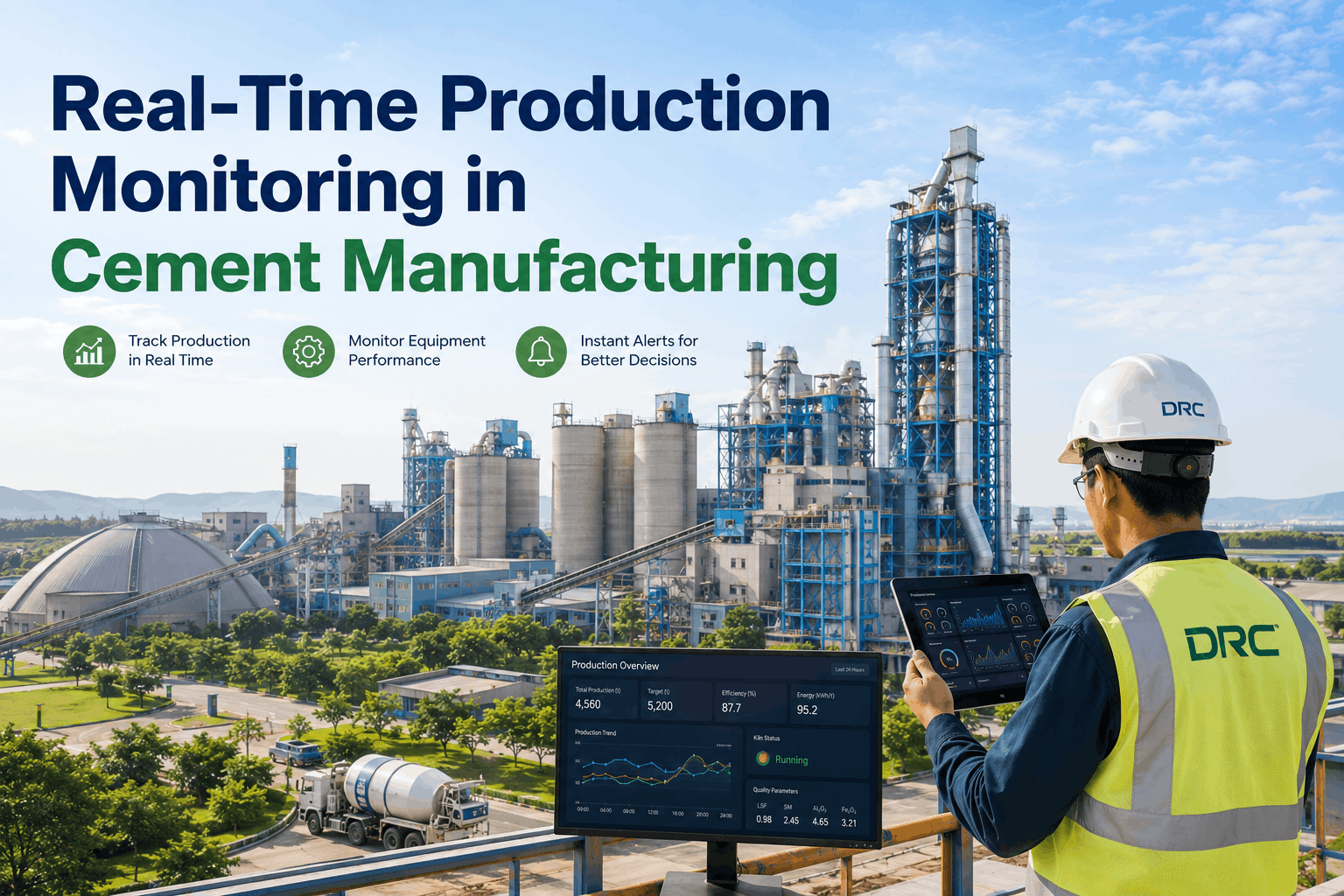
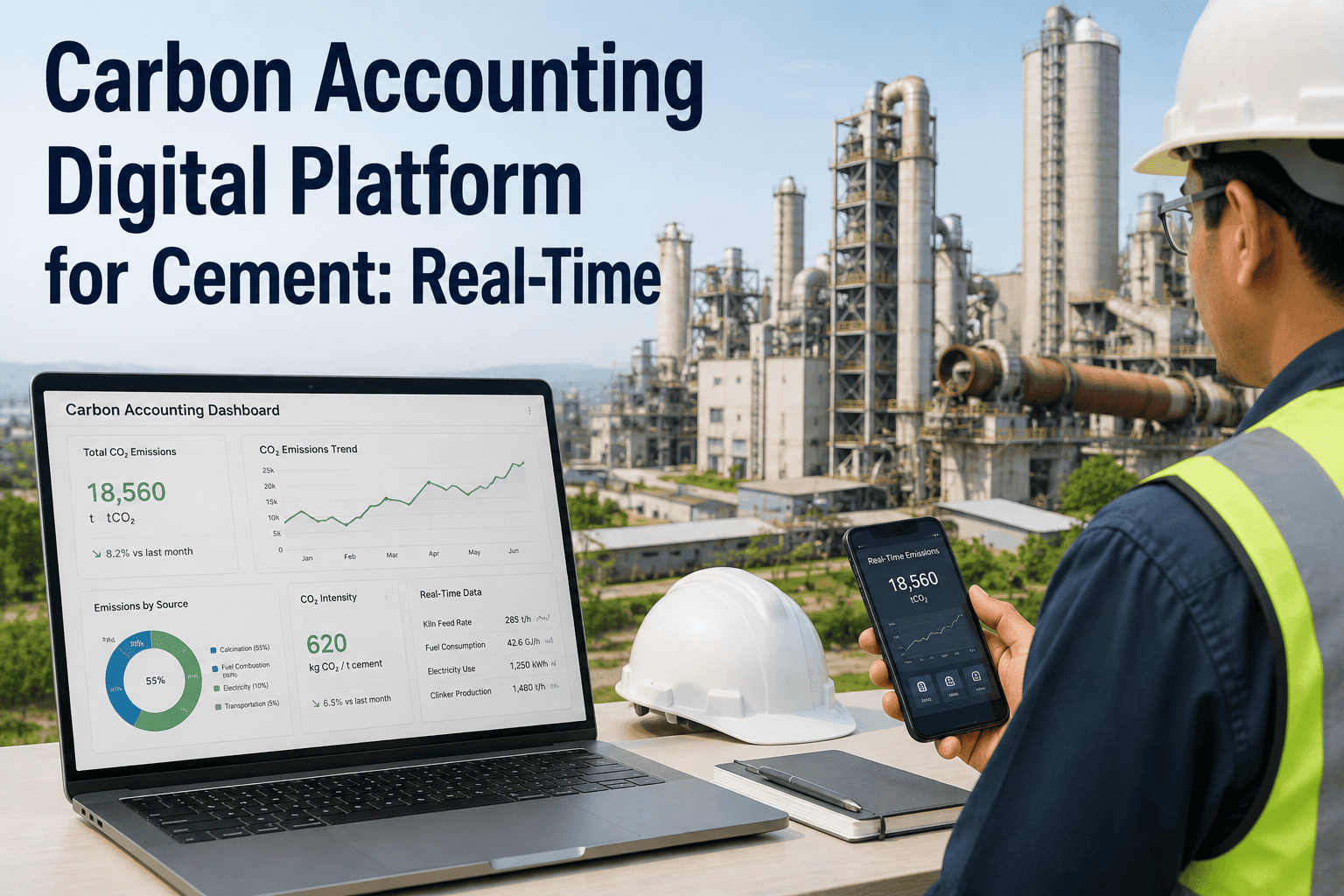
A digital carbon accounting platform doesn't replace your existing CEMS stack analyzers or fuel metering — it connects them into a single, continuously updated model of your plant's actual carbon output, correlated to the specific process conditions that produced it. Four data streams feed the model, and each one closes a gap that quarterly, invoice-based estimation leaves open. Together, they turn a plant's carbon footprint from a single annual number into a live signal that responds the moment production conditions change.
Continuous ingestion of CO2, NOx, SOx, and particulate readings directly from kiln stacks, cooler vents, and mill exhausts, correlated across every emission point to build a real-time, plant-wide emissions picture updated continuously rather than reconstructed after the fact.
Actual fuel consumption records, alternative fuel substitution ratios, and raw meal chemical composition feed directly into the carbon model, so a shift in tire-derived fuel or a change in raw material sulfur content shows up in the CO2-per-tonne number within the same shift it happened.
Scope 2 indirect emissions from purchased electricity are calculated from actual energy meter integrations and equipment run-hour records already captured across the plant, rather than an annual average electricity consumption figure applied uniformly across every day of the year.
A physics-informed digital twin of the kiln links process deviations — a thermal profile shift, a change in preheater gas temperature — to their exact incremental carbon cost, quantifying process inefficiencies that wouldn't trigger a production alarm but move the carbon intensity number in kilograms of CO2 per tonne.
See Your Plant's Actual CO2 Per Tonne, Calculated Live
Bring your last CBAM declaration or EU ETS filing to the call. iFactory engineers will walk through what your kiln's real-time carbon intensity dashboard looks like, built from your existing CEMS and fuel data rather than a new instrumentation project, and show how the same view would have looked for your most recent reporting period.
The Regulatory Clock Cement Producers Are Racing
The compliance calendar isn't a single deadline — it's a compounding sequence, and each phase narrows the runway for producers still running on estimated data. Understanding where your plant sits on this timeline determines how urgently the underlying carbon accounting needs to change. None of these phases are proposals under discussion — each is either already active or scheduled on a fixed calendar that regulators have shown no sign of softening.
| Phase | What Changes | Exposure If Data Is Estimated |
|---|---|---|
| CBAM enforcement, active now | Certificate purchase mandatory based on verified annual emissions; default values no longer accepted | €100 per excess tonne penalty, uncapped, plus mandatory certificate purchase |
| EU ETS allowances, ongoing | Free allocation declining several percentage points annually through the early 2030s | Full market carbon cost exposure at $80+ per tonne with shrinking buffer |
| CSRD double materiality, active now | Scope 1–3 emissions must link to specific manufacturing assets and maintenance records | Asset-level reporting gaps flagged in mandatory sustainability disclosure audits |
| Third-party verification, active now | All emissions data reported must be verified by an independent accredited verifier | Unverifiable spreadsheet estimates fail verification and default to worst-case country values |
| Full ETS allowance elimination, scheduled | All free ETS allowances phased out; producers purchase 100% on the market or rely on CCUS | Plants without a validated carbon baseline enter full market pricing with no transition cushion |
Roughly half of a cement plant's greenhouse gas emissions come directly from the calcination chemistry of turning limestone into clinker — a process emission that exists regardless of fuel choice. Around 40 percent comes from fuel combustion in the kiln, and the remainder from purchased electricity and transport. This breakdown matters for accounting purposes because each source needs a different data trail: calcination emissions are calculated from raw meal chemistry and clinker output, fuel emissions from actual combustion records and fuel composition, and electricity emissions from meter data and grid emission factors. A single quarterly estimate collapses all three into one number, losing the ability to show a verifier — or a plant engineer looking to reduce the total — exactly where the carbon is actually coming from.
Estimated vs Real-Time: The Same Kiln, Two Different Carbon Numbers
The comparison below reflects the same production month measured two ways — once through quarterly fuel-invoice estimation, and once through continuous, sensor-and-CEMS-driven carbon accounting running in parallel on the same kiln line.
Plants that have made this switch consistently report the same discovery: a meaningful share of their carbon footprint — often 15 to 20 percent — was driven by process inefficiencies that never showed up on a production alarm and were invisible until the carbon data was visualized continuously rather than reconstructed quarterly. Once visible, those inefficiencies are usually straightforward to correct, because they were never hidden by complexity — only by the measurement gap. A raw meal chemistry drift, a preheater temperature deviation, an alternative fuel moisture spike — each is a small, correctable event on its own, but invisible to a system that only checks in once every three months.
What Changes Once Carbon Data Is Live
Moving from estimated to real-time carbon accounting changes more than the reporting cadence — it changes who inside the plant can act on carbon data, and how quickly. The four shifts below are the ones plants notice first, usually well before the first full reporting cycle under the new system is complete.
This last point matters more than it first appears. Carbon capture and storage investment decisions — whether that means retrofitting a kiln line or evaluating a mass-balance attribution model for a portion of production — depend entirely on an accurate starting point. A CCUS business case built on an estimated baseline that turns out to be wrong by even a modest margin can misstate the actual carbon reduction the investment delivers, undermining both the environmental claim and the certificate value tied to it. Real-time data removes that uncertainty before the capital is committed.
How Deployment Works on an Existing Plant
A carbon accounting platform is built to sit alongside your existing CEMS, DCS, and fuel metering infrastructure — not replace it. The rollout below reflects how a typical multi-kiln cement plant moves from estimated to verified, real-time carbon data. Because the platform reads from systems already in place, the transition is a data integration project rather than a capital equipment installation, which is part of why timelines stay measured in weeks rather than quarters.
Frequently Asked Questions
The questions sustainability directors and plant managers ask most often before moving to real-time carbon accounting for their cement operations.
Turn Your Carbon Number From an Estimate Into a Live Record.
Connect your existing CEMS, fuel meters, and DCS into a single, continuously verified carbon intelligence platform — built for CBAM, EU ETS, and CSRD reporting from day one, not retrofitted under deadline pressure when a verifier or a certificate shortfall forces the issue.