A single kiln shell fire or a gearbox seizure on the raw mill can take a cement line down for weeks, and the insurance claim that follows is often where plants discover how much their premium was shaped by paperwork nobody updated in years. Insurers price cement risk on what they can see: fire protection records, machinery condition reports, business interruption exposure, and how quickly a plant can prove it manages loss before it happens. Plants that treat the annual risk survey as a compliance formality tend to pay for that gap every renewal cycle, while plants that build a documented loss prevention program around it are the ones insurers compete to underwrite. The pattern shows up clearly once you look at how risk engineering data feeds directly into premium negotiations across the industry.
CEMENT PLANT RISK & INSURANCE
Lower Premiums Start With a Better Risk Survey
Property damage, business interruption, and machinery breakdown coverage are all priced against the evidence a plant can produce. A structured loss prevention program changes that evidence.
What Cement Insurers Actually Price
Cement plants sit in a higher-risk bracket than most manufacturing occupancies because of kiln heat, combustible fuel storage, dust explosion potential, and rotating equipment that runs continuously for years between shutdowns. Coverage typically spans three connected exposures. Underwriters do not price these in isolation either; a weak machinery maintenance program raises the probability of a breakdown claim, and a breakdown that halts the kiln almost always triggers a parallel business interruption claim, so insurers look at the combined exposure rather than treating each coverage line as independent.
This is precisely why the same plant can see very different renewal terms from two different insurers reviewing the same site. One underwriter may weigh recent claims history heavily, while another places more emphasis on current condition monitoring data and protection system upgrades. Plants that understand which levers matter most to their specific insurer, and that keep documentation current on those levers year-round rather than scrambling before a survey, consistently negotiate from a stronger position.
Property Damage
Covers physical loss to buildings, kiln refractory, silos, and fixed plant from fire, explosion, storm, or accidental damage, typically written on a reinstatement value basis rather than depreciated value.
Business Interruption
Pays for lost gross profit and continuing fixed costs while the plant is down, calculated against an indemnity period that has to reflect realistic kiln refractory and long-lead spare replacement timelines.
Machinery Breakdown
Covers sudden mechanical or electrical failure of kilns, mills, fans, and drives, a category that now rivals fire damage in claim frequency across heavy industrial plants.
These three coverages are usually bundled into a single industrial all-risk or industrial special risks policy rather than purchased separately, which is part of why insurers evaluate the plant holistically. A weakness in one area, such as an outdated fire water system, can end up affecting the pricing of machinery breakdown coverage too, because the underwriter is really asking one broader question: how well does this plant understand and manage its own risk on an ongoing basis, not just during the weeks before a survey.
Inside a Risk Survey Visit
A risk engineer's site visit is not an audit against a checklist; it is the raw material an underwriter uses to justify pricing. Plants that walk an engineer through the same four stages tend to leave with fewer open recommendations. The visit itself usually runs a full day for a mid-sized plant, longer for a facility with multiple kiln lines or a recently added grinding circuit, because the engineer is trying to build an honest picture of both the physical hazards on site and how disciplined the plant is about managing them day to day.
What separates a smooth survey from one that generates a long list of recommendations is usually preparation. Plants that assemble maintenance records, prior inspection reports, and incident logs ahead of the visit give the engineer confidence that the operation is managed proactively, and that confidence translates directly into how the risk is written up for underwriting.
01
Exposure Identification
The engineer maps every major hazard on site: kiln burner zones, coal or alternative fuel storage, electrical substations, and dust collection systems, then rates each by potential loss severity. This map becomes the reference point for the rest of the visit, since every protection system and maintenance record reviewed afterward gets checked specifically against the hazards identified here.
02
Protection System Review
Fire detection, suppression coverage, water supply adequacy, and electrical maintenance records are checked against the exposures identified, since gaps here are the single biggest driver of surcharges. Engineers pay particular attention to whether protection was designed for the plant's current configuration or inherited from an earlier layout that has since expanded.
03
Machinery Condition Assessment
Vibration history, oil analysis trends, and inspection records for kiln drives, mills, and critical fans are reviewed to judge breakdown likelihood, not just current running condition. A single clean inspection is far less convincing to an engineer than a trend line showing consistent monitoring over multiple years.
04
Business Continuity Evaluation
The engineer tests whether the stated interruption period is realistic given actual spare parts strategy, alternate sourcing options, and how fast a damaged kiln section could genuinely be rebuilt. Plants that overstate their own recovery speed on paper often discover the gap only after a real loss, when it is too late to adjust the policy.
What Moves the Premium Needle
Not every factor an underwriter considers carries equal weight, and understanding which levers matter most helps a plant prioritize where to invest limited time and budget ahead of a renewal. The table below reflects the factors that risk engineers and underwriters most consistently reference when explaining why one plant's terms differ from another's, drawn from how property and casualty insurers evaluate heavy industrial occupancies more broadly.
| Risk Factor | Impact on Premium | What Insurers Want to See |
| Claims history |
High |
Documented root-cause fixes after each prior loss, not just repair records |
| Machinery maintenance program |
High |
Condition-based monitoring data, not calendar-only maintenance |
| Fire protection coverage |
High |
Detection and suppression matched to identified hazard zones |
| Site housekeeping and dust control |
Medium |
Explosion prevention measures around mill and silo areas |
| Location and natural catastrophe exposure |
Medium |
Flood, seismic, and windstorm mitigation specific to the site |
| Spare parts and continuity planning |
Medium |
Realistic recovery timelines backed by actual sourcing lead times |
The Findings That Show Up Most Often
Across cement plants, a handful of findings appear on nearly every risk survey report, and they are worth addressing proactively rather than waiting for an engineer to flag them again next year.
Aging Fire Water Infrastructure
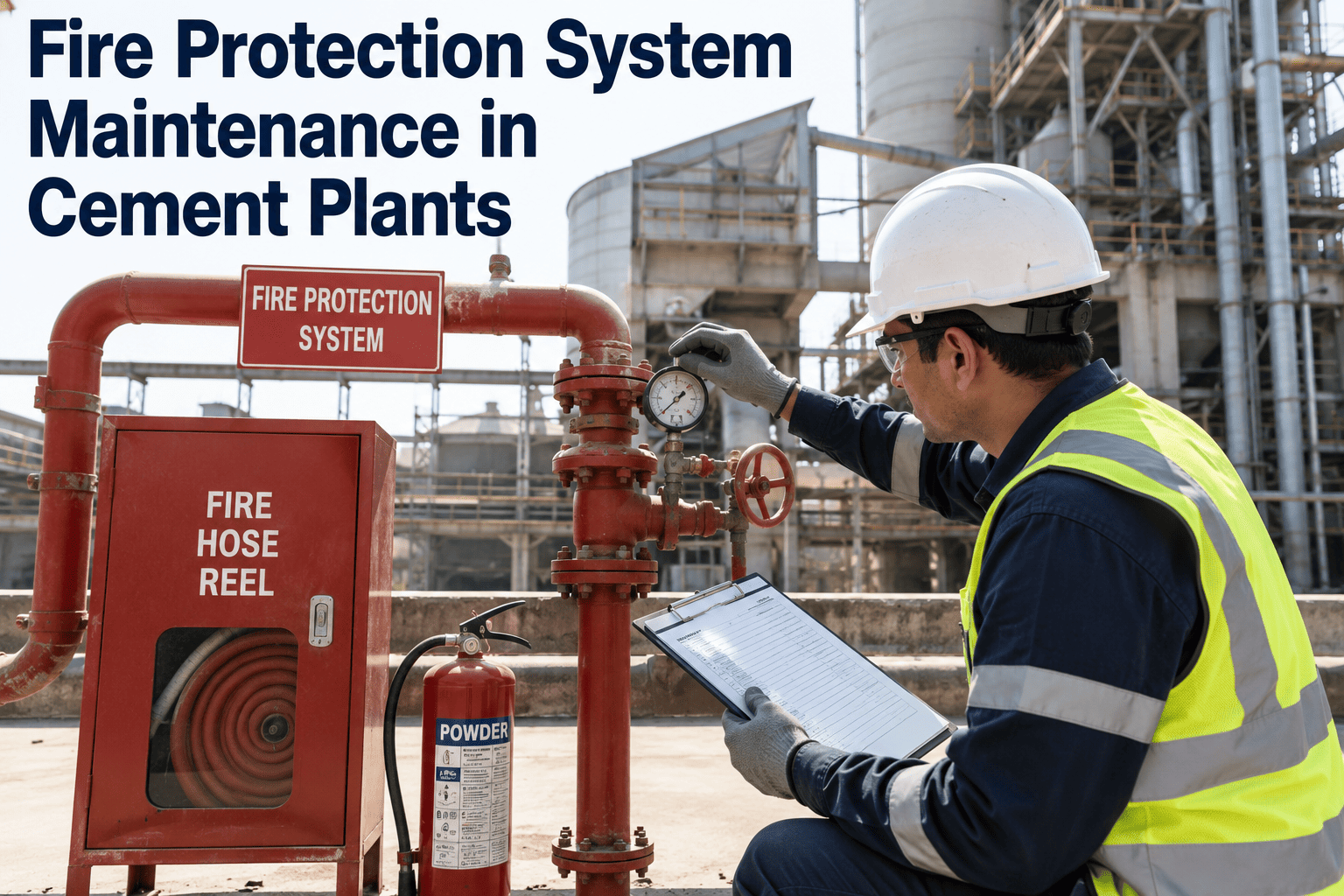
Undersized pumps, corroded piping, and hydrants that were never tested against current flow requirements are one of the most common gaps found, particularly at older plants that have expanded production without expanding fire water capacity.
Incomplete Electrical Records
Thermal imaging surveys that were done once and never repeated, or switchgear maintenance that lacks documented sign-off, consistently draw attention because electrical failure is a leading cause of industrial fire loss.
Unclear Spare Parts Strategy
Engineers frequently find that plants cannot clearly demonstrate lead times for critical spares like main kiln drive components, which undermines confidence in the stated business interruption recovery period.
None of these findings are difficult to fix individually, but they tend to recur because no single person at the plant owns the task of tracking them between survey visits. Assigning clear ownership for fire protection testing, electrical inspection cadence, and spare parts documentation, and reviewing progress on a fixed schedule rather than only before a survey, is usually enough to keep the same findings from reappearing year after year.
Turn Maintenance Data Into Underwriting Evidence
See how condition monitoring and work order history can be packaged into the documentation insurers ask for during renewal.
Building a Loss Prevention Program
A loss prevention program is the difference between reacting to a risk survey once a year and running the plant in a way that a surveyor simply confirms. Five elements consistently show up in programs that hold premiums flat or bring them down at renewal. None of these require a separate system built purely for insurance purposes; in most cases they draw directly on maintenance, inspection, and incident data the plant should already be capturing as part of normal operations.
The distinction between plants that succeed here and plants that struggle usually comes down to whether that data lives in one accessible place or is scattered across paper logs, spreadsheets, and individual inspectors' notebooks. A risk engineer who can be handed a clean, centralized record during the survey forms a very different impression than one who has to chase down information from three different departments.
1
Closed-Loop Recommendation Tracking
Every recommendation from the last survey is logged, assigned, and closed out with evidence before the next visit, instead of being rediscovered a year later. This single habit is often the fastest way to shift a plant's reputation with an insurer from reactive to disciplined.
2
Condition-Based Machinery Monitoring
Vibration, temperature, and oil analysis data on critical rotating equipment gives underwriters something more convincing than a maintenance calendar, since it shows actual equipment health trending rather than a checklist of completed tasks.
3
Fire and Electrical Inspection Cadence
Thermal imaging on electrical panels and fire system testing on a fixed schedule, with records retained and available on request, closes one of the most frequently cited gaps in cement plant surveys.
4
Business Continuity Documentation
A written plan covering critical spares, alternate suppliers, and realistic restart timelines, reviewed whenever equipment or sourcing changes, gives underwriters confidence that the stated indemnity period will actually hold true.
5
Incident Root-Cause Discipline
Every near-miss and breakdown gets a documented cause and corrective action, building the track record that claims history alone cannot show, since a well-documented near-miss demonstrates the same operational discipline an underwriter looks for as a clean claims record.
3 Coverage Areas
Property, business interruption, and machinery breakdown assessed together
Annual Cadence
Most cement risk surveys repeat yearly, tied directly to renewal timing
Closed-Loop Tracking
Recommendations followed through to evidence, not left open
Preparing on a Renewal Timeline
Insurance renewal is not a single event; it is the last step in a cycle that plants either manage deliberately across the year or rush through in the final weeks. Spreading the work out tends to produce measurably better outcomes than treating documentation as a pre-renewal scramble.
A
Ninety Days Before Renewal
Pull together the current year's incident log, closed and open recommendations from the last survey, and updated equipment condition data so nothing has to be reconstructed from memory later, freeing up the final weeks before renewal for negotiation rather than data collection.
B
Sixty Days Before Renewal
Schedule the risk survey visit and confirm with department heads that maintenance, electrical, and fire protection records are accessible and current for the engineer's review.
C
Thirty Days Before Renewal
Address any survey findings that can realistically be closed before the broker begins marketing the renewal, since open items at this stage weaken the negotiating position significantly and give competing insurers a reason to price the risk more conservatively.
D
Renewal Week
Present a complete, organized documentation package to underwriters rather than responding piecemeal to information requests, which consistently shortens negotiation time and strengthens terms.
Frequently Asked Questions
How often should a cement plant undergo a risk survey?
Most insurers expect an annual risk survey ahead of policy renewal, though plants with a recent claim, a major equipment change, or a new production line often see a survey scheduled sooner. Treating the survey as a single annual event rather than a continuous discipline is exactly what causes recommendations to pile up and premiums to drift upward. Plants that keep documentation current between visits, as outlined through
support resources, tend to move through each survey with far fewer open findings, and that consistency is often what separates a routine renewal conversation from one that involves difficult questions about pricing.
What is the biggest driver of machinery breakdown premiums specifically?
Claims history and the quality of a plant's condition monitoring program together carry the most weight, since insurers are effectively pricing the probability of a sudden failure on critical rotating equipment like kiln drives, mills, and fans. A plant relying only on calendar-based maintenance looks riskier on paper than one that can show vibration trending, oil analysis, and thermal data proving equipment condition is actively tracked rather than assumed, and that difference in evidence quality is frequently what separates plants with stable premiums from those facing repeated increases.
Can better documentation actually reduce premiums, or only prevent increases?
Both outcomes are realistic depending on starting position. A plant with a clean claims history and strong documentation is in a much stronger negotiating position at renewal and can sometimes secure rate reductions or broader coverage terms for the same premium. For plants currently carrying open recommendations or thin maintenance records, the more common near-term outcome is holding rates flat while insurers see the gap close over successive renewal cycles, with meaningful reductions typically following two or three renewals of consistent improvement rather than appearing after a single strong year.
How is the business interruption indemnity period determined?
The indemnity period should reflect the realistic time needed to restore production after the worst credible loss scenario, factoring in kiln refractory replacement lead times, availability of long-lead spares like main drive gearboxes, and whether alternate production capacity exists elsewhere. Underestimating this period is one of the most common and costly mistakes plants make, since a shortfall only becomes visible after a major loss when coverage runs out before production actually resumes.
Do alternative fuel and raw material handling systems affect insurance risk ratings?
Yes, feeding alternative fuels or waste-derived materials introduces additional handling, storage, and combustion variability that risk engineers evaluate separately from conventional coal or gas systems. Plants running these systems typically need to show specific fire and explosion protection measures around storage and feed points, and teams can review documentation requirements for these systems through
a scheduled walkthrough.
TURN MAINTENANCE DATA INTO LOWER PREMIUMS
Build a Loss Prevention Program Insurers Recognize
Connect condition monitoring, work order history, and inspection records into the documentation your next risk survey actually needs.