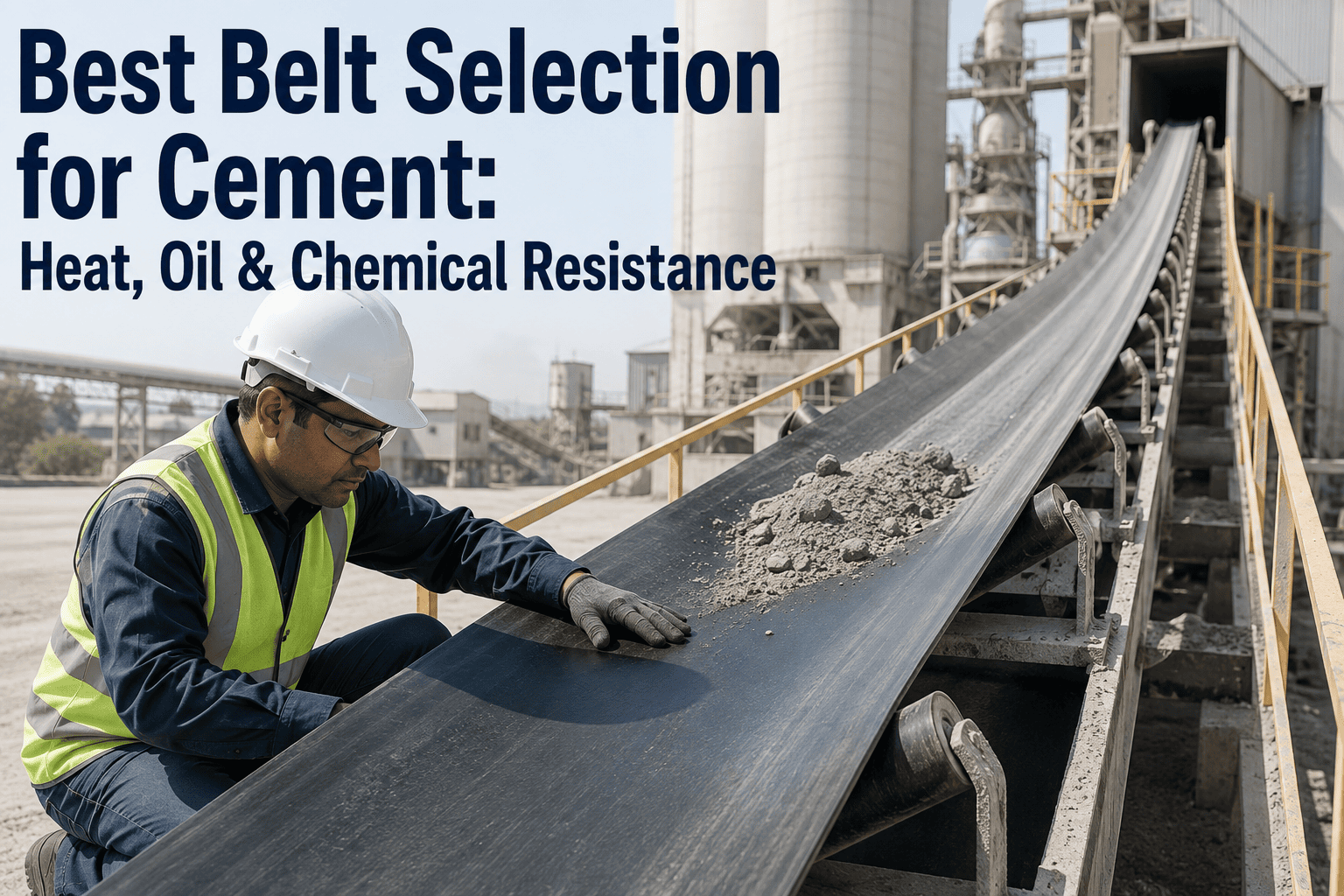
Clinker leaving the kiln cooler can still be above 200°C when it hits a conveyor belt, and the coal or oil used to fire that kiln means the same belt network is also handling grease and hydrocarbon exposure a few hundred meters upstream. Choosing one generic belt for the whole plant — or worse, matching cover compound to whatever's in stock — is why premature belt failure is one of the most common and most avoidable causes of conveyor downtime in cement production. iFactory's asset criticality data combined with the right cover compound selection turns belt replacement from a recurring emergency into a planned, budgeted event.
One Belt Spec Does Not Fit Every Conveyor in Your Plant
Heat, oil, and chemical exposure vary enormously between the quarry, the kiln area, and the finished-product silo — and the belt cover compound that survives one zone will fail fast in another.
Why Cement Belts Fail Faster Than Belts in Most Other Industries
Cement production moves material through some of the harshest conditions any conveyor belt encounters — abrasive limestone and clinker, temperatures that swing from ambient quarry conditions to clinker discharge above 200°C, and oil or grease exposure near the kiln firing system. A belt cover engineered for one of these conditions and forced to handle another degrades far faster than its rated service life, and the resulting unplanned replacement almost always costs more in lost production than the price difference of specifying the right compound the first time.
The Three Resistance Properties That Actually Matter
Heat Resistance
Compounds rated for continuous exposure below 180°C typically use EPDM or chlorinated butyl rubber; high-heat covers rated to 400°F or 700°F are built for foundry and cement clinker service specifically, since standard rubber compounds deteriorate structurally at sustained clinker discharge temperatures.
Oil Resistance
Graded as full oil resistant (FOL), middle oil resistant (MOL), or low oil resistant (LOR) based on cover properties, oil-resistant belts are typically built on nitrile butadiene rubber (NBR), which handles grease and hydrocarbon exposure near fuel handling and kiln firing zones.
Chemical / Abrasion Resistance
Higher carbon-black content compounds resist abrasion from limestone and clinker's rough, sharp edges; reinforcement via polyester, nylon, or steel cord carcass adds tensile strength independent of the cover compound's chemical resistance.
Matching Cover Compound to Plant Zone
| Plant Zone | Primary Exposure | Recommended Cover Type | Typical Temperature Rating |
|---|---|---|---|
| Quarry / raw material | Abrasion, impact, ambient weather | Grade 1 or Grade 2 abrasion-resistant | Ambient, no elevated heat rating needed |
| Kiln feed / fuel handling | Oil, grease, hydrocarbon contact | NBR-based oil-resistant (FOL or MOL) | Ambient to moderate |
| Clinker discharge / cooler | Sustained high temperature, abrasive edges | EPDM or chlorinated butyl heat-resistant | Up to 160–180°C continuous, higher for peak |
| Bucket elevators, hot material | Continuous high-temperature contact | Specialized EPDM heat compound | Up to 160°C permanent carrying |
| Finished product / silo | Fine powder, minimal heat or oil | Standard general-purpose cover | Ambient |
Reading a Belt Specification Sheet
A conveyor belt specification covers more than cover compound. Tensile strength ratings like EP400, EP800, or ST1000 describe the carcass strength; ply count or steel cord diameter determines how much load and impact the belt can absorb before structural damage; top and bottom cover thickness determines wear life before the carcass itself is exposed. International standards — ISO 283 for textile carcass belts, ISO 15236 for steel cord, DIN 22102, and RMA grading — give a common reference point for comparing specifications across suppliers rather than relying on marketing claims about "heavy duty" or "industrial grade," terms with no standardized meaning on their own.
The Belt That Kept Failing at the Same Spot
A plant replacing its clinker discharge belt every four to five months, far short of the expected service life, eventually traced the pattern to cover compound rather than belt age or tension. The plant had standardized on a general-purpose NBR oil-resistant cover across every conveyor in the facility for procurement simplicity — a sensible choice for the fuel handling area, but one that degraded rapidly at sustained clinker temperatures above 180°C. Switching that single conveyor to an EPDM heat-resistant cover, while keeping the NBR spec everywhere oil exposure was the dominant risk, extended service life on the clinker belt to over fourteen months without changing anything else about the conveyor.
Not Sure Which Zones Need a Different Spec?
iFactory maps your conveyor network by criticality and operating conditions, so belt specification decisions are based on actual exposure data, not guesswork or procurement convenience.
Common Belt Selection Mistakes
Standardizing One Spec Plant-Wide
Choosing a single belt type for procurement simplicity ignores that heat, oil, and abrasion exposure differ dramatically between the quarry, the kiln area, and the finished product silo.
Rating by Ambient Temperature, Not Material Temperature
Belt surface temperature is driven by contact with the material being carried, not surrounding air temperature — powdered material like cement doesn't differ from surface temperature as much as chunky, high-contact clinker does.
Ignoring Splice Compatibility
A cover compound chosen without checking splice adhesive compatibility can develop separation at the splice long before the cover itself wears out, especially under thermal cycling.
Comparing Belts on Price Alone
A cheaper general-purpose belt that fails in five months costs more in lost production and labor than a correctly specified belt lasting fourteen months, even before comparing sticker price.
Total Cost of Ownership, Not Just Purchase Price
A belt priced 15 to 20 percent below a correctly specified alternative looks attractive on a purchasing spreadsheet, but that comparison ignores everything that happens after installation. Belt life, splice failure frequency, and unplanned replacement labor all belong in the same comparison as the sticker price — and on a mismatched cover compound, those hidden costs routinely exceed the upfront savings within the first year.
| Cost Factor | General-Purpose Cover (mismatched) | Correctly Specified Cover |
|---|---|---|
| Purchase price | Lower | 10–20% higher upfront |
| Typical service life in a demanding zone | 4–6 months | 12–18 months |
| Unplanned replacement events per year | 2–3 | 0–1 |
| Splice failure risk under thermal cycling | Elevated | Low, when adhesive is compatibility-checked |
Installation and Splicing Considerations by Cover Type
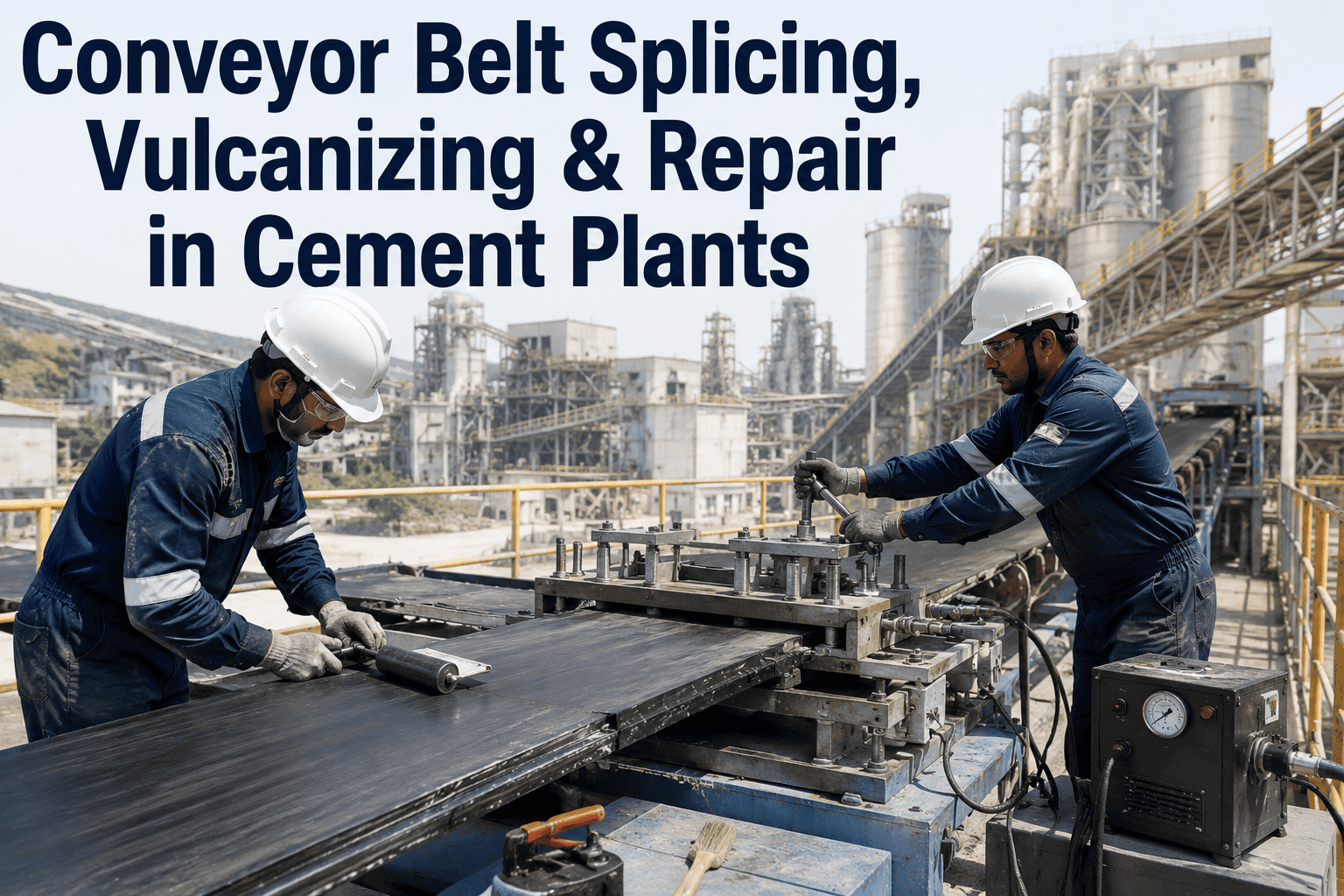
Selecting the right cover compound solves half the problem — the splice connecting belt sections has to be compatible with that same compound, or the belt fails at the splice long before the cover itself wears through. Heat-resistant EPDM covers generally require a splice adhesive rated for the same temperature range as the cover itself, since a standard splice compound can soften and separate under conditions the cover was designed to withstand. Steel cord belts require vulcanized splicing with precise curing time and temperature control specific to the cover compound in use, which makes splice technician training and equipment calibration as important to belt longevity as the initial material specification.
Frequently Asked Questions
What temperature actually determines the belt cover rating I need?
The material's contact temperature against the belt surface matters more than surrounding ambient air temperature, and the two are not the same thing — powdered material like raw meal or finished cement tends to have belt surface temperatures close to the material temperature, while chunky, high-contact material like clinker exiting the cooler can create localized surface temperatures that swing more than ambient readings would suggest. Heat-resistant belts are generally recommended once material temperature consistently exceeds about 60°C, with specialized high-heat compounds required above 160–180°C. Contact support for help mapping actual material temperatures across your conveyor network.
What's the difference between FOL, MOL, and LOR oil-resistant belts?
These grades describe the degree of oil resistance built into the cover compound — full oil resistant (FOL) for continuous, heavy hydrocarbon exposure, middle oil resistant (MOL) for moderate or intermittent contact, and low oil resistant (LOR) for occasional splash or incidental exposure. Specifying a higher grade than a given conveyor actually needs adds cost without meaningful benefit, while under-specifying leads to premature cover softening and separation.
Can one belt handle both heat and oil resistance requirements?
Yes — combined heat and oil resistant cover compounds exist and are common in areas where clinker or hot material also carries incidental hydrocarbon exposure, such as certain kiln feed and cooler transfer points. These combination compounds typically carry a cost premium over a single-property cover, so they're worth specifying only where the conveyor genuinely faces both exposures rather than as a default across the plant.
How much does correct belt selection actually extend service life?
The gap varies by how mismatched the original spec was, but plants that discover a general-purpose or mismatched cover compound was driving early failures commonly see service life extend by two to three times once the correct heat or oil rating is specified for that specific zone. The clinker discharge example is typical: a poorly matched cover lasting four to five months against a correctly specified one lasting well over a year on the identical conveyor and load.
Do steel cord and fabric-ply belts need different cover considerations?
The carcass material — steel cord versus fabric ply — determines tensile strength and impact resistance, and is a largely separate decision from cover compound selection, which addresses heat, oil, and abrasion at the belt surface. Steel cord belts are typically specified for long overland conveyors or very high tension applications, while fabric-ply belts cover most shorter, lower-tension runs, but either carcass type can be paired with the heat- or oil-resistant cover appropriate to its operating zone. Book a demo to review carcass and cover specifications together for your specific conveyor network.
Specify the Right Belt for Each Zone, Not One Belt for the Whole Plant
iFactory's conveyor asset data gives you the exposure profile — heat, oil, abrasion — needed to specify cover compounds by zone instead of by procurement convenience.