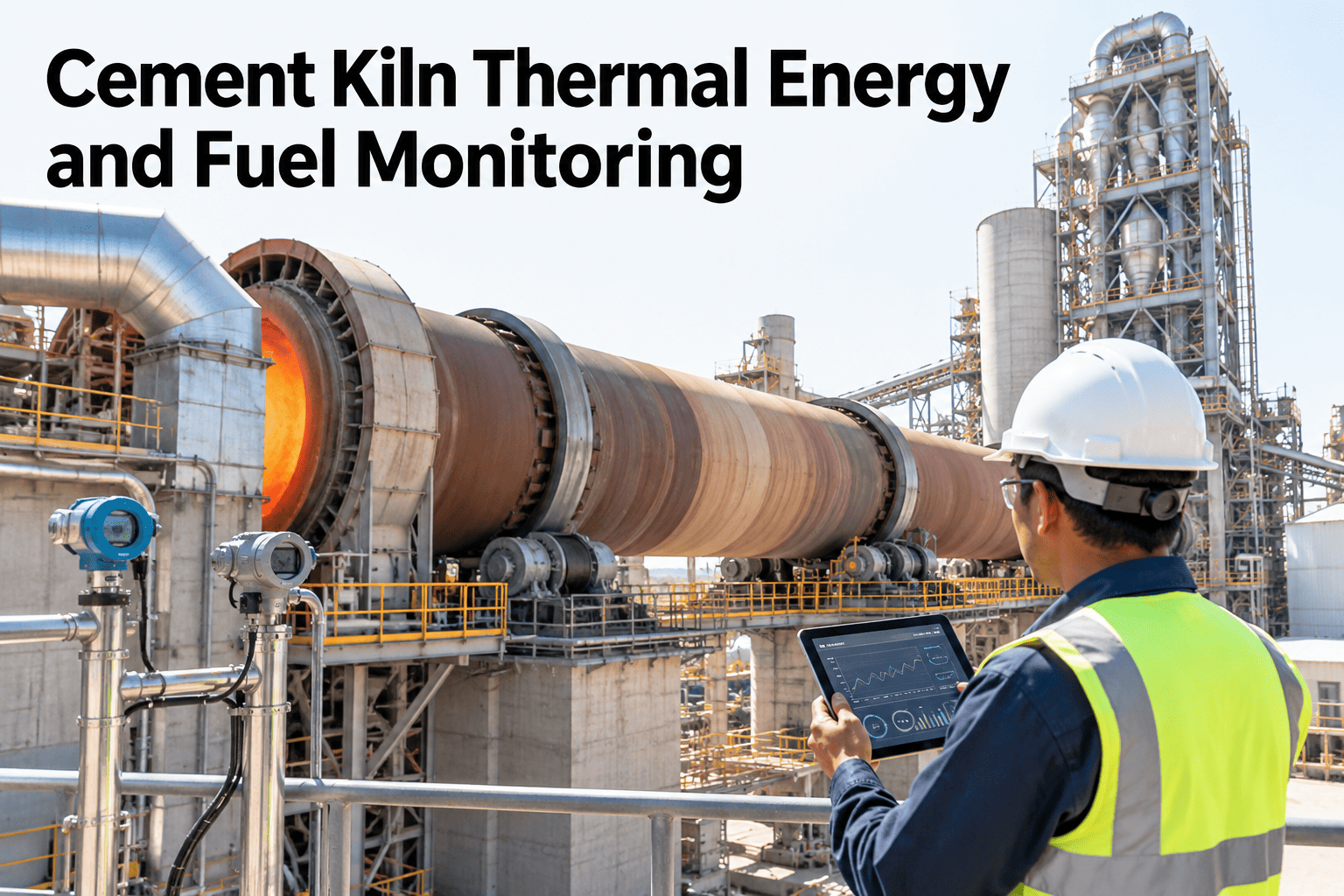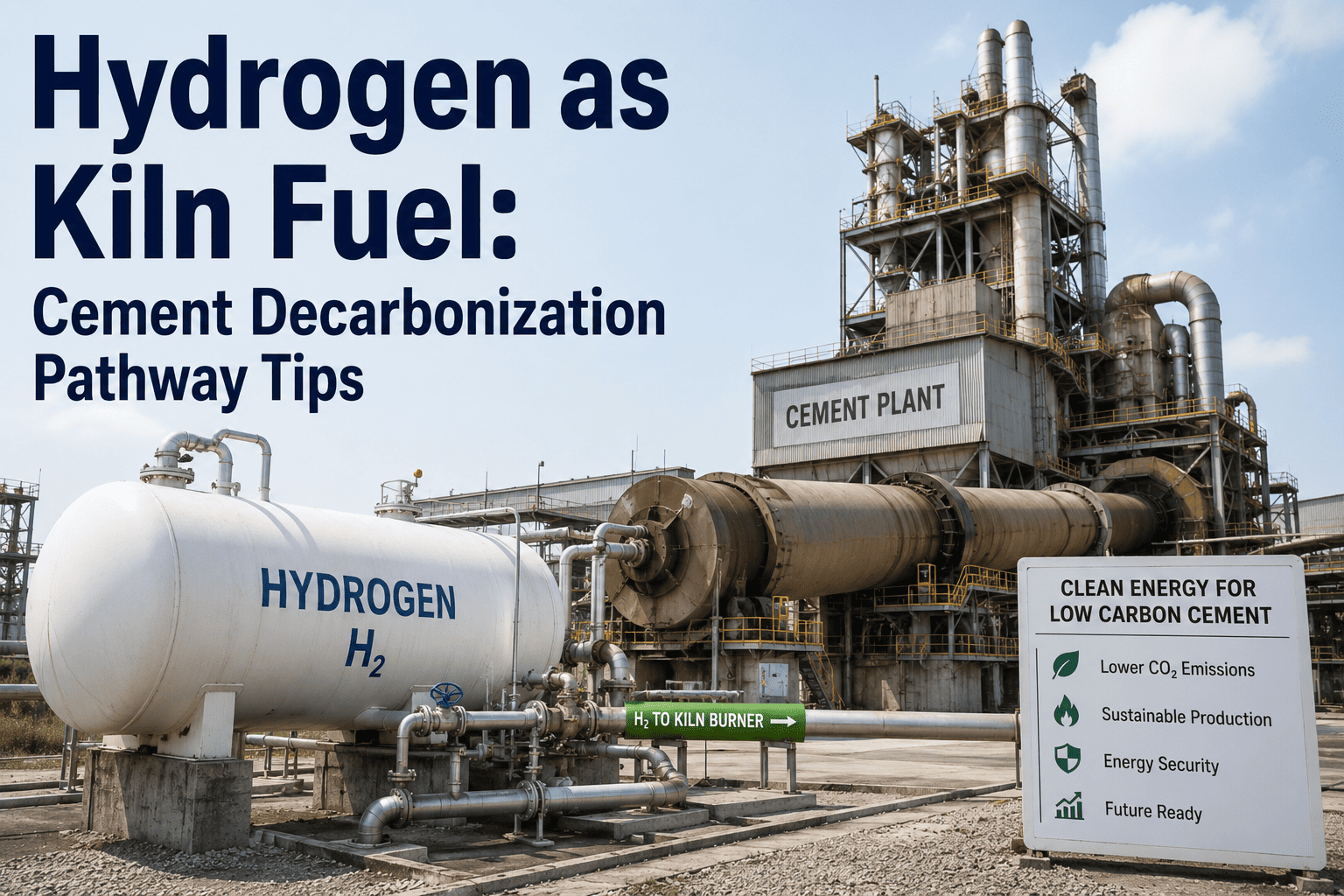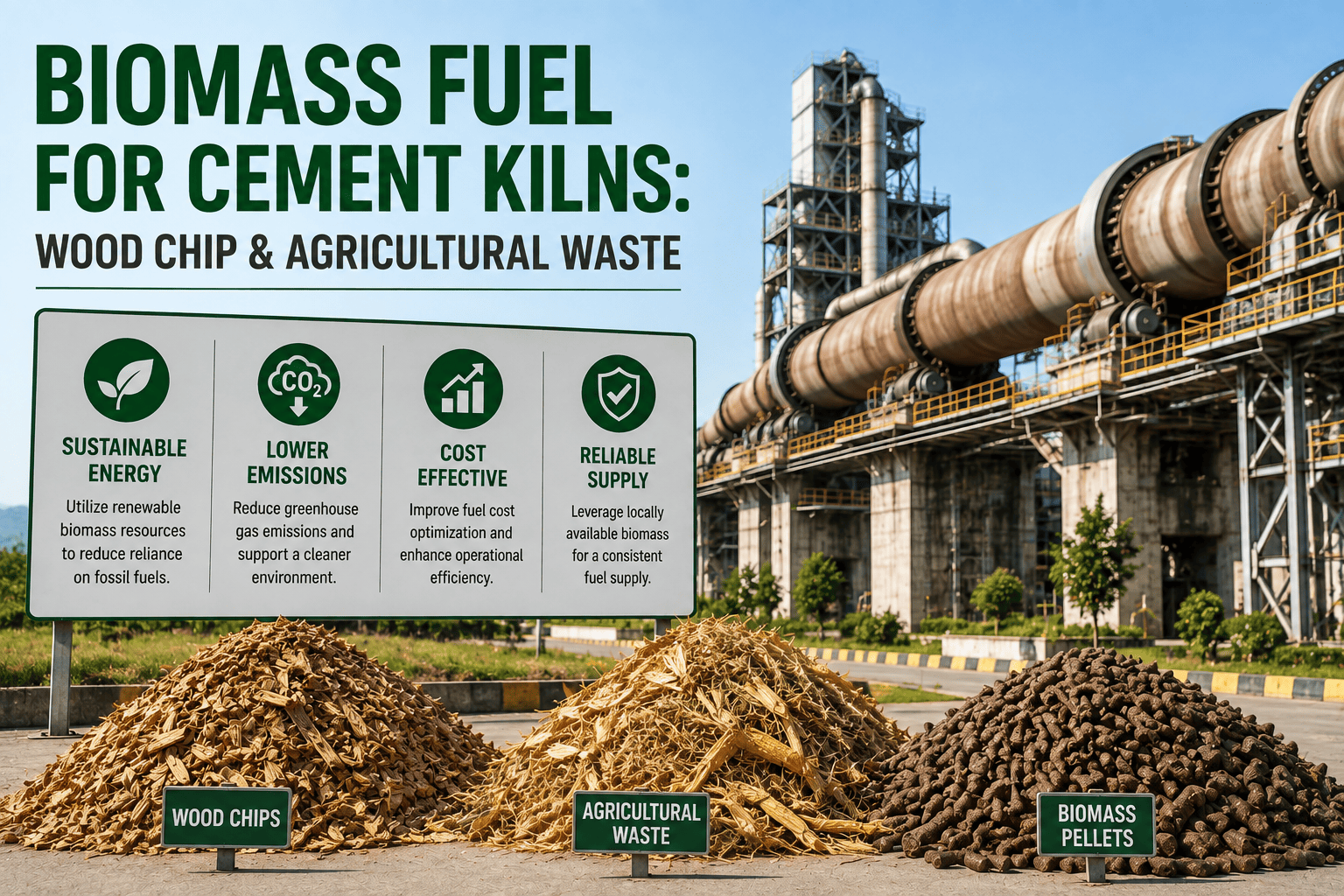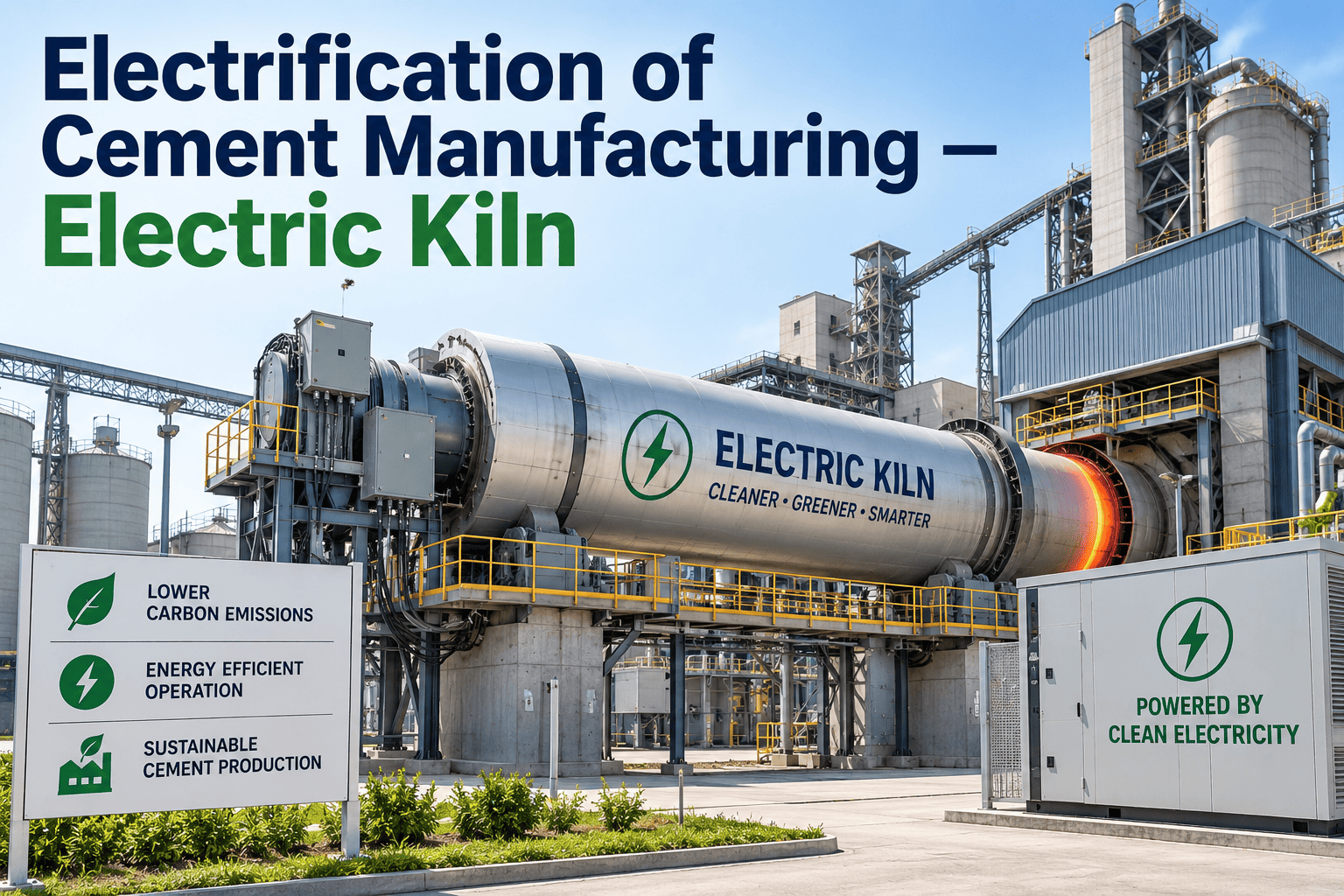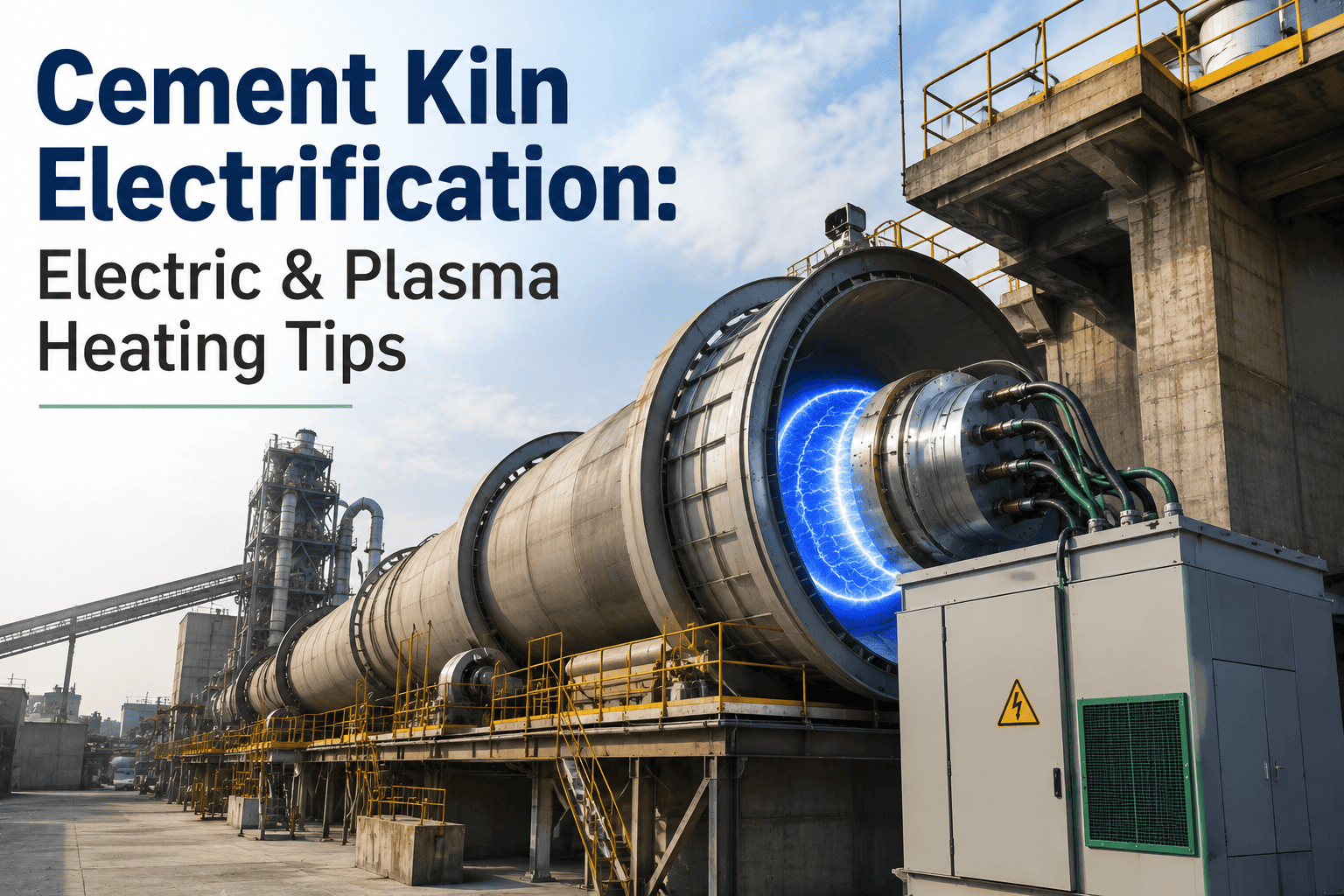
Most cement decarbonization conversations focus on fuel switching, alternative fuel substitution rates, and carbon capture bolted onto an existing kiln, because those are the levers available today. Electrifying the kiln itself is a different proposition entirely, since it means replacing the flame that sinters clinker at 1,450°C with electricity, and the two leading approaches for doing that, resistive/induction electric heating and plasma heating, are now moving from lab demonstrations into pilot-scale rotary kilns. Plasma heating in particular has shown it can fuse raw materials into clinker in seconds at temperatures above 2,400°C, roughly 100 times faster than a conventional kiln. What this actually means for a plant deciding whether to track this technology or plan around it is explained at ifactory support.
Electric and Plasma Kiln Heating Are No Longer Just Lab Concepts
AI that tracks energy consumption, models hybrid combustion-electric transition scenarios, and benchmarks pilot performance data as electrification pathways move from demonstration scale toward commercial cement kilns.
Why the Kiln Is the Hardest Part of Cement to Electrify
Electrifying low and medium temperature industrial heat processes, up to roughly 600°C, is largely a solved problem today. Reaching the 1,400 to 1,500°C the kiln burning zone needs is a different technical challenge entirely, which is why electrified process heating at cement-relevant temperatures has remained one of the most difficult segments of industrial decarbonization to commercialize. It also does not solve the whole problem on its own, since roughly 60% of a kiln's CO2 output comes from calcination, the chemical decomposition of limestone itself, and only about 40% comes from the fuel burned to generate heat. Electrification targets that 40%, which is significant, but full decarbonization still needs a carbon capture step, an alternative feedstock, or both, layered on top of it.
The Four Electrification Methods Being Tested
Not every electrified heating approach is chasing the same goal, and the method that fits a demonstration furnace is not necessarily the one that scales to a commercial rotary kiln.
| Method | Approx. Max Temp | Maturity | Best Fit |
|---|---|---|---|
| Resistive Heating | Up to ~1,200°C | Established for lower-temp stages | Preheater, low-temp calciner zones |
| Induction Heating | Up to ~1,400°C | Pilot / early commercial | Calciner electrification |
| Microwave Heating | Material-dependent | Early research stage | Selective raw material heating |
| Plasma Heating | 2,400°C+ | Pilot scale, fastest advancing | Rotary kiln burning zone |
Model What a Hybrid Combustion-Electric Kiln Would Mean for Your Line
Bring your current kiln fuel mix and energy data to the call. We will walk through how AI-based modeling would map a phased electrification path for your specific plant.
Where the Pilots Actually Stand Today
This is not a theoretical technology anymore, though it is still far from a commercial off-the-shelf purchase. A handful of named projects mark how far the leading approaches have actually progressed.
The Carbon Capture Bonus Electrification Creates
One advantage of kiln electrification rarely gets the same attention as the temperature and efficiency numbers, but it may matter just as much for a plant's long-term decarbonization economics. When combustion is removed from the kiln, the flue gas that remains is almost pure CO2 from calcination alone, rather than being diluted with combustion byproducts and excess air. That higher concentration significantly simplifies the downstream carbon capture step, which in turn tends to lower both the energy consumption and the capital cost of the capture system a plant would eventually need to fully decarbonize.
The capture benefit compounds with scale too. A plant running a hybrid kiln during a transition period would see its flue gas composition shift gradually as the electrified share of thermal load increases, which means a capture system sized only for today's diluted, combustion-heavy stream could become oversized or mismatched as electrification progresses. Plants that model this shift in advance, rather than treating capture system design as a one-time decision, are better positioned to size equipment that stays right-fit across the transition instead of needing a costly mid-life redesign.
A Phased Path, Not a Single Switch-Flip Decision
No plant is expected to go from a fully fuel-fired kiln to a fully electric one overnight, and the modularity built into the leading pilot designs reflects that reality. A realistic path runs through distinct stages, each with a different readiness bar.
| Stage | What Gets Electrified | Primary Requirement |
|---|---|---|
| Partial Electrification | Preheater and lower-temperature calciner zones | Grid capacity for resistive/induction load |
| Hybrid Calciner | Calciner fully electrified, kiln remains fuel-fired | Reliable, cost-competitive electricity supply |
| Plasma-Assisted Kiln | Rotary kiln burning zone via plasma retrofit | Plasma generator integration and grid stability |
| Full Electrification | Entire thermal process, all fossil fuel eliminated | Large-scale renewable or low-carbon power access |
The modularity built into projects like ELECTRA is a direct response to that reality. Rather than asking a producer to commit to a fully electric kiln in one step, the leading pilot designs are explicitly engineered to run hybrid combustion-electric modes, which means a plant could, in principle, electrify a portion of its thermal load first, validate performance against its own product quality and output targets, and expand the electrified share over subsequent phases as confidence and grid access both improve. That staged approach is what makes the technology plausible for existing plants rather than something that only makes sense for a greenfield build designed around it from day one.
What This Actually Means for a Plant Today
For most operating cement plants, kiln electrification is not yet a procurement decision, it is a monitoring and readiness question. The pilots described above are still measured in single-digit to double-digit megawatts against a commercial kiln that typically draws far more thermal energy, and commercial-scale deployment depends heavily on access to abundant, cost-competitive, low-carbon electricity, which varies enormously by region and grid. What a plant can do now is build the energy visibility and hybrid-mode readiness that would make a future transition, whether that is a partial calciner electrification project in the next several years or a full plasma retrofit further out, a data-informed decision rather than a leap into the unknown.
| Question | Why It Matters |
|---|---|
| What is your current kiln-zone energy consumption baseline? | Sets the reference point for evaluating any electrification pathway's real impact |
| What is your local grid's low-carbon electricity capacity and cost? | Determines whether electrification actually reduces net emissions and at what cost |
| Could your kiln run a hybrid combustion-electric mode? | Modular pilot designs assume a transition period, not an instant switch |
| Is your downstream capture system sized for a future higher-purity CO2 stream? | Electrification changes flue gas composition, which affects capture system design |
What Slows a Realistic Timeline Down
Enthusiasm for plasma and electric kiln technology tends to outrun the practical constraints that actually govern when it becomes viable at commercial scale, and a handful of recurring factors explain most of the gap between a promising pilot result and a bankable investment decision.
Frequently Asked Questions
Get an Electrification Readiness Assessment for Your Kiln Line
Bring your current kiln fuel mix, energy consumption data, and grid access details to the call. We will walk through where your plant stands against a phased electrification path.