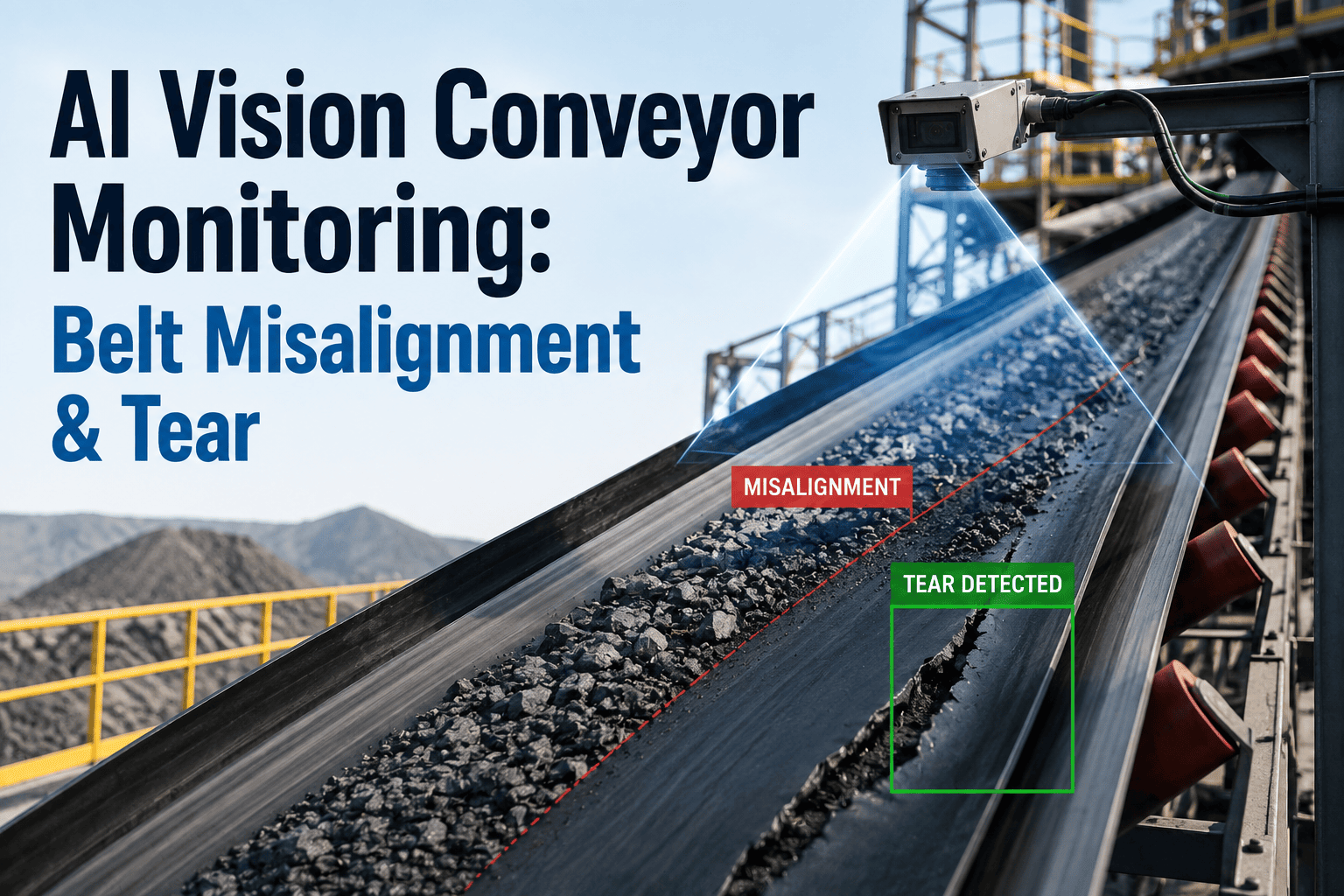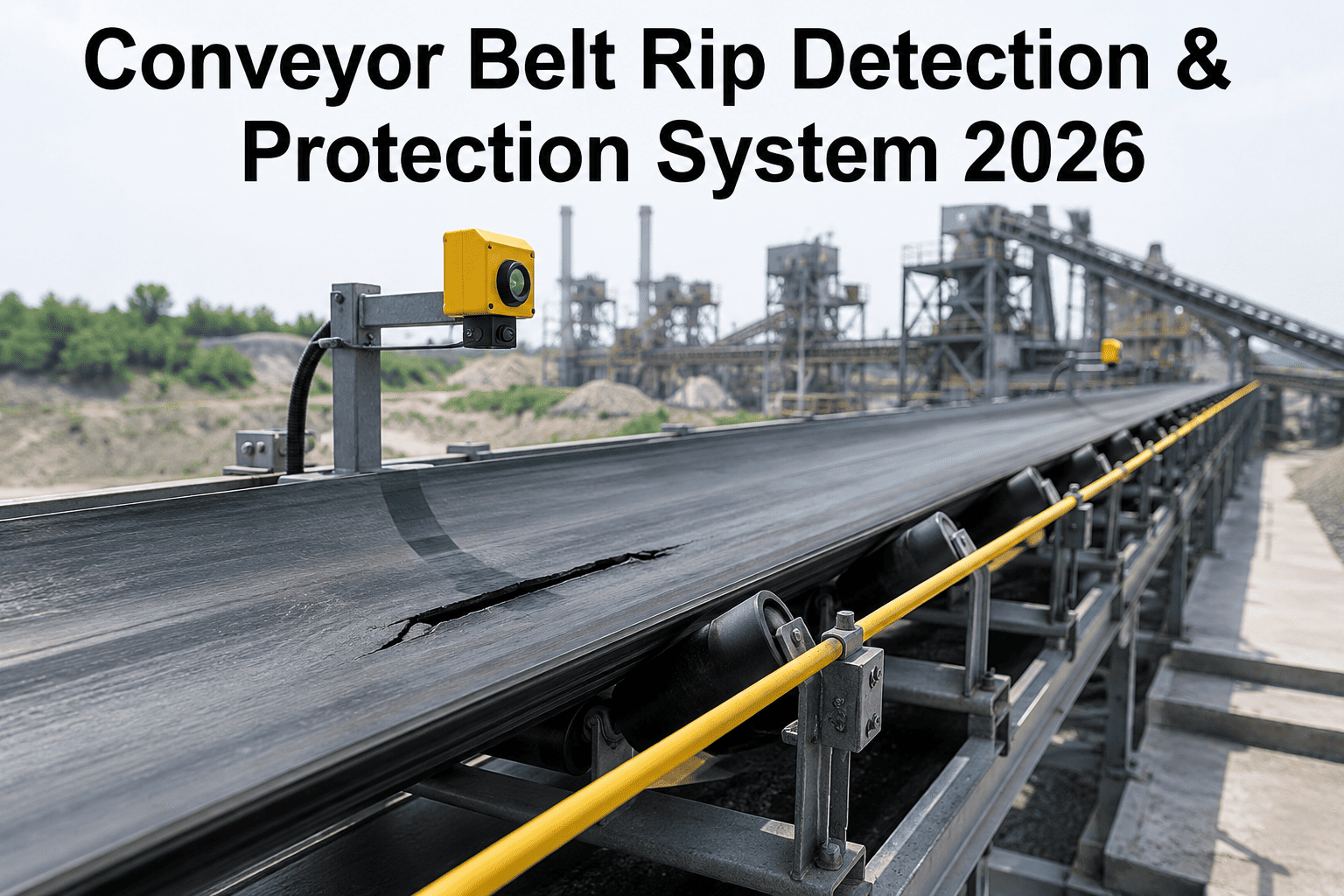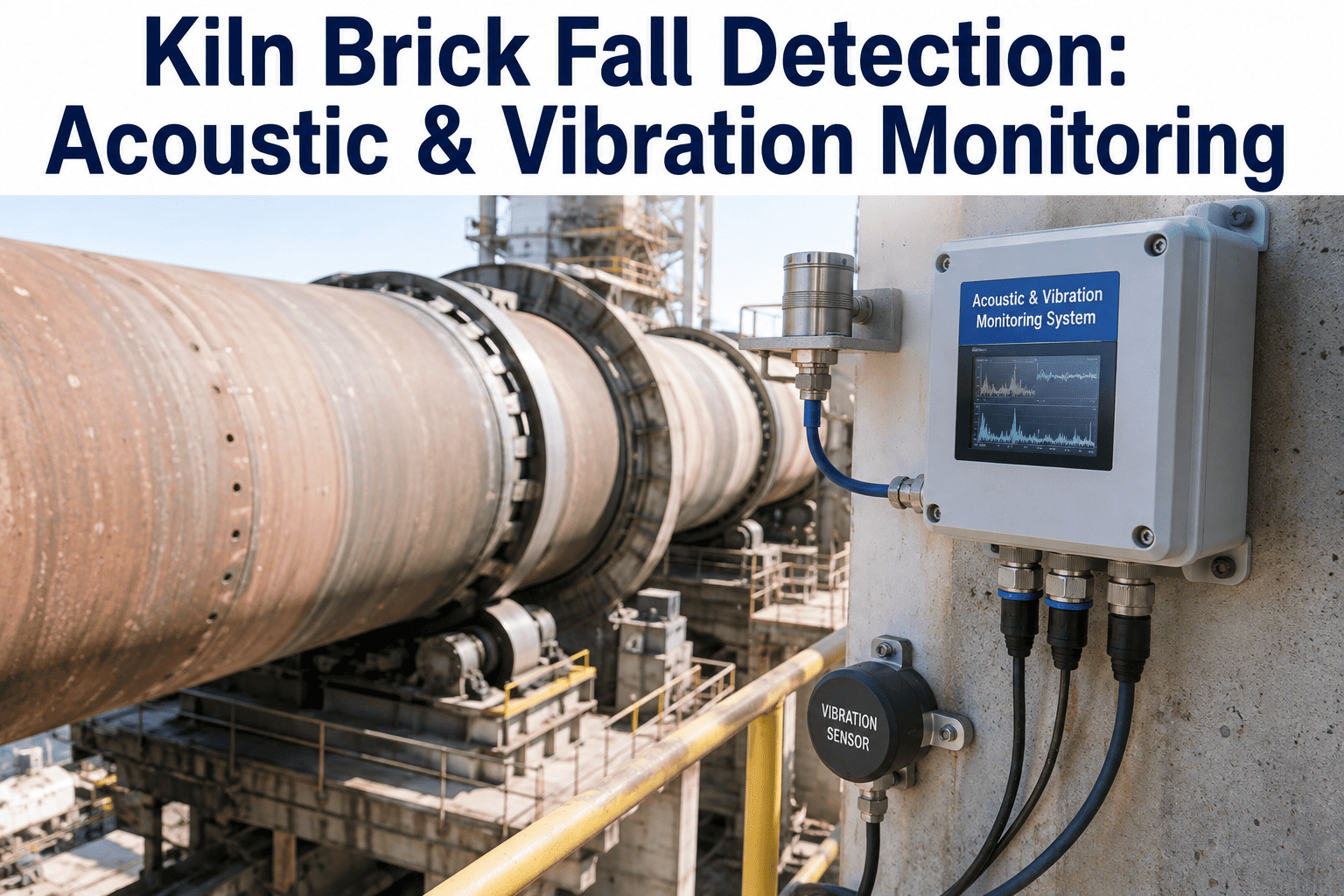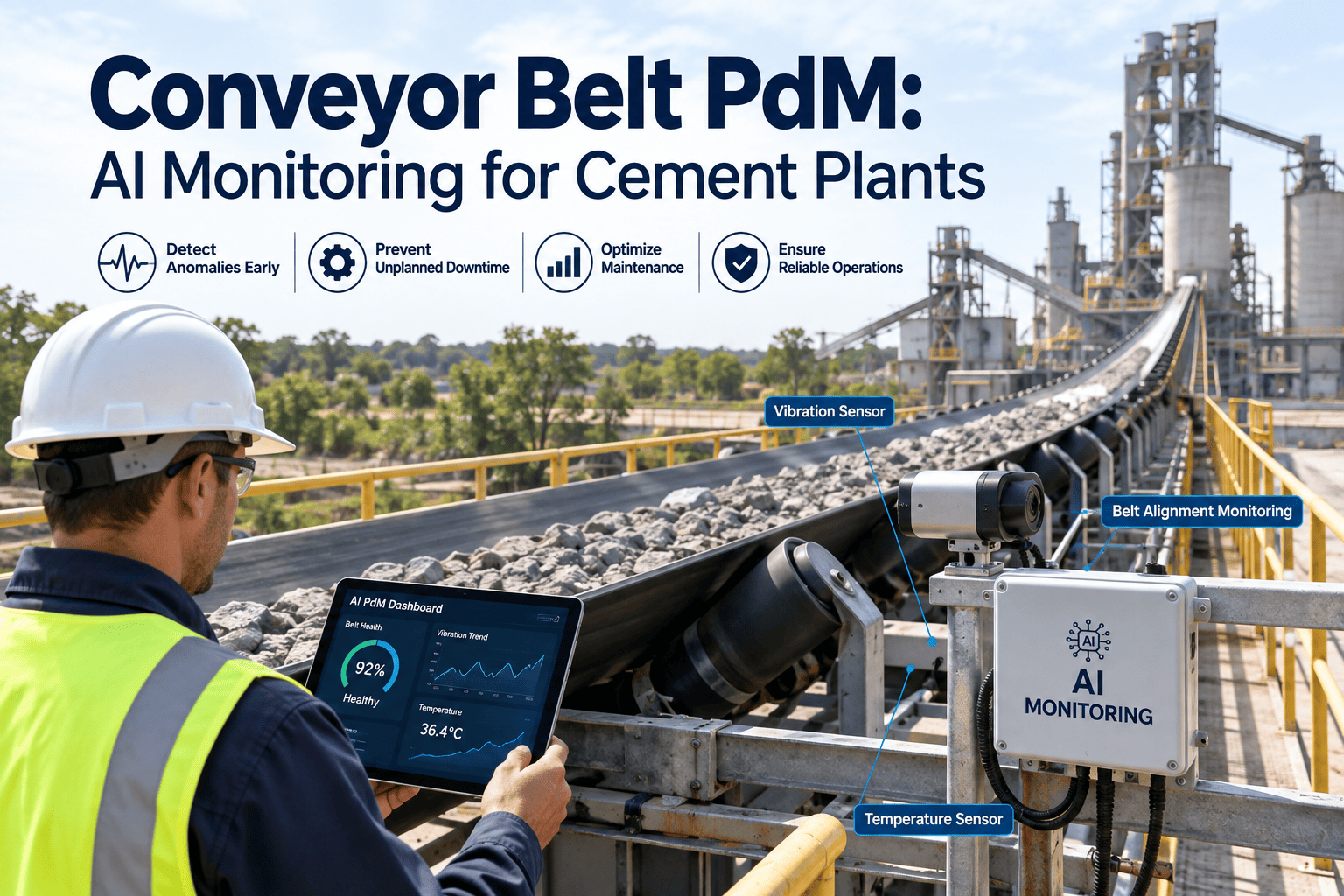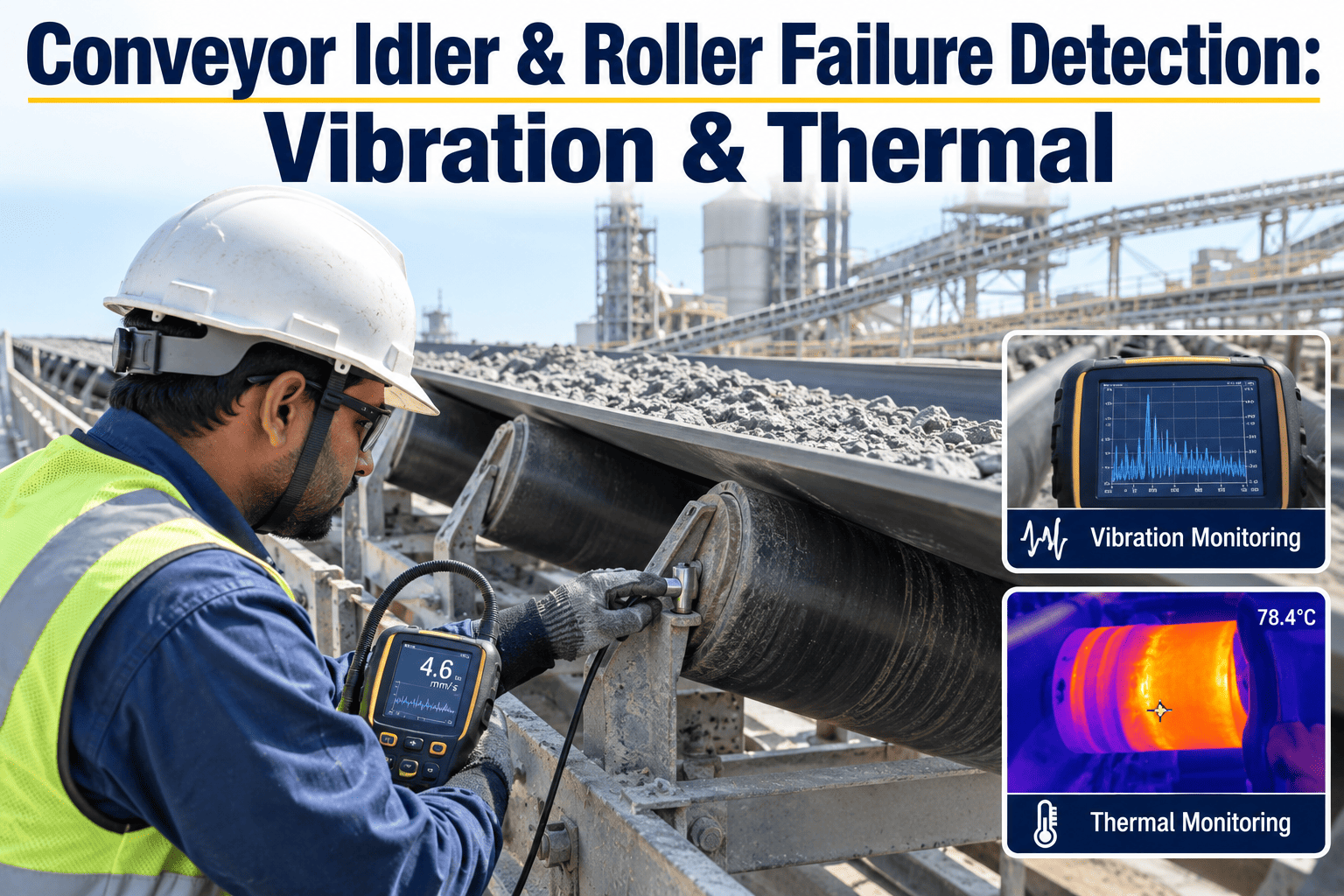
A single seized idler roller on a cement plant conveyor can start a chain reaction that ends in a burned-through belt, a multi-shift shutdown, and a repair bill running into hundreds of thousands of dollars. Most maintenance teams only find out an idler has failed after someone smells hot rubber or spots smoke near a transfer point, by which time the belt itself is already damaged. The fix is not more manual walk-downs, it is combining vibration sensing with thermal monitoring so a bearing that is starting to seize gets flagged weeks before it locks up. Book a demo to see how this looks against your own conveyor network.
Catch a Seizing Idler Weeks Before It Burns Through a Belt
Vibration and thermal sensors on idler rollers turn a silent, slow-building bearing failure into an early work order, protecting belts that can cost more than the entire monitoring system to replace.
Why Idler Failures Are More Expensive Than They Look
A single idler costs very little to replace on its own. The damage it causes on the way to failing is what actually shows up in the maintenance budget.
idler rollers can be installed across the conveyor network of a single large cement plant
of unplanned conveyor downtime in bulk material handling traces back to idler and roller bearing failures
typical lead time between a detectable vibration anomaly and a full bearing seizure
commonly cited replacement cost range for a belt damaged by a seized idler, versus a few hundred dollars per roller
The Three Failure Signatures Sensors Are Built to Catch
Idler bearings do not fail instantly. They move through recognizable stages, and each stage has a distinct sensor signature that shows up before a technician would ever notice anything by walking past.
Early bearing wear
High-frequency vibration spikes appear at specific bearing defect frequencies long before any change in surface temperature or audible noise is detectable during a manual inspection round.
Lubrication breakdown
Friction increases as grease breaks down, and thermal sensors pick up a gradual temperature climb at the bearing housing well before the roller shows visible discoloration.
Seizure onset
Vibration amplitude rises sharply and thermal readings spike together as the roller starts to drag against the belt instead of rotating freely, the last window before belt contact damage begins.
Vibration Sensing vs Thermal Monitoring: What Each One Actually Catches
Neither method alone tells the whole story. Vibration and thermal data cover different failure stages, which is why plants that run both together catch problems earlier than plants relying on just one.
See Which of Your Idlers Are Already Showing Warning Signs
iFactory can walk through a sample of your conveyor network and show what vibration and thermal data from your own rollers would look like in practice.
How Replacement Priority Gets Decided Once Sensors Are Live
Not every flagged idler needs a technician dispatched the same day. A simple severity framework keeps crews focused on rollers that are actually close to failing.
Mild vibration deviation
Readings sit slightly above baseline with no thermal change. These rollers get logged and reviewed at the next scheduled maintenance window rather than an emergency dispatch.
Vibration rising with mild heat
A clear upward trend across both signals means the bearing is progressing through wear. These get scheduled into the next planned shutdown window, typically within one to two weeks.
Sharp vibration and thermal spike together
Both signals moving sharply at once signals seizure onset. These trigger an immediate work order since belt contact damage can begin within hours once a roller stops rotating freely.
What Actually Drives Idler Failures in Cement Plant Conveyors
Understanding the root causes helps crews interpret sensor data correctly instead of treating every alert as a random, isolated event.
Dust and fines ingress
Fine cement dust works past worn seals and contaminates bearing grease, accelerating wear far faster than the roller's rated service life would suggest.
Belt misalignment loading
A belt tracking off-center puts uneven side loading on troughing idlers, wearing bearings asymmetrically and shortening life on one side of the set.
Extended lubrication intervals
Sealed-for-life rollers still degrade under heavy dust and heat, and stretching relubrication schedules to cut costs often accelerates the exact failures monitoring is meant to catch.
Impact damage at loading points
Material dropping directly onto impact idlers near transfer chutes causes shock loading that fatigues bearing races well before normal wear would.
Sensor Placement Checklist for a New Monitoring Rollout
Impact and load-bearing idlers near transfer points prioritized first, since these see the highest stress and fail most often
Vibration sensors mounted on bearing housings rather than the roller shell for a cleaner, more reliable defect frequency signal
Thermal sensors positioned to read housing temperature directly, avoiding false readings from ambient plant heat sources nearby
Baseline vibration and temperature readings captured during the first week before alert thresholds are finalized for each idler set
Return idlers along long overland spans included, not just carry idlers, since return-side failures are easy to overlook
Alert routing confirmed to reach the CMMS as a work order rather than sitting in a dashboard nobody checks daily
A Reliability Engineer's Take on the First Six Months
We used to find out about a bad idler when a technician smelled burning rubber during a round. Now the system flags a roller two to three weeks out, and we swap it during a normal shift instead of scrambling to stop the line. The belt damage alone that we have avoided has paid for the whole rollout several times over.
Frequently Asked Questions
How early can vibration monitoring actually catch a failing idler?
Vibration sensors typically pick up early bearing defect frequencies three to four weeks before a roller would seize, since wear on the race or rolling elements creates a measurable high-frequency signature long before any heat or noise change is noticeable. This lead time is what gives maintenance teams room to schedule a swap during a normal shift instead of responding to an emergency. Book a demo to see sample vibration trend data from a real idler failure progression.
Why use both vibration and thermal sensors instead of just one?
Vibration and thermal data capture different stages of the same failure. Vibration tends to catch mechanical wear earliest, while thermal monitoring is often the first to flag lubrication breakdown and rising friction heat, especially on load-bearing carry idlers. Running both together closes the gap that either method leaves on its own, which matters most on conveyor spans where a belt failure would stop production.
Does this integrate with the CMMS systems cement plants already use?
Yes. Integration is designed to connect with common cement plant CMMS platforms including SAP, Maximo, eMaint, and Infor, so alerts arrive as pre-filled work orders with the specific roller location and severity level rather than as a separate dashboard technicians have to check manually. Talk to a specialist about connecting to your specific CMMS setup.
How many idlers typically need sensors versus the total on a conveyor line?
Most plants start with impact idlers and load-bearing carry idlers near transfer points, since these see the highest stress and account for a disproportionate share of failures, rather than instrumenting every roller on the line at once. Coverage typically expands to return idlers and less critical spans once the initial rollout proves out on the highest-risk locations first.
What happens if a roller shows a sudden spike instead of a gradual trend?
A sharp, sudden spike in both vibration and temperature together usually signals seizure onset rather than gradual wear, and it should be treated as an immediate work order since belt contact damage can begin within hours once a roller stops rotating freely. This is different from the slow, weeks-long trend that most bearing wear follows, which is why severity thresholds are typically split between gradual and sudden change patterns.
Stop Losing Belts to Idlers That Failed Silently
Book a 30-minute call and bring a map of your highest-risk conveyor spans. iFactory will show what a phased vibration and thermal rollout would look like for your plant.