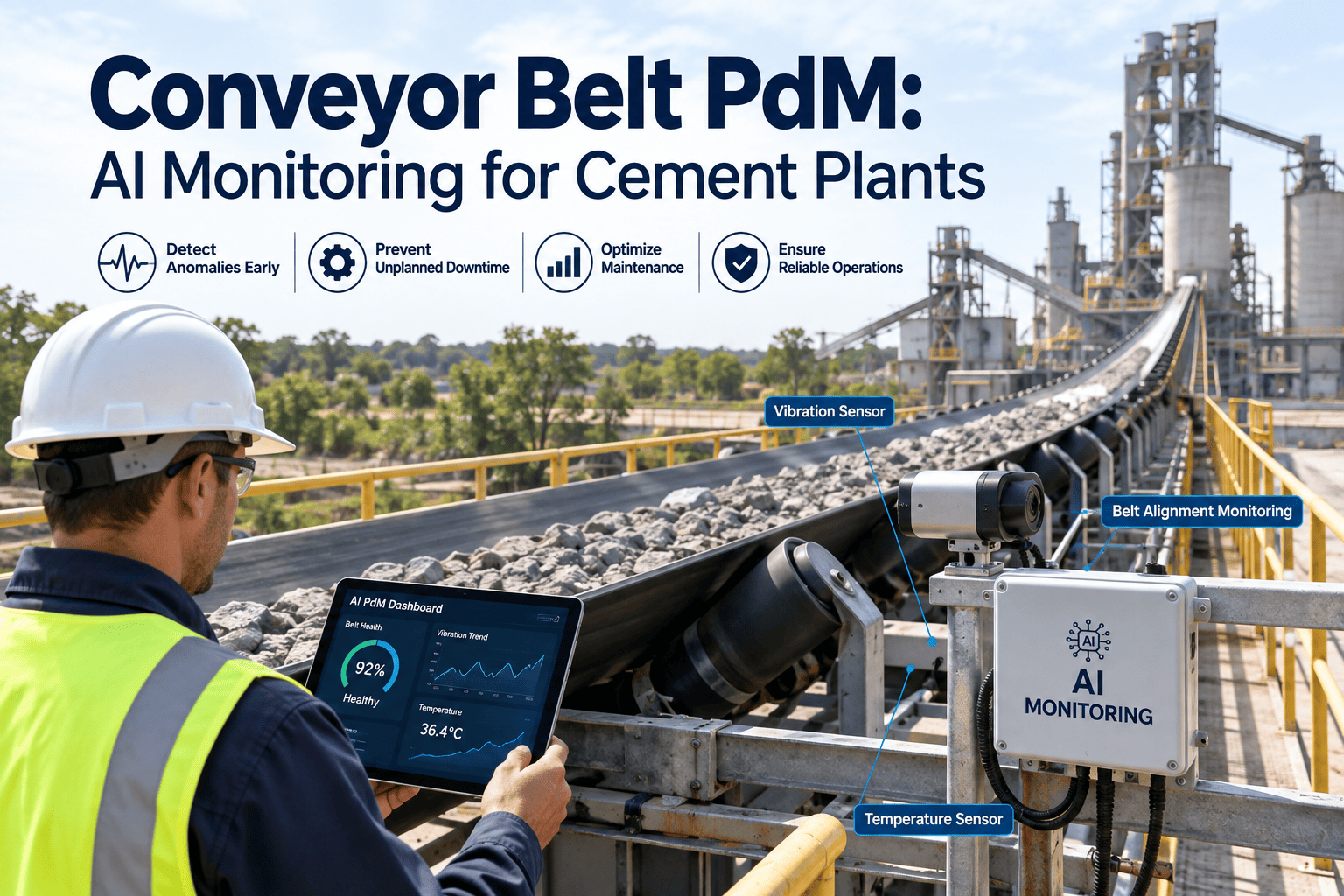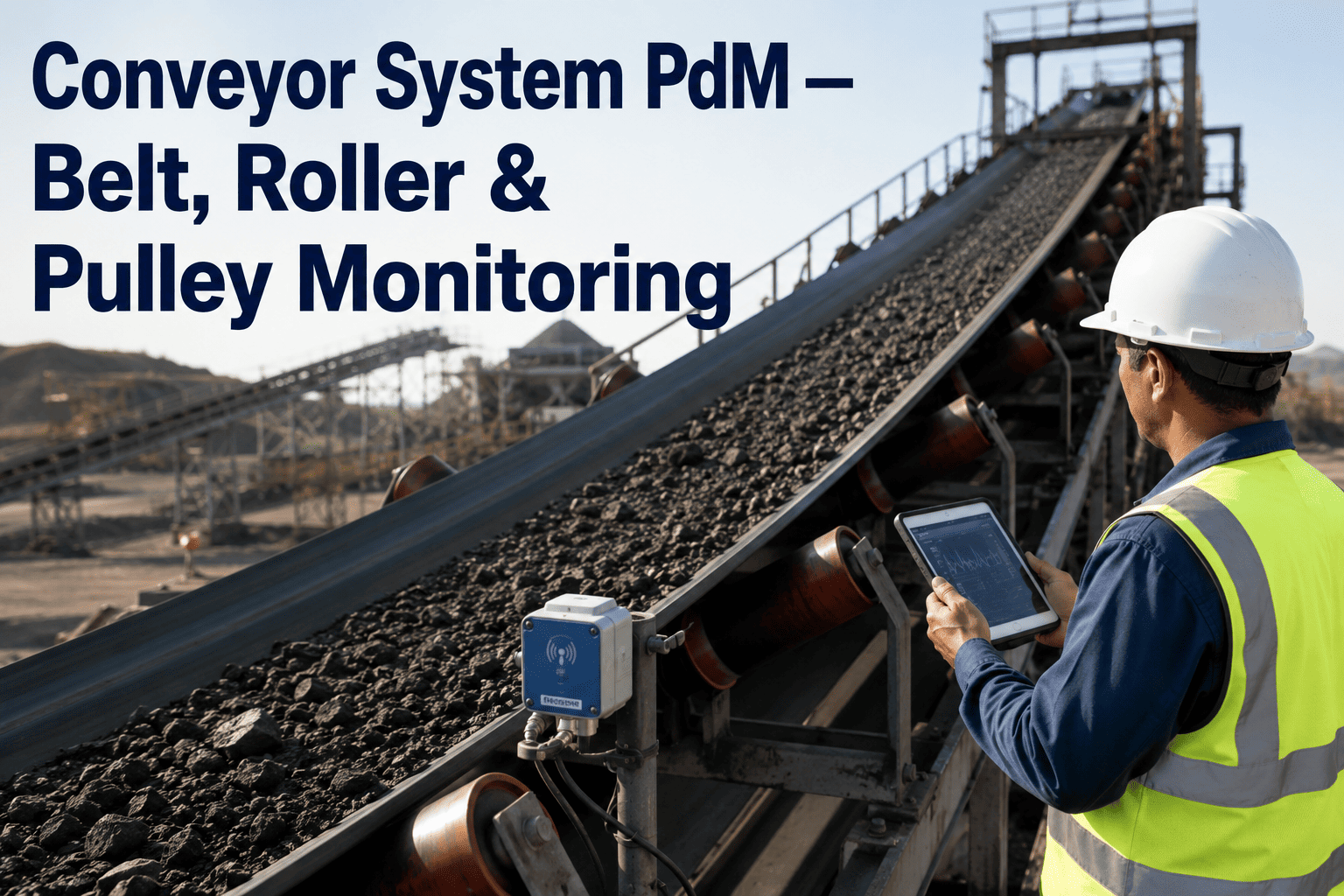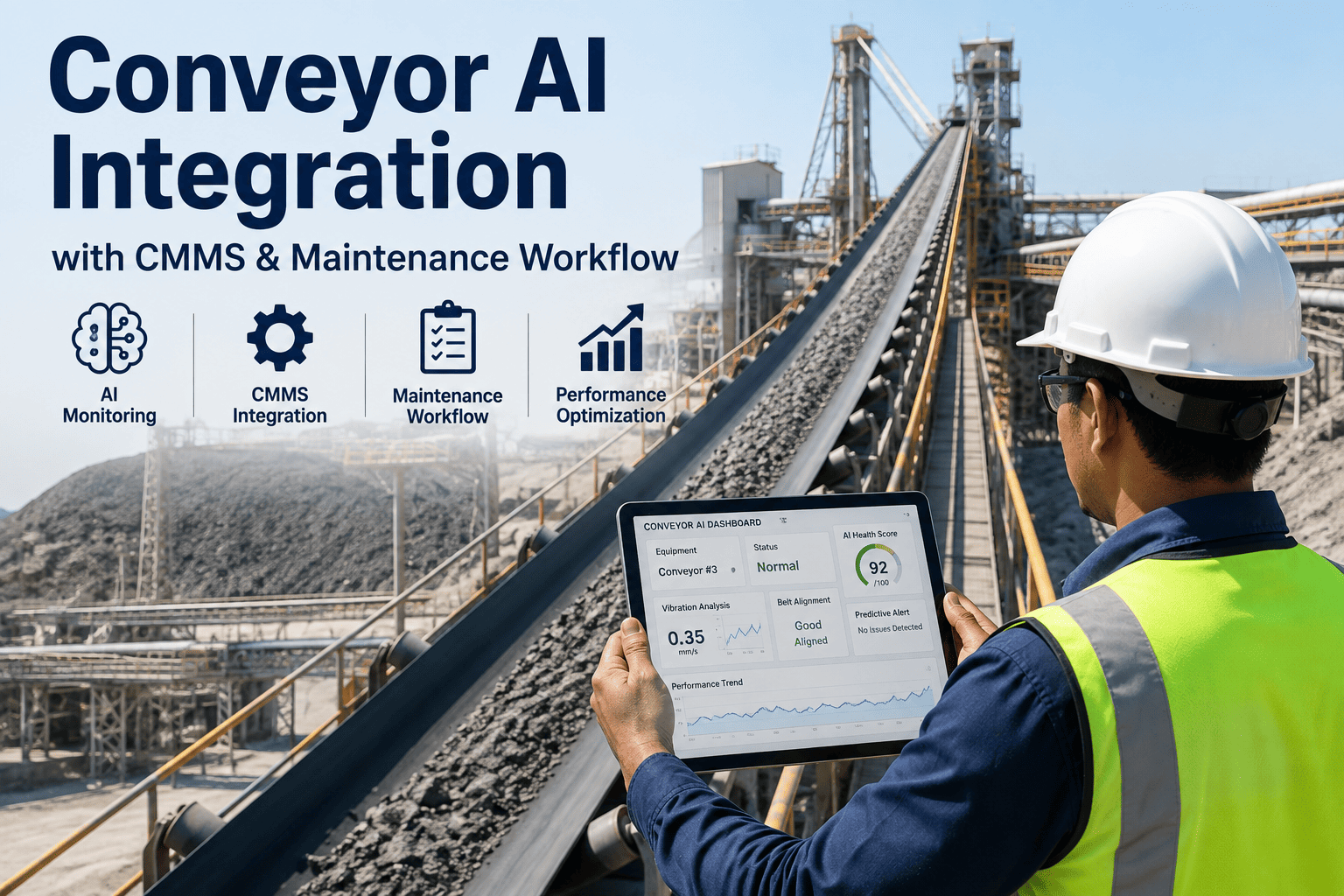
A conveyor sensor can detect a misaligned belt, a hot idler, or a splice failure risk in real time, but detection alone has never been the bottleneck in cement plant maintenance. The bottleneck is what happens between the moment an alert fires and the moment a technician is standing at the right conveyor position with the right parts in hand. Many plants still route that gap through inboxes, radio calls, and a supervisor manually opening a work order, which routinely adds hours to a response that should take minutes. This page covers how integrating AI conveyor monitoring directly with a CMMS collapses that gap, what an automated alert-to-work-order pipeline actually looks like, and how a short scheduling call can map that pipeline against a plant's specific conveyor network.
The Gap Between Detection and Repair Is Where Conveyor Downtime Hides
iFactory routes every confirmed conveyor fault directly into your CMMS as a prioritized, pre-populated work order, closing the gap between an AI detection and a technician standing at the right location with the right parts.
What Happens Between a Sensor Alert and a Completed Repair Today
In most cement plants without a fully closed-loop system, the work order process contains more manual handoff steps than the actual repair does. A conveyor sensor throws an alert on a dashboard. Someone has to notice it. That person checks whether it is a real fault or a false positive. If real, they email or radio a supervisor. The supervisor manually opens a work order, guesses at priority, and assigns a technician based on who happens to be available rather than who has the right skill match. Parts availability is not checked until the technician is already walking to the conveyor. Each of these steps adds delay, and the delays compound: warehouse and delivery operations without automation commonly lose an average of 48 hours between a conveyor sensor alert and a completed repair, not because the repair itself is difficult, but because the administrative path between detection and action is slow.
Five Stages From Camera Detection to Verified Repair
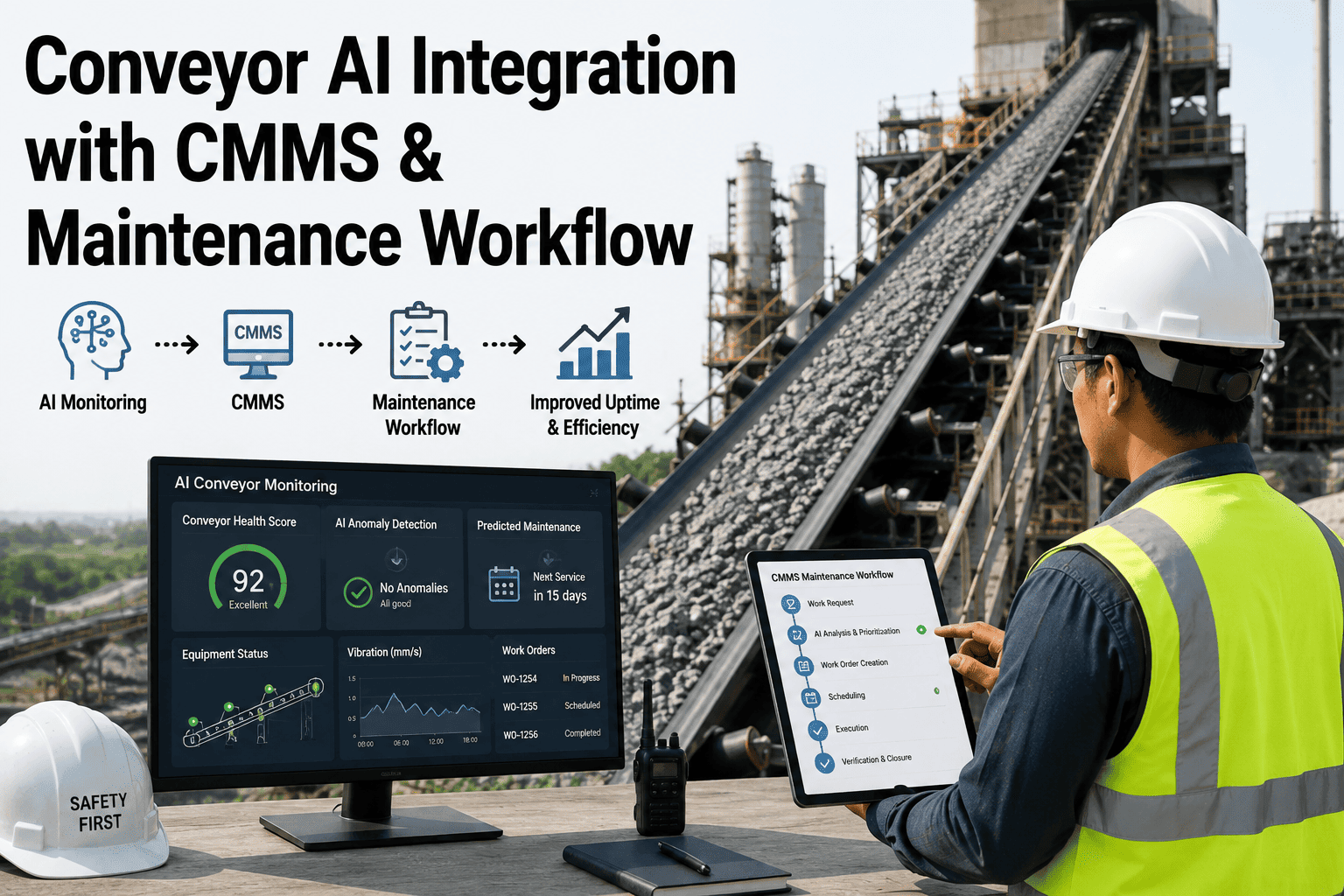
A properly integrated system replaces every manual handoff above with an automated step, so the only human decision points left are the ones that genuinely require judgment, like final repair verification. The stages below describe how a fault moves from a camera detection through to a closed, documented work order without a manual review step sitting in the middle of the pipeline.
Cut Detection-to-Repair Time From Hours to Minutes
iFactory's conveyor monitoring platform unifies sensor deployment, AI analytics, and work order management in one system, with an average detection-to-work-order time measured in seconds rather than the hours a manual process typically requires.
How Faults Get Ranked So Nothing Critical Waits Behind Routine Work
Priority classification only works if it is consistent, and consistency requires a defined ranking system rather than a supervisor's judgment call under time pressure. Most conveyor fault classification systems use a three-tier structure, separating faults that require immediate stoppage or dispatch from those that can be scheduled within a defined window and those that can be batched into routine preventive work. The comparison below shows how manual prioritization compares to a systematic, automated ranking applied consistently across every alert.
| Priority Tier | Example Fault | Manual Process | Automated Process |
|---|---|---|---|
| P1 – Critical | Splice failure risk, hot idler, belt mistracking beyond safe limit | Depends on whoever notices the alert first | Immediate mobile push, SCADA alarm, optional auto-deceleration |
| P2 – Urgent | Progressive belt wear, developing misalignment, elevated bearing temperature | Often queued behind whatever was logged first | Scheduled within a defined response window based on severity score |
| P3 – Routine | Minor spillage, early-stage surface wear, informational trend flags | Frequently lost in general maintenance backlog | Batched into next scheduled preventive maintenance round |
Fitting Into the CMMS a Plant Already Runs
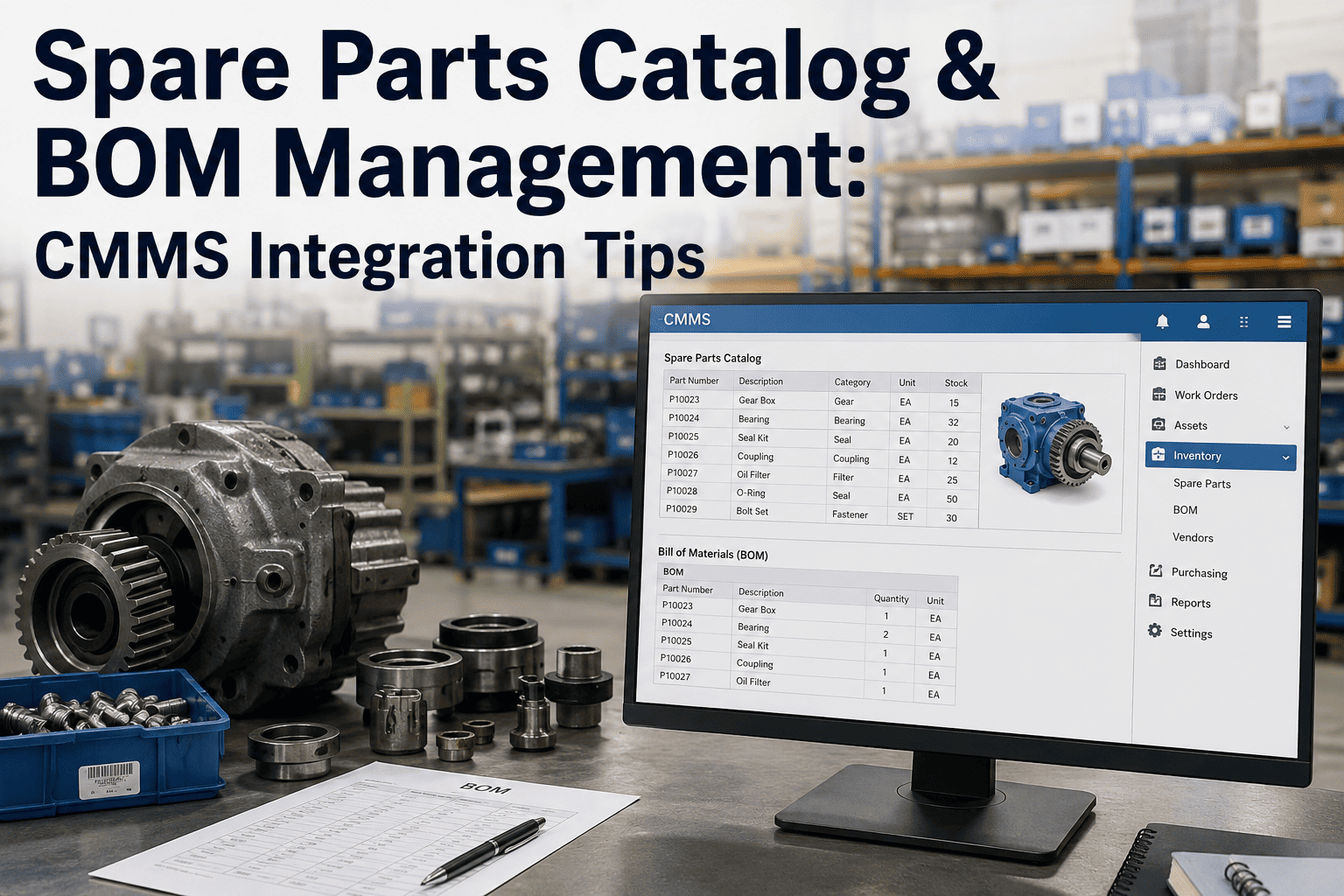
Integration does not require ripping out an existing CMMS or PLC infrastructure. A properly built conveyor AI platform connects to whichever work order system a plant already runs, whether that is SAP PM, Maximo, Fiix, MaintainX, or iFactory's own CMMS, through standard API connections. It also reads directly from belt weigher and SCADA systems already installed, pulling belt speed, material rate, and totalized weight without requiring new field instrumentation for that data. The result is a single conveyor dashboard that gives maintenance teams full traceability from a defect image through belt position and fault classification to the exact work order ID handling it, without introducing a second system technicians have to check separately from the one they already use daily.
What Feeds the Detection Layer Before a Work Order Ever Gets Created
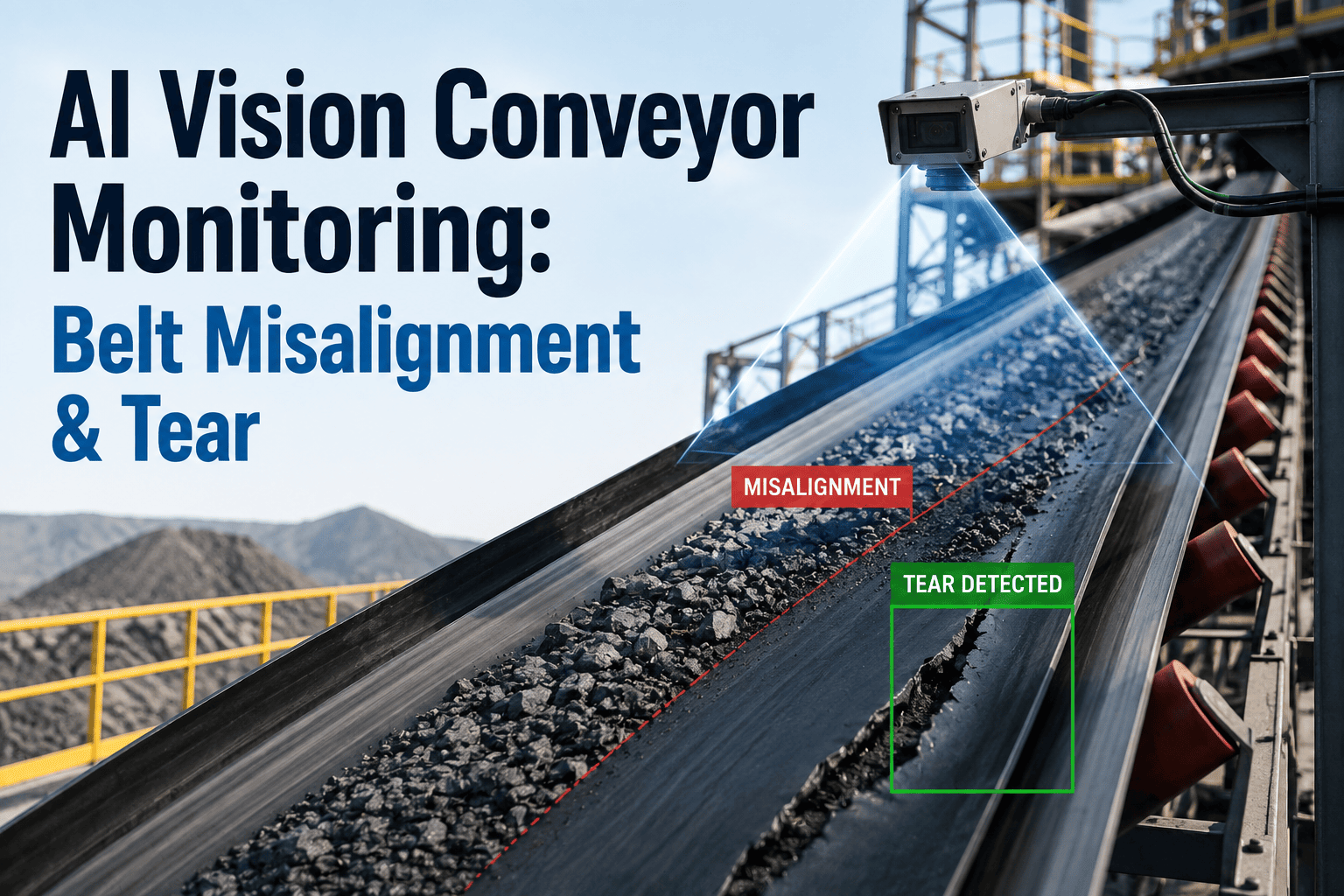
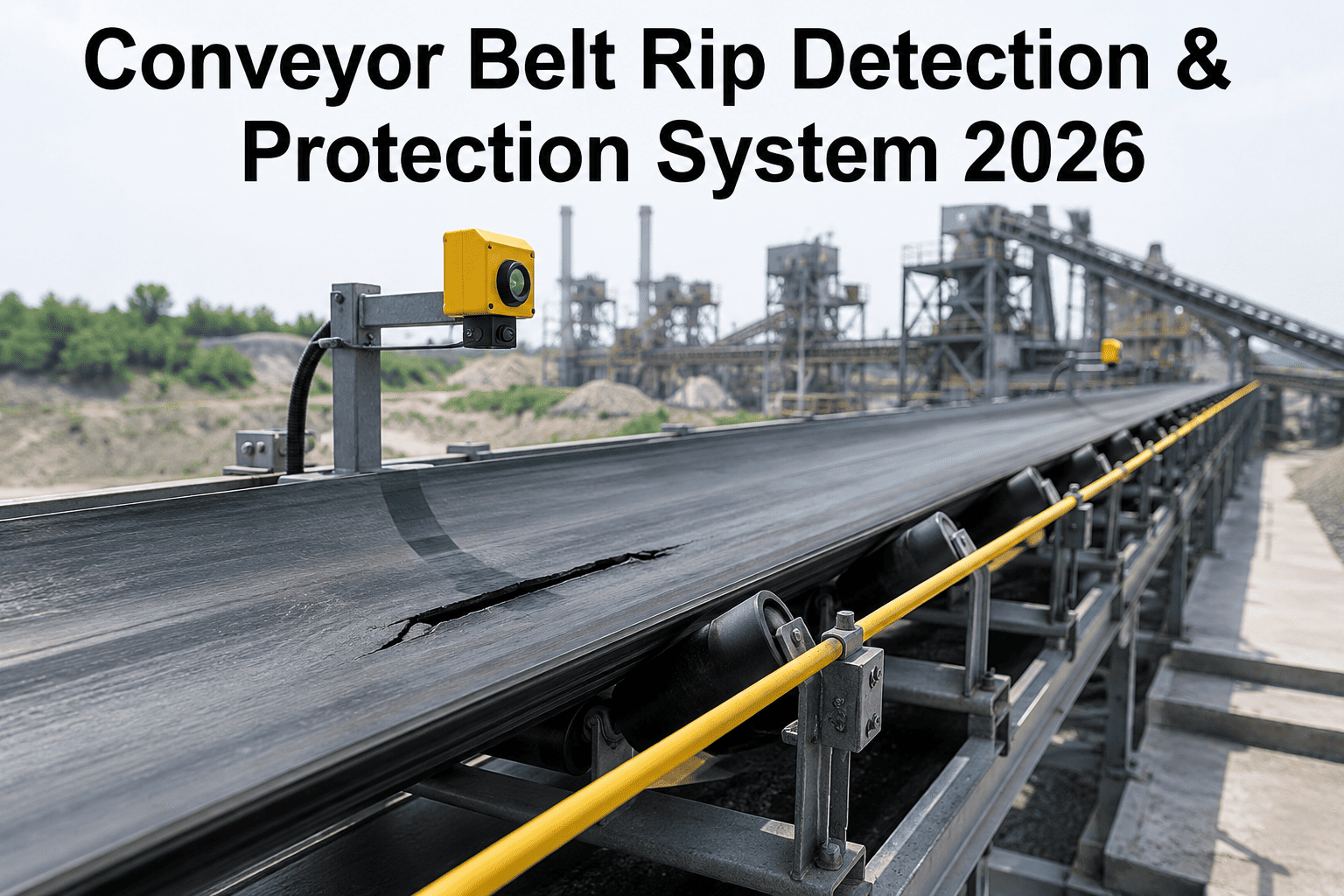
The quality of an automated work order is only as good as the detection feeding it, and conveyor monitoring typically combines several sensor types rather than relying on a single data source. AI vision cameras positioned at splice locations, head and tail drums, and along the belt length catch visible defects like tears, misalignment, and hot material. Thermal cameras spaced along the belt catch overheating idlers before they ignite material or seize outright. Wireless vibration sensors on critical idler frames catch bearing degradation that a camera alone would never see. Combining these streams gives the priority scoring stage enough independent evidence to assign a confidence-backed severity rather than reacting to a single sensor in isolation.
What a Fully Automated Response Actually Looks Like
A vibration sensor flags a developing bearing anomaly on a conveyor drive pulley in the early hours of a shift. Within a minute, the system has generated a prioritized work order, identified the likely failure mode from historical pattern matching, attached the relevant repair procedure and parts list, confirmed the replacement bearing is in stock, and assigned the job to the technician with the right skill set starting the next shift. That technician arrives already knowing what the problem is and what parts to bring, rather than starting the visit with a diagnostic walk-down. This is the practical difference automation makes, not eliminating the repair itself, but eliminating every avoidable delay that used to sit between detection and a technician actually being productive at the conveyor.
Common Questions on Conveyor AI and CMMS Integration
Give Every Conveyor Alert a Direct Path to a Completed Work Order
iFactory connects AI vision detection, sensor trending, and your existing CMMS into one automated pipeline, so a confirmed fault becomes a prioritized, parts-checked, technician-assigned work order without a single manual handoff in between.