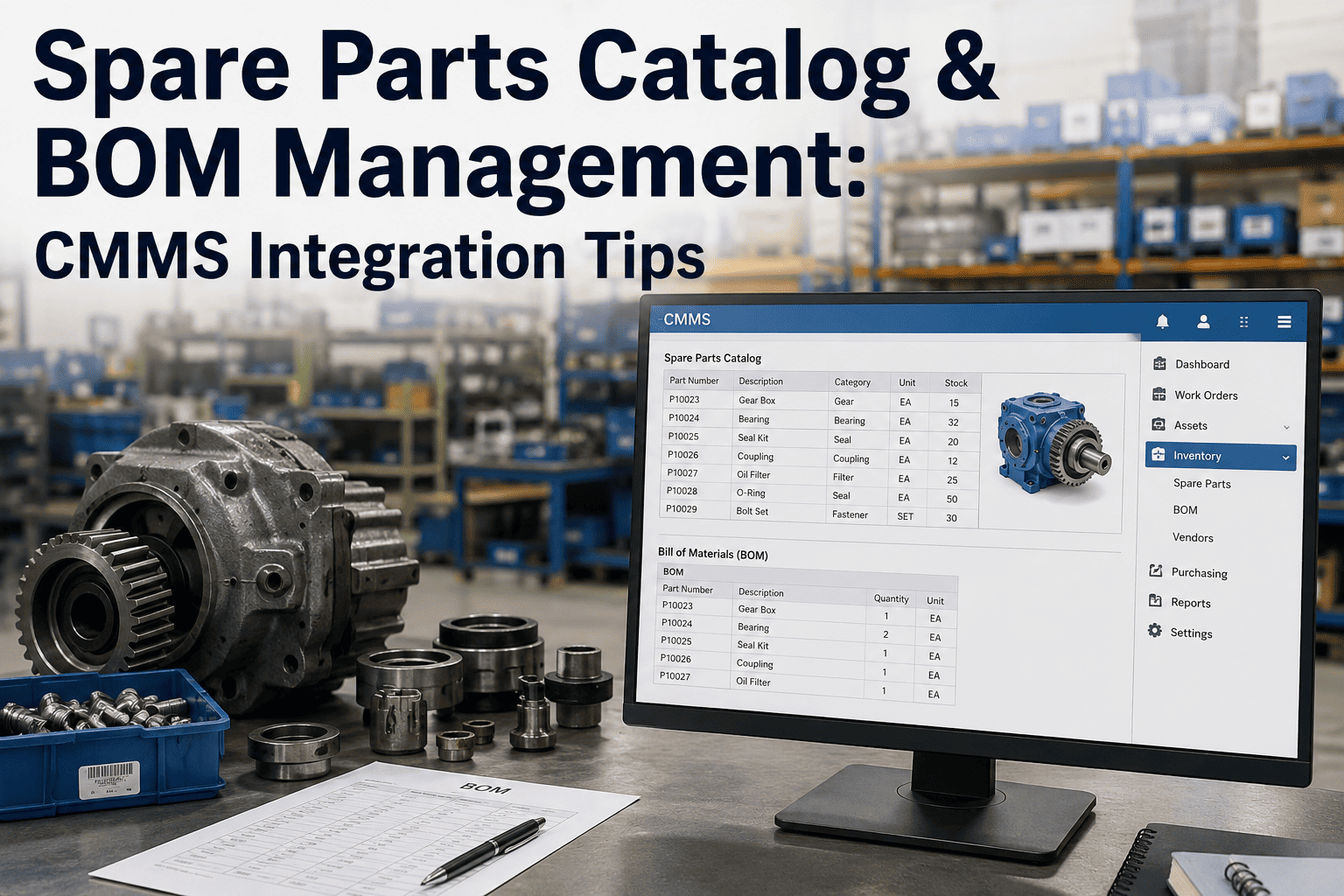
A bearing fails on a raw mill at two in the morning, and the night shift technician opens the CMMS to order the replacement, only to find three part numbers that could plausibly be the right one, none of them linked clearly to that specific mill, and no indication of which vendor actually stocks it. The part gets ordered wrong, the correct one arrives four days later, and the mill sits idle the whole time. The part was never the problem. The catalog was, and closing that exact gap is what a demo of iFactory is built to show.
Your CMMS Only Knows a Part Exists. It Should Also Know Exactly Which Equipment Needs It
A spare parts catalog without a properly linked bill of materials is just a list of numbers. A catalog with equipment-to-part linking built in tells a technician, in seconds, exactly which part fits which machine, how critical it is, and where to source it, turning a four-day delay into a same-shift fix.
Most Cement Plants Have a Parts List. Very Few Have a Parts System
Walk through the storeroom logic of most cement plants and the pattern repeats itself, a spreadsheet or a legacy CMMS module holding thousands of part numbers, descriptions, and quantities on hand, built up over years by different people with different naming conventions, and almost never structured around the actual equipment those parts belong to. The list exists. The relationship between that list and the plant's kilns, mills, and conveyors mostly lives in the memory of a few senior technicians who have been there long enough to know it by heart.
That informal knowledge works fine right up until the person who holds it retires, transfers, or simply isn't on shift when a failure happens at an inconvenient hour. Without a structured bill of materials linking every part directly to the specific equipment and even the specific sub-assembly it belongs to, every technician who wasn't there for the original installation is stuck guessing, cross-referencing old work orders, or calling someone at home to confirm a part number before an order can even go out.
The financial impact of this gap rarely shows up as a single dramatic number, which is exactly why it survives budget reviews year after year. It shows up as slightly longer mean time to repair across hundreds of small events, slightly higher emergency freight costs from rush orders on parts that should have been on the shelf, and slightly bloated inventory carrying costs from duplicate parts nobody realized were already stocked under a different description.
Five Fields That Turn a Part Number Into Something a Technician Can Actually Use
A bill of materials that only lists a part number and a quantity is barely more useful than no BOM at all, because it still leaves the technician to independently verify fit, criticality, and sourcing. A working BOM structure captures enough context that the part record itself answers the questions a technician would otherwise have to ask someone else.
Same Storeroom, Same Parts. A Completely Different Outcome Once the BOM Is Linked
The comparison below is not hypothetical, it reflects the practical difference plants report between a catalog with no structured equipment linkage and one where every part record is tied directly into the CMMS asset hierarchy.
| Scenario | Unlinked Catalog | BOM-Linked Catalog |
|---|---|---|
| Technician Identifies Correct Part | Cross-checks manuals or calls a senior colleague | Looks up the asset record, part appears instantly |
| Reordering After a Failure | Manually searches part descriptions, risk of wrong match | Reorder triggered directly from the linked BOM entry |
| New Technician Onboarding | Relies on tribal knowledge from experienced staff | Parts context is built into the system, not one person's memory |
| Inventory Planning | Stock levels set on rough historical averages | Stock levels informed by actual asset-specific usage patterns |
See What Your Storeroom Looks Like Once Every Part Is Linked to Its Equipment
iFactory connects your existing part records to your equipment hierarchy inside the CMMS, so identifying, ordering, and tracking spares stops depending on who happens to be on shift.
A Practical Path From a Messy Parts List to a Structured, CMMS-Integrated Catalog
Rebuilding a spare parts catalog from scratch feels overwhelming for most plants, largely because the existing part count runs into the thousands and the idea of manually reviewing every single record seems impossible to fit into an already full maintenance schedule. In practice, the plants that succeed do not rebuild everything at once, they work through a defined sequence that prioritizes the parts that matter most first.
The Data Quality Issues That Undermine an Otherwise Well-Built Catalog
Even plants that invest real effort into building a structured catalog often watch its accuracy erode over time, and the erosion almost always traces back to a small set of recurring data quality issues rather than a fundamental flaw in the original structure.
| Common Issue | Root Cause | Practical Fix |
|---|---|---|
| Duplicate Part Numbers | Different departments or shifts created separate entries for the same part | Enforce a single-entry-point policy for adding new part records |
| Orphaned Parts With No Equipment Link | Parts added during emergency orders without time to complete linkage | Schedule a periodic review specifically for unlinked catalog entries |
| Outdated Vendor Information | Supplier changes made informally and never updated in the catalog | Tie vendor record updates to the purchasing approval workflow |
| Inconsistent Naming Conventions | Catalog built up over years by different people with different habits | Adopt and enforce one standardized naming format going forward |
The Measurable Difference a Properly Integrated Catalog Makes
Common Questions From Maintenance and Storeroom Teams
Give Every Technician the Same Parts Knowledge Your Most Experienced Person Has
iFactory turns a disorganized parts list into a structured, equipment-linked catalog inside your CMMS, so the right part gets identified and ordered correctly every time, regardless of who is on shift.