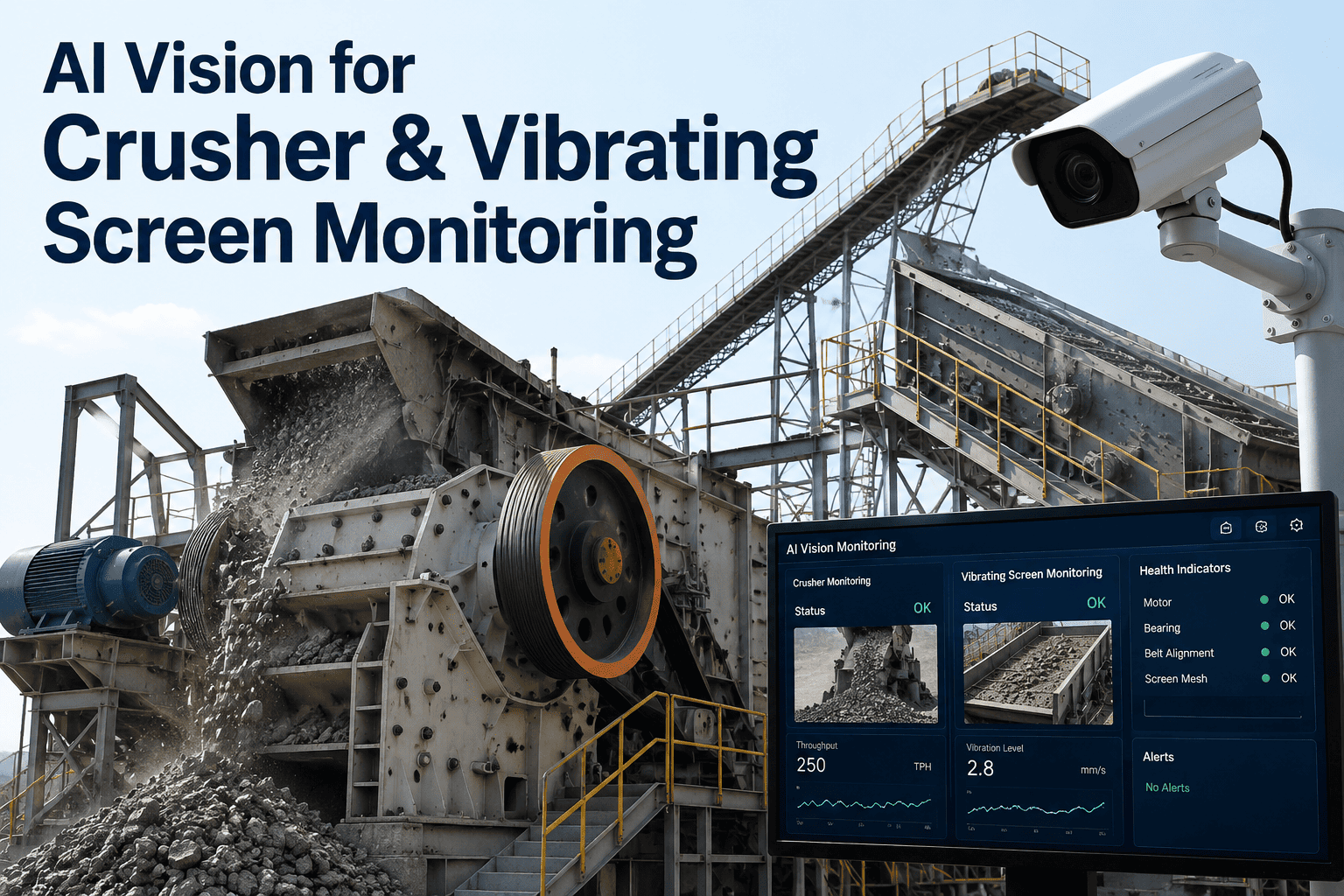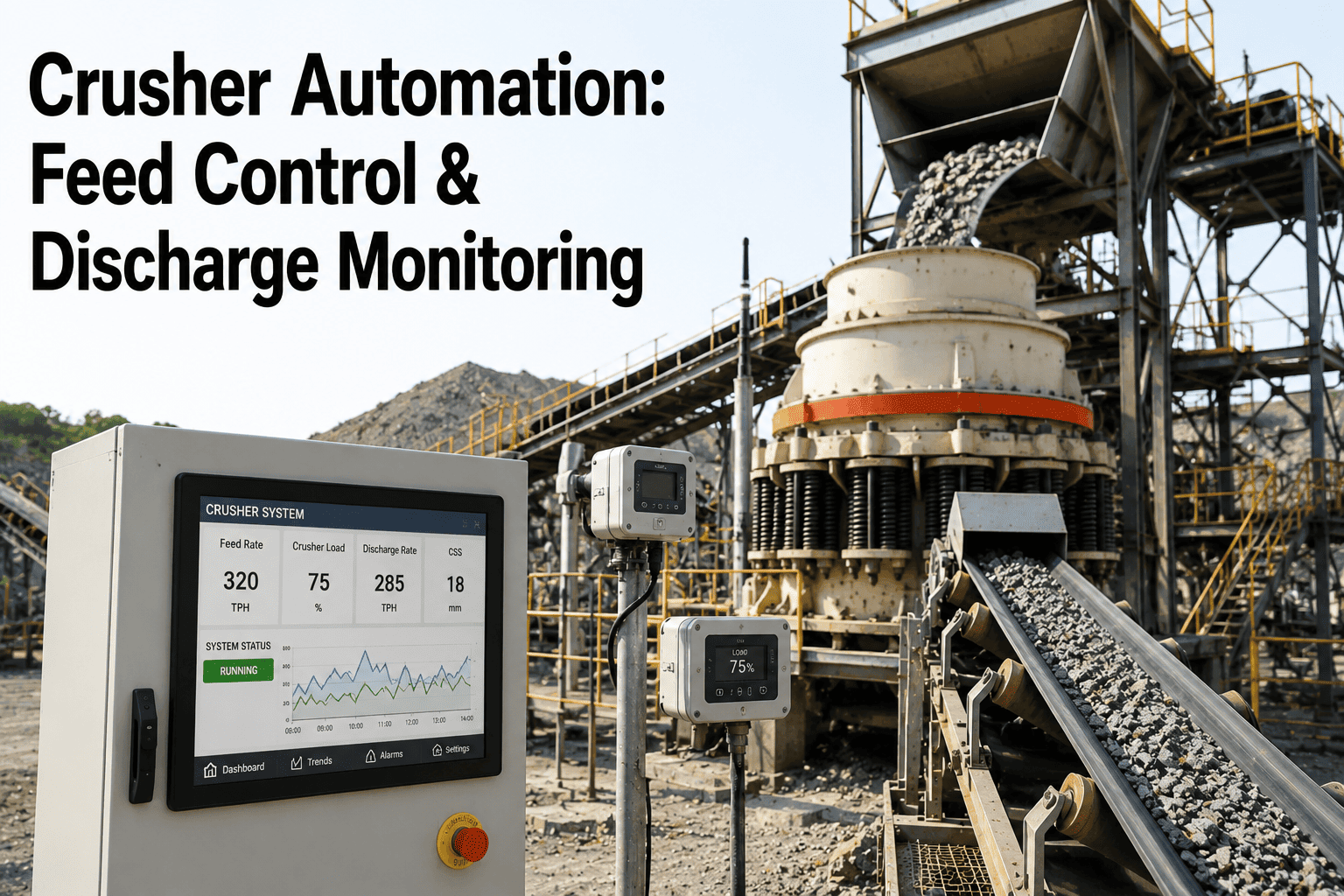
Walk past most crusher stations on a manual shift and you'll see the same pattern: an operator eyeballing the feed hopper, nudging a belt speed control up or down by feel, and adjusting again twenty minutes later when the amp gauge climbs higher than they'd like. It works, in the sense that clinker keeps moving — but it also means the crusher spends a good part of every shift either starved of material, wasting cavity capacity, or overfed and grinding through a tramp event nobody saw coming until the motor tripped. Feed control and discharge monitoring exist to close that gap between what a skilled operator does on their best day and what the crusher actually gets on an average one, and iFactory's crusher automation tools are built to make that consistency the default rather than the exception.
A Crusher Running at 65% Feels Safe. It's Actually Leaving Capacity on the Floor.
Manual feed control keeps operators comfortable, not the cavity full. Automated level sensing and variable-speed feeding push throughput toward what the crusher was actually designed to handle.
Choke-Fed vs. Starved-Fed: The Difference That Decides Everything Downstream
Every automated feed strategy exists to answer one question: is the crushing cavity full or not? A crusher operating choke-fed, with the inlet fully covered by material, crushes rock against rock as well as rock against liner, producing a finer, more consistent product while spreading wear evenly. A starved-fed crusher does the opposite — it crushes almost entirely against the liner surface, accelerating wear and producing a coarser, less predictable product. The two states look similar to an operator glancing at a hopper. They are not similar at all in outcome.
Inside the Control Loop: How Automated Feed Control Actually Works
The logic behind automated feed control is simpler than the sensors that support it. A level signal tells the system how full the cavity is, an amp draw signal tells it how hard the crusher is working, and a variable-speed feeder acts on both readings continuously — far faster and more consistently than a human operator glancing at a gauge every few minutes.
Cavity level sensor reads fill state
An ultrasonic or microwave level sensor mounted above the feed hopper continuously measures how full the crushing cavity is, feeding that reading into the control system in real time.
Motor amp draw confirms load state
As the cavity fills, horsepower demand on the crusher's prime mover rises correspondingly. Amp draw acts as a second, independent confirmation of how close the crusher is running to its peak efficient range.
Variable-speed feeder adjusts in real time
The feeder speed increases when the level drops below target and decreases as the cavity approaches full, keeping the crusher consistently choke-fed without operator intervention.
Closed-side setting compensates for liner wear
As liners wear down, the same amp draw signal starts corresponding to a wider gap. Automation platforms compensate by adjusting the closed-side setting to hold product size steady despite the wear.
Tramp and overload events trigger protection
Sudden spikes in amp draw or hydraulic pressure signal tramp iron or an oversized feed piece, and the system can back off the feeder or trip protection before the event becomes a mechanical failure.
Every One of These Signals Already Exists on Your Crusher. The Question Is Whether They're Connected.
Level readings, amp draw, and closed-side setting data usually live on separate gauges and separate logs. iFactory brings them into one control view so feed decisions happen in real time instead of on the next operator walk-round.
Choosing a Level Sensing Technology
Cavity level measurement sounds straightforward until the sensor is actually mounted above a hopper full of falling rock and dust. Each common technology handles that environment differently, and the wrong choice for a given crusher size and feed material is one of the more common reasons an automation retrofit underperforms its promise.
Ultrasonic Level Sensors
Widely used and relatively low cost, ultrasonic sensors measure the time for a sound pulse to reflect off the material surface. Confined hopper geometry and falling feed material can cause signal reflections that require careful sensor placement to avoid false readings.
Microwave / Radar Level Sensors
Less affected by dust than ultrasonic technology, microwave sensors handle the harsh, particle-laden environment above a crusher hopper more reliably, though placement still matters to avoid interference from falling material entering the detection area.
Amp-Draw Inference
Using motor horsepower as an indirect level signal avoids the placement problem entirely, but on its own it can't distinguish a full cavity from worn liners producing the same amp reading — which is why it's almost always paired with a physical level sensor rather than used alone.
Discharge Monitoring: Closing the Loop on Product Size
Feed control decides what goes into the crusher. Discharge monitoring confirms what actually comes out — and without it, a control system can be running a textbook-perfect choke-fed cycle while liner wear or a chamber blockage quietly pushes product size outside spec for hours before anyone downstream notices.
Continuous discharge belt weighing confirms throughput matches feed rate, flagging a growing gap that usually signals a partial blockage or chamber packing before it becomes a full stoppage.
Periodic or camera-based size sampling on the discharge stream tracks whether closed-side setting compensation for liner wear is actually holding product gradation within its target band over time.
Comparing discharge tonnage against fresh feed tonnage reveals how much material is recirculating through the chamber — a rising figure is one of the earliest signs a crusher has drifted from choke-fed toward starved-fed operation.
A Composite Scenario: What a Level Sensor Actually Changed
A Secondary Cone Crusher, Manually Fed for Fifteen Years
Consider a mid-size cement plant running a secondary cone crusher that had been manually fed since installation. The operating habit, built up over years, was to keep the belt feeder comfortably below capacity — the crusher's amp gauge rarely climbed past 65% of rated load, and nobody saw that as a problem, since the crusher never tripped and throughput met the shift target most days.
A retrofit added an ultrasonic cavity level sensor interlocked with a variable-speed belt feeder, alongside continuous amp draw monitoring. Within the first week of automated operation, the data told a different story than the shift logs had: the crusher had been running starved-fed for years, with recirculating load regularly exceeding 30% of throughput and liner wear concentrated unevenly on the zones taking direct impact rather than distributed across the crushing surface.
Once the automation platform began holding the cavity consistently full and adjusting closed-side setting for wear automatically, throughput rose without any change to the crusher's rated capacity — because the capacity had been there the entire time, just never fully used. Liner replacement intervals extended, product size distribution tightened, and the operator's role shifted from constantly nudging a belt speed dial to monitoring exception alerts on tramp events and setting drift.
Metrics That Show a Feed Automation Program Is Working
Whether the crusher is trending toward consistent choke-fed operation rather than settling into a comfortable, under-capacity manual setpoint.
Whether the share of material cycling back through the chamber is falling as feed control keeps the cavity properly loaded rather than starved.
Whether liner replacement intervals are extending as even, choke-fed wear replaces the uneven, impact-heavy wear pattern typical of starved feeding.
Whether discharge gradation is holding tighter to target as closed-side setting compensation keeps pace with liner wear automatically.
Frequently Asked Questions
What's the difference between choke feeding and starved feeding, in practical terms?
Choke feeding means the crushing cavity stays fully covered with material, so rock crushes against rock as well as against the liner, producing finer and more consistent product with even wear. Starved feeding means the cavity runs partially empty, forcing material to impact the liner more directly, which accelerates uneven wear and produces coarser, less predictable output. Most manual operations default toward starved feeding simply because it feels safer to the operator.
Why does amp draw alone not fully solve feed control?
Horsepower demand rises as the cavity fills, which makes amp draw a useful signal, but liner wear over time changes what a given amp reading actually means — a worn crusher can show the same amperage as a full cavity on fresh liners. Pairing amp draw with a physical level sensor gives the control system two independent confirmations instead of one signal that can drift with wear.
Can feed automation compensate for liner wear automatically?
Yes — as liners wear and the gap between crushing surfaces widens, automation platforms can adjust the closed-side setting to hold target product size steady, rather than requiring an operator to notice the drift and manually reset the gap. This is one of the more consistently cited benefits of moving from manual to automated feed control. Visit support to see how closed-side setting compensation is configured for different crusher types.
What causes a level sensor to give unreliable readings above a crusher hopper?
Confined hopper geometry can cause a sensor's signal to reflect off the walls instead of the material surface, and falling feed material passing through the detection zone can interfere with the reading, particularly at certain feeder speeds. Correct sensor placement and choosing a technology suited to the hopper's dust and geometry conditions resolves most of these issues.
How does iFactory support crusher feed and discharge automation?
iFactory brings cavity level readings, motor amp draw, closed-side setting, and discharge tonnage together into a single view tied to the crusher's asset record, so feed control decisions and wear trends are visible in real time rather than scattered across separate gauges and shift logs. Book a demo to see how it connects to your existing feeder and level instrumentation.
Your Crusher's Rated Capacity Isn't the Problem. Your Feed Rate Is.
Most crushers running below their design throughput aren't underpowered — they're underfed, running comfortably under manual control instead of consistently choke-fed. iFactory closes that gap with real-time level, amp draw, and discharge monitoring in one platform.