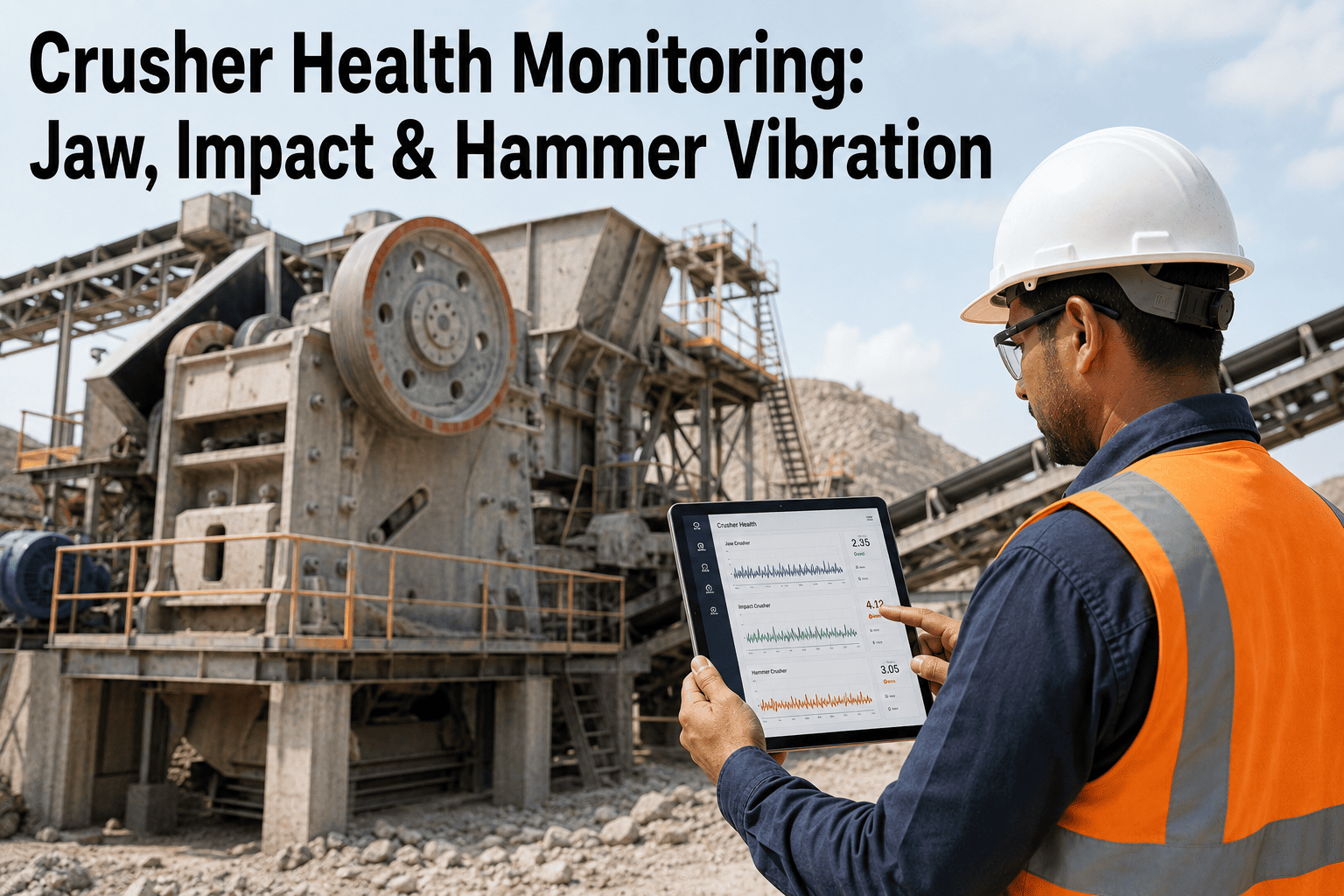
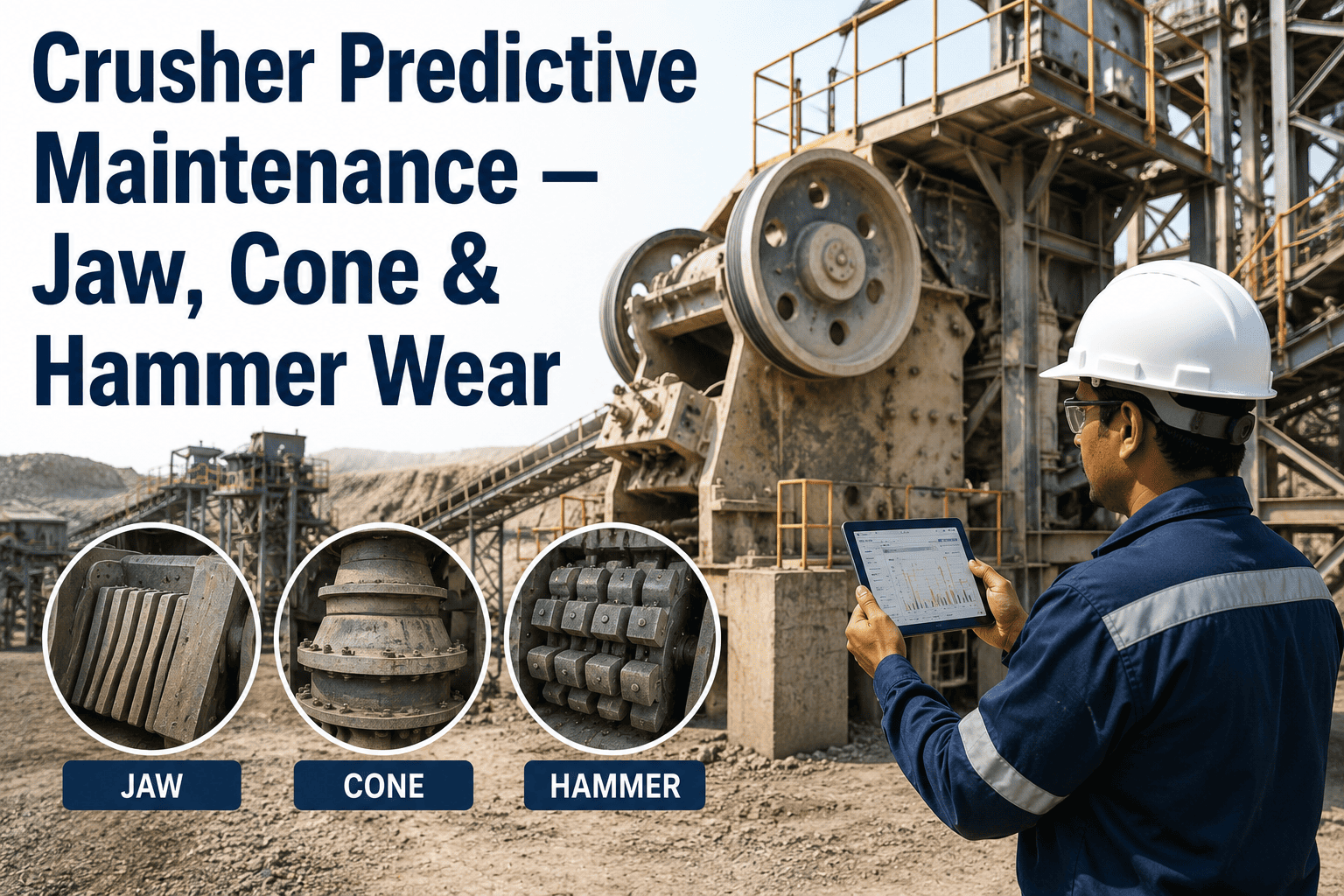
A jaw crusher running with a worn toggle plate doesn't announce the problem with a dramatic failure — it shows up first as a subtle change in vibration signature that a technician walking past with a handheld meter once a week has almost no chance of catching before the plate finally lets go and the crusher comes down mid-shift. Impact crushers lose blow bars to abrasive wear on a schedule that varies with feed hardness, and hammer mills chew through hammers fast enough that manual wear checks are often outdated within days of being recorded. Continuous vibration monitoring tuned to each crusher type's specific failure signatures catches toggle plate wear, blow bar imbalance, and hammer degradation weeks before a scheduled inspection would, giving maintenance teams a genuine planning window instead of a reactive scramble, and iFactory's crusher health monitoring platform tracks jaw, impact, and hammer crushers against the vibration patterns that actually predict their failure modes.
Cement Operations · Equipment Health
Three Crusher Types, Three Failure Signatures — One Monitoring Approach That Actually Fits Each One
AI-driven vibration analysis calibrated to jaw, impact, and hammer crusher failure modes, catching toggle plate wear, blow bar imbalance, and hammer degradation before they turn into an unplanned crusher stoppage.
Jaw Crusher
Toggle Plate Wear
Impact Crusher
Blow Bar Imbalance
Hammer Mill
Hammer Degradation
Why Crusher Downtime Hits Harder Than Most Equipment
The Crusher Is the Bottleneck Every Downstream Process Waits On
Primary crushing sits at the front of the process line, which means an unplanned crusher stoppage doesn't just idle one machine — it starves every piece of equipment downstream of it, from the raw mill to the kiln feed system. Unlike a redundant pump or fan that can often be bypassed temporarily, most cement plants run a single primary crusher line, so a wear part failure that could have been caught during a scheduled inspection instead becomes a full production stoppage measured in hours rather than minutes, with the added risk that a plate or bar failing mid-cycle can send debris into the crushing chamber and cause secondary damage well beyond the original wear part. The financial impact compounds quickly once the stoppage extends past the crusher itself, since a starved raw mill and an underfed kiln feed system both represent lost throughput on assets that were otherwise running at full capacity.
Crusher Type Breakdown
Each Crusher Type Wears Differently, and Vibration Monitoring Has to Know the Difference
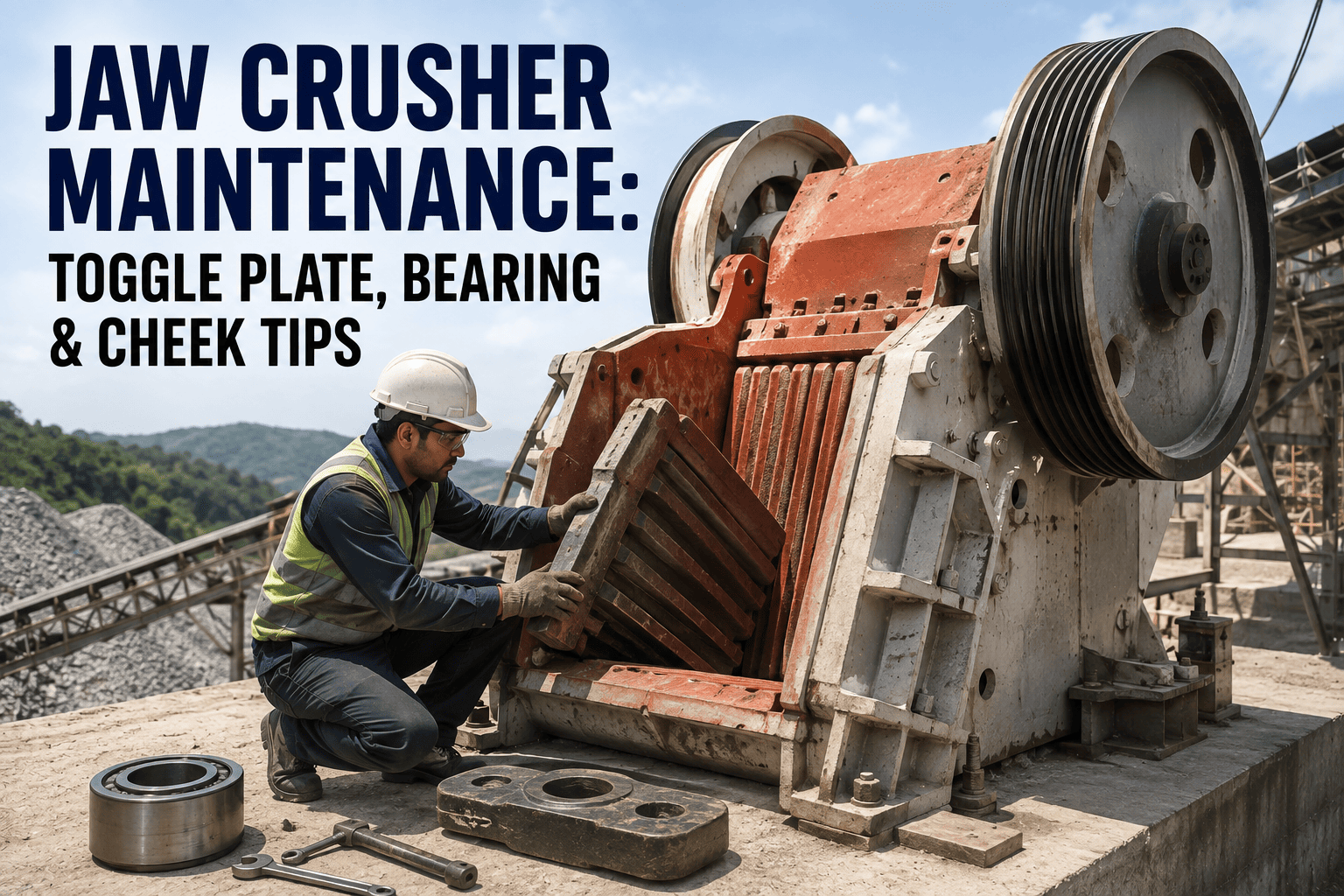
Jaw Crusher
Primary Wear Part: Toggle Plate
The toggle plate is a designed weak link that protects the crusher from tramp metal by breaking under excessive load, but it also wears gradually under normal operation, and that gradual wear changes the crusher's swing dynamics in a way that shows up as a shifting vibration pattern well before the plate is at risk of unexpected failure.
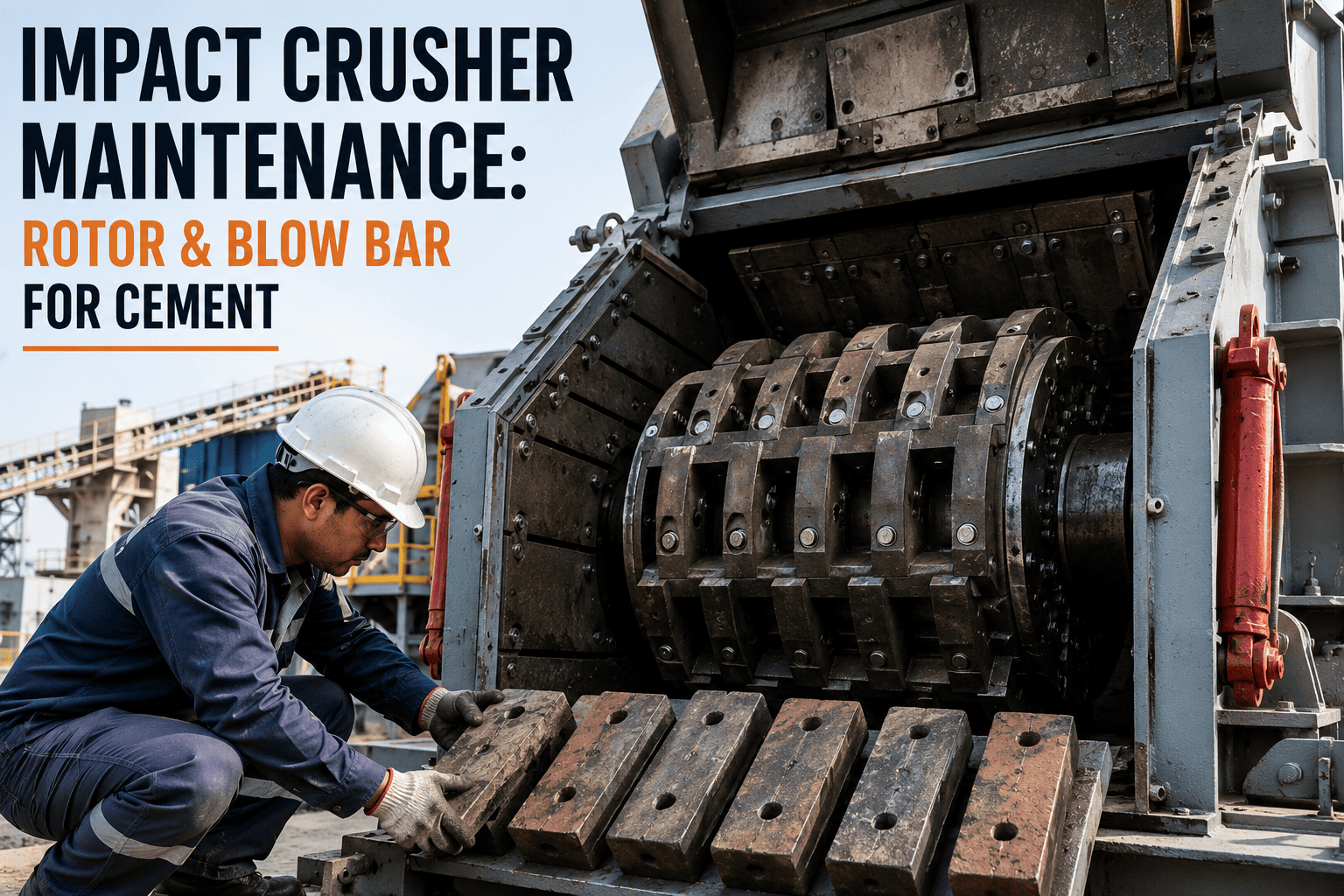
Impact Crusher
Primary Wear Part: Blow Bar
Blow bars wear unevenly across their length depending on feed material and rotor speed, and uneven wear creates a rotor imbalance that produces a distinct once-per-revolution vibration spike, one of the clearest early indicators available on any crusher type when the monitoring system is tuned to catch it.
Hammer Mill
Primary Wear Part: Hammers
Hammers wear fastest of the three wear part types, particularly on abrasive raw materials, and because a hammer mill carries multiple hammers on a rotor, uneven wear across them produces a more complex vibration signature that combines imbalance with harmonic frequencies tied to hammer count and rotor speed.
Vibration Signature Reference
What Each Failure Mode Actually Looks Like on a Vibration Spectrum
| Failure Mode | Vibration Signature | Typically Affects |
| Toggle plate wear |
Gradual amplitude increase at swing frequency |
Jaw crushers |
| Blow bar imbalance |
Sharp once-per-revolution peak |
Impact crushers |
| Hammer wear/loss |
Harmonic peaks at hammer-pass frequency |
Hammer mills |
| Bearing defect |
High-frequency peaks at bearing defect frequencies |
All crusher types |
| Liner looseness |
Broadband noise increase across the spectrum |
Jaw and impact crushers |
| Structural misalignment |
Elevated 2x running-speed harmonic |
All crusher types |
Calibrated to Each Crusher, Not Generic Thresholds
Stop Applying the Same Vibration Alarm to Three Different Machines
iFactory tunes vibration monitoring to the specific failure signatures of jaw, impact, and hammer crushers, catching wear part degradation before it becomes an unplanned stoppage.
Wear Part Monitoring in Detail
What Continuous Monitoring Catches That a Weekly Walkdown Misses
Toggle Plate — Progressive Thinning
A toggle plate wears down gradually over weeks or months, and that thinning subtly changes the crusher's swing geometry. Continuous monitoring tracks this drift day over day, giving maintenance planners a clear replacement window instead of discovering the plate is near its limit during a scheduled inspection that happens to land at the wrong time.
Blow Bar — Uneven Rotor Wear
Because blow bars wear unevenly depending on where feed material impacts the rotor, imbalance can develop between scheduled inspections even on a rotor that looked acceptable at the last visual check. A vibration trend catches the imbalance building in real time, well before it reaches a level that risks bearing damage.
Hammer — Rapid, Uneven Loss
Hammers can wear at meaningfully different rates depending on their position on the rotor and the abrasiveness of the current feed blend, and a monitoring system that tracks harmonic patterns tied to hammer-pass frequency can flag when one or more hammers are wearing faster than the rest, prompting a targeted inspection instead of a full rotor teardown.
Feed-Related Vibration Shifts
Changes in feed material hardness or moisture content can shift baseline vibration levels independent of wear part condition, which is why an effective monitoring approach separates feed-driven variation from genuine wear part degradation rather than triggering false alarms every time the feed blend changes.
Common Monitoring Mistakes
Why Some Crusher Vibration Programs Never Catch a Real Failure
Installing vibration sensors on a crusher is only the starting point — plenty of monitoring programs run for months collecting data without ever catching a wear part failure early, and the reasons almost always trace back to a handful of avoidable setup mistakes rather than a limitation of the technology itself.
One Generic Threshold for Every Crusher
Applying the same overall-vibration alarm level to a jaw crusher, an impact crusher, and a hammer mill ignores that each machine has a completely different normal operating baseline and a different failure signature to watch for.
Sensors Placed for Convenience, Not Coverage
Mounting a sensor wherever access is easiest rather than where the relevant failure mode actually shows up in the vibration path often means the sensor is technically running but not actually capturing the signal that matters.
No Baseline Across Feed Conditions
Setting thresholds from a single day of data misses the normal variation that comes from different feed hardness and moisture, leading to either false alarms during hard feed or missed detection during soft feed.
Alerts With No Owner
A vibration alert that lands in an inbox nobody checks regularly provides no more protection than not monitoring at all — the alert has to route directly into a maintenance workflow with a clear owner and response timeline.
Sensor Placement
Where Sensors Actually Need to Sit to Catch Each Failure Mode
Sensor placement matters as much as sensor quality, because a vibration signal that has to travel through several mechanical joints and mounting surfaces before reaching the sensor loses resolution along the way. Getting placement right the first time avoids a costly re-mounting exercise months into a program once a missed failure reveals the original location wasn't capturing the signal that mattered.
01
Bearing Housings
The primary mounting point for any crusher, since bearing housings sit closest to the rotating assembly and pick up imbalance, misalignment, and bearing defect signatures with the least signal loss.
02
Toggle Plate Mounting Frame
On jaw crushers specifically, a sensor near the toggle plate's mounting frame captures the swing-frequency changes tied to plate wear more directly than a bearing-only sensor location would.
03
Rotor Shaft Ends
For impact crushers and hammer mills, sensors positioned near both rotor shaft ends help distinguish a localized imbalance from one that's evenly distributed across the rotor, which matters for diagnosing which specific bar or hammer is driving the signature.
Manual Inspection vs. Continuous Monitoring
What Changes When Crusher Health Moves From a Checklist to a Live Feed
| Factor | Manual Walkdown Inspection | Continuous Vibration Monitoring |
| Detection frequency |
Weekly or per-shift spot check |
Continuous, updated in real time |
| Sensitivity to gradual wear |
Hard to spot trend between visits |
Tracks trend day over day |
| Distinguishes wear types |
Relies on technician experience |
Signature matched to specific failure mode |
| Response to sudden imbalance |
Can be missed entirely between checks |
Flagged within the operating cycle it appears in |
| Maintenance planning lead time |
Often reactive, discovered at the limit |
Weeks of advance notice on replacement window |
Before and After
What Changes When Vibration Monitoring Catches a Wear Pattern Early
Before
An impact crusher's blow bars wear unevenly over several weeks between scheduled inspections. The resulting rotor imbalance goes undetected until vibration levels are high enough to damage the main bearings, resulting in an unplanned multi-day stoppage to replace both the blow bars and the damaged bearing assembly, well beyond the cost of a routine bar change.
After
The same imbalance pattern is flagged within days of onset by continuous vibration monitoring tuned to blow bar imbalance signatures. Maintenance schedules a blow bar replacement during the next planned stop, the bearings never see damaging vibration levels, and the crusher returns to service on the original production schedule.
Getting Started
What to Confirm Before Deploying Crusher Vibration Monitoring
Identify Crusher Type and Wear Parts
Confirm which crusher types are in the fleet and which wear part failure modes matter most for each, since jaw, impact, and hammer crushers need different vibration signatures tracked.
Establish a Baseline
Capture normal operating vibration across a range of feed conditions before setting alarm thresholds, so feed-driven variation doesn't get mistaken for wear part degradation.
Set Signature-Specific Thresholds
Configure alerts around the specific frequency patterns tied to toggle plate wear, blow bar imbalance, or hammer degradation rather than a single generic overall-vibration alarm.
Connect Alerts to the Maintenance Workflow
Route wear part alerts directly into work order generation, so an early warning turns into a scheduled replacement instead of sitting in a dashboard nobody checks.
Common Questions
Frequently Asked Questions
Can one vibration monitoring setup cover jaw, impact, and hammer crushers on the same plant?
Yes — the sensor hardware itself is largely the same across crusher types, but the analysis has to be configured differently for each, since a toggle plate wear signature on a jaw crusher looks nothing like a blow bar imbalance pattern on an impact crusher. A monitoring platform built for cement crushing applies the right signature model to each machine automatically rather than forcing a one-size-fits-all threshold across a mixed crusher fleet.
Talk to support about configuring monitoring across a mixed crusher fleet.
How early can vibration monitoring actually catch toggle plate wear compared to a visual inspection?
Continuous monitoring typically identifies a meaningful trend in swing-frequency vibration weeks before wear would be obvious on a visual check, because the vibration signature responds to dimensional changes in the plate long before those changes are visible to the eye or measurable with a simple gauge during a walkdown inspection.
Does a change in feed material trigger false vibration alarms?
It can, if the monitoring system isn't built to separate feed-driven variation from genuine wear part degradation, which is why establishing a baseline across a representative range of feed conditions matters before setting alarm thresholds. A properly tuned system tracks the specific frequency signatures tied to each failure mode rather than reacting to any overall vibration increase, which keeps feed changes from generating noise that erodes trust in the alerts.
What happens if a wear part failure is missed and the crusher stops unexpectedly?
An unplanned crusher stoppage typically halts the entire crushing circuit and starves every downstream process of feed material, often for longer than a planned wear part replacement would take, since unplanned failures frequently cause secondary damage to bearings, liners, or structural components beyond the original wear part.
Book a demo to see how early detection prevents that secondary damage.
Is continuous monitoring worth it for a plant with only one primary crusher?
A single primary crusher is exactly the case where continuous monitoring delivers the most value, because there's no redundant unit to fall back on if a wear part fails unexpectedly. Every hour of unplanned crusher downtime on a single-line plant translates directly into lost production across the entire process, which is a stronger case for early detection than a plant with backup crushing capacity would have.
Know the Wear Part, Know the Warning Sign
Monitor Jaw, Impact, and Hammer Crushers Against the Signatures That Actually Predict Failure
iFactory's crusher health monitoring catches toggle plate wear, blow bar imbalance, and hammer degradation weeks before they become an unplanned stoppage.