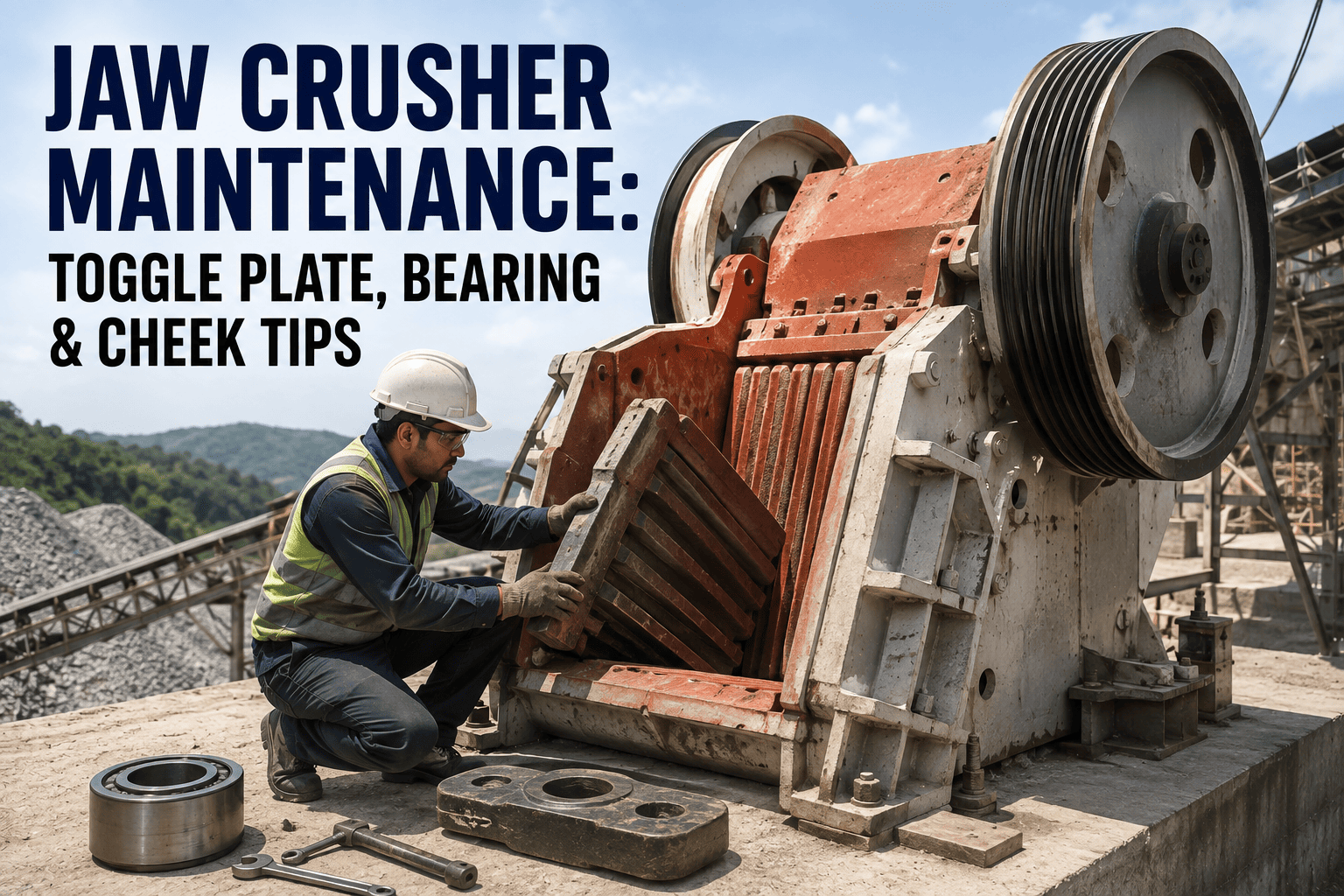
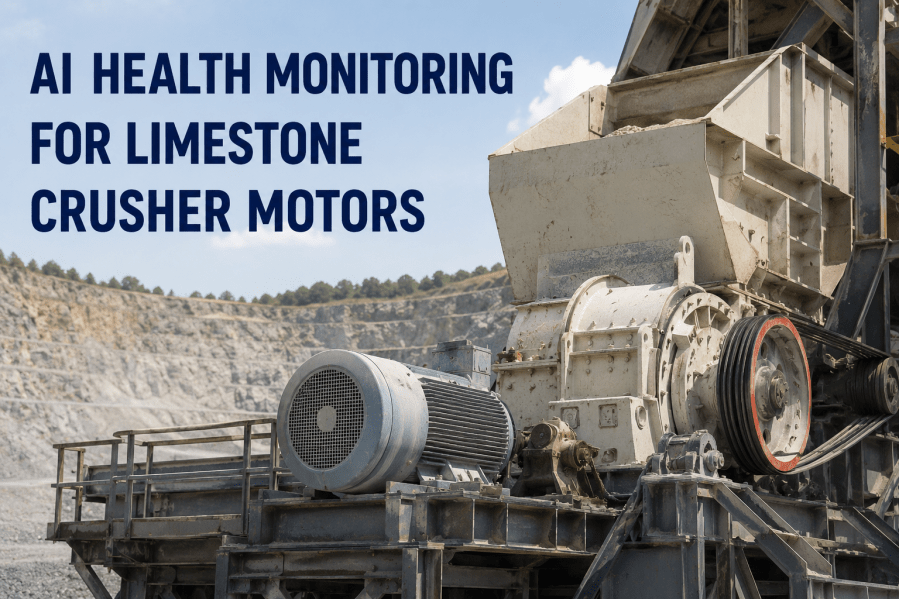
A jaw crusher that suddenly stops mid-shift with a snapped toggle plate looks like a catastrophic failure, but it is usually the crusher doing exactly what it was designed to do — sacrificing a low-cost wear part to protect the pitman, eccentric shaft, and frame from an overload event. The real problem shows up earlier and more quietly: a bearing running a few degrees hotter than normal, a cheek plate worn thin enough to let material contact the frame, a toggle seat that has started to walk out of alignment. Plants that catch those signals early turn a jaw crusher outage into a planned five-minute part swap instead of an emergency shutdown with a queue of haul trucks backed up at the primary crusher. This guide walks through what actually wears on a jaw crusher, how to read the warning signs before failure, and you can also book a demo to see how continuous monitoring applies to your own crushing circuit.
The Three Wear Points That Decide Whether Your Jaw Crusher Runs or Stops
Toggle plates, pitman bearings, and cheek plates account for the overwhelming majority of jaw crusher downtime — and all three give measurable warning before they fail.
Of jaw crusher downtime traced to toggle, bearing, or cheek plate issues
10-15°F
Typical bearing temperature rise that precedes a failure event
Minutes
Time to swap a toggle plate versus hours for an emergency bearing repair
Why the Toggle Plate Is Supposed to Fail
Unlike almost every other wear part on a jaw crusher, the toggle plate is engineered to be the weakest link on purpose. If an uncrushable object — a piece of tramp metal, a chunk of grinding media — enters the crushing chamber, the toggle plate is designed to break before the overload transmits into the pitman, the eccentric shaft, or the frame itself, all of which are dramatically more expensive and time-consuming to repair. That design intent is exactly why toggle plate failures get dismissed as routine and go untracked, when in reality the frequency of toggle failures is itself a diagnostic signal. A toggle plate that keeps breaking under normal operating loads, rather than only during genuine tramp events, usually points to a misaligned toggle seat, an undersized plate for the application, or a chamber that is regularly seeing material it was not designed to crush.
Toggle Plate
Positioned between the pitman and the adjustment mechanism, the toggle plate transmits crushing force while acting as a mechanical fuse. Frequent breakage under normal load — rather than during a tramp event — signals a seating or sizing problem worth investigating rather than simply replacing the part again.
Pitman and Eccentric Shaft Bearings
These bearings carry the full crushing load on every cycle, and their condition is the single best early-warning indicator on the whole machine. Rising temperature and vibration trends typically appear days to weeks before a bearing failure becomes audible or causes a shutdown.
Cheek Plates
Mounted to the sides of the crushing chamber, cheek plates protect the frame from direct material contact and wear unevenly depending on feed distribution. Worn cheek plates let material bridge against the frame, accelerating frame wear that is far more expensive to address than a plate replacement.
Jaw Dies (Fixed and Movable)
The jaw dies do the actual crushing work and wear according to a predictable pattern shaped by chamber geometry. Uneven die wear changes product size distribution and increases the load transmitted through the toggle plate and bearings, tying die condition directly back to the other three wear points.
Where Unplanned Downtime Actually Comes From
Not every wear point contributes equally to downtime. Understanding which components drive the most lost crushing time helps focus inspection and monitoring effort where it matters most.
Pitman & Eccentric Bearings
34%
Toggle Plate Failures
25%
Cheek Plate Wear-Through
16%
Jaw Die Wear & Adjustment
13%
Other Structural & Feed Issues
12%
Reading Bearing Condition Before It Becomes a Shutdown
Bearing temperature and vibration follow a fairly consistent progression as wear develops, which makes them one of the most reliable predictive signals available on a jaw crusher.
Condition Signal
Normal Range
Watch Zone
Critical — Act Now
Bearing Temperature
Stable at baseline
5-10°F above baseline
10°F+ above baseline or rapid rise
Vibration Amplitude
Consistent with commissioning baseline
Gradual upward trend
Sharp increase or new frequency component
Lubricant Condition
Clean, correct viscosity
Discoloration or minor particulate
Metal particulate or burnt odor present
Audible Noise
Consistent operating tone
Intermittent knocking or whine
Continuous grinding or knocking sound
Catch the Bearing Trend Before It Reaches the Critical Zone
iFactory tracks bearing temperature, vibration, and lubrication trends continuously against your crusher's own baseline, flagging the watch zone early enough to plan a repair instead of reacting to a shutdown.
Cheek plates wear in a fairly predictable sequence, and knowing which stage a plate is in determines whether rotation, adjustment, or full replacement is the right next step.
Stage 1
Even Surface Wear
Uniform thinning across the plate surface. No action needed beyond routine tracking against the wear baseline.
Stage 2
Localized Thin Spots
Wear concentrates at the feed entry zone. Rotating or repositioning the plate can extend service life if caught here.
Stage 3
Near Frame Contact
Plate thickness approaches the minimum safe tolerance. Replacement should be scheduled for the next planned window.
Stage 4
Frame Exposure Risk
Material is contacting or close to contacting the frame directly. Continued operation risks frame damage that costs far more than the plate itself.
Reactive vs. Predictive Jaw Crusher Maintenance
Reactive Approach
Predictive Approach
Toggle plate frequency tracked informally, if at all
Break frequency logged and flagged when it exceeds baseline
Bearing condition checked on a fixed inspection interval
Temperature and vibration trended continuously between inspections
Cheek plates replaced when visibly worn through
Wear stage tracked so replacement is scheduled before frame risk
Root cause of repeat toggle failures rarely investigated
Repeat pattern flags alignment or feed issues for correction
Bearing failure discovered as an unplanned shutdown
Bearing trend flagged weeks ahead, repair planned in advance
A Five-Point Inspection Routine Worth Standardizing
Most of this data already exists somewhere in a plant's maintenance records — the value comes from checking it consistently and trending it over time rather than treating each inspection as a standalone event.
1
Log Every Toggle Plate Break
Record the date, shift, and suspected cause of every toggle failure rather than treating each one as an isolated event — the pattern is the diagnostic signal.
2
Check Bearing Temperature at Consistent Points
Measure at the same location and load condition each time so temperature readings are actually comparable across inspections.
3
Measure Cheek Plate Thickness, Not Just Appearance
A visual glance can miss localized thin spots — a physical thickness measurement at multiple points gives a far more reliable wear reading.
4
Verify Toggle Seat Alignment
A seat that has walked out of alignment increases stress concentration on the toggle plate and is a common root cause of repeat failures.
5
Cross-Reference Product Size Distribution
Coarsening product size without a deliberate adjustment often points back to jaw die wear that is also loading the toggle and bearings harder than intended.
What Early Detection Looks Like in Practice
Before
A Bearing Failure That Stopped the Circuit
A cement plant's primary jaw crusher was on a monthly bearing inspection schedule. Between inspections, a lubrication issue caused bearing temperature to climb steadily, but with no continuous tracking in place, the trend went unnoticed until the bearing seized mid-shift. The crushing circuit was down for over a full shift while a replacement bearing was sourced and installed.
After
The Same Trend Caught Within Days
With continuous temperature and vibration monitoring in place, the same lubrication-driven temperature rise was flagged as an early trend well before reaching the critical zone. Maintenance corrected the lubrication issue during a routine shift, and the bearing never approached failure — avoiding both the downtime and the cost of an emergency replacement.
Getting Started: What to Prioritize First
A
Establish a Bearing Baseline
Record current temperature and vibration readings under normal operating conditions as the reference point for future trend comparison.
B
Start a Toggle Failure Log
Even a simple spreadsheet tracking every toggle break turns an informal pattern into a diagnostic tool within a few months.
C
Measure Current Cheek Plate Thickness
A one-time thickness measurement establishes where each plate currently sits on the wear progression before any monitoring program begins.
D
Move From Periodic to Continuous Tracking
Shifting bearing checks from a fixed calendar interval to continuous monitoring is the single change that catches the most downtime before it happens.
Frequently Asked Questions
How often should toggle plates actually break under normal operation?
Toggle plates are designed to fail during genuine overload events, such as tramp metal entering the crushing chamber, so occasional breaks are expected and not necessarily a problem. What matters is the frequency relative to your plant's typical tramp event rate — if toggle failures are happening more often than tramp events would explain, it usually points to a seating misalignment, an undersized plate, or a chamber that is regularly seeing oversized feed material.
What is the earliest reliable warning sign of a bearing failure?
Temperature and vibration trending upward together, even gradually, is the most reliable early signal — a single elevated reading can be a momentary load spike, but a sustained upward trend over days is a much stronger indicator of developing bearing wear. Continuous monitoring catches this trend far earlier than a monthly or quarterly walkdown inspection, which only captures a single point in time.
How thin can a cheek plate get before it becomes a real risk?
The safe minimum thickness depends on the specific crusher model and frame design, so it is worth confirming against manufacturer specifications rather than relying on a general rule of thumb. The larger point is that thickness should be measured, not estimated visually, since localized thin spots near the feed zone can approach a risky tolerance well before the plate looks worn overall. Reach out through support if you want help setting up a measurement routine for your specific crusher.
Can predictive monitoring reduce how often we replace bearings and plates?
Yes — one of the most common outcomes is extending service life safely, because condition data shows exactly how much life remains rather than forcing an early precautionary replacement on a fixed schedule. At the same time, it catches the cases where a part is wearing faster than expected, so the net effect is fewer surprise failures without necessarily more frequent part changes.
What is the fastest way to see this working on our own crusher?
The quickest path is connecting your existing bearing temperature, vibration, and maintenance log data to a monitoring model built around your crusher's own operating baseline. Most plants can see an initial wear and bearing trend view within the first working session — you can book a demo to walk through what that looks like against your specific jaw crusher.
Turn Toggle, Bearing, and Cheek Plate Wear Into a Planned Event
iFactory tracks bearing temperature, vibration, toggle failure frequency, and cheek plate wear continuously, so jaw crusher downtime shows up as an early signal instead of a mid-shift shutdown.