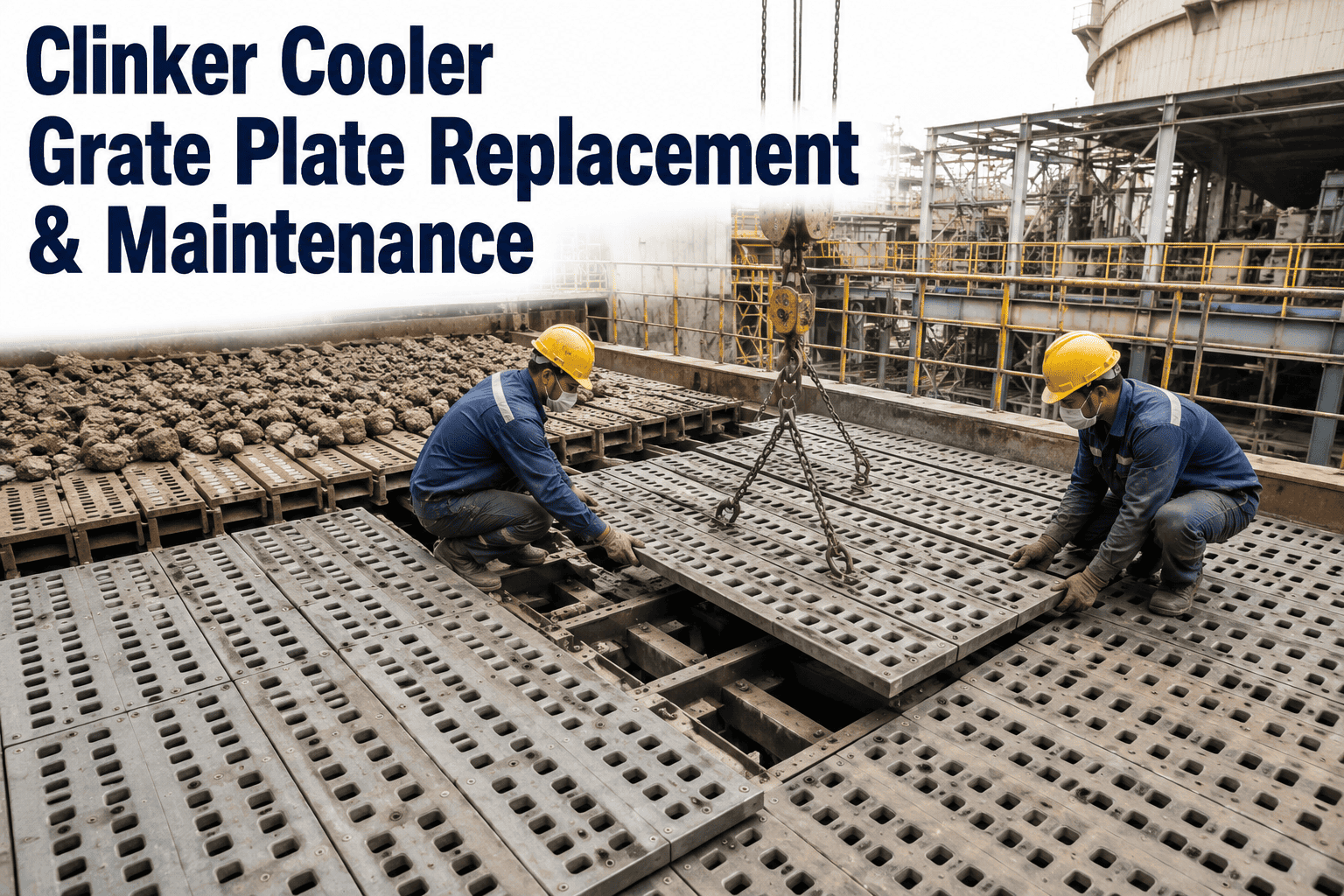
A clinker cooler's grate plates rarely fail all at once, which is exactly what makes them dangerous to ignore. Individual plates warp, crack, or clog with fine clinker dust over months, quietly starving sections of the clinker bed of cooling air while the rest of the cooler compensates. By the time secondary air temperature drops enough to show up in the burner's fuel consumption, or clinker discharge temperature climbs enough to damage downstream conveyors, the plate wear behind it has usually been building for a year or more. Book a Demo to see how continuous under-grate pressure and secondary air trending catch that drift zone by zone, long before it reaches a cooler stop.
Every Grate Plate Wears at a Different Rate. Most Replacement Schedules Treat Them as One.
The recuperation zone nearest the kiln discharge takes a completely different thermal and abrasive load than the after-cooling zone further down the grate, yet many plants still run a single blanket replacement interval across the whole cooler. Scheduling by zone, backed by actual wear measurement, is what keeps secondary air recovery and clinker discharge temperature both where they belong.
The Recuperation Zone Wears Years Faster Than the After-Cooling Zone — Here's Why
A grate cooler's plates sit under a clinker bed whose temperature and abrasive character change dramatically along the cooler's length. Plates nearest the kiln discharge see clinker at 1,000 to 1,200°C, still glowing and mechanically abrasive from the burning zone, while plates near the discharge end handle clinker that has already cooled to 150 to 250°C. Treating every plate in the cooler as one maintenance population, rather than tracking each zone's actual wear rate separately, is the single most common reason replacement budgets get spent in the wrong place.
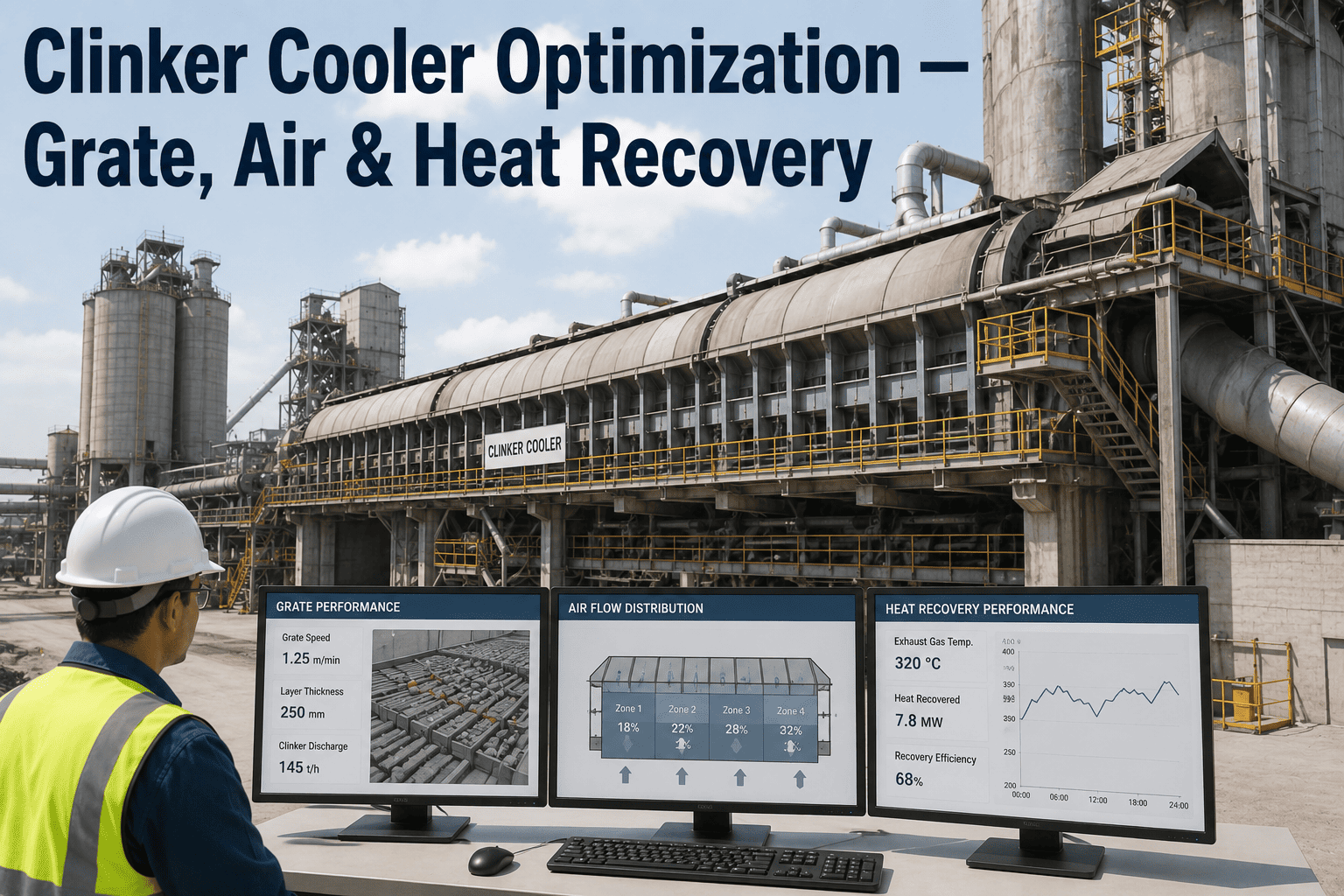
Relative wear severity across a typical four-zone grate cooler. Zone 1 plates commonly need replacement two to three times as often as Zone 4 plates on the same cooler.
Matching Alloy Grade to Zone Temperature and Abrasion Load
Grate plate alloy selection follows the same zone-by-zone logic as the wear pattern itself. A plate that performs well in the after-cooling zone will typically fail early if installed in the recuperation zone, and specifying the highest-grade alloy throughout the cooler wastes budget in zones where a lower grade would perform just as well for a fraction of the cost.
High-Chromium Heat-Resistant Alloy
The standard choice for the recuperation zone, where high chromium and nickel content provide the oxidation resistance and hot strength needed to survive continuous exposure to glowing clinker without warping or scaling prematurely.
Cast Heat-Resistant Stainless (HK/HH Grade)
Common in the primary and secondary cooling zones, balancing heat resistance against cost where temperatures remain elevated but no longer approach the recuperation zone's extremes, offering a longer service life than carbon steel at a lower premium than the highest-chromium grades.
Standard Alloy Steel
Adequate for the after-cooling zone, where reduced temperature shifts the dominant wear mechanism toward mechanical abrasion rather than heat damage, making the cost premium of a heat-resistant alloy unnecessary in this section of the cooler.
Which Zone Is Actually Driving Your Next Cooler Outage?
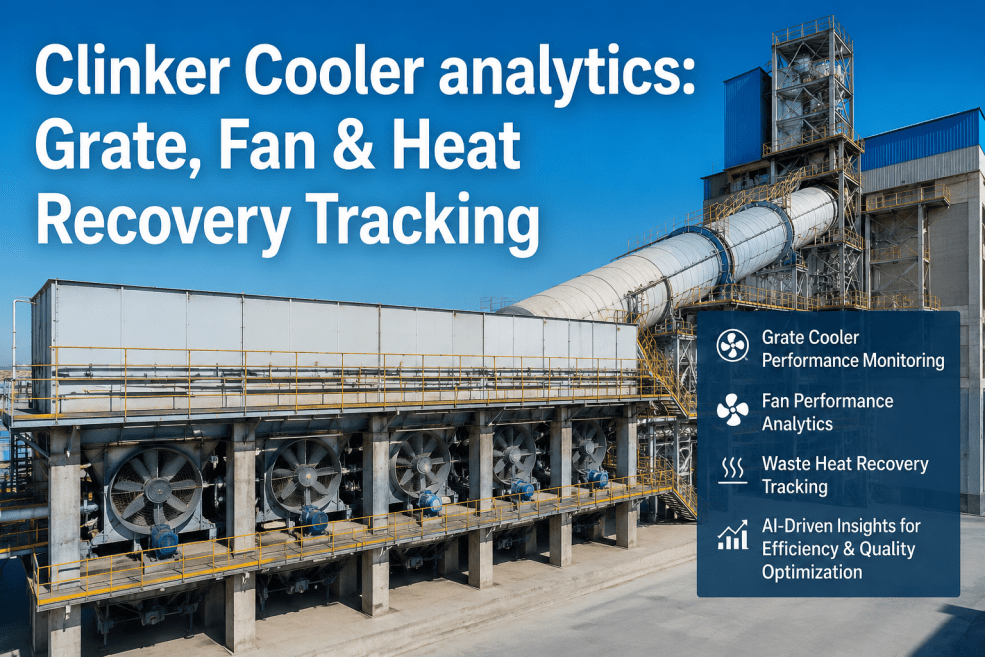
iFactory tracks under-grate pressure and secondary air temperature by zone continuously, showing exactly which section is losing air distribution before it forces an unplanned stop.
Four Ways to Know a Grate Plate Needs Replacing Before It Fails
Grate plate failure is rarely a sudden event. It typically progresses through a visible sequence of perforation clogging, localized warping, and finally cracking, and each stage has a corresponding inspection method that catches it before the plate fails outright and disrupts air distribution across an entire cooler row.
| Inspection Method | What It Detects | Typical Frequency |
|---|---|---|
| Under-Grate Pressure Survey | Air distribution imbalance from clogged or worn perforations | Continuous to weekly |
| Visual Inspection During Stops | Warping, cracking, and clogging visible from above the grate | Every scheduled cooler stop |
| Plate Thickness Measurement | Cumulative material loss from abrasive wear | Quarterly to semi-annually |
| Secondary Air Temperature Trending | Zone-level heat recovery loss indicating widespread wear | Continuous |
Six Steps From Isolation to Verified Commissioning
Grate plate replacement happens inside a compressed cooler outage window, and skipping steps to save time tends to reappear later as an air distribution problem that is much harder to diagnose than it would have been to prevent during the original replacement.
Isolation and Clinker Bed Clearance
The cooler section is isolated and any residual clinker bed is cleared to expose the grate structure for safe access and inspection.
Substructure Inspection
The support structure beneath the plates, including air distribution ducting and seals, is inspected for damage that plate replacement alone would not address.
Worn Plate Removal
Worn plates are removed row by row, with each plate's condition logged to build a wear-rate history for that specific position in the cooler.
New Plate Installation
Replacement plates matched to the zone's specified alloy grade are installed with correct overlap and clearance to maintain the designed air-seal pattern between adjacent plates.
Air Distribution Verification
Under-grate pressure is checked across the replaced section before the cooler restarts, confirming the new plates are seated correctly and air flow is even across the row.
Commissioning and Performance Check
Secondary air temperature and clinker discharge temperature are monitored through the first several days back in service to confirm the replacement has restored expected cooling performance.
What a Correctly Executed Replacement Should Recover
The value of a grate plate replacement shows up in two measurable places: secondary air temperature, which feeds directly into kiln fuel efficiency, and clinker discharge temperature, which affects downstream conveyor and storage equipment. Comparing these before and after a replacement confirms whether the work actually addressed the air distribution problem or only replaced the most visibly damaged plates.
| Metric | Before Replacement | After Replacement |
|---|---|---|
| Secondary Air Temperature | 750-850°C | 900-1,000°C |
| Clinker Discharge Temperature | 150-200°C above ambient | Within 65°C of ambient |
| Under-Grate Pressure Variance | High row-to-row imbalance | Even distribution across row |
| Cooler Fan Power for Same Airflow | Elevated to compensate for leakage | Reduced to design baseline |
We used to replace grate plates on a fixed two-year cycle across the whole cooler, whether a given row needed it or not. Once we started tracking under-grate pressure by zone, it became clear Zone 1 needed attention every eight to ten months while Zone 4 plates were still fine well past the two-year mark. Targeting the replacement budget at the zones that actually needed it recovered secondary air temperature we did not know we were losing.
Frequently Asked Questions
Q: How do we know which zone in our cooler needs plate replacement first?
Under-grate pressure readings taken zone by zone are the most direct indicator, since a section with clogged or worn plates shows a measurable pressure signature different from a healthy section even before any visible damage appears from above. Secondary air temperature trending over weeks to months provides a complementary signal at the cooler level, and combining both gives a much clearer replacement priority than relying on visual inspection alone during scheduled stops. A structured monitoring approach, discussed further via Book a Demo, tracks both continuously rather than only at outage intervals.
Q: What causes premature grate plate failure beyond normal wear?
Uneven clinker bed distribution, sometimes called channeling or a red river effect, concentrates heat and abrasion on specific plates rather than spreading the load evenly, causing those plates to fail well ahead of their expected life while neighboring plates remain in good condition. Clinker snowman formation, where clinker builds into large fused masses, can also mechanically damage plates directly beneath it. Both conditions are usually visible in under-grate pressure data as a localized anomaly well before a physical inspection would catch them.
Q: Why does perforation clogging matter more than plate thickness in some cases?
A plate can retain adequate structural thickness while its air perforations become clogged with fine clinker dust, and clogging alone is enough to starve the clinker bed above it of cooling air and push that section's temperature well above target. This is why a thickness measurement alone can miss a plate that is functionally failing, and why perforation clog rate is tracked as its own inspection category rather than assumed to correlate directly with material loss. Questions about interpreting a specific cooler's inspection data can be routed through Support Contact.
Q: Is it worth upgrading to a higher alloy grade across the entire cooler at once?
Generally not. The recuperation zone benefits meaningfully from a higher heat-resistant alloy because it operates near that material's performance limits, but installing the same premium grade in the after-cooling zone rarely extends life enough to justify the additional cost, since abrasion rather than heat is the dominant wear mechanism there. Matching alloy grade to each zone's actual failure mode consistently delivers better return than a uniform upgrade across the whole cooler.
Q: How long does a typical zone-level grate plate replacement take during an outage?
A single zone replacement on an accessible cooler section typically runs one to two days including isolation, substructure inspection, plate installation, and post-replacement air distribution verification, though this varies considerably with cooler size, plate count, and whether substructure repairs are also required. Planning the replacement around zone-specific wear data rather than waiting for a full cooler overhaul generally keeps each individual outage shorter and more predictable to schedule.
Replace the Right Plates at the Right Time, Not on a Fixed Calendar
See how zone-level pressure and temperature trending turns grate plate replacement into a planned, budget-targeted schedule instead of a uniform guess.