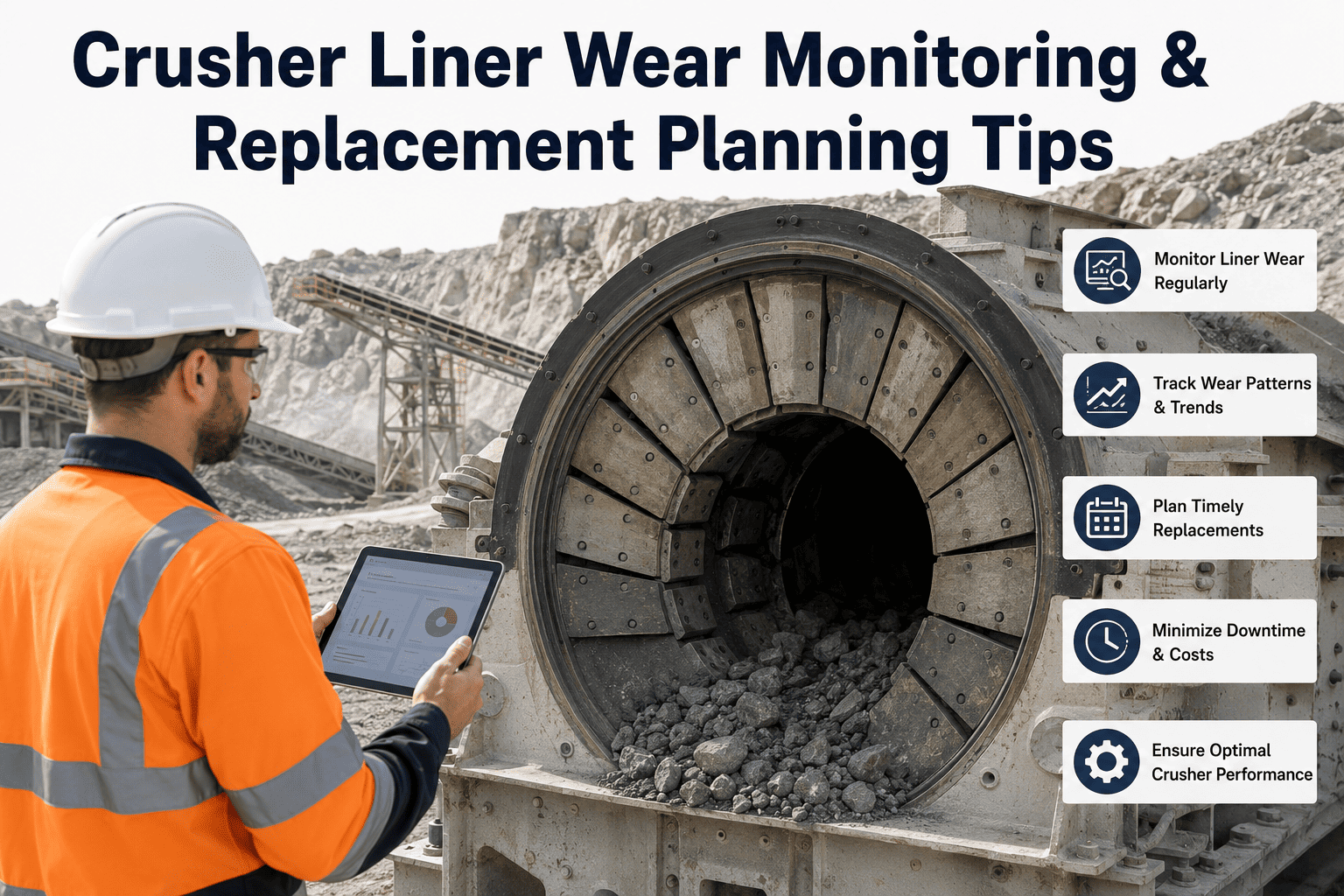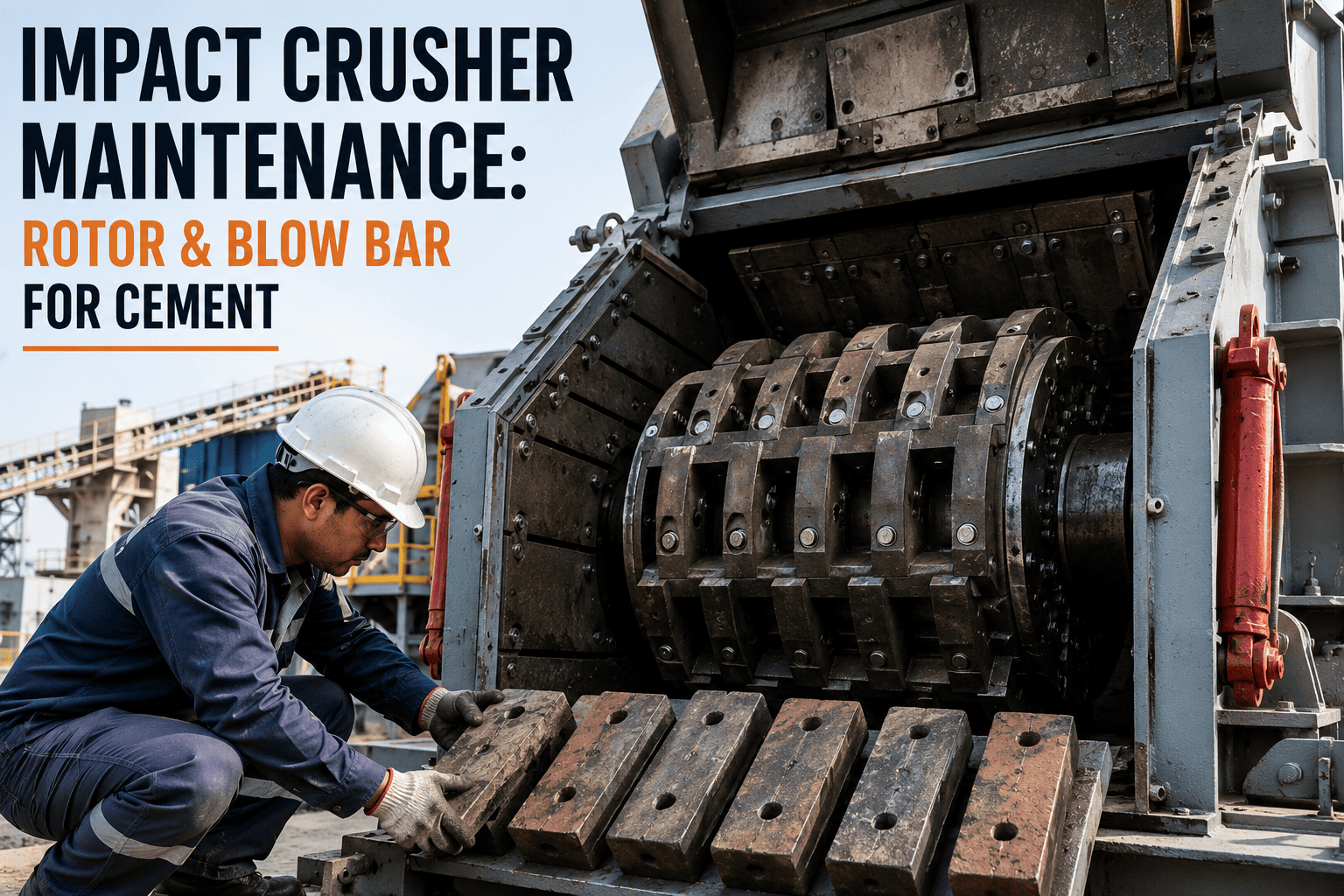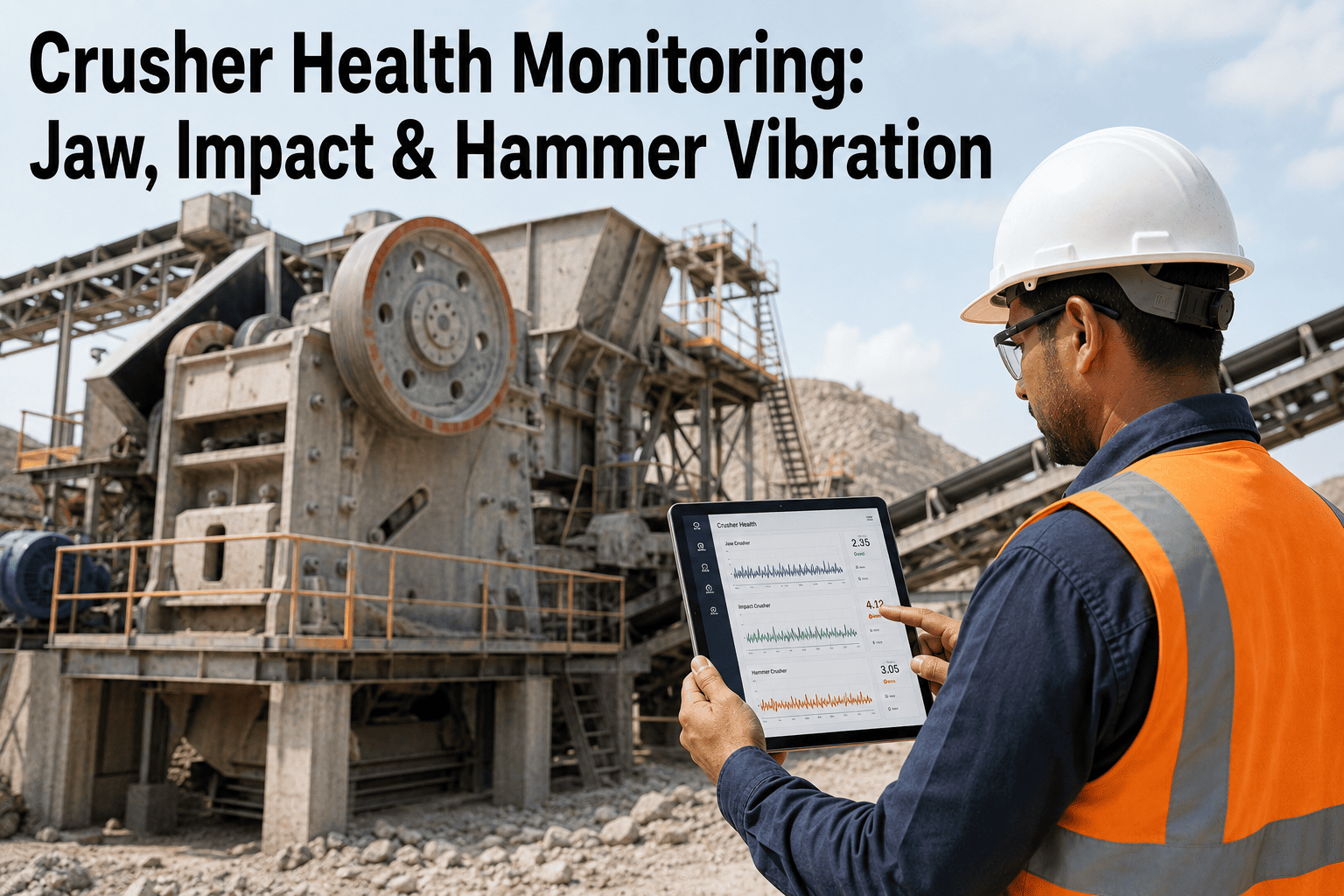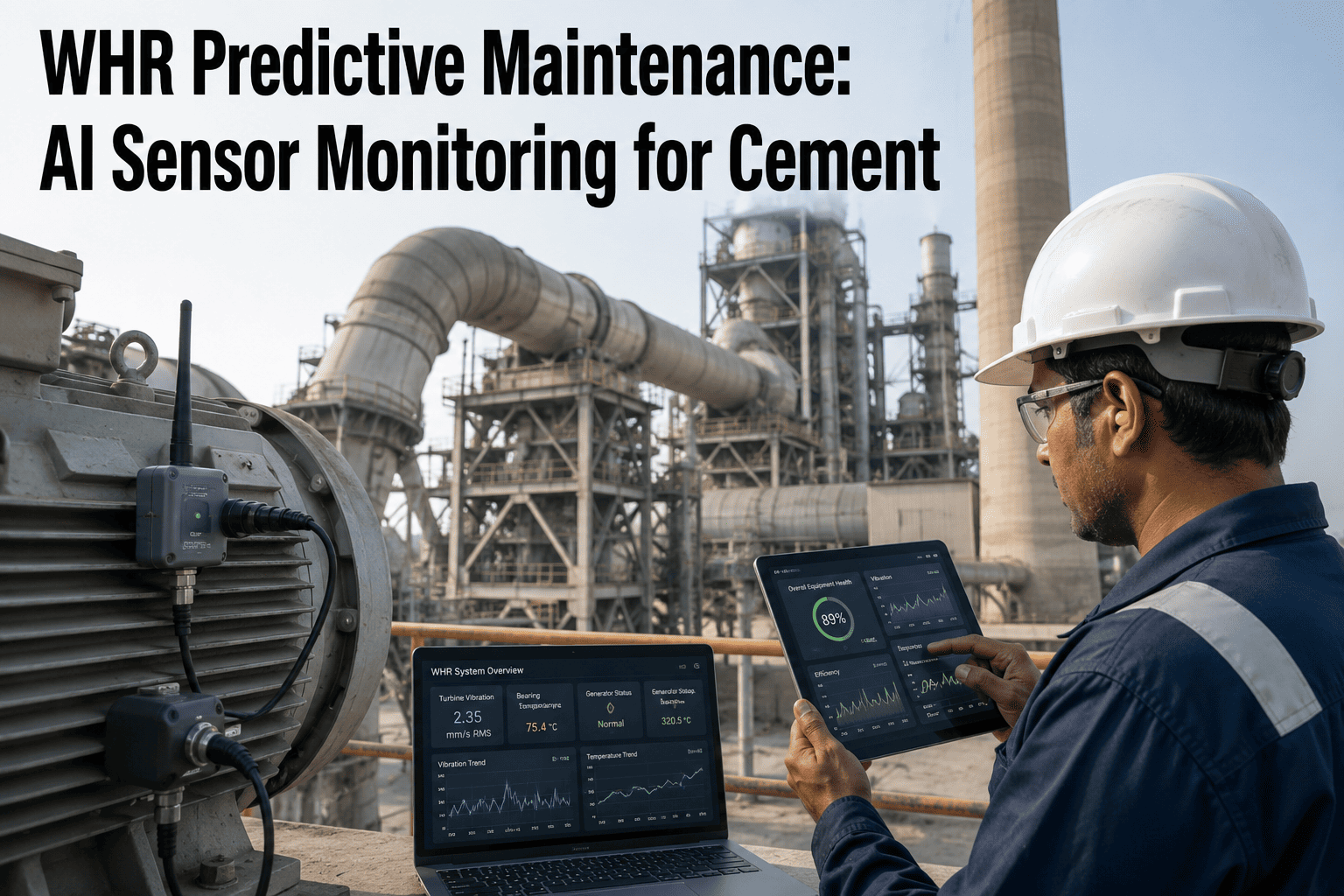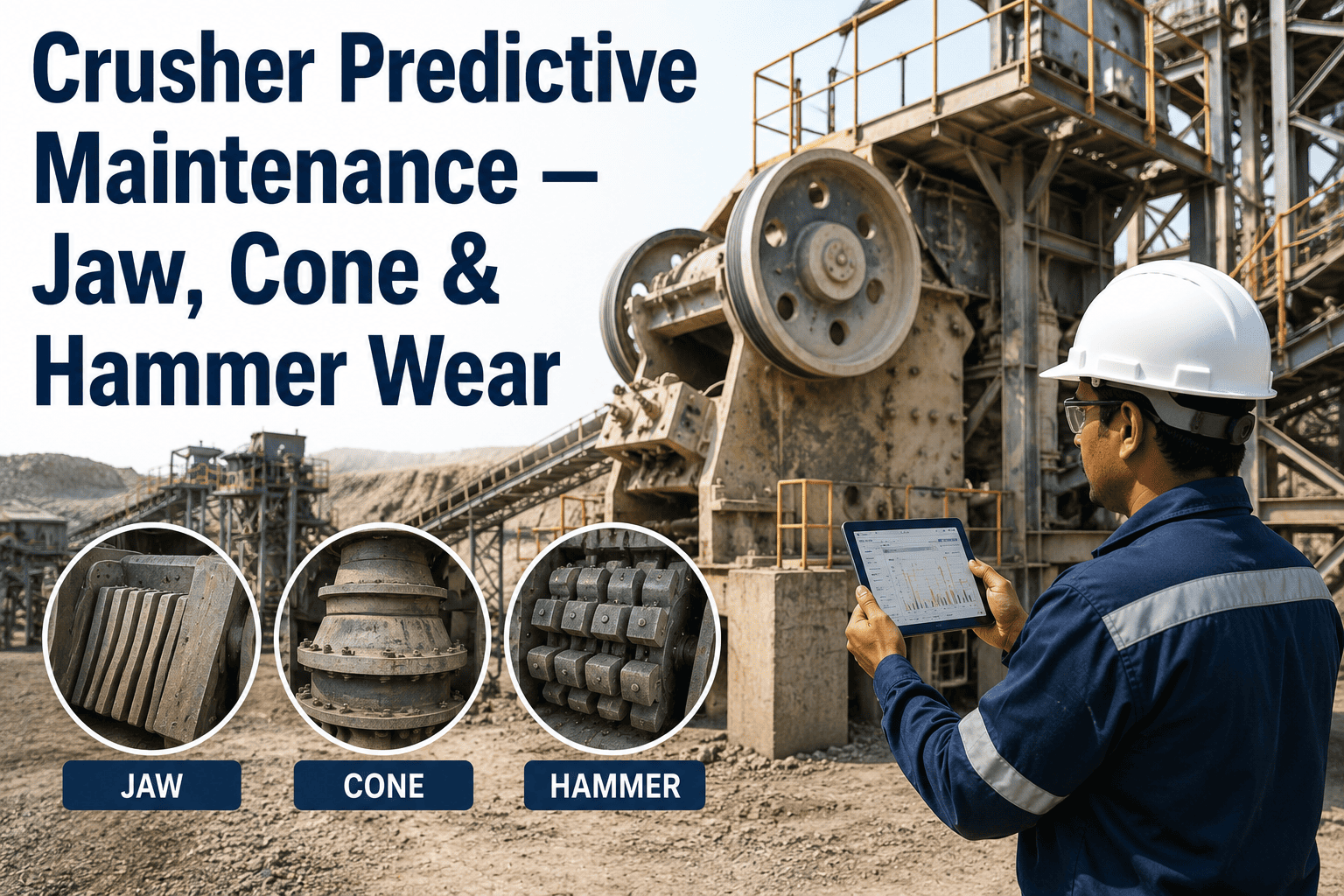
A jaw crusher's toggle plate wearing thin does not announce itself with a warning light; it shows up as a slow creep in closed-side setting, a subtle rise in amp draw, and eventually a shutdown that nobody saw coming because nobody was measuring the wear directly. Cone crusher mantles and concave liners follow the same quiet pattern, and impact crusher blow bars wear even faster under abrasive feed, sometimes losing measurable thickness within a single shift of hard rock. Reactive liner replacement means either changing parts too early and wasting wear life, or running them too long and risking a metal-on-metal failure that can crack a mantle or seize an eccentric bushing. AI-based crusher monitoring tracks wear part condition, bearing health, and throughput together, so replacement happens on the wear curve instead of on a guess. Reliability teams evaluating this can Book a Demo to see live wear tracking running against a real crusher liner change history.
Why Crusher Wear Is Managed by Guesswork Today
Most cement and aggregate plants schedule liner changes on fixed tonnage intervals or visual inspection during planned shutdowns, because measuring wear directly during operation has historically required stopping the crusher and climbing inside it. That approach works reasonably well for feed material that behaves consistently, but abrasiveness varies by quarry face, moisture content, and even the day's blast pattern, so a fixed interval either leaves wear life on the table or pushes a worn liner past the point where closed-side setting has drifted out of product specification.
The cost of getting this wrong compounds quickly. A jaw crusher running with a worn toggle plate produces oversized product that overloads the downstream cone crusher. A cone crusher running past mantle wear limits loses throughput and can develop uneven loading that stresses the eccentric bushing and main shaft. AI monitoring closes this gap by correlating vibration signatures, hydraulic pressure trends, and product size distribution to estimate remaining wear life continuously, rather than only at the next scheduled inspection.
Tracking Wear Severity Across Every Crusher Type
Each crusher type wears differently, so the monitoring approach is tuned to the specific failure mode of each wear part rather than applying one generic vibration threshold to all three.
Jaw Crusher — Toggle Plate & Jaw Dies
Moderate wear — monitor closed-side setting driftCone Crusher — Mantle & Concave
High wear — hydraulic pressure trend flags replacement windowImpact Crusher — Blow Bars & Hammers
Critical wear — fastest degrading part, tracked per shiftAll Types — Bearings & Eccentric Bushing
Low wear — vibration and temperature trended continuouslyThe Signals That Predict Wear Before It's Visible
Vibration Signature
Bearing and eccentric shaft vibration is trended against a healthy baseline to catch imbalance and early bearing wear before temperature rises.
Hydraulic Pressure Trend
On cone crushers, hydraulic setting pressure drift correlates directly with mantle and concave wear, giving an early read on remaining liner life.
Product Size Distribution
Oversized product in the discharge stream is an early indicator that a jaw die or blow bar has worn past its effective crushing profile.
Motor Amp Draw
A rising power draw for the same feed rate often signals increased crushing resistance from a worn or misaligned wear part.
Fixed-Interval Replacement vs AI Wear Tracking
| Factor | Fixed Tonnage Interval | AI Wear Tracking |
|---|---|---|
| Replacement timing | Same interval regardless of feed abrasiveness | Based on actual measured wear rate |
| Wear life utilization | Often replaced early, wasting life | Used closer to full wear life safely |
| Product spec drift | Caught at next inspection | Flagged as closed-side setting drifts |
| Unplanned downtime risk | Higher if wear outpaces interval | Lower with continuous condition tracking |
| Bearing failure risk | Detected after vibration is audible | Detected in early vibration trend shift |
Getting a Crusher Onto AI Wear Monitoring
Sensor Installation
Vibration sensors are installed on bearing housings, and hydraulic pressure or amp draw feeds are connected where available.
Baseline Against Liner History
Historical liner change records are used to calibrate the wear model against your specific feed material and crusher configuration.
Live Wear Curve Tracking
The model produces a continuously updating wear estimate for each tracked part, visible to maintenance planners in advance of shutdowns.
Shutdown Planning Integration
Predicted replacement windows feed directly into shutdown planning, reducing last-minute part orders and unplanned crusher stoppages.
Crusher Predictive Maintenance — Common Questions
Can this predict wear on jaw, cone, and impact crushers at the same time?
Yes, though each crusher type is modeled against its own specific wear signature rather than a single generic threshold. Jaw crushers are tracked primarily through closed-side setting drift and product size, cone crushers through hydraulic pressure trends, and impact crushers through vibration and product size together, since blow bars wear the fastest of the three and benefit from the tightest monitoring interval.
How accurate is the wear prediction compared to a physical inspection?
Accuracy improves as the model accumulates liner change history specific to your feed material, since abrasiveness varies significantly between quarry faces and even blast patterns. Most deployments reach a reliable prediction window within a few liner change cycles, and physical inspection during planned shutdowns continues alongside the model as a confirmation check rather than being replaced entirely.
Does this require stopping the crusher to install sensors?
Sensor installation is typically scheduled during a planned maintenance window since it involves mounting vibration sensors on bearing housings and connecting to existing hydraulic or electrical instrumentation where available. Once installed, the monitoring itself runs continuously during normal operation without requiring further downtime for data collection.
What happens when the model flags a wear part as approaching its limit?
An alert is generated with the estimated remaining wear life, which maintenance planners can use to schedule the replacement during the next convenient shutdown rather than reacting to a sudden failure. The alert includes the trend data behind the prediction, so planners can weigh it against production schedules and parts availability before committing to a specific date.
How long does it take to get useful wear predictions after installation?
Basic vibration and pressure trending is visible within days of installation, but wear-life predictions calibrated to your specific feed material typically firm up after the model has observed at least one full liner wear cycle. Reliability teams ready to scope a pilot crusher can Book a Demo or contact iFactory Support for an installation walkthrough.