A preheater tower does not fail all at once. It fails one cyclone stage at a time, one refractory joint at a time, usually starting with something as unremarkable as a hairline crack at an expansion joint flange that nobody flagged during the last walkdown. Six weeks later that same joint is pulling in cold air, disrupting the gas flow pattern through the cyclone above it, and setting up a coating buildup that eventually breaks free and blocks the riser duct entirely. The plant that treats the preheater as a static structure between shutdowns is the plant that discovers its condition during an unplanned stop instead of a planned one. You can book a demo to see how iFactory turns a preheater walkdown into a structured, zone-by-zone maintenance record.
Stop Reacting to Preheater Blockages and Start Tracking Them
iFactory structures refractory inspection, expansion joint condition, and cyclone buildup tracking into a single zone-by-zone maintenance record that turns your preheater tower from a black box into a monitored asset.
The Preheater Handles Most of Your Fuel Input, and Gets the Least Structured Attention
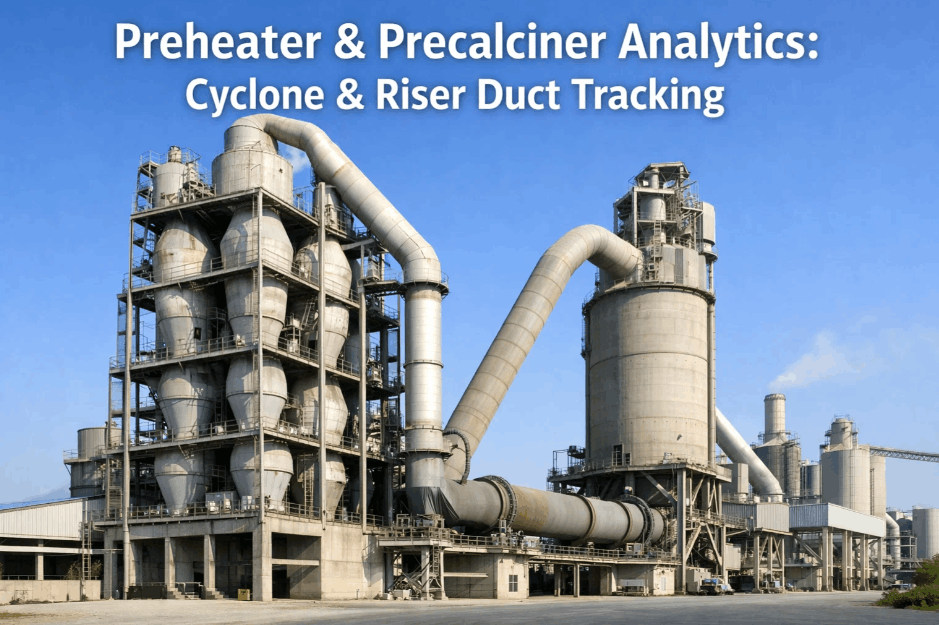
In a modern dry-process line, the preheater and precalciner together handle the majority of total fuel input before material ever reaches the kiln burning zone, yet the tower is often the least instrumented, least systematically inspected structure on the line. Refractory degrades gradually, expansion joints leak slowly, and cyclone cones build up coating over weeks, none of which triggers an alarm the way a bearing vibration spike does. The result is that preheater problems are usually discovered by their consequence, a blockage or a coating fall, rather than by the condition data that predicted them.
Every Stage of the Tower Has a Different Failure Mode
Working from the top cyclone stage down to the calciner matches the sequence of an actual shutdown walkdown and ensures no zone gets skipped because it was harder to reach than the others.
Brick, Castable, or a Combination: Choosing the Right Lining for Each Zone
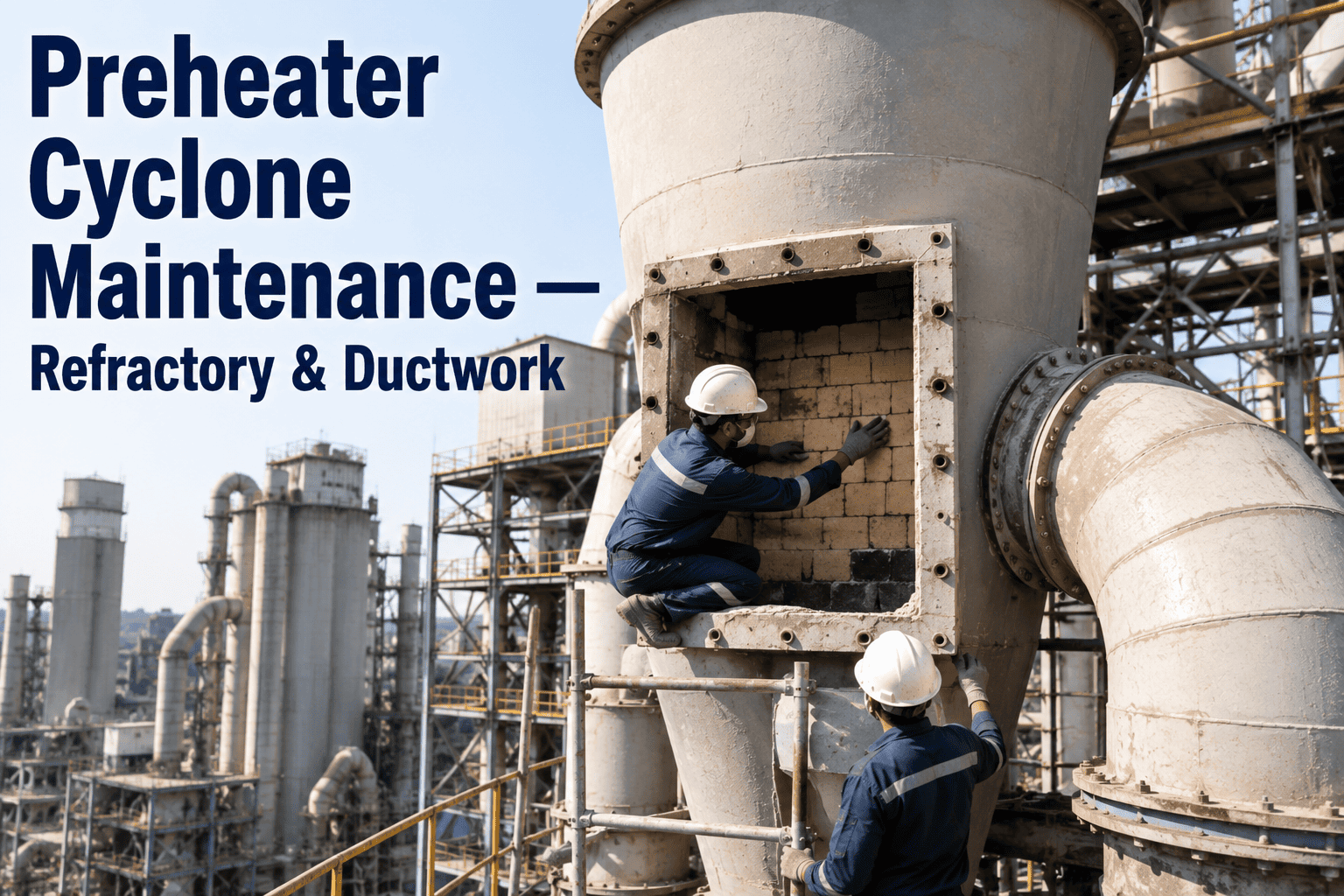
Not every zone of the preheater tower calls for the same refractory approach. The choice affects both service life and how the zone needs to be inspected.
| Lining Type | Best Suited For | Inspection Focus |
|---|---|---|
| Brick Lining | High-wear zones like cyclone cones and dip tubes where uniform, fired-at-high-temperature properties give more predictable, flexible performance | Joint condition and individual brick displacement rather than surface cracking |
| Castable Refractory | Complex geometries and areas requiring anchors, such as vessel transitions and irregular duct shapes | Anchor exposure and surface spalling, since castable relies on metal anchors that fail if joints open |
| Combination Lining | Zones that need brick's durability in the high-wear path with castable's flexibility around penetrations and fittings | The transition line between materials, a common origin point for cracking |
What a Single Preheater Blockage Actually Costs the Plant
A blockage event does not just cost the hours the line is down. It costs the emergency clearing labor, the refractory damage from thermal shock during the clear, and the ramp-up time to get the kiln back to stable operation afterward.
Catching Coating Buildup Before It Falls and Blocks the Riser
Coating buildup on cyclone cones and dip tubes is a normal part of preheater operation in small amounts, but left unmonitored it grows until a large section breaks free under its own weight, drops into the riser duct below, and blocks gas and material flow entirely. The inspection sequence that catches this early is straightforward but has to be consistent: borescope or visual check of the cone and dip tube through the inspection door on a fixed interval, comparison against the previous reading rather than a one-off judgment call, and a lower threshold for escalation in stages four and five where buildup is most common. Plants that track buildup as a trend, rather than checking a pass or fail box, get meaningfully more warning before a fall event because they can see the growth rate rather than just the current state.
Matching the Repair Method to the Damage Found
Not every refractory finding calls for the same fix, and choosing the wrong repair method is one of the more common reasons a supposedly repaired zone fails again within a single campaign.
| Damage Type | Typical Repair | When It Applies |
|---|---|---|
| Localized Spalling | Patch repair with matching castable, applied and cured in place during a short outage window | Isolated surface damage that has not exposed or damaged the anchor system behind the lining |
| Open Joints Between Bricks | Joint re-pointing or partial re-bricking of the affected course | Joint separation caught before hot gas has penetrated far enough to damage the shell or anchors behind it |
| Anchor Exposure in Castable | Full section demolition and re-cast, since a compromised anchor system cannot reliably hold a patch | Anchor corrosion or exposure is visible, indicating the lining is no longer mechanically secured |
| Shell Hot Spot from Lining Loss | Emergency shutdown and full-thickness relining of the affected zone | Infrared scanning shows shell temperature approaching a level that risks structural damage to the steel shell itself |
Fitting Preheater Work Into a Crowded Shutdown Scope
Preheater refractory and expansion joint work almost always competes for the same shutdown window as kiln, cooler, and mill jobs, which means it needs to be scoped and quantified well before the outage begins rather than discovered during it. The zone condition data collected during running inspections is what allows the preheater scope to be defined in advance: which stages need a full re-line versus a spot patch, which expansion joints are due for replacement rather than another inspection cycle, and how many technician-hours and what materials the work will actually require. Preheater work that shows up as a surprise mid-shutdown, after scaffolding is already built for other jobs and crews are already allocated elsewhere, either gets rushed or gets deferred to the next outage, and neither outcome is good for tower reliability.