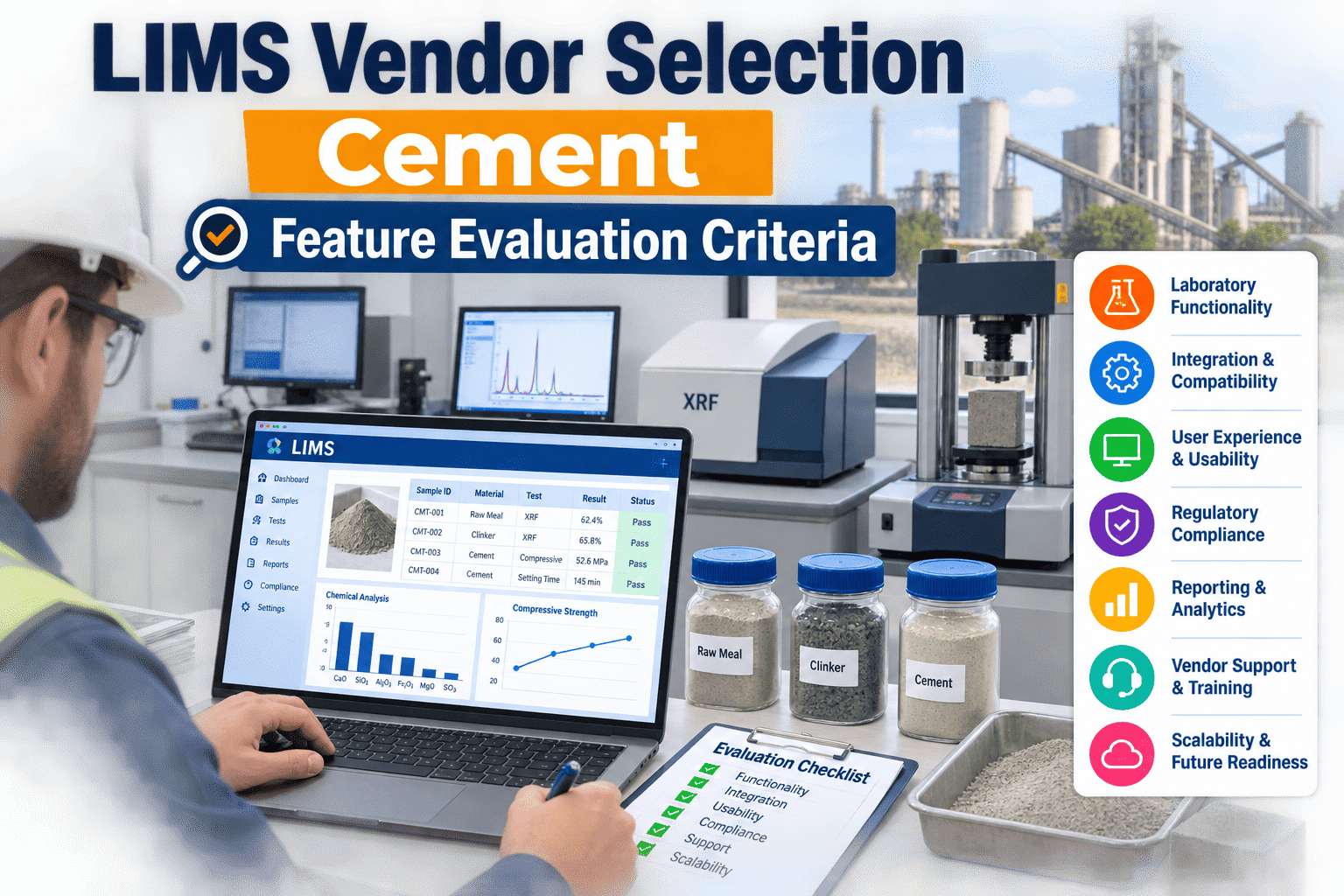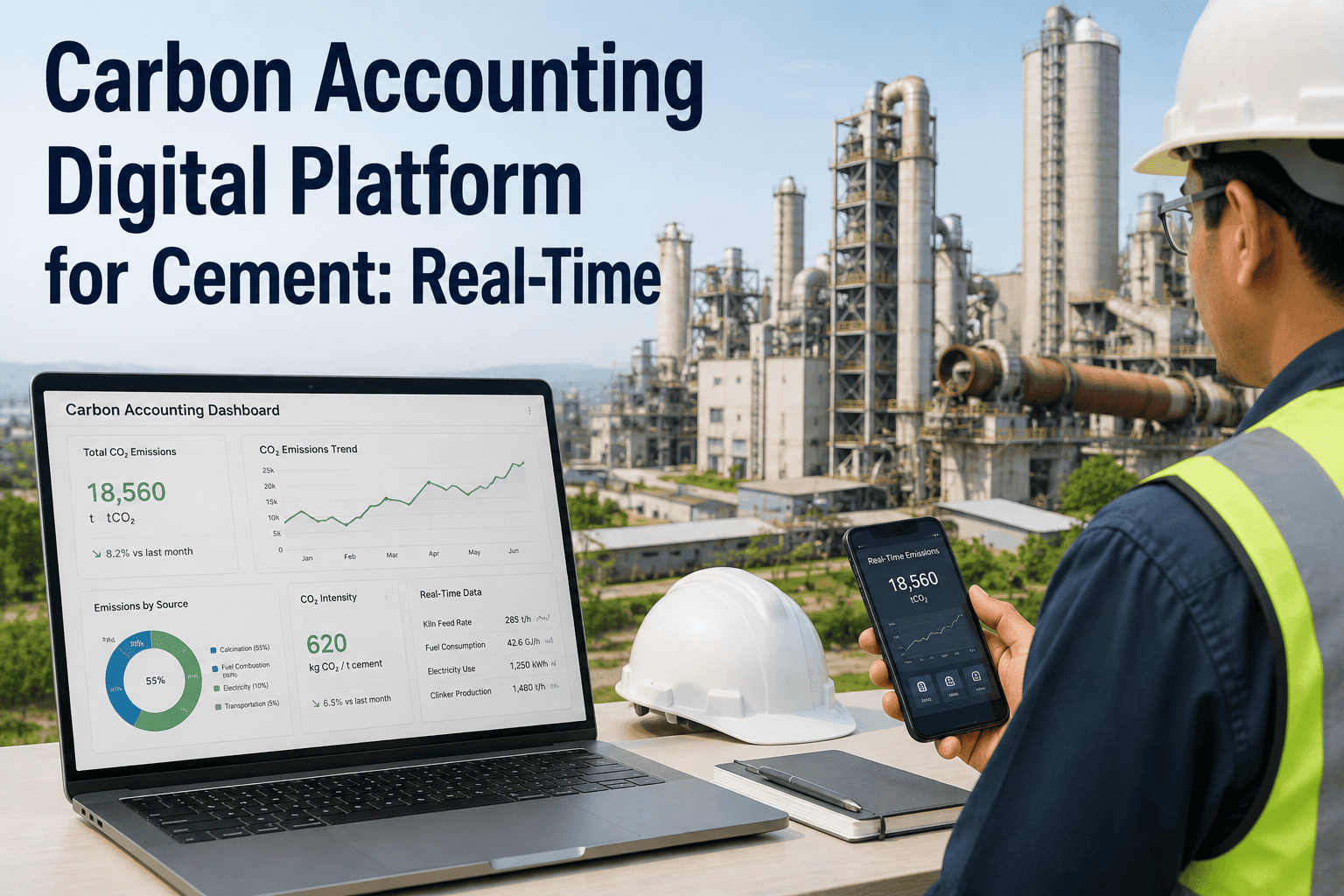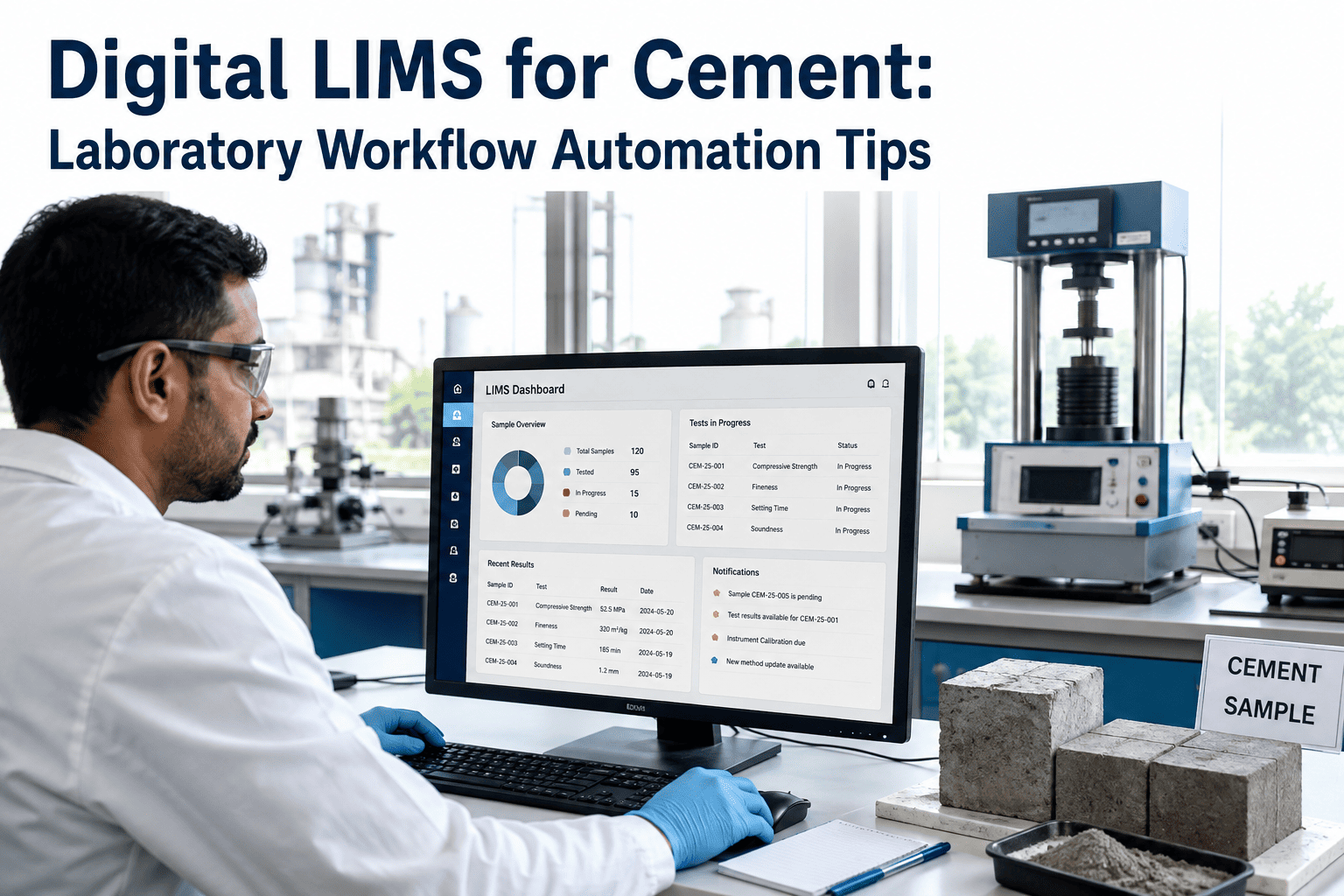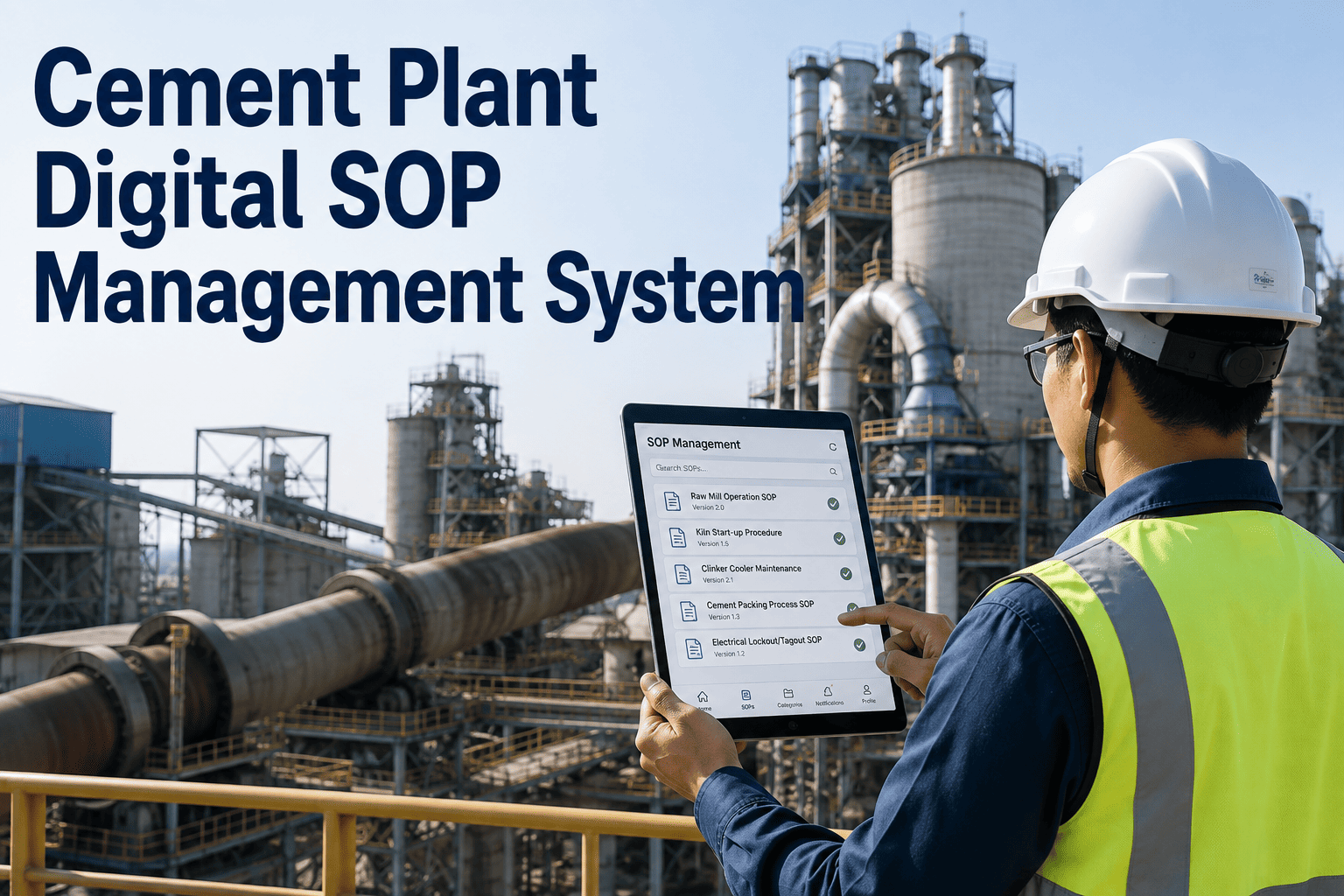
Most cement plants evaluate a new digital platform the same way they would evaluate any enterprise software: a feature checklist, a pricing sheet, and a reference call or two. That process works fine for a CRM or an HR tool, but it consistently fails cement operations, because a platform that looks impressive in a generic demo often cannot read a kiln DCS tag, has never seen an XRF quality result, and has no idea what a coating buildup alarm in a preheater cyclone even means. The plants that get this right treat vendor selection as a domain-specific evaluation, not a generic IT purchase. Book a demo and see how a cement-built platform holds up against your actual evaluation criteria.
How to Choose the Right Digital Platform for Cement Plant Operations
A practical evaluation framework covering cement-specific feature fit, integration depth, and real deployment requirements — built for the teams who have to live with this decision for the next five years and answer for it if the rollout stalls.
Why Standard IT Evaluation Checklists Miss the Point
A polished sales demo can make almost any platform look production-ready. The gap only becomes visible once real plant data starts flowing through it, and by then the contract is usually already signed and the internal case for the platform has already been made to leadership.
Generic dashboards, borrowed data
Sales demos frequently run on sample datasets from unrelated industries, so the interface looks polished while the platform has never actually ingested a kiln, mill, or preheater tag structure. Once real data is connected, teams often discover that dashboards built for a generic factory floor simply do not map cleanly onto cement-specific process stages.
No native DCS or historian connector
Weeks into implementation, teams discover the platform needs a custom middleware layer just to read OPC-UA or Modbus tags from the existing control system, adding months to the timeline and turning a straightforward rollout into an unplanned systems integration project.
No path for quality results
Free lime, C3S, and fineness results from the LIMS or manual lab entry are treated as an afterthought, leaving quality prediction and process correlation permanently out of reach no matter how good the process monitoring side of the platform eventually becomes.
Not built for plant-wide tag volume
A platform that performs well with a few hundred tags in a pilot can slow to a crawl once it is asked to handle the thousands of tags a full-scale integrated cement plant actually generates across kiln, mills, and utilities combined.
What a Poor-Fit Platform Actually Costs a Plant
A rejected implementation rarely shows up as a single failed invoice. It shows up as months of stalled progress and a team that has grown skeptical of the next platform too.
Typical delay when a platform requires custom middleware to connect to existing DCS or historian systems after contract signature, pushing the original go-live date well past the original project plan.
Share of enterprise software rollouts that stall or get abandoned when the initial fit assessment was rushed or generic rather than built around the specific systems already running on site.
Cost multiplier when a plant needs to re-run a vendor selection process after a first platform fails to scale, since the sunk cost of the failed attempt rarely gets recovered.
How long a burned team can stay resistant to the next digital initiative after one visible failed rollout, regardless of how strong the case for that next platform actually is.
What Actually Separates a Cement-Ready Platform
Two platforms can look identical on a features page and behave completely differently once real plant conditions are involved. The difference rarely shows up in a sales deck; it shows up months later, in how quickly the platform actually starts delivering usable insight once it is connected to your live systems.
| Requirement | Generic Industrial Platform | Cement-Purpose-Built Platform |
|---|---|---|
| DCS and historian integration | Requires custom middleware | Native connectors pre-configured |
| Kiln and mill process models | Built from scratch per client | Pre-trained on cement process patterns |
| Quality lab data handling | Treated as generic tabular import | Modeled against free lime, fineness, strength |
| Scale to full plant tag volume | Performance degrades past pilot scale | Engineered for thousands of live tags |
| Domain support during rollout | Generalist implementation team | Engineers who understand cement operations |
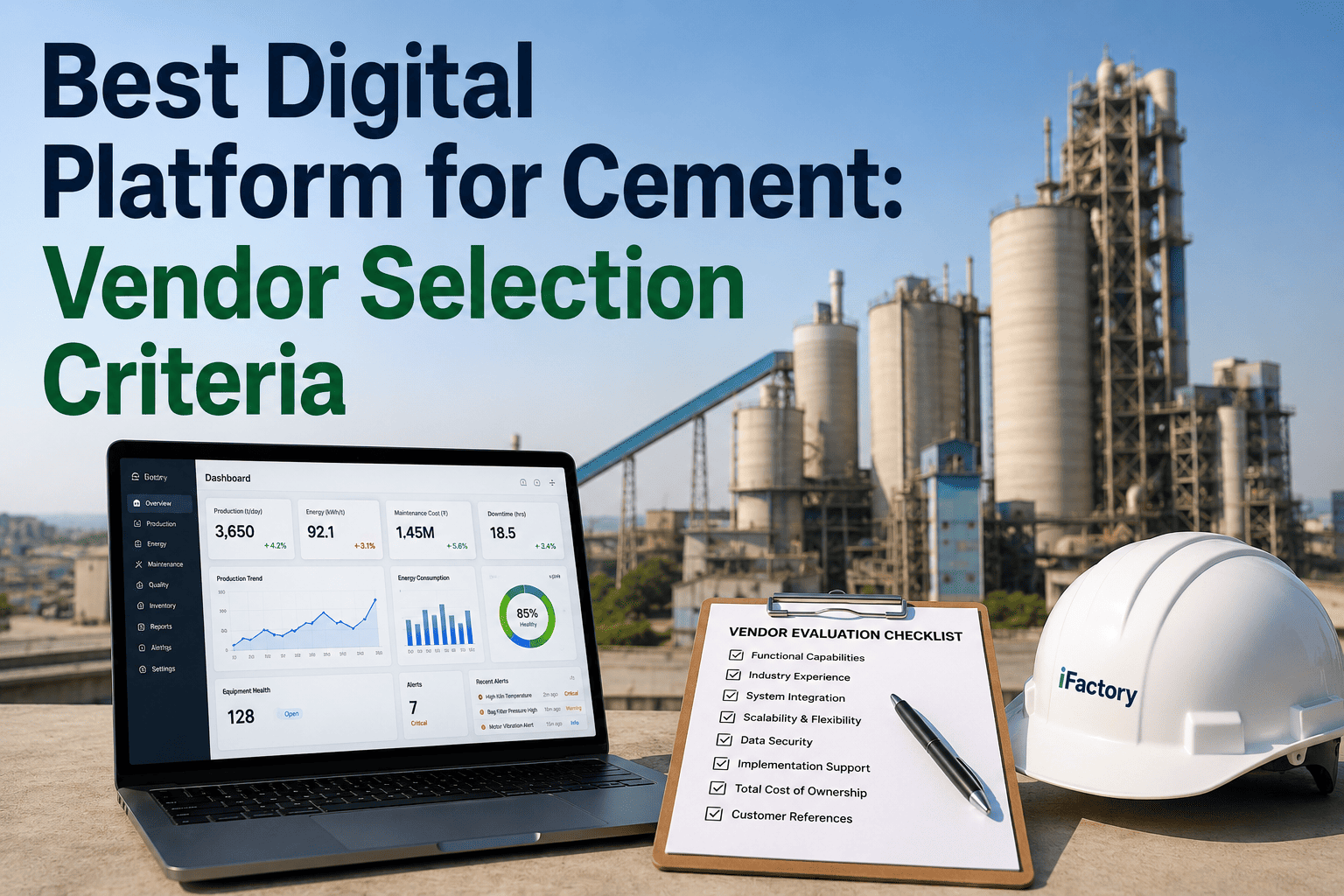
Use this table as a starting scorecard during vendor calls, and press each vendor to explain, with specifics, which column their platform actually belongs in for every row.
Run Your Evaluation Against a Platform Built for This
Instead of testing generic dashboards, see how iFactory handles your actual DCS tags, your actual lab data structure, and your actual plant scale, before you commit to a five-year platform decision that the rest of your operation will have to live with.
Six Criteria That Actually Predict Success
Weight your evaluation toward the criteria that determine whether a platform survives contact with a real plant, not just a sales cycle. Score each vendor consistently across all six so the comparison stays objective even after the presentations and demos are long finished.
Cement Process Domain Fit
Weight: HighDoes the vendor's model already understand kiln burning zones, VRM grinding dynamics, and clinker chemistry, or will your team spend the first year teaching it the basics? A platform with genuine domain fit should be able to explain, in specific terms, how it interprets a kiln temperature spread or a raw mill differential pressure trend before it has even connected to your data.
Integration Depth
Weight: HighCan the platform natively read your specific DCS, historian, LIMS, and CMMS without a lengthy custom middleware build before any real data even flows? Ask for a concrete list of the exact systems the vendor has already integrated with in production, not just the protocols they claim to support in principle.
Scalability Beyond Pilot
Weight: HighHas the vendor demonstrated the platform running at full plant tag volume across multiple production lines, not just a limited proof-of-concept environment? A platform that has only ever been tested on a small pilot dataset carries real risk of performance issues once it is deployed at full plant scale.
Implementation Support Model
Weight: MediumWill the implementation team include engineers who understand cement operations, or generalist consultants learning the industry on your rollout? The difference shows up directly in how quickly issues get diagnosed once the platform is live and something behaves unexpectedly.
Total Cost of Ownership
Weight: MediumDoes the quoted price include integration and ongoing model tuning, or will those costs appear later as separate change orders once the contract is signed? Ask for a single, itemized number covering the full first three years, not just the recurring license fee.
Product Roadmap Alignment
Weight: MediumIs the vendor's roadmap actively shaped by cement industry feedback, or is cement one vertical among many competing for limited development attention? A vendor genuinely invested in the cement sector should be able to point to specific product features that came directly from cement customer requests.
Red Flags During the Evaluation Process
Some warning signs only become obvious in hindsight. These usually show up earlier than teams expect, if they know to look for them, and catching even one of these early can save months of wasted implementation effort.
The Demo Uses Someone Else's Data
If a vendor cannot demo against a sample of your own tag structure or a comparable cement dataset, ask why, since a truly domain-built platform should be able to show this without months of custom setup. A vendor that keeps deflecting this request is often signaling that their platform has not actually been tested against cement-specific data before.
Integration Timelines Keep Growing
A quoted four-week integration that keeps slipping is often a sign the platform was never built with your specific DCS or historian in mind, and each delay compounds project risk while internal stakeholders start to lose confidence in the initiative before it has even gone live.
No Reference Customer in Cement
A platform with strong references in discrete manufacturing but none in cement or heavy process industries has not yet proven it can handle the specific operational complexity you run, and being the vendor's first cement deployment carries real implementation risk you should price into the decision.
Pricing Excludes Implementation
A license quote that looks attractive but excludes integration, model training, and change management almost always turns into a total cost several times higher than the initial number once the real project scope becomes clear during contract negotiation.
A Practical Process for Selecting the Right Platform
Structured evaluations consistently outperform ad hoc ones, especially for a decision that will shape plant operations for years and set the technical foundation every future digital initiative gets built on top of.
Document Your Real Requirements First
List your actual DCS type, historian, lab system, tag count, and the specific process problems you are trying to solve before any vendor conversation begins, so the evaluation stays grounded in your plant rather than a generic template. This document also becomes the reference point every vendor conversation gets measured against later.
Score Vendors Against the Six Criteria
Weight domain fit, integration depth, and scalability heavily, since these three criteria are what most commonly separate a platform that ships from one that stalls in a pilot phase. Keep the scoring in writing so the final decision can be defended clearly if it is ever questioned later.
Demo Against Your Own Data
Insist on seeing the platform work against a sample of your actual tag structure and lab data rather than a generic showcase dataset, since this is the fastest way to expose a poor fit before signing anything. A vendor confident in their domain fit will welcome this request rather than resist it.
Ask for a Cement Reference Plant
Speak directly with a plant of comparable scale that is already running the platform in production, not just a logo on a case study page, and ask specifically about integration timeline and support quality. A short reference call often reveals more than weeks of vendor presentations.
Confirm the Full Cost Before Signing
Get integration, model tuning, and ongoing support costs included in writing so the number you evaluate against is the number you actually pay across the life of the contract, rather than discovering additional line items once implementation has already begun.
Digital Platform Vendor Selection — Questions Answered
What plant leaders and digital transformation teams ask most often when comparing platforms for cement operations, before a contract is ever signed.
Q: What is the single biggest mistake plants make when selecting a digital platform?
The most common mistake is treating the evaluation like a generic enterprise software purchase and weighting factors like interface polish or brand recognition over actual domain fit and integration depth. A platform that looks impressive in a sales demo can still fail badly once it needs to read a real kiln DCS tag or correlate live process data against clinker quality results, which is exactly the work a cement plant actually needs it to do every day, not just during a sales presentation.
Q: How important is it that a vendor has prior cement industry experience?
It matters significantly, because cement processes like kiln burning zone dynamics, VRM grinding behavior, and clinker chemistry have specific patterns that a generalist industrial platform has not been trained to recognize. A vendor with genuine cement experience can typically get from data connection to a working model in a fraction of the time it takes a platform starting from zero domain knowledge, and that time difference compounds across every subsequent phase of the rollout. Book a demo to see cement-specific process models in action.
Q: Should we run a paid pilot before committing to a full platform rollout?
A scoped pilot on one line or one mill is generally a sound approach, as long as the pilot explicitly tests the criteria that matter most: real integration with your DCS and historian, correlation against actual lab results, and a clear path to scaling beyond the pilot's limited tag count. A pilot that only tests the dashboard interface without touching real integration risk gives a false sense of confidence and can end up masking the exact problems a proper evaluation is meant to surface.
Q: How do we compare total cost of ownership across different vendors fairly?
Request a full breakdown covering licensing, integration work, model training, ongoing support, and any change orders typically required after go-live, since license price alone routinely understates the real cost by a significant margin. Comparing only the headline subscription number across vendors almost always favors whichever platform hid the most cost in implementation, so insist on a like-for-like, itemized quote from every vendor under consideration.
Q: What should we ask a vendor's reference customers during due diligence?
Ask specifically about integration timeline versus what was originally promised, how responsive support was once real operational issues came up, and whether the platform's process models actually needed heavy customization to become useful. These three questions tend to surface the gap between a polished sales pitch and how the platform performs once it is running inside a live production environment, and reference customers are usually candid once the vendor is no longer in the room. Our support team can also walk you through what a real cement deployment timeline looks like.
Evaluate a Platform Built for Cement, Not Retrofitted for It
Six criteria, a working scorecard, and a clear list of red flags will get you most of the way to a confident decision. The fastest way to close the remaining gap is to see how a cement-purpose-built platform actually performs against your own data, on your own tags, before anything gets signed.