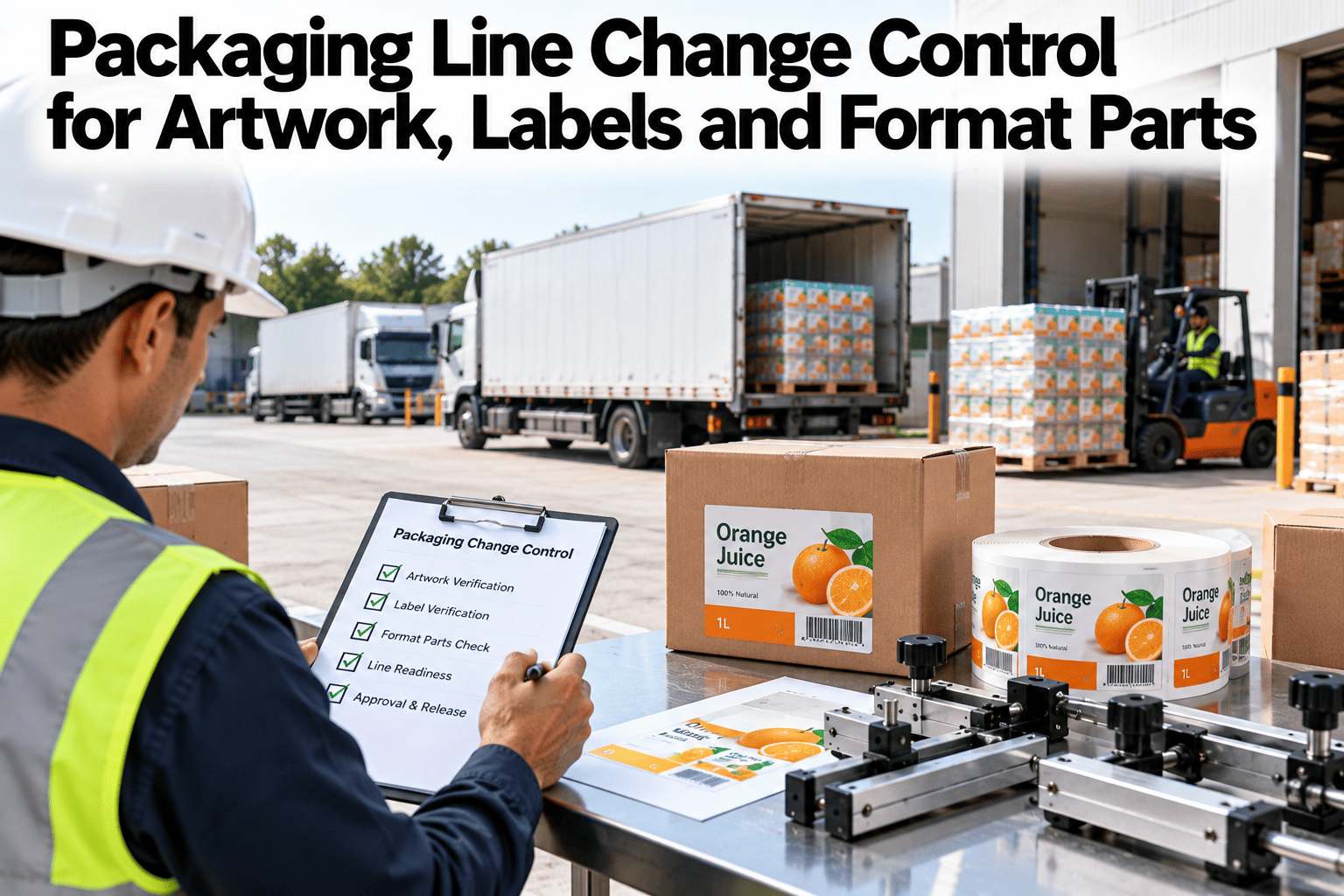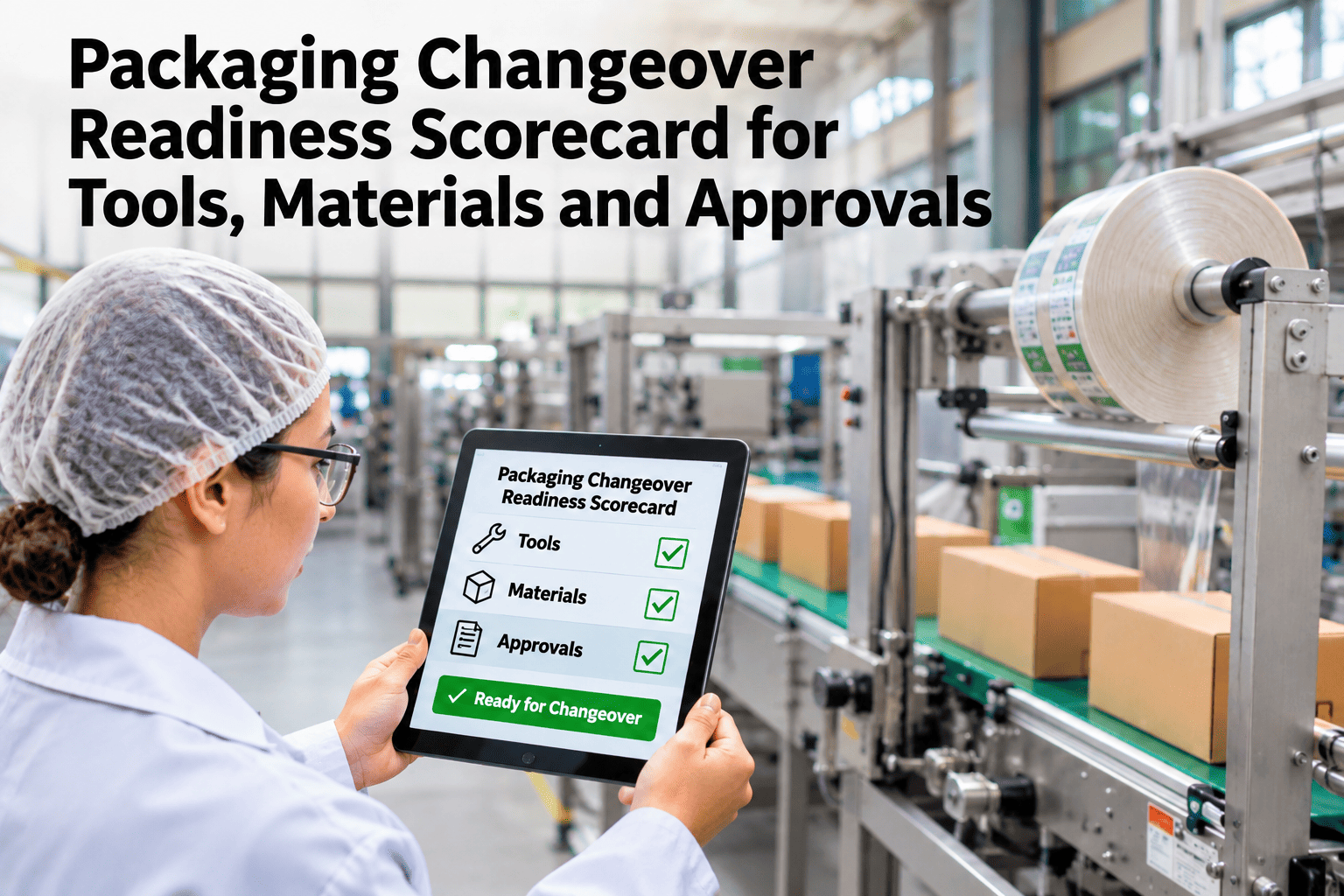
A packaging line changeover is approved as "ready" far more often than it is actually ready, because readiness gets treated as one yes-or-no gate instead of six separate things that each have to be true at once. Format parts can be staged while the wrong artwork revision is still loaded. Materials can be verified while the line clearance paperwork is missing a signature. A scorecard that checks all six readiness dimensions separately, and refuses to average them into one misleading number, is what actually predicts whether the changeover will run clean or stall ten minutes after it starts. Plants that want to see this scored against their own changeover data can walk through a readiness scorecard built from their last ten changeovers with the iFactory AI team.
Six Readiness Checks, Scored Separately, Never Averaged Into One Number
iFactory AI scores format parts, materials, artwork, cleaning, staffing and first-good-pack acceptance as six independent gates, so a changeover only reads ready when every gate actually is.
(misleading)
Why a Blended Readiness Score Hides the One Thing That Stops the Line
Most changeover dashboards add up a handful of checks into a single percentage. The problem is that readiness is not additive. Being 100% ready on five dimensions and 0% ready on the sixth is not 83% ready — it is not ready, because any single missing piece stops the line exactly as hard as all six missing would.
The Six Gates a Changeover Has to Clear
Each gate answers a different question, and a pass on one tells you nothing about the others. The breakdown below shows what each gate actually verifies and what it misses if left unscored.
Score Your Last Ten Changeovers Against These Six Gates
Bring your changeover records to a 30-minute session and see which gate is actually failing most often on your lines.
Where Changeover Time Actually Goes
Structured studies of changeover time consistently point to the same root cause: searching for things that should have been staged in advance. The bars show an illustrative breakdown of where minutes are lost on a typical unstructured changeover.
Searching for parts and tools accounts for well over half of total changeover time in documented SMED studies, which is why a scorecard that confirms items are physically staged before the line stops recovers more time than any amount of pressure on the mechanical swap itself.
Internal Work vs External Work: Score Them Differently
SMED methodology splits every changeover task into internal setup, which can only happen while the line is stopped, and external setup, which can be finished while the previous SKU is still running. A readiness scorecard should score the external work before the stop, not during it.
Externalizing the first four gates is where the recoverable time actually lives. Documented SMED implementations report 30% to 70% setup time reduction largely from this single shift, well before any mechanical redesign of the machine itself.
The Readiness-to-Changeover-Time Relationship
Scoring readiness is not a compliance exercise on its own — it is a leading indicator of how long the changeover will actually take. The columns compare an illustrative changeover duration against how many of the six gates were externally confirmed before the line stopped.
Index 100
Index 78
Index 52
Scoring Rules That Keep a Scorecard Honest
The Gate Most Often Sacrificed Under Time Pressure
When a changeover is running behind schedule, one gate gets skipped more than any other: first-good-pack approval. It is the one check that can only happen after the line has already restarted, which makes it the easiest to wave through when every other gate already reads green.
A Composite Scenario: The Score That Looked Fine
A line reported an 85% readiness score heading into a changeover, well above the plant's usual 70% threshold for proceeding. Format parts, materials, cleaning and staffing all scored a clean pass.
The missing 15% sat entirely in the artwork gate, where a label revision from two SKU cycles earlier was still loaded in the printer. Because the blended score crossed the threshold, the changeover proceeded, and the mismatch was not caught until a routine first-off check nearly an hour into the run. Scoring artwork as its own pass-or-fail gate, rather than folding it into an average, would have stopped the line before it ever started.
Where iFactory AI Fits
Six Independent Gates
Format parts, materials, artwork, cleaning, staffing and first-good-pack are tracked and scored separately, never blended into one number.
Pre-Stop External Scoring
The four externalizable gates are confirmed while the previous SKU is still running, surfacing gaps before the line stops.
First-Pack Enforcement
The line restart hold stays active at the system level until a first-off sample is actually logged as approved.
Override Audit Trail
Any gate marked ready by override instead of verification is recorded as an override, with name and reason attached.
Frequently Asked Questions
Why not just average the six readiness checks into one score?
An average treats every gate as partially substitutable for the others, which is not how a changeover actually fails. A line with five perfect gates and one missing artwork approval is not 83% ready, it is not ready, because the missing gate alone is enough to produce wrong product. See the six-gate model applied to your changeover log to compare it against your current scoring.
How much changeover time can scoring readiness actually recover?
Documented SMED implementations that separate internal from external setup, which is effectively what a readiness scorecard enforces, report setup time reductions in the range of 30% to 70%, with the largest gains coming from parts, material and artwork staged before the stop rather than during it. Walk through expected gains on your own line types and SKU mix.
What happens when a gate genuinely cannot be confirmed in time?
A supervisor or quality lead can override a gate to let the line proceed, but the override is logged with a name, a reason and a timestamp rather than silently counted as a normal pass. That keeps the exception visible instead of letting it quietly become the new normal. Ask support how override rules are configured for your approval hierarchy.
Why is first-good-pack approval treated as its own gate instead of part of quality sign-off?
First-good-pack approval is the only gate that can only be confirmed after the line has already restarted, which is exactly why it is the gate most often skipped under time pressure. Scoring it separately, with a hard hold at the system level, keeps it from being folded into an earlier sign-off that happened before the format was even running. See how the first-pack hold works on a line similar to yours.
Can this scorecard work alongside our existing changeover checklist?
Yes. A checklist confirms that a task was completed, while a readiness scorecard confirms that each of the six dimensions independently passed before the line is allowed to proceed. Most plants run both, with the checklist feeding the gate and the scorecard deciding whether the line can start. Ask how an existing checklist maps to the six gates for your SKU families.
Make Readiness Mean All Six Gates, Not an Average of Them
iFactory AI scores format parts, materials, artwork, cleaning, staffing and first-good-pack as six separate gates, so a changeover only starts when every one of them actually is ready. Book a walkthrough with your own changeover data.