A packaging supplier that passes every incoming inspection can still be the one quietly driving the most downtime on your line, if the defects that do slip through are concentrated in exactly the failure modes your equipment handles worst. A supplier scorecard built only on a pass or fail rate misses that nuance entirely, along with the pattern of late shipments that force a line to run on buffer stock more often than it should. Real supplier performance needs incoming defects, lot rejection, on-time-in-full delivery, and corrective action follow-through read together, not as four separate reports nobody cross-checks. See a full supplier scorecard built from your own incoming data.
Score Suppliers on What Actually Affects Your Line
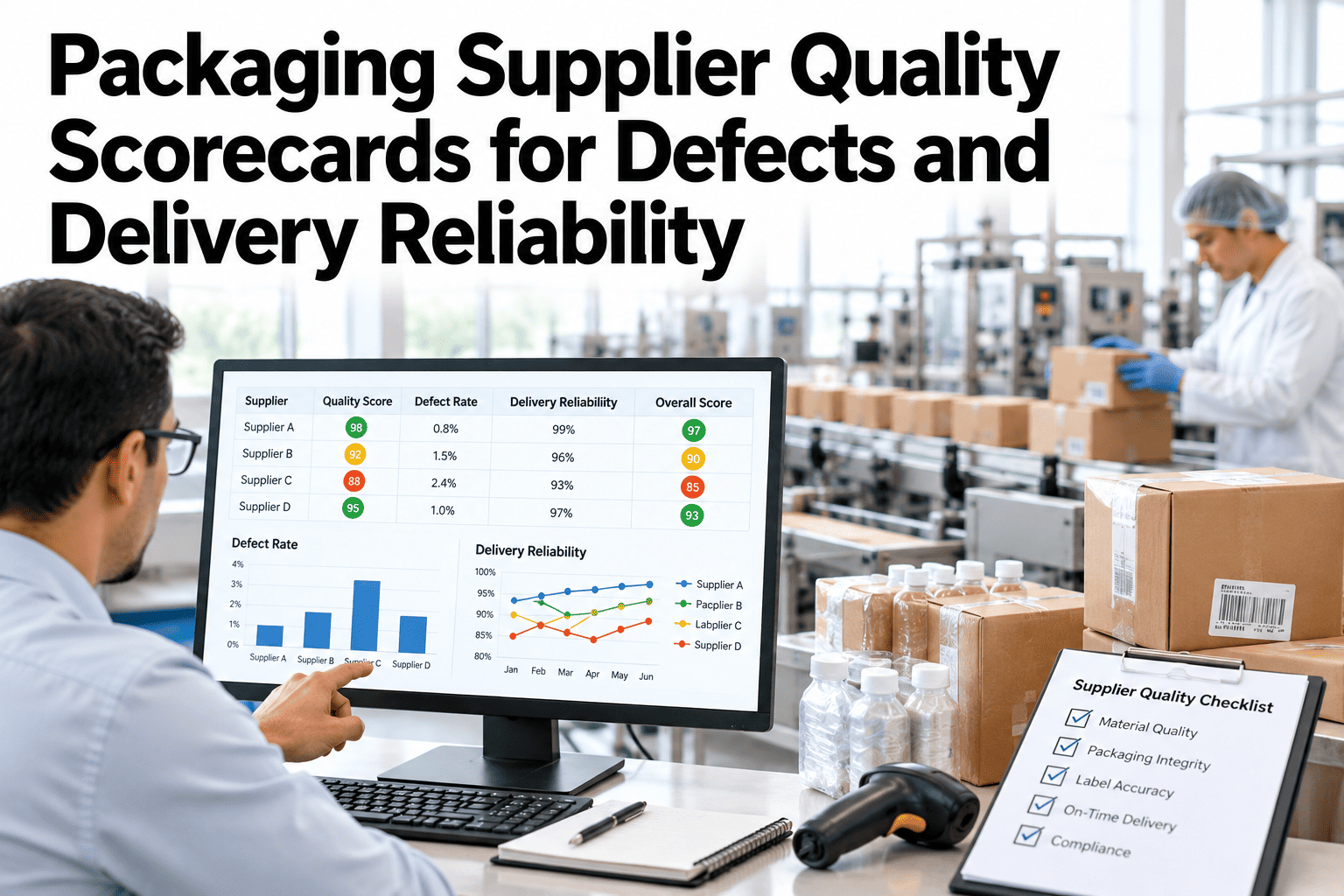
iFactory AI combines incoming defects, lot rejection, OTIF delivery, and corrective action follow-through into one supplier quality scorecard.
Four Numbers, One Supplier Picture
A defect rate alone tells you how often a supplier's material fails inspection, but not whether those defects cluster in a failure mode your line is especially sensitive to, and a delivery performance number tracked separately misses how often a late shipment forces a costly buffer-stock run on the floor.
Incoming Defects
Defect rate and type found at incoming inspection, tracked by lot and material type.
Lot Rejection
Full-lot rejection frequency, a stronger signal than a sampled defect rate alone.
Supplier OTIF
On-time, in-full delivery performance against your scheduled receiving windows.
Corrective Actions
Whether a flagged issue led to a resolved corrective action or recurred unaddressed.
A Composite Scorecard Across Suppliers
Six packaging suppliers scored across the four dimensions. Darker cells show where a supplier's performance needs the most attention.
Score Your Own Supplier Base
Book a 30-minute session and build a full quality scorecard from your own incoming inspection and delivery data.
What Each Signal Is Good For
Each piece of the scorecard answers a different procurement question.
| Signal | Question It Answers | Used For |
|---|---|---|
| Incoming defects | Is the material itself consistently in spec? | Quality conversations with the supplier |
| Lot rejection rate | How often does a whole shipment fail? | Escalation and contract review |
| Supplier OTIF | Can the supplier be relied on for schedule? | Buffer stock and sourcing decisions |
| Corrective action closure | Does the supplier actually fix flagged issues? | Long-term supplier relationship decisions |
Scorecard Governance
A scorecard only drives better supplier behavior if it is reviewed on a consistent cadence with a clear escalation path.
Rolling Out Across Your Supplier Base
iFactory AI connects to your existing incoming inspection and receiving systems to build scorecards without a separate data collection process.
Weighting the Scorecard
Not every signal should count equally toward a supplier's overall score; the weighting reflects which failures carry the most operational risk.
From Flag to Resolution
A supplier flagged below threshold moves through a defined review path rather than sitting on a report nobody acts on.
Flagged
Supplier score drops below the category threshold and is surfaced for review.
Reviewed
Procurement and quality jointly review the specific signals driving the low score.
Actioned
A corrective action request is issued with a clear expected resolution.
Monitored
Score tracked over the following cycles to confirm the issue did not recur.
Expert Review
The corrective action closure signal is usually the most predictive piece of a supplier scorecard, since a supplier with an occasional defect but a strong track record of actually fixing what gets flagged tends to be a safer long-term partner than one with a lower defect rate but a history of letting corrective actions quietly lapse.
Frequently Asked Questions
Does this require suppliers to use a new system?
No, the scorecard is built from your own incoming inspection and receiving data, so suppliers are not required to adopt any new system or portal. Support can confirm what data your current system already captures.
How often are supplier scores updated?
Scores update continuously as new inspection and delivery data arrives, so a supplier's scorecard reflects recent performance rather than a stale quarterly snapshot.
Can scoring thresholds differ by material category?
Yes, thresholds are set per material category, since an acceptable defect rate for corrugate and for printed film are not the same number. See category-specific thresholds on a call.
Does this track whether a corrective action was actually effective?
Yes, a corrective action is tracked against whether the flagged issue recurs afterward, not just whether the supplier responded to the request.
Can this integrate with our procurement system?
Supplier scores can be referenced during sourcing and contract review, and integration with an existing procurement system can be discussed based on your current setup. Ask support about procurement system integration.
Know Which Suppliers Actually Perform
iFactory AI scores packaging suppliers on defects, rejection, delivery, and corrective action follow-through. Book a demo to build your own scorecard.